
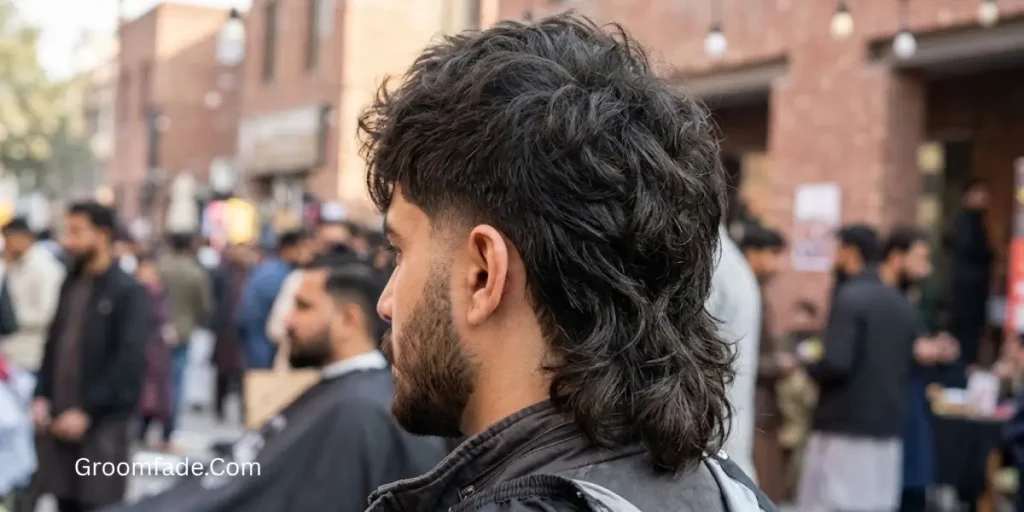
The mullet taper fade combines short, clean sides with a longer back and a shaped top. It gives you the bold look of a mullet without making the entire haircut feel heavy or untidy. You can keep it short and subtle, add curls and texture, or choose a longer back for a stronger look.
One reason this haircut works for different styles is that you can adjust the taper, top length, and back to match your hair type. A low taper creates a softer finish, while a mid or high taper gives the sides more contrast. Curly, wavy, and straight hair can all work with this cut when the length and shape are planned well.
In this guide, you will learn about the best mullet taper fade haircuts, how to choose a style for your hair, what to tell your barber, and how to maintain the shape at home.
What Is a Mullet Taper Fade?

A mullet taper fade is a haircut that combines the longer back of a mullet with a gradual taper around the temples and neckline. The top can be short, medium, curly, fluffy, or textured, depending on the look you want.
Unlike a traditional mullet with more length and weight around the sides, a modern mullet taper fade keeps the edges neat. The contrast between the shorter sides and longer back gives the haircut its shape.
The exact result depends on how high the taper starts, how much hair stays on top, and how far the back extends below the crown.
The Main Features of the Haircut
A well-shaped mullet taper fade usually has four main parts:
- Tapered sides: The hair gradually gets shorter around the temples and sideburns.
- Clean neckline: The hair around the back of the neck is shortened to create a neat finish.
- Textured top: The top may be layered, curly, brushed forward, or styled upward.
- Longer back: Extra length remains at the back to create the recognizable mullet shape.
These parts can be adjusted to suit your hair. For example, curly hair may need more length at the crown to prevent the top from looking too short after it dries. Straight hair may benefit from layers that create movement instead of hanging flat.
A center part adds balance to the front while keeping the back longer. The Middle Part Mullet combines these features for a relaxed style with natural movement.
Mullet Taper Fade vs. Traditional Mullet
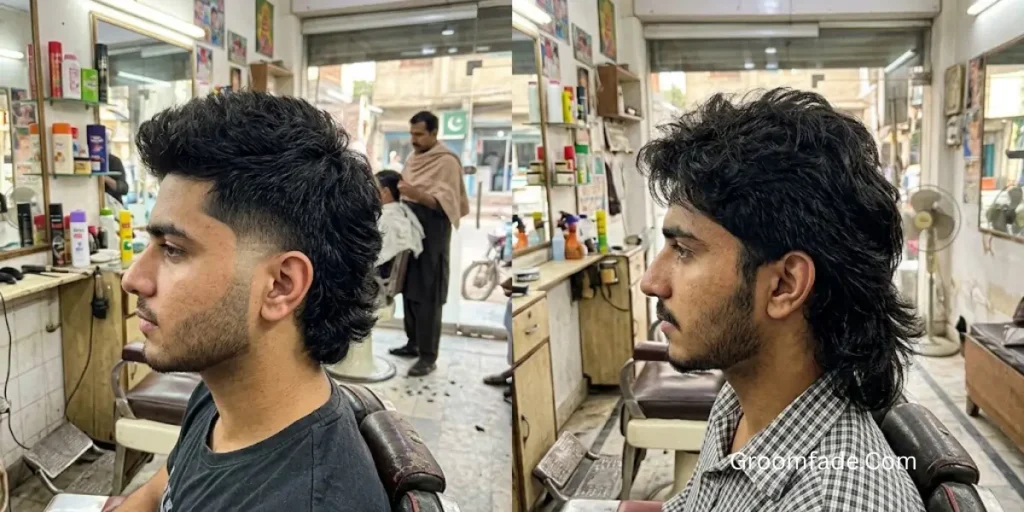
A traditional mullet often has a stronger difference between the short front and sides and the longer back. A mullet taper fade uses a more gradual finish around the temples and neckline, giving it a cleaner outline.
Neither option is automatically better. A traditional mullet may suit someone who likes a bold, retro shape, while a taper fade mullet may appeal to someone who wants a more controlled finish.
Is a Taper Fade a Mullet?
No. A taper fade and a mullet describe different parts of a haircut. A taper fade gradually shortens the hair around selected areas, while a mullet keeps more length at the back. When you combine both features, you get a mullet taper fade.
This distinction matters when you visit a barber. Asking for only a taper fade may leave you with a neat, short haircut that does not have the longer back you want.
25 Best Mullet Taper Fade Haircut Ideas
The best mullet taper fade depends on your hair texture, preferred length, and how much contrast you want. These styles offer different ways to wear the same basic haircut, from understated and short to curly, layered, and bold.
Low Taper Fade Mullet

A low taper fade mullet is a good starting point if you want a modern haircut that does not look too sharp. The taper stays low around the temples and neckline, leaving more hair around the sides than a higher taper would.
Best for: First-time mullet wearers, subtle styles, and people who prefer a natural finish.
You can pair a low taper with a textured top, soft fringe, or medium-length back. The result looks balanced because the taper cleans up the edges without taking too much attention away from the mullet shape.
Ask your barber to keep the taper low and blend it into the sides. Explain how much length you want at the back before the cutting begins.
Mid Taper Fade Mullet
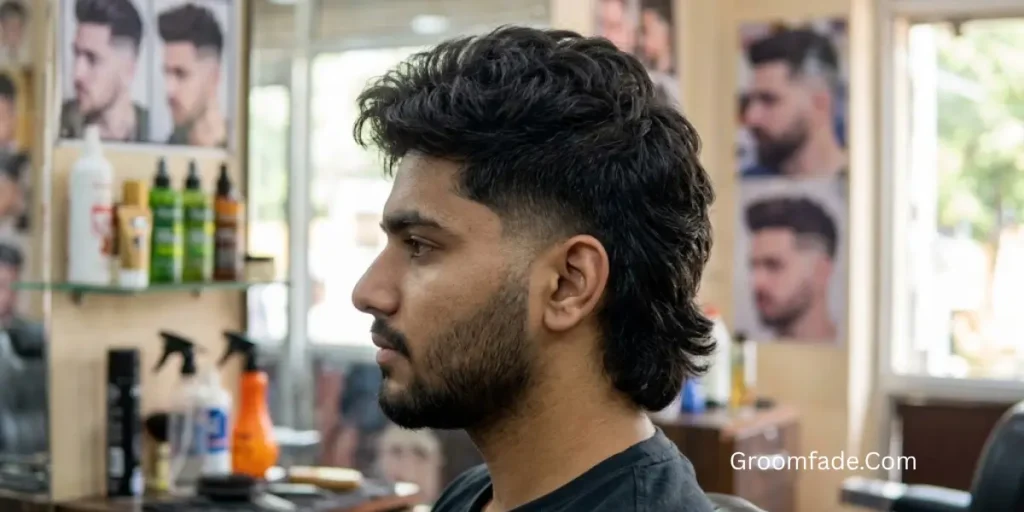
A mid taper fade mullet offers more contrast than a low taper without making the sides as short as a high taper. The transition starts around the middle of the sides and blends into the top and neckline.
This option works well with straight, wavy, and curly hair. It can also help a textured top stand out because the shorter sides create a clearer difference in length.
Choose a moderate back length if you want a balanced everyday haircut. If you prefer a more noticeable mullet, leave extra length behind the ears and at the nape.
High Taper Fade Mullet
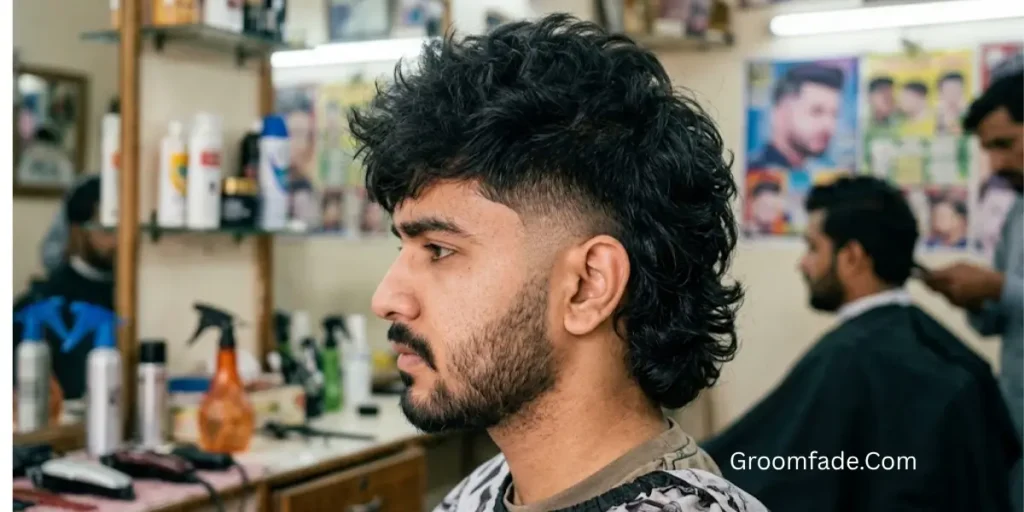
A high taper fade mullet creates a sharper look by taking the shorter section higher around the temples. This gives the haircut a stronger contrast, especially when the top and back have plenty of length.
It can work well with thick hair, textured layers, and styles that need a clear outline. However, a high taper removes more hair from the sides, so it may make the head shape look different from a low taper.
Tell your barber how high you want the taper to reach. Bring a side-view reference photo because the difference between a mid and high taper can be difficult to explain with words alone.
Short Mullet Taper Fade

A short mullet taper fade keeps the overall haircut compact while retaining some length at the back. It is a practical choice if you like the mullet shape but do not want long hair hanging down your neck.
The top can be cropped, lightly textured, or styled with a short fringe. Keep the back long enough to show the mullet shape, but avoid making the difference between the top and back too extreme if you want a softer finish.
This haircut usually takes less daily styling than a longer mullet. It still needs regular trims to keep the taper neat.
Men who want extra length at the back can consider the Long Mullet Hairstyle, which gives the classic shape more length and flexibility for styling.
Long Mullet Taper Fade
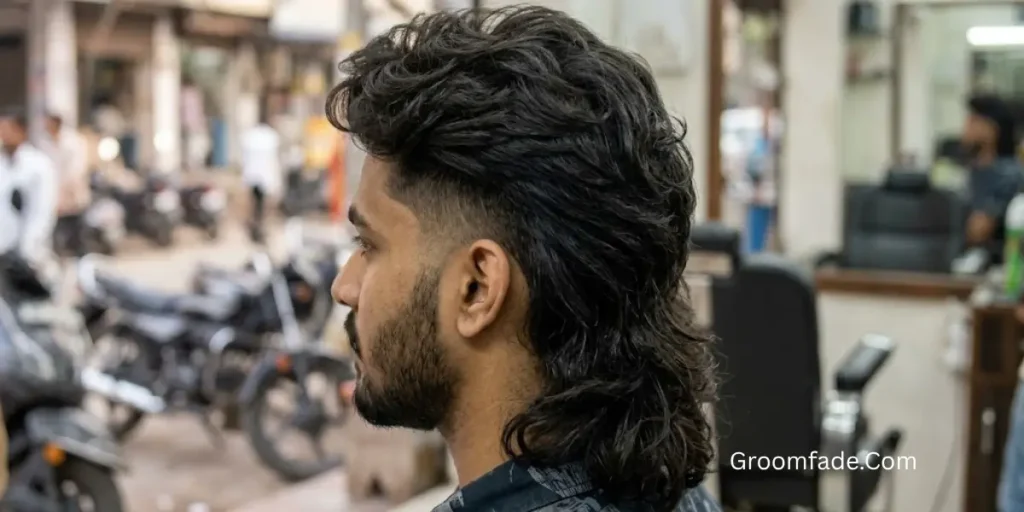
A long mullet taper fade leaves more length at the back and often uses layers to create movement. The sides stay shorter, which makes the longer hair more noticeable.
This style suits people who enjoy a bold haircut and are willing to spend time caring for longer hair. Conditioning and gentle detangling can help keep the back manageable.
Ask your barber to shape the back without removing too much length. If you are growing your hair out, explain your goal so the barber can clean up the sides while preserving the length you need.
Modern Mullet Taper Fade
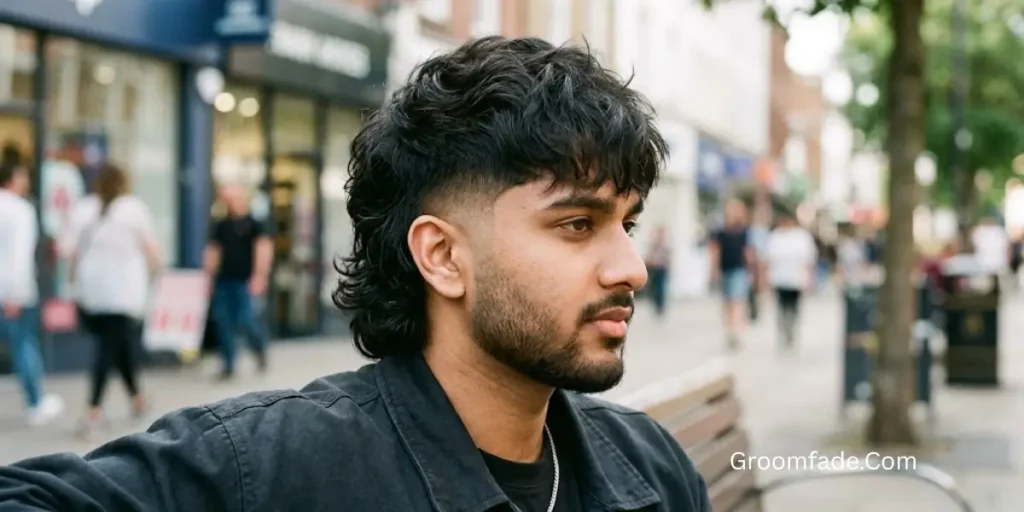
A modern mullet taper fade combines a cleaner outline with a top and back shaped to suit your hair. It may include soft layers, a textured fringe, natural waves, or a low taper.
There is no single correct version of a modern mullet. Some look neat and controlled, while others have a messy finish and more volume.
For an everyday style, keep the sides tidy and use layers to connect the top to the back. This creates movement without making the haircut look like two separate lengths joined together.
Soft Mullet Taper Fade
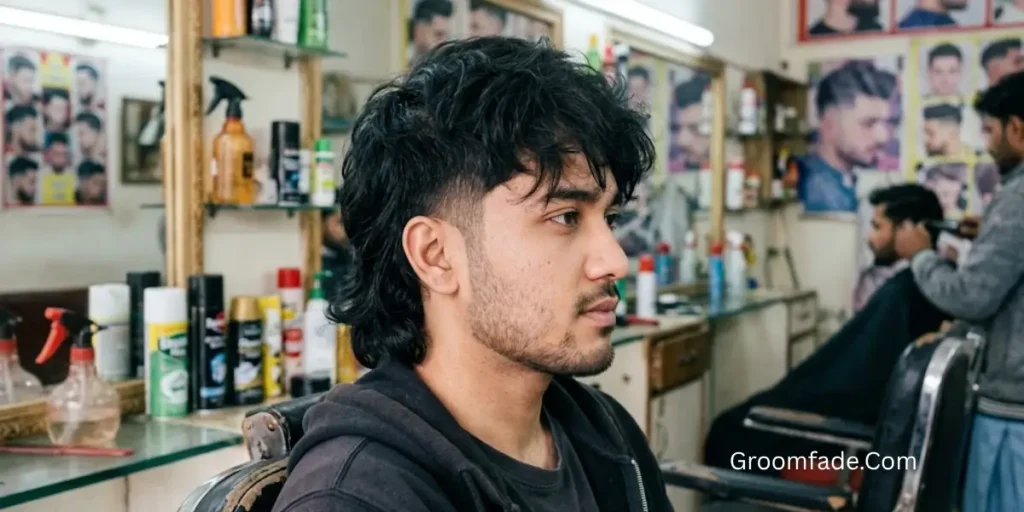
A soft mullet taper fade uses gentle transitions and less dramatic contrast. The back is longer than the sides, but the overall shape looks relaxed rather than sharply separated.
This can be a good choice if you want to try a mullet without committing to an extreme style. It works particularly well with natural waves, light curls, and layered straight hair.
Ask for a soft taper, blended layers, and a natural neckline. Avoid asking for too much length to be removed from the back if you want the mullet shape to remain visible.
Curly Mullet Taper Fade
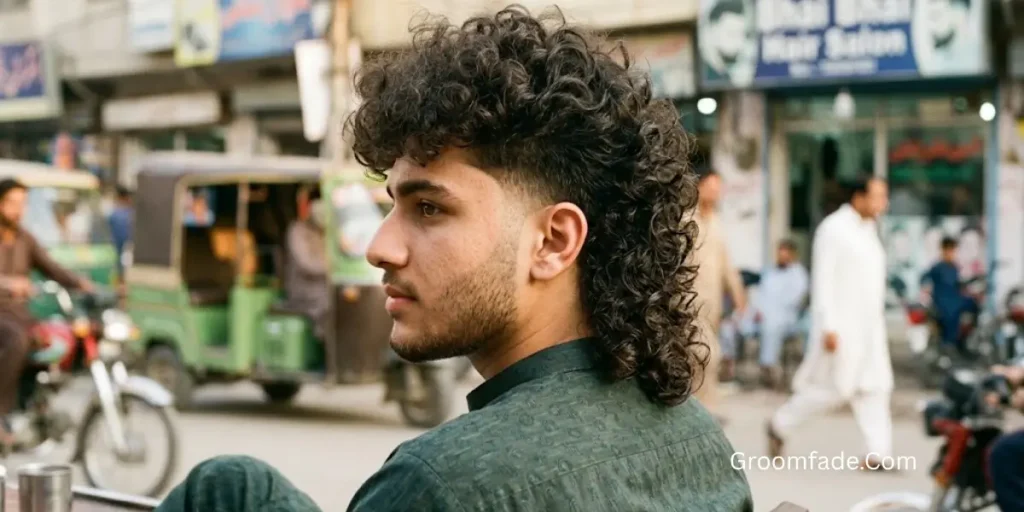
A curly mullet taper fade keeps the curls on top and at the back while cleaning up the temples and neckline. The natural curl pattern gives the haircut volume and makes the longer back stand out.
The most important part is allowing enough length for your curls to form properly. Tight curls often look shorter when dry, so your barber should account for shrinkage before cutting.
Use a suitable conditioner and a small amount of curl cream or leave-in product if your hair needs extra moisture. Scrunch the product into damp hair and let the curls dry naturally or use a diffuser on a gentle setting.
Wavy Mullet Taper Fade
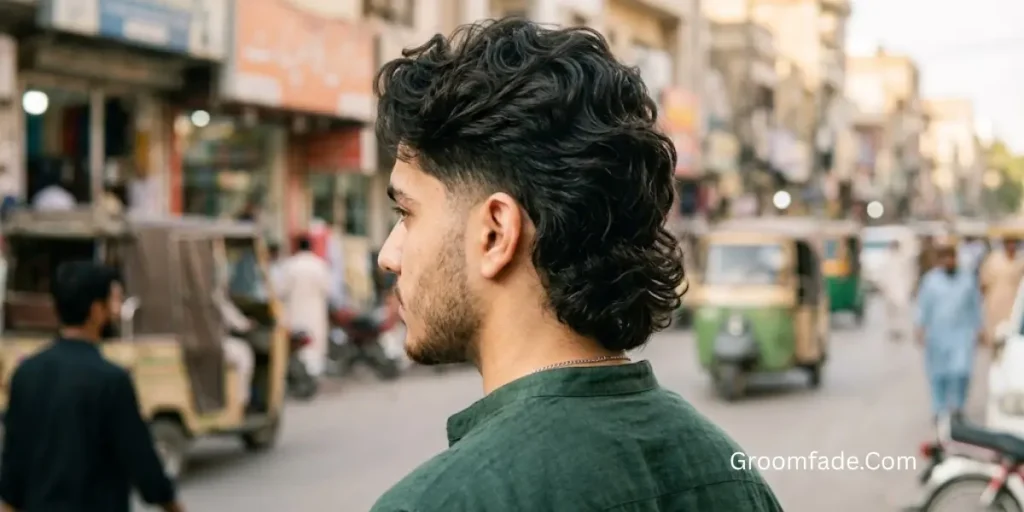
A wavy mullet taper fade uses natural waves to create a relaxed, flowing shape. The top can be left loose, while the back has enough length to show the wave pattern.
This style is useful for people whose hair has movement but does not form tight curls. A light styling cream or sea salt spray may help add texture, depending on your hair’s needs.
Ask for layers that support the natural wave instead of cutting everything to one length. Too much thinning can make some wavy hair look uneven or frizzy.
Straight Hair Mullet Taper Fade
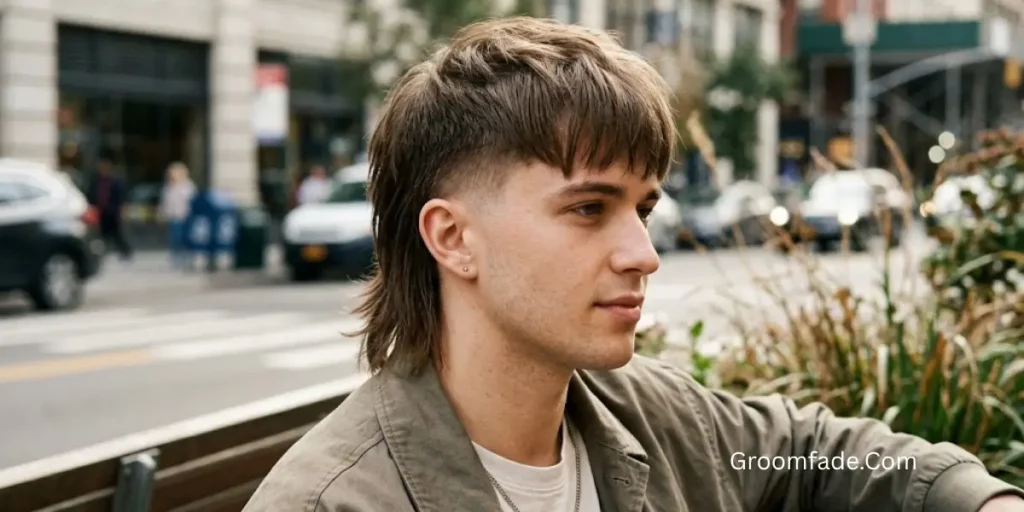
A mullet taper fade for straight hair relies on shape and layering because straight strands may not create as much natural volume as curls or waves.
The top can be textured with scissors, styled forward, or brushed back. The longer section at the rear can remain smooth or receive light layers to prevent it from looking flat.
If your hair is fine, avoid removing too much weight from the top and back. If it is thick, ask your barber to reduce bulk carefully while keeping enough length for a clear mullet shape.
Fluffy Mullet Taper Fade
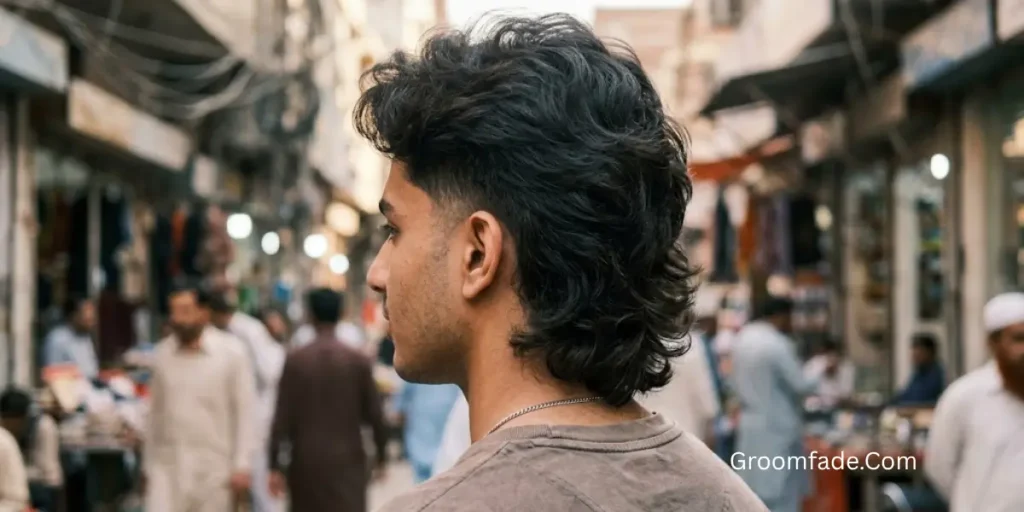
A fluffy mullet taper fade focuses on volume and a soft, airy finish. The top has lift, while the back keeps enough length to maintain the mullet shape.
This style works well with medium-length hair that has some natural movement. A blow-dryer and vent brush can help lift the roots, while a lightweight styling product can add shape without making the hair stiff.
Avoid using too much heavy wax or pomade. These products can flatten the volume that makes a fluffy mullet look full.
Textured Mullet Taper Fade
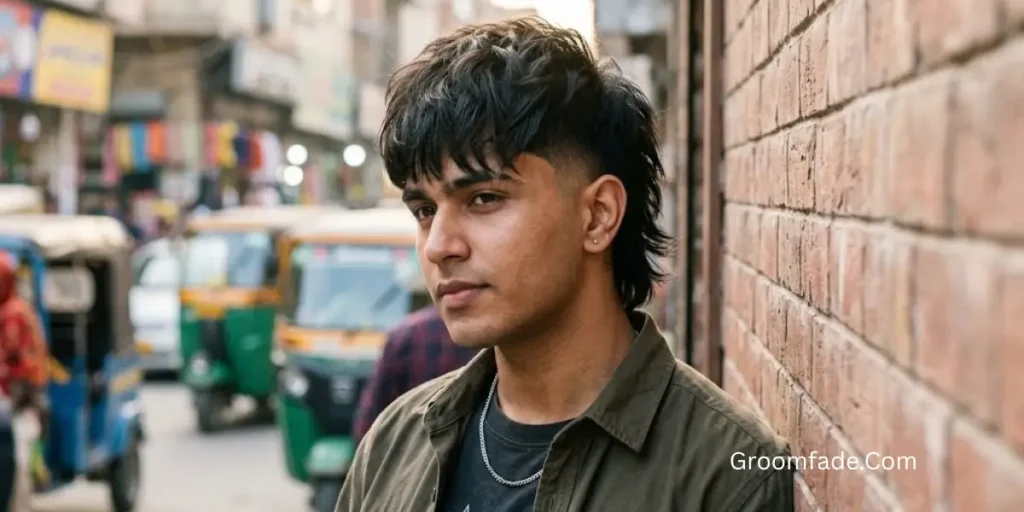
A textured mullet taper fade uses layers and separated strands to create movement. It can work with straight, wavy, and curly hair, although the cutting method should match the texture.
The top may be cut with a slightly uneven finish, while the back is shaped to follow the head. The taper keeps the edges neat and allows the texture to remain the main feature.
For styling, work a small amount of matte paste through dry or slightly damp hair. Use your fingers to separate sections instead of combing everything into a flat shape.
For a subtle transition around the sides, the Low Fade Mullet keeps the fade closer to the ears while preserving the longer back.
Messy Mullet Taper Fade
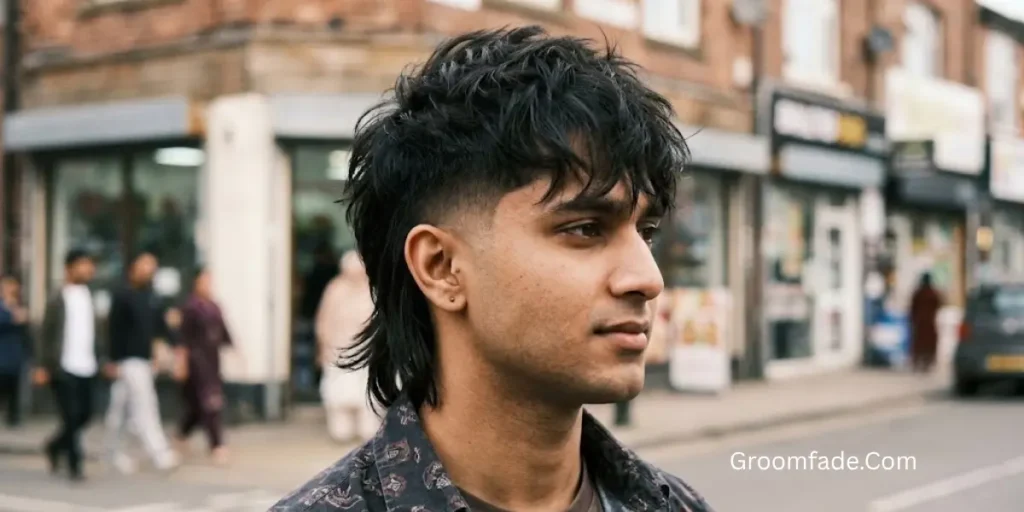
A messy mullet taper fade is designed to look relaxed rather than perfectly arranged. The top has loose texture, and the back can sit naturally instead of being brushed into a fixed shape.
This is a useful option if you do not want to style every strand each morning. However, a messy finish still benefits from a good cut. Layers need to sit well so the hair looks intentional rather than uneven.
Apply a small amount of lightweight cream or texture paste, then use your fingers to shape the top and back. Avoid repeatedly touching the hair as it dries if you want to limit frizz.
Slick Back Mullet Taper Fade
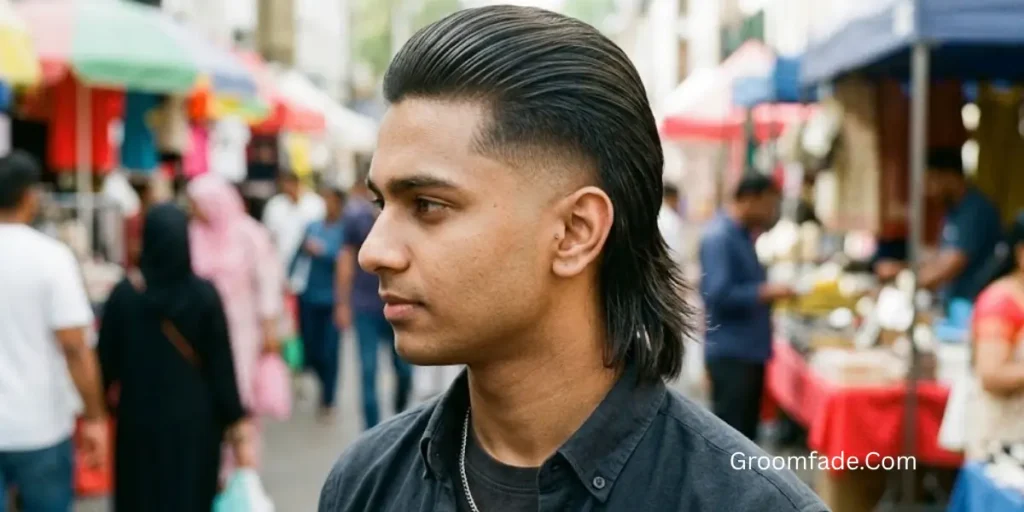
A slick back mullet taper fade combines hair brushed away from the face with a longer back and clean tapered edges. It gives the haircut a more controlled appearance than a messy or fluffy version.
This style generally works best when the top has enough length to move backward. Medium or thick straight hair is often easier to shape, although wavy hair can also create an attractive result.
Use a light or medium-hold styling product suited to your hair type. Brush the top back while keeping the longer rear section in its natural direction.
Middle Part Mullet Taper Fade
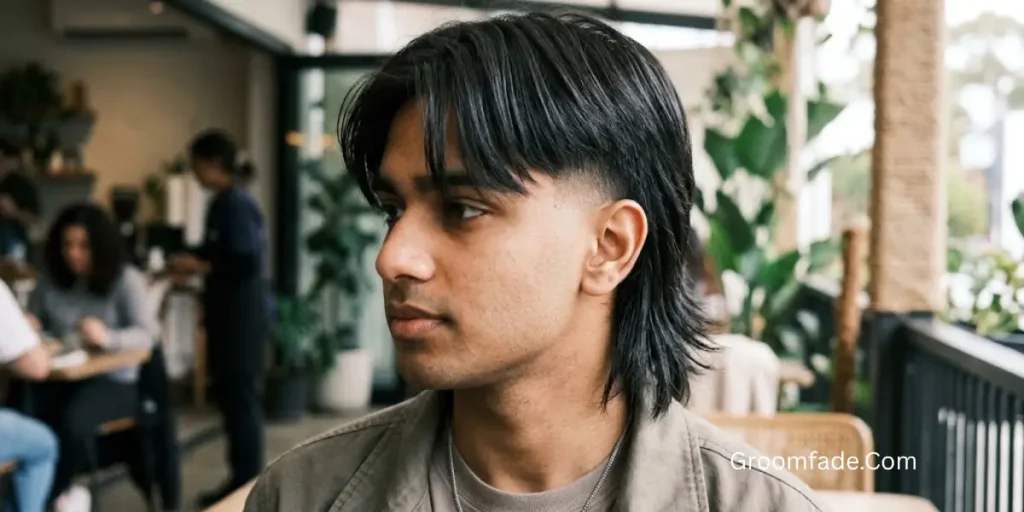
A middle part mullet taper fade separates the front hair into two sections that fall to either side of the face. The taper keeps the edges clean, while the longer back maintains the mullet shape.
This look often works best with enough length around the front to form a visible part. Straight and wavy hair can be easier to arrange into a curtain shape, but other textures can work with the right length and styling.
Ask your barber to preserve the front length and create layers that connect naturally with the back. The middle part should fit your hair’s natural growth pattern rather than being forced into place.
Black Men’s Mullet Taper Fade
A mullet taper fade for Black men can combine natural texture, a shaped top, and a clean taper around the temples and neckline. The top may feature short coils, twists, curls, or a longer textured shape.
The best design depends on hair density, curl pattern, and personal preference. A subtle low taper can preserve more fullness around the sides, while a higher taper creates stronger contrast.
Discuss the neckline and temple shape with your barber, especially if you want a natural finish. For tightly coiled hair, choose products that support moisture and reduce unnecessary friction during styling.
Afro-Textured Mullet Taper Fade
An afro-textured mullet taper fade keeps volume and texture at the top and back while shortening the edges. The longer rear section can be rounded, layered, or shaped to suit your preferred look.
A key point is preserving the natural texture instead of trying to force the hair into a straight shape. The barber should understand how the hair grows and how much it shrinks when dry.
Use a suitable leave-in conditioner or curl cream if needed. Protect the hair from excessive heat and rough handling to help maintain its natural feel.
Burst Fade Mullet
A burst fade mullet uses a curved fade that spreads around the ear. The back stays longer, so the haircut retains its mullet shape while the curved sides add a more noticeable outline.
Although it is often grouped with taper fade mullets, a burst fade is a distinct fading pattern. The exact amount of exposed skin depends on how short the barber cuts the sides.
This style can work with curls, waves, textured tops, and spiky hair. If you want the curved shape to stand out, show your barber a clear side-view image before the cut begins.
Natural curls can add volume and texture to a mullet. The Curly Mullet Haircut lets the curl pattern shape the top and back for a distinctive finish.
Skin Taper Mullet
A skin taper mullet takes the hair very short near selected areas of the temples or neckline, blending from bare skin into longer hair. The result is sharper than a soft taper.
The term can mean slightly different things between barbers, so explain whether you want the skin-level finish at the temples, the neckline, or both.
This haircut creates a strong contrast and may show regrowth sooner than a longer taper. If you prefer a softer appearance, ask for a gradual blend rather than a very high skin finish.
Shag Mullet Taper Fade
A shag mullet taper fade combines layered, uneven texture with a longer back and neat tapered edges. It usually has more movement than a classic mullet and may include a fringe that falls over the forehead.
This cut suits people who like a loose, lived-in appearance. Wavy and thick hair can provide natural movement, while straight hair may need careful layering to avoid looking flat.
Ask your barber to keep the layers connected and preserve enough weight at the back. A little styling cream can help the hair fall into place without removing its natural texture.
Mohawk Mullet Taper Fade
A mohawk mullet taper fade keeps more hair along the center of the head, with shorter sides and extra length at the back. It creates a bolder shape than a standard mullet taper.
The center section can be spiky, curly, or brushed upward. You can choose a narrow strip for a stronger mohawk look or a wider top for something easier to style.
Tell your barber how much width you want to keep through the center. A very narrow shape can look dramatically different from a broad, textured top.
Edgar Mullet Taper Fade
An Edgar mullet taper fade combines the short, defined fringe associated with an Edgar haircut with the longer back of a mullet. The top and fringe usually have a more structured appearance than a fluffy or shaggy style.
This combination can create a strong outline, especially when the fringe is cut straight across. The back should still have enough length to read as a mullet rather than an ordinary textured crop.
Bring a reference photo that shows both the front fringe and the rear shape. A front-only image may not tell your barber how you want the two styles combined.
Asian Mullet Taper Fade
An Asian mullet taper fade can feature a textured fringe, middle part, layered crown, or longer back. Straight and thick hair may hold a clear shape, while wavy hair can create a softer, more relaxed finish.
The best version depends on your individual hair rather than ethnicity alone. Hair density, growth direction, and natural texture should guide the cut.
If you want a Korean-inspired look, you might prefer a soft taper and layered fringe. For a sharper appearance, choose a more defined taper and stronger separation between the sides and back.
Medium Mullet Taper Fade
A medium mullet taper fade sits between a short, compact mullet and a long, dramatic version. The back is long enough to show the shape clearly, but it does not extend as far as a long mullet.
This length offers flexibility. You can style the top forward, add waves, create a middle part, or leave the hair in its natural shape.
Ask your barber to agree on the back length before cutting. Words such as “medium” can mean different things to different people, so a photo or a clear length reference is useful.
Classic Mullet with a Taper Fade
A classic mullet with a taper fade keeps the recognizable short-front, longer-back shape while cleaning up the temples and neckline. It is a good option if you like the traditional mullet but want the edges to look more controlled.
The top can remain simple, with the focus on the difference between the front and back. You can keep the sides fuller or choose a more noticeable taper based on your preference.
To preserve the classic feel, avoid taking too much length from the rear. The taper should support the shape rather than replace it.
How to Choose the Right Mullet Taper Fade for Your Hair Type
Your hair texture affects how a mullet taper fade looks after the cut. The same style can appear fuller on curly hair and flatter on straight hair, even when the barber uses similar lengths.
Best Mullet Taper Fade for Curly Hair
Curly hair works well with a mullet because it adds natural volume to the crown and back. A low taper is a good option for a softer look, while a mid taper creates more contrast.
Keep enough length for the curls to form their natural shape. Ask your barber to consider shrinkage before cutting the back too short.
Best Mullet Taper Fade for Straight Hair
Straight hair benefits from layers and texture that help the haircut maintain its shape. A textured top, middle part, or slick back can work well.
If your hair is fine, keep enough weight in the top and back to prevent the cut from looking thin. Thick straight hair may need some bulk removed so the sides and back do not appear too heavy.
Best Mullet Taper Fade for Wavy Hair
Wavy hair creates a relaxed look without requiring much styling. A medium-length back and soft layers can help the waves flow naturally.
Use a lightweight styling cream if your hair becomes frizzy. Avoid brushing it too much after styling, as this can reduce the definition of the waves.
Best Mullet Taper Fade for Thick Hair
Thick hair can create a full, bold mullet taper fade. The main challenge is controlling excess bulk while keeping enough volume at the top and back.
Ask your barber to remove weight where needed without making the ends look thin. The right layering method depends on whether your hair is straight, wavy, or curly.
Best Mullet Taper Fade for Fine or Thin Hair
Fine hair can work with a mullet taper fade, but the cut needs careful shaping. A shorter or medium-length back may be easier to manage than a very long style.
Keep the top textured without removing too much hair. Lightweight products are often more useful than heavy waxes, which can make fine hair look flat.
If you prefer less length and easier daily styling, the Short Mullet Haircut keeps the recognizable shape without the weight of longer hair.
Best Mullet Taper Fade for Black Men
Black men can wear a mullet taper fade with natural coils, short curls, twists, or a fuller textured top. A low taper creates a subtle outline, while a mid or burst fade offers more contrast.
Choose the shape based on your natural hair growth and the amount of volume you want to keep. A barber familiar with your hair texture can help preserve the natural pattern while creating clean edges.
How to Choose Between a Low, Mid, and High Taper Fade
The taper height affects how noticeable your mullet looks. Think about how much contrast you want before choosing a variation.
| Style | Overall appearance | Best for |
| Low taper mullet | Subtle and natural | Everyday wear |
| Mid taper mullet | Balanced contrast | A modern, defined shape |
| High taper mullet | Bold and sharp | Strong contrast |
| Skin taper mullet | Very short near selected edges | A sharper finish |
| Burst fade mullet | Curved fade around the ears | A more distinctive outline |
Which Taper Height Is Best for You?
Choose a low taper if you want the sides to stay fuller and the haircut to look understated. A mid taper is a useful middle ground because it provides visible contrast without removing as much hair as a high taper.
A high taper suits people who want a stronger difference between the top and sides. A burst fade is worth considering if you want the fade to curve around the ears rather than follow a simple taper at the temples and neckline.
Remember that barbers may use these terms slightly differently. Reference photos help you communicate the exact result you want.
Who Suits a Mullet Taper Fade?
A mullet taper fade can suit many people because its length and shape are adjustable. Your hair texture, styling habits, and comfort with a noticeable haircut matter more than following a strict rule about face shape.
Choosing a Mullet for Different Face Shapes
- Round faces: A little height on top can create a longer visual shape. Avoid adding too much width at the sides if that is not the look you want.
- Oval faces: Many variations can work, from short mullets to longer layered styles.
- Square faces: Soft layers and a natural fringe can balance a strong jawline.
- Long faces: A fuller fringe or moderate top height can help balance the overall proportions.
- Heart-shaped faces: A textured top with a balanced back may help create a more even appearance.
These are styling suggestions, not fixed rules. The haircut should reflect your preferences and how you like your hair to sit.
Mullet Taper Fade for Men, Young Adults, and Teenagers
For men who want a versatile haircut, a short or medium mullet with a low taper can be easier to maintain. A textured top makes it suitable for casual settings without requiring a complicated styling routine.
Young adults and teenagers may prefer a more noticeable look, such as a curly mullet, fluffy mullet, or burst fade mullet. For boys and younger children, a shorter back and softer taper may be more practical.
The right choice also depends on school rules, workplace expectations, and how often you want to visit the barber.
How to Ask Your Barber for a Mullet Taper Fade
Clear instructions help your barber understand the shape you want. Instead of asking only for a mullet taper fade, explain the taper height, top length, and back length.
Step 1: Choose Your Taper Height
Decide whether you want a low, mid, or high taper. If you are unsure, a low taper is a reasonable starting point because it leaves more hair around the sides.
Step 2: Explain the Top Length
Tell your barber whether you want the top short, textured, fluffy, curly, or long enough for a middle part. Mention how you normally style your hair.
Step 3: Decide How Long to Keep the Back
The back is a defining feature of a mullet. Show your barber where you want the length to end rather than relying only on words such as “short” or “medium.”
Step 4: Choose the Finish
Explain whether you want a natural neckline, sharp edges, or a skin-level finish near the temples. These details can change the final appearance.
Step 5: Bring Reference Photos
Bring photos showing the front, side, and back. A single front-facing photo may not show the length or taper shape clearly enough.
Step 6: Discuss Your Hair Texture
Tell your barber whether your hair is straight, wavy, curly, thick, or fine. If your hair shrinks significantly when dry, mention that before the back is cut.
Example barber request:
“I want a modern mullet taper fade with a low taper around the temples and neckline. Keep enough length at the back to show the mullet shape, add some texture on top, and blend the layers naturally. Please leave the front long enough to style.”
Adjust this request to match the photos and length you prefer.
Before choosing your next cut, you can use the AI Hairstyle Try On Tool to preview a hairstyle direction and help explain your preferred look to your barber.
How to Style a Mullet Taper Fade at Home
You do not need many products to style a mullet taper fade. The right routine depends on your hair texture and the finish you want.
Step 1: Start with Clean, Damp Hair
Wash your hair as needed and gently towel-dry it. Avoid rubbing curly or wavy hair too roughly, as this can increase frizz.
Step 2: Apply the Right Styling Product
Choose a product that supports your hair type.
- Use curl cream for curls that need definition.
- Try lightweight mousse for volume.
- Use matte paste for separated, textured styles.
- Choose a light styling cream for a softer, natural finish.
Start with a small amount and add more only if needed.
Step 3: Add Volume and Texture to the Top
For a fluffy mullet, use a blow-dryer on a moderate setting and lift the roots with your fingers or a suitable brush.
For a messy or textured style, work the product through the hair using your fingertips. For a middle part, guide the front hair away from the center.
Step 4: Shape the Back
Use your fingers to arrange the longer hair at the back. Keep the natural direction of the hair in mind rather than forcing every strand into place.
Step 5: Define Curls or Smooth Straight Hair
If you have curly hair, scrunch in your curl product and allow the hair to dry. A diffuser can help maintain volume when used on a gentle setting.
For straight hair, use a brush or comb to guide the strands into the desired shape. Avoid excessive heat, and use a heat protectant when appropriate.
Step 6: Finish Without Making Hair Stiff
Check the top, sides, and back in a mirror. Use a light finishing product if necessary, but avoid adding so much that the hair loses its natural movement.
How to Maintain a Mullet Taper Fade
The tapered sides usually show regrowth before the longer back loses its shape. Your maintenance routine should focus on keeping the outline clean while protecting the length you want to retain.
How Often Should You Get a Taper Trim?
Many people choose a trim every two to four weeks to keep a sharp taper looking neat. This is a general guide, not a strict schedule. Your hair growth rate and preferred finish may mean you need more or less frequent appointments.
If you want a softer, grown-out look, you can wait longer between trims.
How to Keep the Back at the Right Length
Tell your barber that you want to preserve the mullet shape. Ask for the ends to be cleaned up without shortening the entire back unnecessarily.
If you are growing a long mullet, occasional shaping can help maintain its outline. You do not need to cut off a large amount of length each time.
Hair Washing, Conditioning, and Daily Care
Wash your hair according to your scalp and hair needs. Condition the longer sections to help them stay manageable, especially if they become dry or tangled.
Use a wide-tooth comb for longer curly or wavy hair when appropriate. Avoid excessive heat and tight styling that pulls on the hair.
Common Mullet Styling Mistakes to Avoid
- Cutting the back too short before deciding on the final shape.
- Choosing a taper that is higher than you intended.
- Using heavy products that flatten fine or fluffy hair.
- Removing too much weight from naturally thin hair.
- Ignoring curl shrinkage when choosing the length.
- Waiting too long to clean up a taper that you want to keep sharp.
Good communication and a manageable home routine can help your haircut keep its shape between visits.
Mullet Taper Fade vs. Other Haircuts
Several haircuts have features that look similar to a mullet taper fade. Understanding their differences can help you choose the right cut.
Mullet Taper Fade vs. Burst Fade Mullet
A mullet taper fade usually has a gradual taper around the temples and neckline. A burst fade mullet uses a curved fading pattern around the ears.
Both keep length at the back, but the burst fade creates a more distinctive curved outline. Choose based on the side profile you prefer.
Mullet Taper Fade vs. Regular Taper Fade
A regular taper fade can be part of many haircuts, including short crops, textured fringes, and classic styles. It does not automatically include a longer back.
A mullet taper fade combines that tapered finish with the recognizable mullet shape. If you want the longer rear section, make sure your barber understands that it is part of the request.
Low Taper Mullet vs. Mid Taper Mullet
A low taper keeps the shorter section close to the temples and neckline, creating a softer appearance. A mid taper begins higher and provides more contrast.
Neither option is always better. A low taper may suit someone who prefers fuller sides, while a mid taper can make the haircut look more defined.
Mullet Taper Fade vs. Wolf Cut
A wolf cut usually relies on layered volume, a shaggy finish, and movement around the crown and sides. A mullet taper fade places more emphasis on the tapered sides and longer back.
Some modern haircuts combine features of both. If you want a wolf-like shape with clean edges, show your barber a reference that captures the exact balance.
Mullet Taper Fade vs. Mohawk Mullet
A mohawk mullet places more emphasis on the hair running along the center of the head, with shorter sides and a longer back. A standard mullet taper fade does not require such a narrow or raised central shape.
Choose a mohawk version if you want a more dramatic outline. For a softer result, keep more width through the top and use a low or mid taper.
Is the Mullet Taper Fade Still in Style in 2026?
The mullet taper fade remains a recognizable modern haircut option in 2026, with room for personal changes in length, texture, and taper height. Its appeal comes from combining a distinctive back shape with cleaner edges.
However, no haircut suits everyone, and popularity can vary by location and personal style. The best choice is one that fits your hair, daily routine, and comfort with a noticeable cut.
What Is the Gen Z Mullet?
The Gen Z mullet is a modern take on the classic shape. It often includes textured layers, a fuller crown, a shorter fringe, or a taper or burst fade around the sides.
Some versions look soft and casual, while others have sharp edges and strong contrast. The term describes a broad style rather than one fixed haircut.
Is a Mullet Taper Fade a Good First Bold Haircut?
It can be a good starting point if you want to try a mullet without choosing an extreme version. A short back and low taper create a more subtle result than a long, heavily layered mullet with a high fade.
You can also start with a softer shape and leave more length for future changes. This makes it easier to adjust the cut after you see how it works with your hair.
Frequently Asked Questions About Mullet Taper Fades
Q1. Is a taper fade a mullet?
No. A taper fade shortens the hair gradually around selected areas, while a mullet keeps more length at the back. A mullet taper fade combines both features.
Q2. What fade is best for a mullet?
A low taper is a good choice for a subtle look, while a mid taper offers more contrast. A burst fade is useful if you prefer a curved fade around the ears.
Q3. What is the Gen Z mullet?
The Gen Z mullet is a modern variation with a longer back, textured top, and often a taper, fringe, or burst fade. Its exact shape varies by personal preference.
Q4. What is a burst fade vs. a mullet?
A burst fade is a fading technique around the ears, while a mullet is a haircut shape with more length at the back. You can combine them in a burst fade mullet.
Q5. Does a mullet taper fade work with curly hair?
Yes. Curly hair adds volume and definition to the top and back. Leave enough length for the curls to form naturally, and ask your barber to account for shrinkage.
Q6. Can you get a mullet taper fade with straight hair?
Yes. Straight hair works well with a mullet taper fade when the barber uses suitable layers and texture. A middle part, textured top, or slick back can all complement the longer back.
Q7. How short can you cut a mullet taper fade?
You can keep the top and back relatively short while retaining enough length at the rear to show the mullet shape. If the back is cut too short, the haircut may look more like a regular taper.
Q8. How often should a mullet taper fade be trimmed?
Many people trim the taper every two to four weeks to keep it sharp. Longer intervals can work if you prefer a softer, grown-out appearance.
Q9. Is a mullet taper fade suitable for Black men?
Yes. It can work with natural coils, curls, twists, and other textures. The best taper height and top shape depend on the individual’s hair and preferred style.