
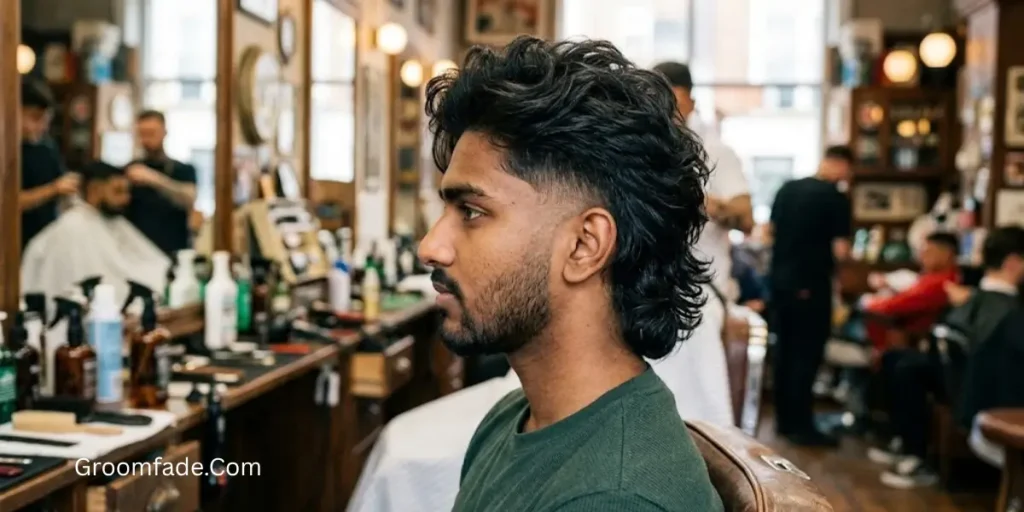
A low fade mullet is a haircut where the sides and nape are faded down to a low point around the ears, while the top stays textured and the back stays longer. It keeps the mullet shape but looks much cleaner than the classic version. This guide covers the best low fade mullet haircut styles, what to tell your barber, and how to style and maintain the cut.
Quick answer: A low fade mullet blends short sides into skin or a low guard near the ear and neckline. The top and back stay longer. Ask for a low fade or low taper, a textured top, and length kept at the back. It suits straight, wavy and curly hair, and it needs a trim every 3–4 weeks to stay sharp.
Key points
- A low fade keeps the shortest hair near the bottom of the head, so the cut stays wearable.
- A low taper is the softest version. A low burst fade has the most shape.
- The cut works on straight, wavy and curly hair, but each type needs a different styling plan.
- Say the fade height and the back length as two separate requests. This is where most bad haircuts start.
What Is a Low Fade Mullet Haircut?
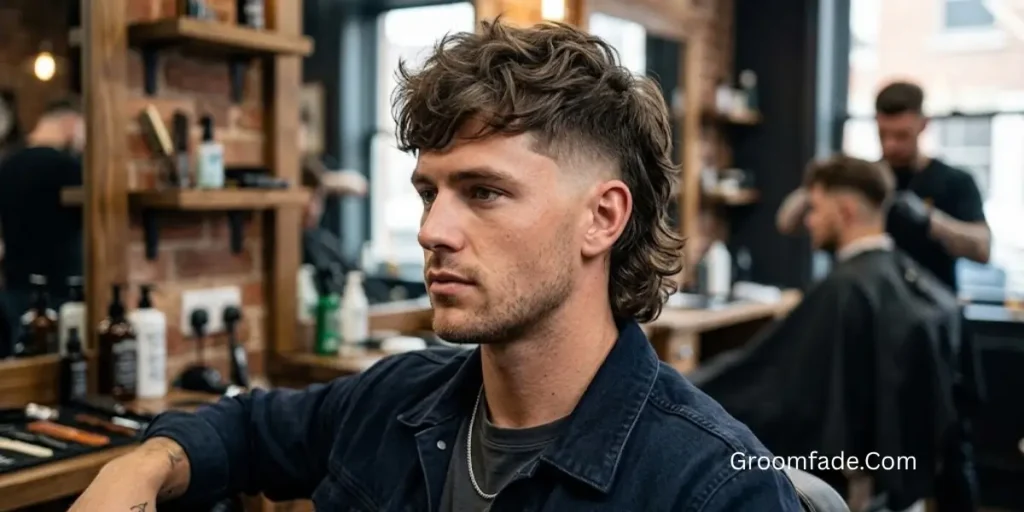
A low fade mullet is a mullet with a low fade on the sides. The fade starts near the bottom of the head, around the sideburns, the area above the ears, and the neckline. Above that, the hair grows longer into a textured top. At the back, the hair stays longer and forms the “tail.”
A classic mullet is often just short on the sides, with no blend at all. The low fade version adds a smooth gradient, so the hair moves from short to long without a hard line.
Parts of the Cut
Knowing the parts makes it easier to explain what you want.
- Top: The hair from the front hairline to the crown. It can be short and choppy, medium and layered, or long enough to cover the forehead.
- Fringe: The hair at the front. It can fall forward, sweep to the side, or be cut straight across.
- Sides: The area above the ears. On this cut, the sides are faded, not left long.
- Nape and neckline: The lower back of the head. The fade goes here too, and the shape of the neckline can be rounded, squared or tapered.
- Back (the tail): The longest section. It can sit at the nape, touch the collar, or go past it.
Other Names for This Cut
People search for this style in several ways. A mullet with a low fade, a low fade with a mullet, a modern low fade mullet, and a low fade mullet cut all point to the same idea. Barbers may also say “mullet with a low fade” when booking. If your barber uses a different name, show a photo and check that you both mean the same fade height.
For a softer and more textured shape, the Shag Mullet uses layered lengths to create movement while keeping the longer back of the style.
12 Low Fade Mullet Styles
Here are twelve versions, from subtle to bold. Pick one as a starting point and adjust it with your barber.
Classic Low Fade Mullet
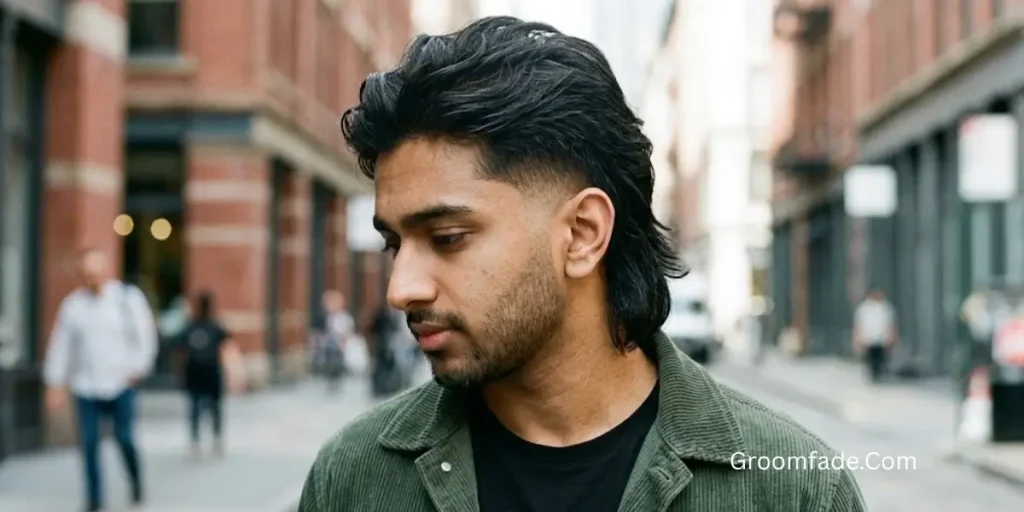
Short faded sides, a medium top and a soft tail. This is the easiest place to start if you have never had a mullet.
- Best for: First-time mullet wearers
- Ask your barber: “Low fade, medium top, tail at my nape”
- Styling: Light clay or paste, about two minutes
- Upkeep: Fade touch-up every 2 to 3 weeks
Low Taper Fade Mullet
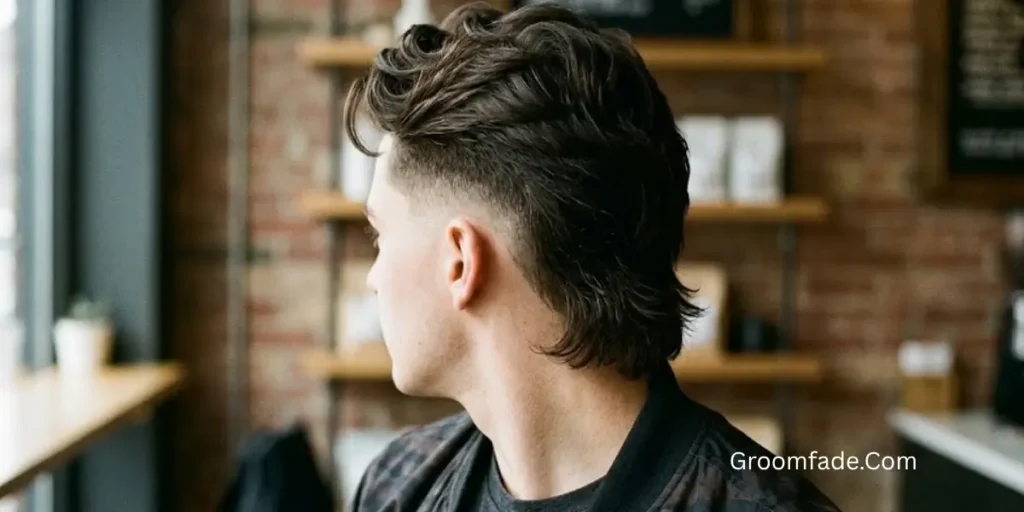
The taper stays close to your natural hairline. You keep more hair on the sides, and the neckline looks clean. If someone asks for a low taper fade mullet haircut, this is usually what they mean.
- Best for: Men who worry about looking too bold
- Ask your barber: “Low taper on the sideburns and neckline only”
- Styling: Matte paste and a quick finger comb
- Upkeep: A trim every 3 to 4 weeks is enough
Lower Taper Fade Mullet
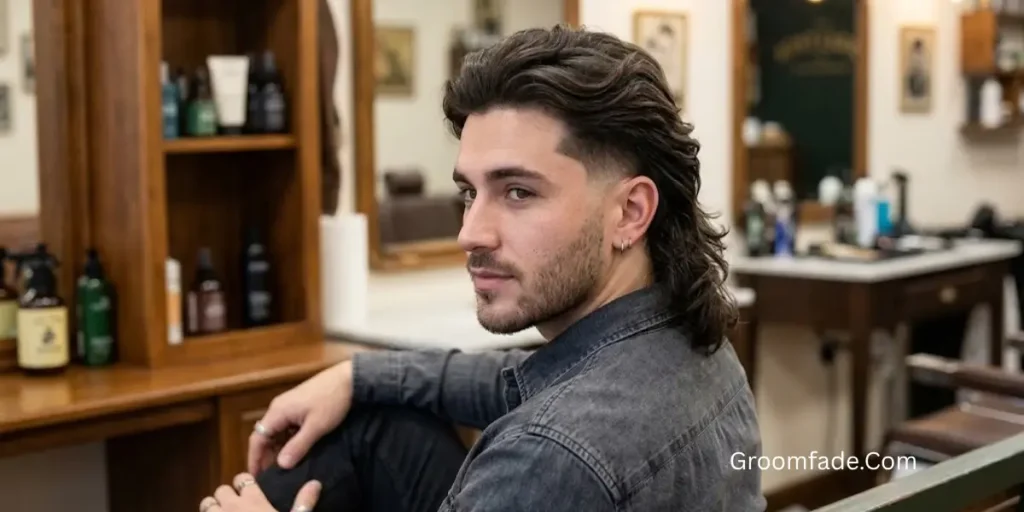
This one sits even lower and only touches the sideburns and the neckline. From a distance, the sides look almost natural.
- Best for: Men who want the mullet shape without a strong fade line
- Ask your barber: “Keep the taper as low as possible”
- Styling: Works with almost any product
- Upkeep: The softest fade grows out the most gently
Low Burst Fade Mullet
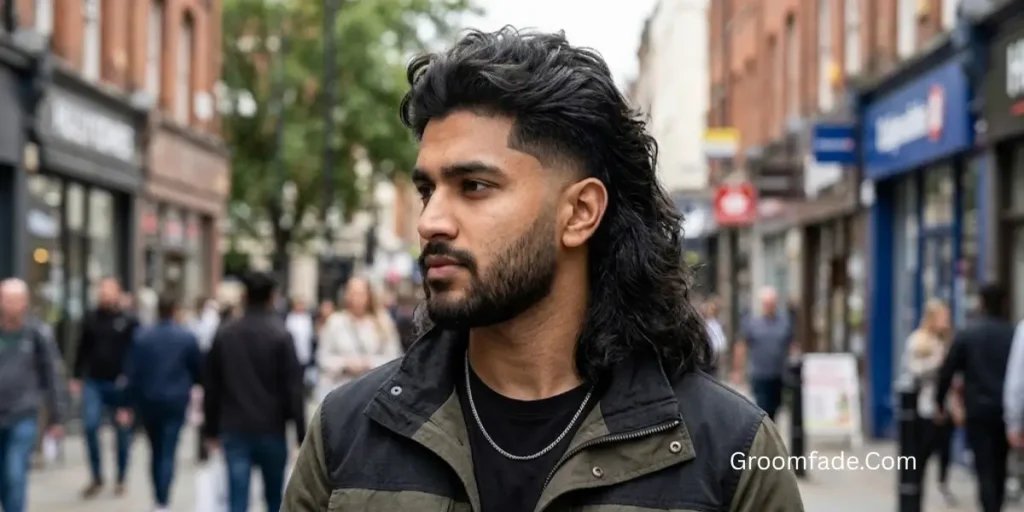
The fade curves around the ear like a half circle. The hair at the back stays long, so the shape stands out from the side and from behind.
- Best for: People who want a sharp look in photos
- Ask your barber: “Low burst fade around the ear, keep the back long”
- Styling: Sea salt spray on the top and tail
- Upkeep: Touch up the curve every 2 to 3 weeks
Low Taper Burst Fade Mullet
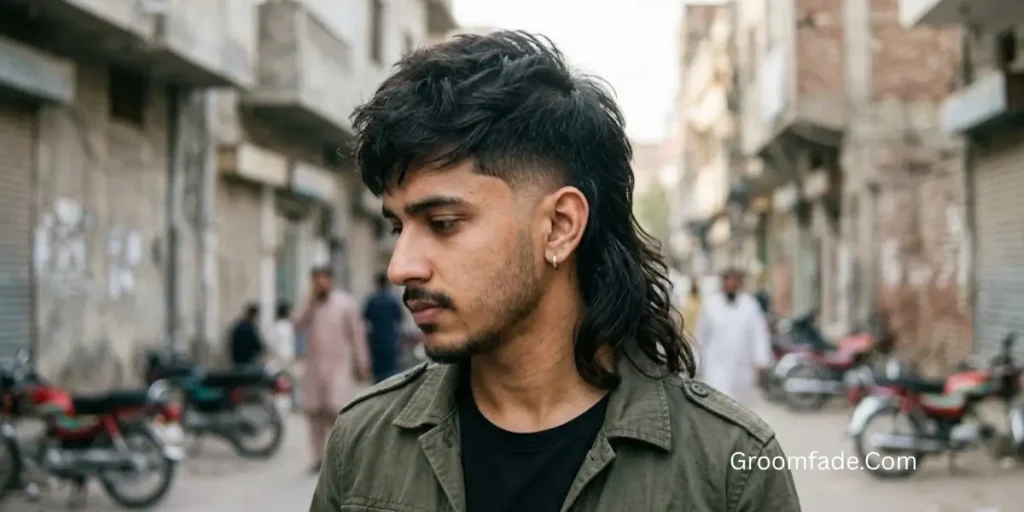
This blends a soft taper with a burst curve. You get the round shape around the ear, but the change from short to long is gentler.
- Best for: Men who want something between styles 2 and 4
- Ask your barber: “Burst shape with a soft taper, not a hard line”
- Styling: Texture powder for extra lift
- Upkeep: Fade touch-up every 3 weeks
Low Drop Fade Mullet
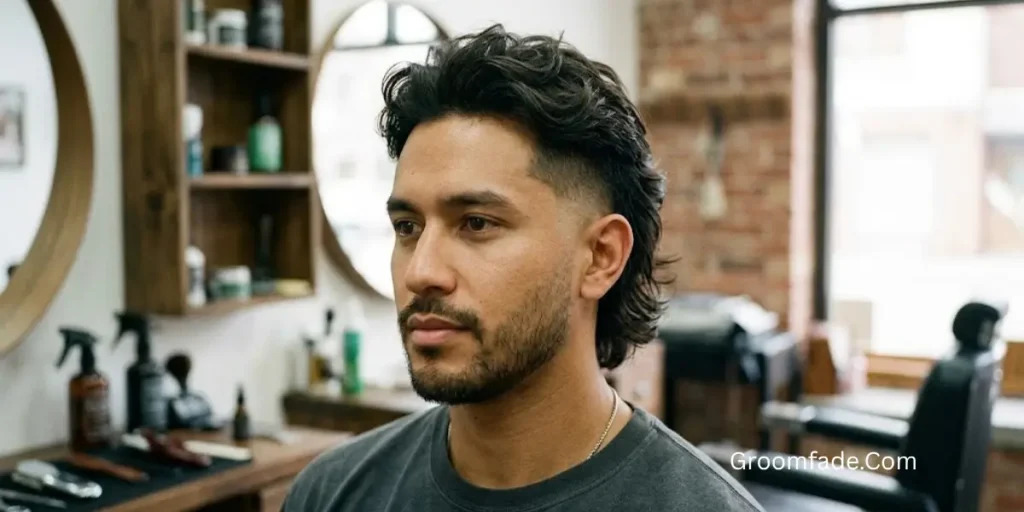
A low drop fade mullet dips behind the ear and follows its curve down toward the neck. The fade seems to lead the eye into the back hair.
- Best for: Longer tails and angled outlines
- Ask your barber: “Low drop fade that follows the ear”
- Styling: Light oil to smooth the tail
- Upkeep: Neaten the neckline every 3 weeks
A less traditional option is the Reverse Mullet, which changes the usual length pattern and creates a different balance between the front and back.
Low Skin Fade Mullet
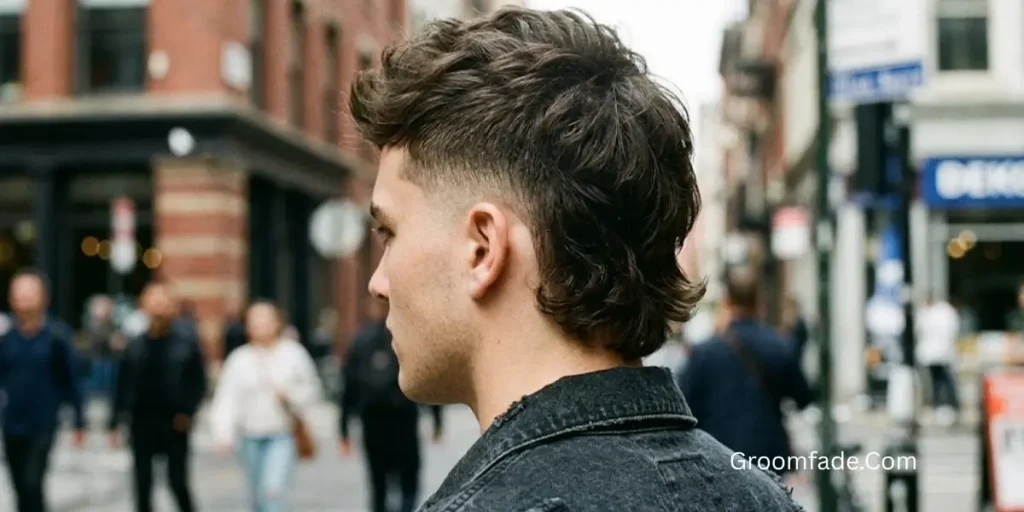
The sides go down to bare skin at the base. This gives the highest contrast and makes the top and back stand out.
- Best for: A sharp, high-contrast finish
- Ask your barber: “Low fade down to skin, blended up slowly”
- Styling: Clay or paste on a textured top
- Upkeep: Grows out fastest, so book every 2 weeks
French Crop Low Fade Mullet
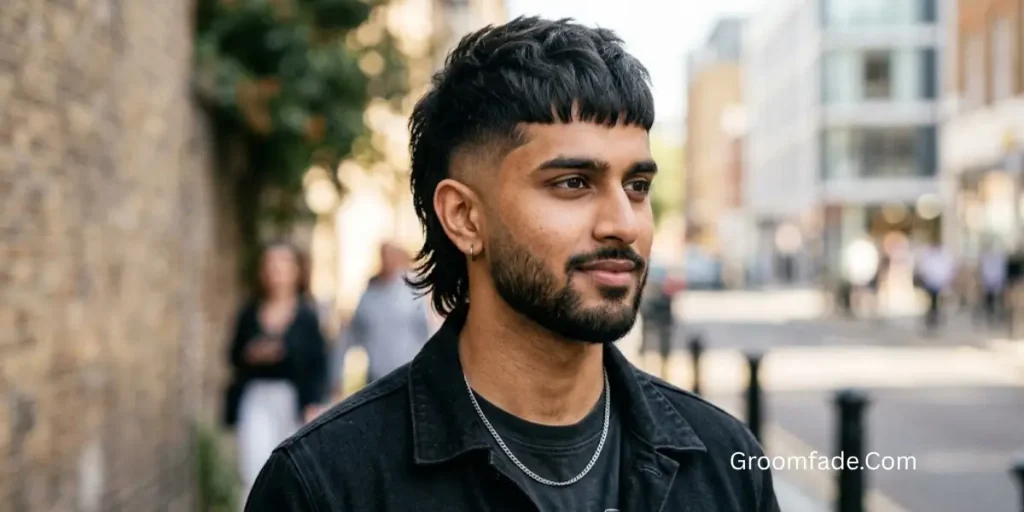
A short, textured fringe cut straight across the forehead, a low fade on the sides and a small tail at the back. Styling takes about two minutes.
- Best for: Men who like short hair with a hint of mullet
- Ask your barber: “French crop fringe, low fade, small tail”
- Styling: Matte clay pushed forward
- Upkeep: Fringe trim every 4 weeks
Short Low Fade Mullet
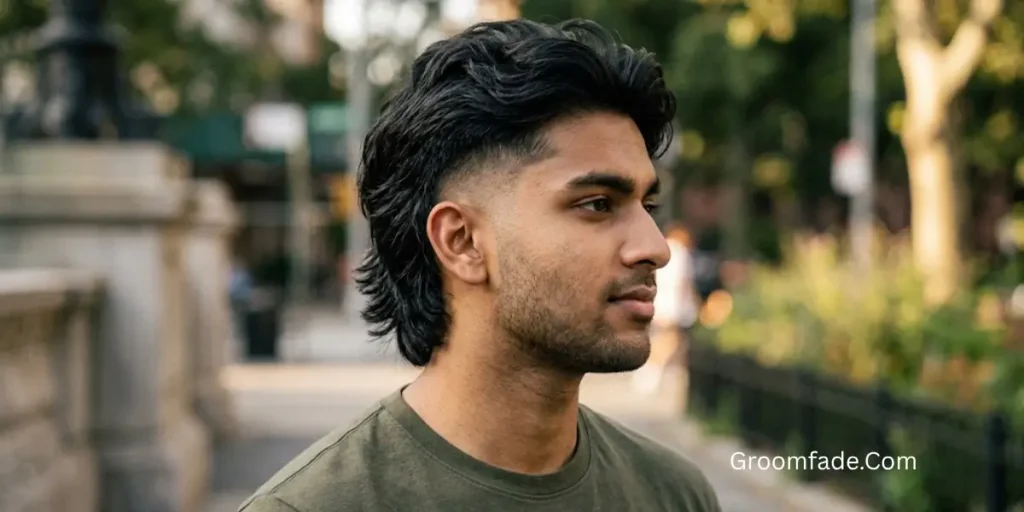
A short low fade mullet keeps the back only slightly longer than the top. If you have low fade mullet short hair right now, this is the version to try.
- Best for: Short hair and growing-out stages
- Ask your barber: “Fade the sides, leave the back alone”
- Styling: Texture powder or light paste
- Upkeep: Trim only the sides while the back grows
Low Fade Mullet Buzz Cut
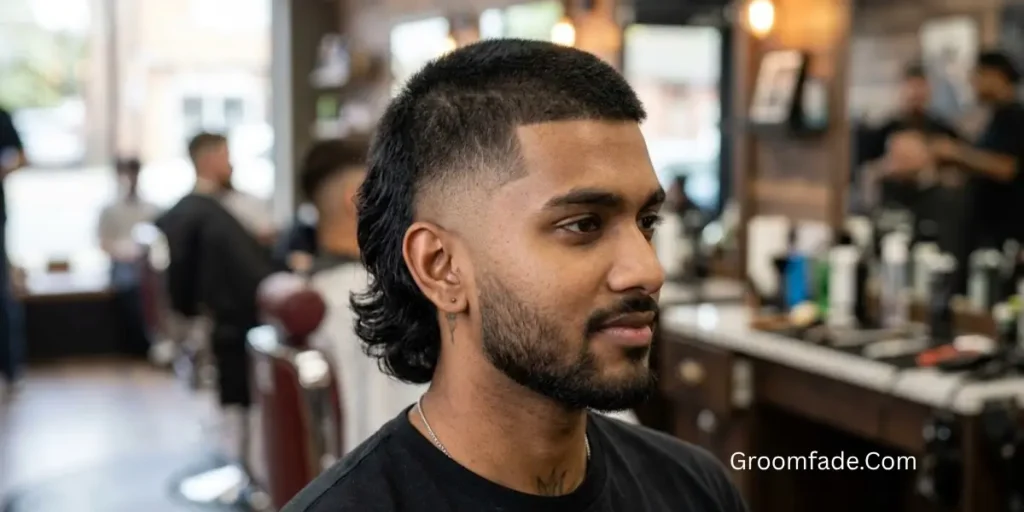
The top is clipped very short and the back has a small tail or none at all. It is a low-effort version and works well in hot weather.
- Best for: Busy routines and warm climates
- Ask your barber: “Low fade, short top, a few extra inches at the nape”
- Styling: Almost none
- Upkeep: Clipper touch-up every 2 to 3 weeks
For a softer finish with controlled layers, the Asian Mullet Hairstyle can work well with straight, wavy, or textured hair while keeping the overall shape neat.
Textured Low Fade Mullet With Fringe
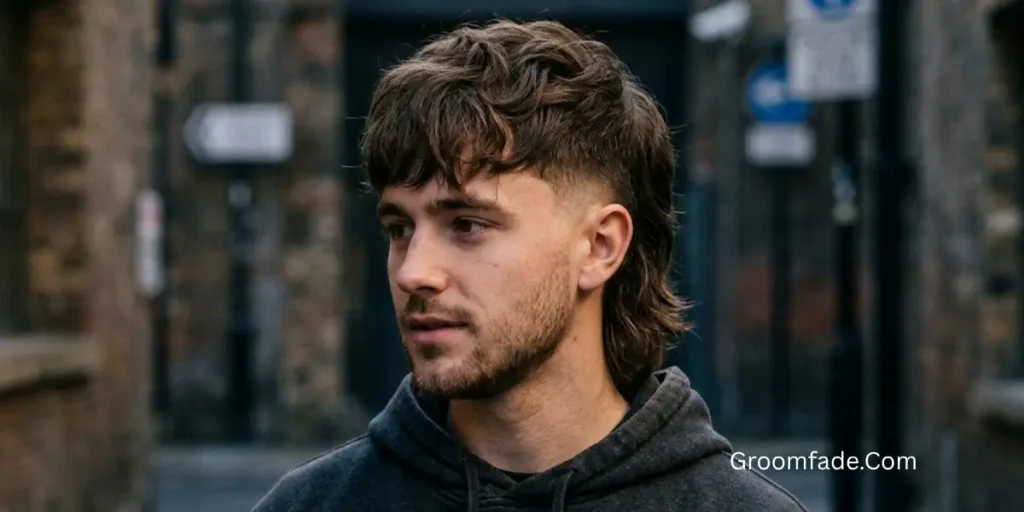
A choppy top with a fringe that falls forward. Ask for point cutting, which is when the barber snips into the ends to create a broken edge.
- Best for: A casual, relaxed look
- Ask your barber: “Point cut the top and fringe, low fade on the sides”
- Styling: Sea salt spray plus a little clay
- Upkeep: Full trim every 4 to 6 weeks
Low Fade Mullet With a Hard Part
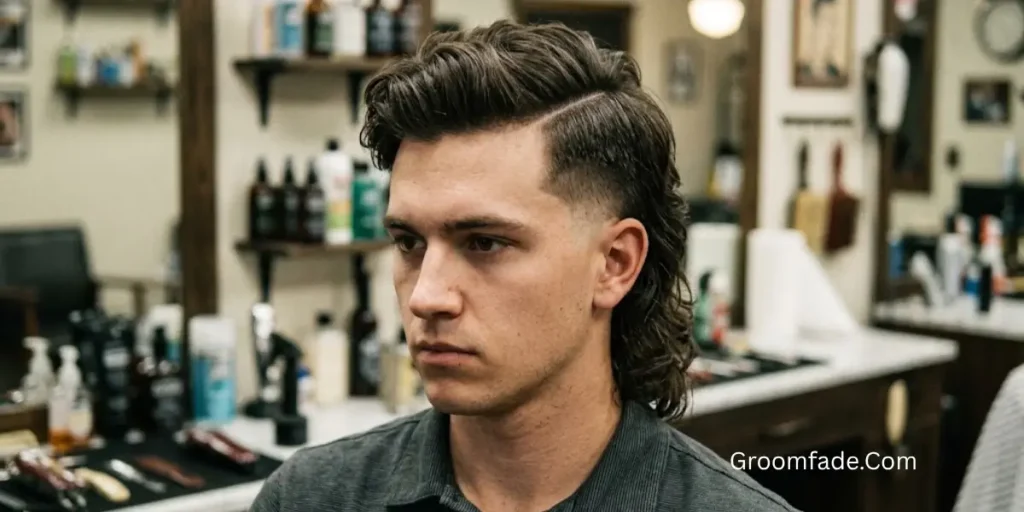
A part is shaved or cut into one side to give the cut a sharp edge. It looks best on thick or wavy hair, where the part stays visible.
- Best for: Thick or wavy hair
- Ask your barber: “Low fade with a hard part on the left (or right)”
- Styling: Comb the top over and add matte paste
- Upkeep: Redraw the part every 2 weeks, since the line softens fast
Best Version for Your Hair Type
Your hair type matters as much as the fade. The same cut can look very different on straight and curly hair.
Low Fade Mullet for Straight Hair
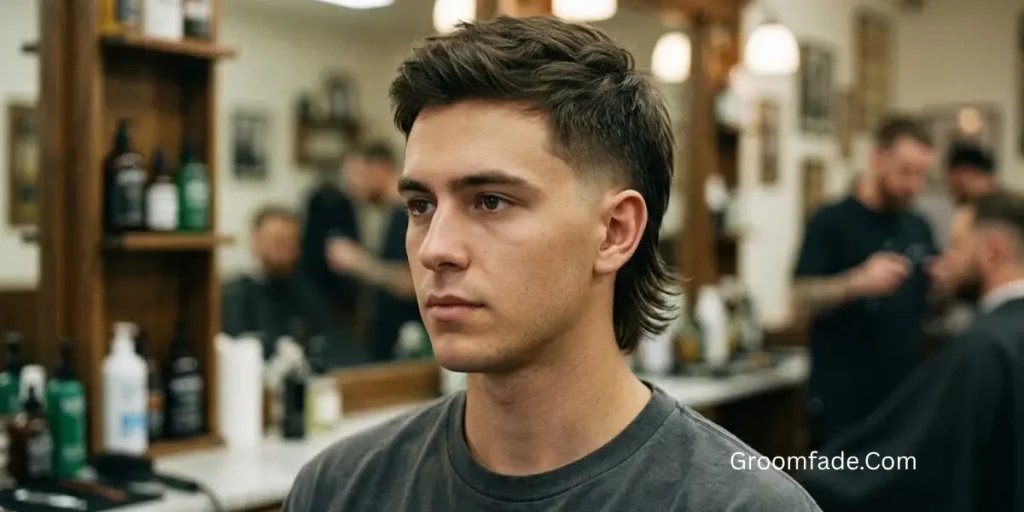
Straight hair shows every line, which is good for a clean fade and less good for a flat top. A low taper fade mullet on straight hair looks best with layers and texture. Ask for point cutting on the top and back so the hair does not hang like a curtain.
A low burst fade mullet on straight hair also works well. The hair falls cleanly over the faded area, and the burst curve shows up clearly. Use sea salt spray or texture powder to add grip. Without it, straight hair can lie flat by midday.
Low Fade Mullet for Wavy Hair
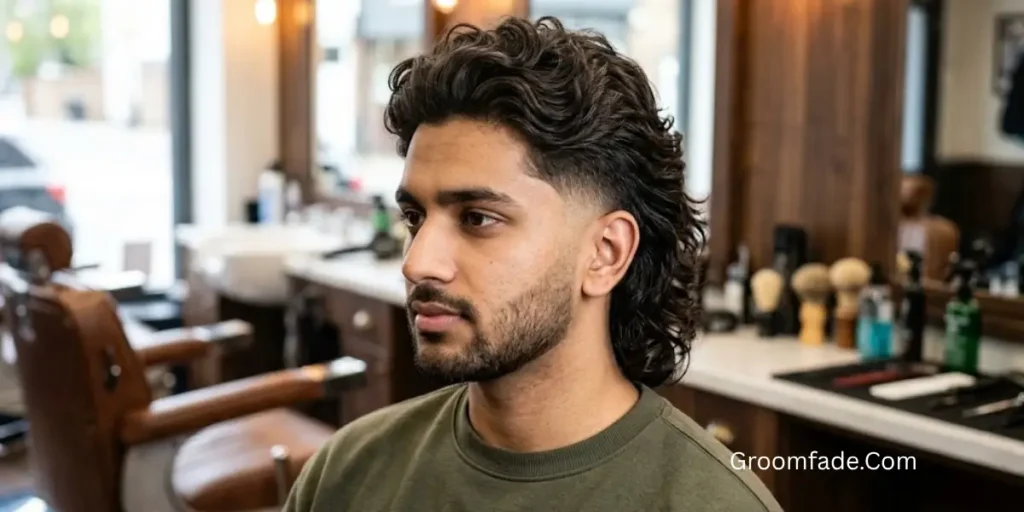
Wavy hair is the easiest to work with. It already has movement, so the top and back look full with little effort. A light cream or a bit of clay is usually enough. Let it air dry or diffuse it on low heat.
Low Fade Mullet for Curly Hair
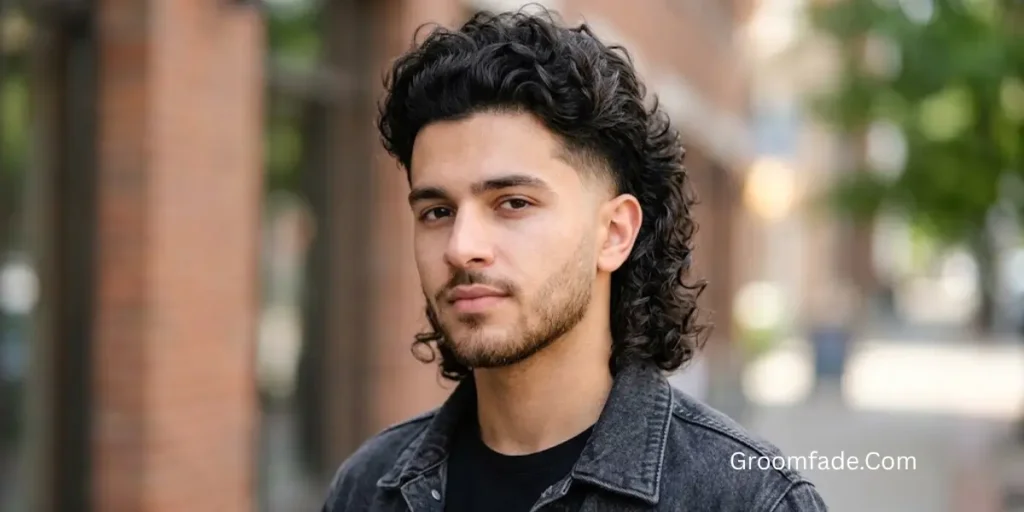
A curly low fade mullet is one of the best matches. The fade controls the bulk at the sides, and the curls give the top and back their shape. A low taper fade mullet on curly hair keeps the outline neat while the curls stay natural.
Curly hair needs moisture. Use a curl cream on damp hair, and avoid brushing it dry. If the curls get too wide at the sides, the fade is doing its job by keeping that area short. A low fade mullet with curly hair may need slightly more length on top, because curls shrink when they dry.
Thick Hair
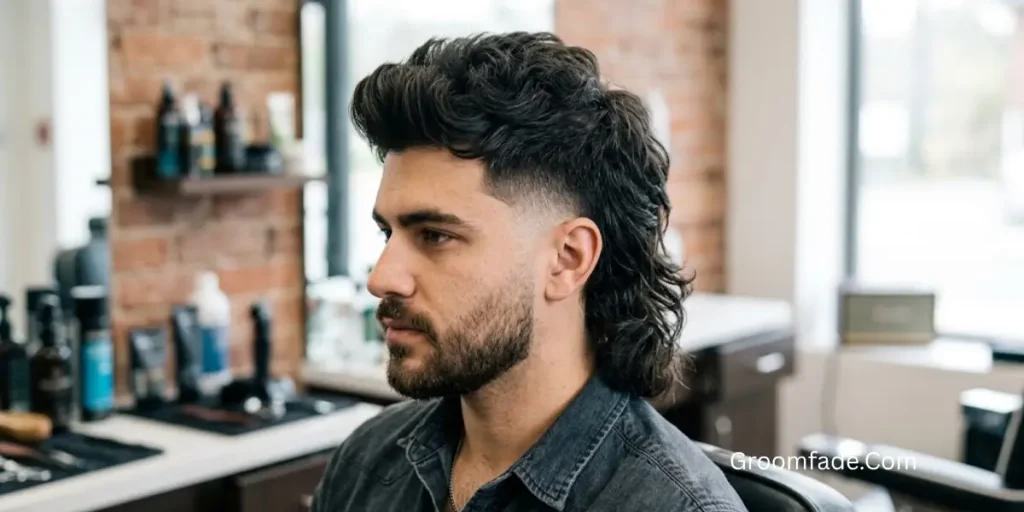
Thick hair gains the most from a fade. Removing weight from the sides stops the cut from looking like a helmet. Ask for the top to be thinned lightly so it does not stack up.
A more dramatic variation is the Mohawk Mullet, which places greater focus on the center section while retaining the longer back that defines a mullet.
Fine or Thin Hair
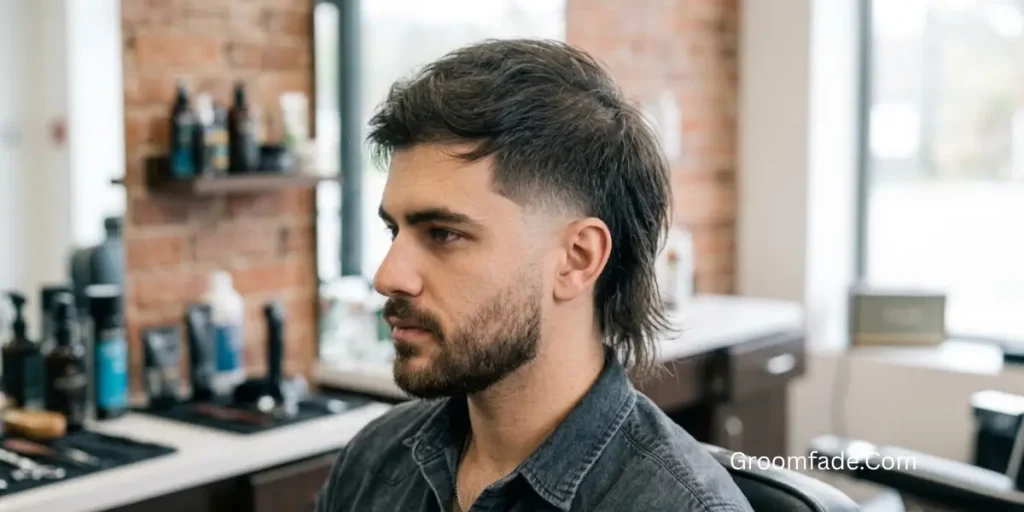
If your hair is fine, choose a shorter version. A short low fade mullet gives the look of fullness without needing much length. Use a light product like texture powder. Heavy pomade will pull fine hair flat.
Best Version for Your Face Shape
Face shape is a guide, not a rule. Use it as a starting point.
- Oval: Nearly every version works, so pick what you like.
- Round: Keep the sides tight and add height on top. A low skin fade or burst fade helps the face look longer.
- Square: A soft taper and a textured top balance a strong jaw.
- Diamond: A fringe helps balance wide cheekbones.
- Heart: A fringe or side part softens a wider forehead.
- Oblong: Keep the top shorter and avoid too much height. A fringe can also shorten the look of a long face.
Low Fade Mullet With a Beard
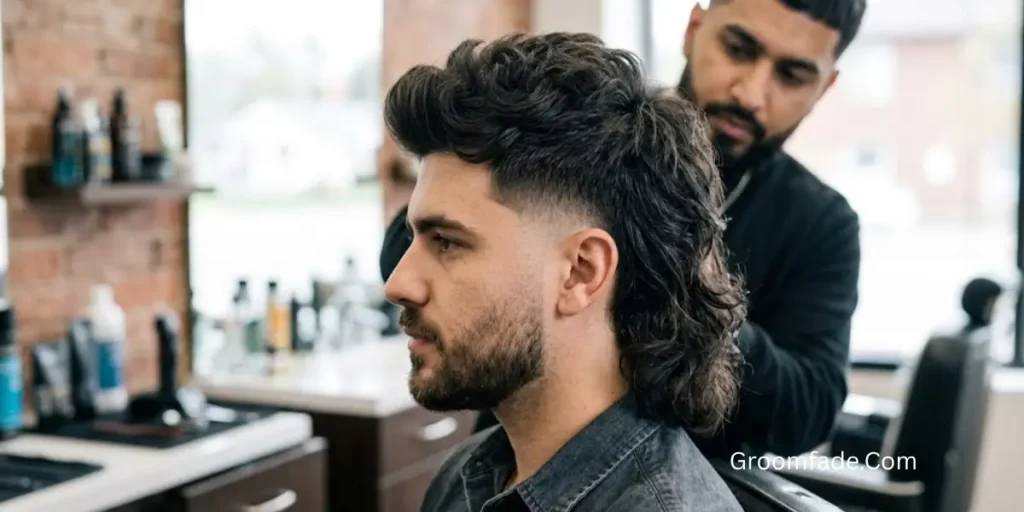
A low fade mullet with a beard works well because the fade can run straight into the beard line. There is no sudden jump from hair to beard, so the whole look reads as one shape.
Here is how to get it right:
- Ask your barber to blend the sideburn fade into the beard, not stop at the ear.
- Keep the beard neat. A messy beard next to a textured top can make the whole look feel busy.
- Match the length. A short beard fits a skin fade. A fuller beard fits a taper.
- Trim the neckline of the beard at the same visit as the haircut, so both age at the same pace.
Low Fade, Taper, Burst, Drop and Skin Fade Explained
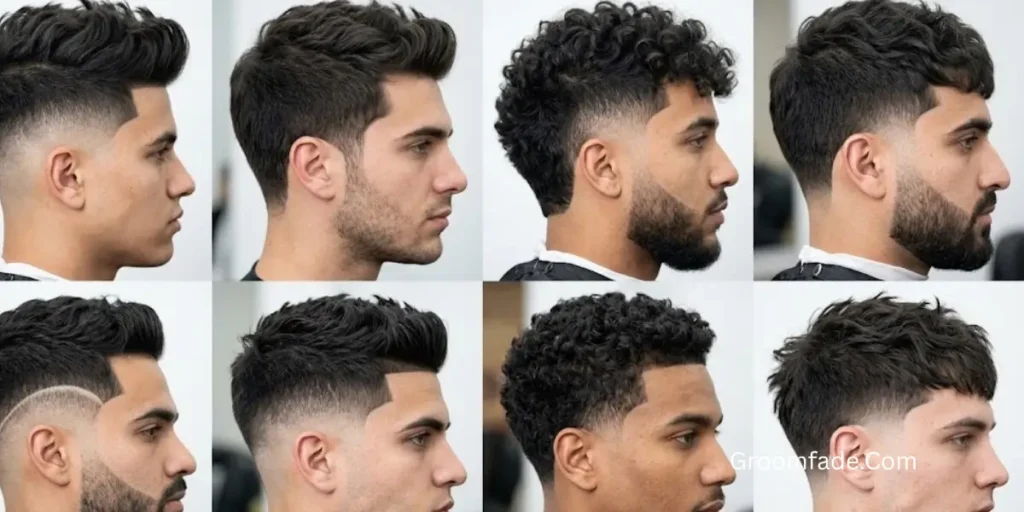
Fade names cause a lot of confusion. Two barbers can use the same word for slightly different cuts, so treat this table as a guide and not a strict rule.
| Fade type | What it looks like | Best for |
| Low fade | Fades from short hair or skin just above the ear and nape | A clean, balanced mullet |
| Low taper fade | Gradual shortening at the sideburns and neckline, with more hair left | A softer, work-friendly look |
| Lower taper fade | An even smaller taper, only at the edges | The most low-key option |
| Low burst fade | Curves around the ear in a half circle, then blends into the longer back | Strong shape and contrast |
| Low drop fade | The fade line dips down behind the ear | An angled, curved outline |
| Low skin fade | Fades to bare skin at the base | A sharp, high-contrast finish |
Low Fade vs Low Taper
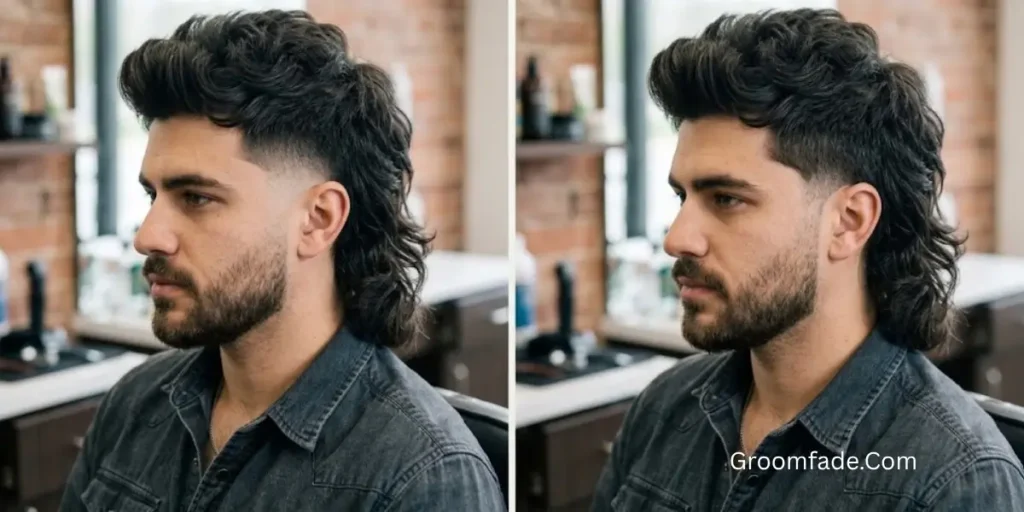
A low fade takes more hair off the sides and can reach skin. A taper is gentler. It trims the edges and leaves the rest closer to natural length. If you want a subtle mullet, ask for a low taper fade mullet. If you want a clear line between short and long, ask for a low fade.
Burst Fade vs Drop Fade
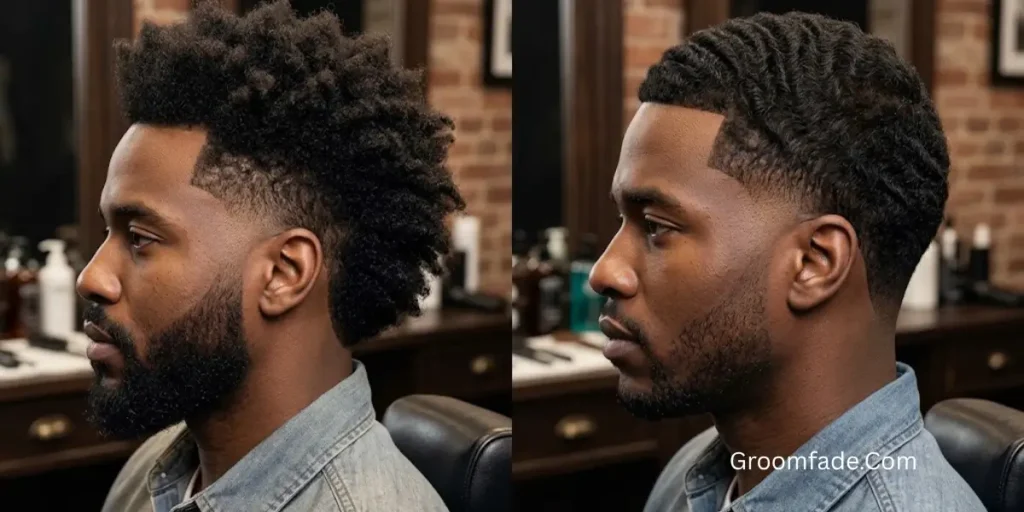
Both curve around the ear, but they do it differently. A burst fade makes a rounded shape behind and around the ear, and it leaves the hair at the back full. A drop fade follows the ear and then slopes downward toward the neck. Ask your barber to show you a photo of each if you are not sure.
Why the Modern Low Fade Mullet Works
The classic mullet has a reputation for looking messy. The low fade fixes that. Three things help.
The sides look neat. Short, blended sides frame the face and take away the “shaggy all over” look.
The cut adjusts to your comfort level. You can pick a soft taper for a quiet look or a burst fade for a bolder one. You can also change the top and back length without changing the fade.
It fits real life. With the right length and a little product, the cut can work at school, at the office (in a relaxed workplace), at the gym and out with friends. It is not a cut for every dress code, but it is more flexible than most people expect.
How to Ask Your Barber for a Low Fade Mullet
Most bad mullets happen because of one word: “mullet.” It can mean many things. The more clearly you describe each part, the better your result.
Barber Script
Use this as a template and fill in the blanks:
“I’d like a low fade mullet haircut. Please do a [low taper / low burst / low skin] fade on the sides and neckline. Keep the top textured, about [X] inches, with layers. Leave the back long enough to [sit at my nape / touch my collar]. I want a [fringe / no fringe] at the front.”
Bring two or three photos. Pictures cut out most of the guesswork.
For men who want more length through the back, the Long Mullet Hairstyle keeps the extended back as the main feature while allowing different textures and styling approaches.
Quick Barber Cheat Sheet
| Detail | What to say |
| Clipper guard | Ask what guard they plan to use at the top of the fade, or say “skin” at the base |
| Fade height | “Low, starting just above the ear” |
| Top length | Give inches, or point to a photo |
| Back length | “Keep it long, only texture the ends” |
| Fringe | Say if you want it forward, side-swept or straight across |
Clipper Guard
A #1 guard leaves about 3 mm (one eighth of an inch). A #2 leaves about 6 mm (a quarter inch). Most low fades start at skin or a #0.5, then move up to a #1 or #2 before joining the longer hair. You do not need to memorize this. Just ask the barber what they plan to use.
Fade Height
“Low” means the fade stays near the bottom of the head. If the fade climbs above the top of the ear, it is a mid fade, and the cut will look quite different. Say “low” and point to the spot on your head.
Top Length
Show the length with your fingers, or say “long enough to cover my eyebrows” or “long enough to style with clay.” Personal landmarks work better than numbers.
Back Length
Tell the barber exactly where the tail should end. Options include the nape, the collar or just past the collar. If you are growing it out, ask them to only tidy the ends.
The Fringe
Decide early. A forward fringe gives a boyish look. A side-swept fringe looks a bit more grown up. A straight-across fringe fits a French crop.
Common Mistakes to Avoid
- Saying only “mullet.” Always name the fade type and height.
- Letting the fade climb too high. A high fade changes the whole look.
- Skipping texture. Straight or heavy hair can look flat and blocky without layers.
- Cutting the back too short. The tail is the whole point, so protect it.
- Over-styling. A cut like this looks best when it seems easy.
- Waiting too long between touch-ups. Fades grow out quickly and lose their shape.
How to Style a Low Fade Mullet Haircut
Good styling takes about five minutes once you know your routine. Start simple.
Best Styling Products
- Sea salt spray: Adds grip and a rough finish. Good for straight hair.
- Matte clay or paste: Gives hold without shine.
- Texture powder: Adds lift for fine hair.
- Curl cream: Defines curls and helps with frizz.
- Light oil or serum: Smooths flyaways in the tail. Use a very small amount.
Step-by-Step Styling Guide
- Wash and towel-dry. Your hair should be damp, not dripping.
- Add a base product. Use sea salt spray for straight or wavy hair. Use curl cream for curly hair.
- Dry the hair. Use a blow dryer or a diffuser. Lift the roots as you dry the top.
- Add hold. Warm a pea-sized amount of clay or paste in your hands and work it through the top.
- Shape the fringe. Push it where you want it to sit.
- Separate the tail. Use your fingertips to break up the ends at the back.
- Finish lightly. Use a flexible-hold spray only if you need it.
Straight vs Curly Styling Tips
Straight hair: Use more texture product than you think you need. Rough-dry the hair with your fingers so it does not fall flat.
Curly hair: Use less product, and do not rake your hands through dry curls. Scrunch upward while diffusing, then leave it alone until it is completely dry.
How to Maintain a Low Fade Mullet Haircut
A fade looks best in the first two weeks. After that, it gets softer. Plan around that.
Trim Schedule
- Fade and neckline: every 2 to 3 weeks. A skin fade needs visits closer to every 2 weeks.
- Top and layers: every 4 to 6 weeks.
- Tail: every 8 to 12 weeks, only if you want to keep it in shape.
Hair grows around half an inch (about 1.25 cm) each month for many people, though it varies. That is why a short fade blurs so quickly.
Hair Care Routine
- Wash two or three times a week with a gentle shampoo, unless your scalp gets oily.
- Condition the lengths, especially the tail, because it is the oldest hair and dries out first.
- Use a heat protectant if you blow-dry often.
- Keep heavy pomades away from the roots so the top does not go limp.
Growing Out the Back
If you are growing a mullet, be patient. It usually takes a few months to gain a useful tail, depending on where you start. In the meantime, book short-hair versions like the short low fade mullet or French crop. Keep the sides faded, ask the barber to leave the back alone, and trim only split ends.
Pros and Cons
Pros
- Looks neat and modern
- Works on straight, wavy and curly hair
- Easy to adjust from subtle to bold
- Removes bulk from the sides
- Grows out into other styles without much fuss
Cons
- The fade needs regular touch-ups
- The tail takes time to grow
- It needs some styling
- Some workplaces and schools may see it as too bold
Low Fade Mullet vs Other Cuts
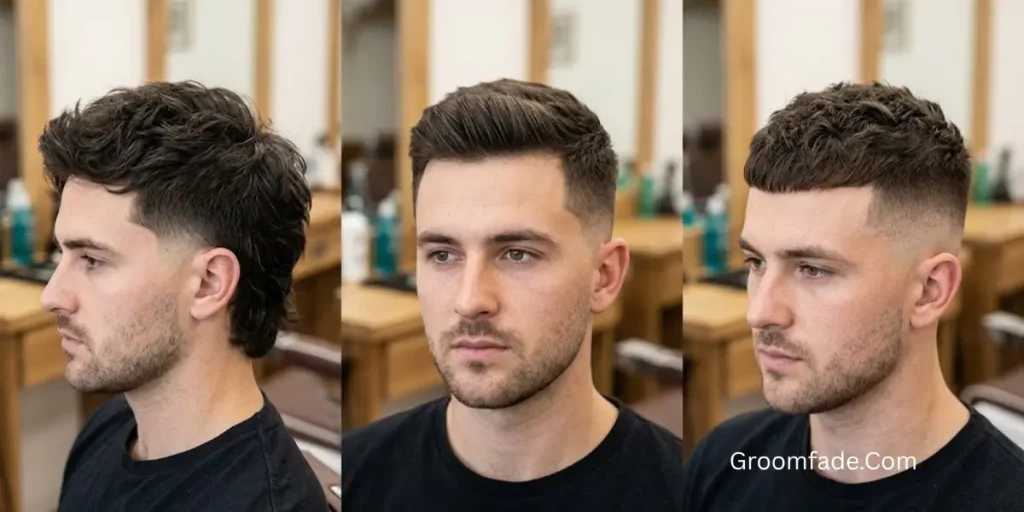
Low fade mullet vs classic mullet: The classic version has no fade, so the change from short to long is abrupt. The low fade version is smoother and easier to wear with different outfits.
Low fade mullet vs low taper mullet: A low fade removes more hair from the sides. A taper is gentler and leaves more length.
Low fade mullet vs burst fade mullet: A burst fade wraps around the ear in a curve. A standard low fade follows the hairline more evenly.
Low fade mullet vs wolf cut: A wolf cut has layers all over and a shaggy outline. A low fade mullet has a clear contrast between the faded sides and the longer back.
Low fade mullet vs undercut: An undercut removes hair from the sides and back and leaves the top long. A low fade mullet keeps the back long.