
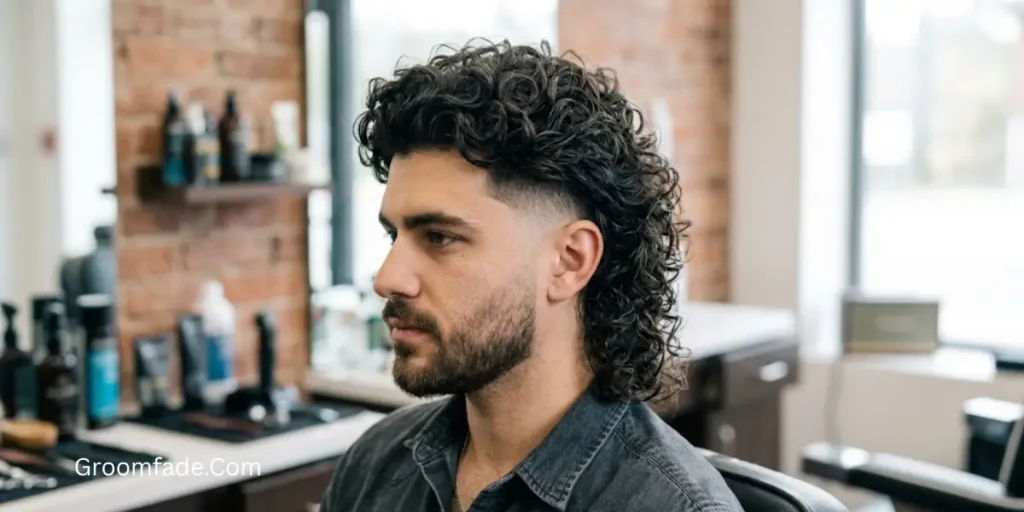
A curly mullet haircut combines the natural volume of curly hair with the recognizable shape of a mullet. The sides and front are usually shorter, while the hair at the back stays longer. The result can be neat and subtle or bold and heavily layered, depending on your curl pattern, hair length, and preferred style.
Curly hair can make a mullet look fuller because curls naturally create movement and texture. You can also change the shape with a low fade, mid fade, taper, undercut, bangs, or extra layers. This makes the style flexible for men, women, boys, and kids.
The key is to work with the natural curl pattern instead of cutting against it. Hair density, shrinkage, face shape, and the amount of maintenance you want all affect the final result.
What Is a Curly Mullet Haircut?
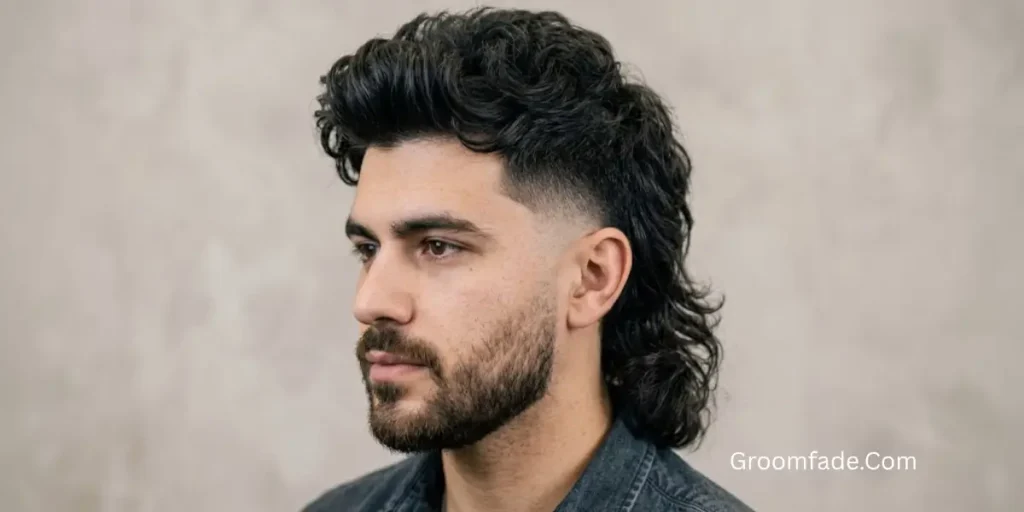
A curly mullet haircut is a mullet designed around naturally curly hair. The classic idea is simple: keep the front and sides shorter while leaving more length at the back.
With curly hair, however, the shape is not always as obvious as it is with straight hair. Curls can shrink when dry, add volume around the crown, and make the back appear shorter than its actual length.
A good curly mullet haircut takes these factors into account.
The top can be left longer for volume, while the sides can be tapered, faded, or cut shorter. The back can have a clean shape or several layers that allow the curls to move naturally.
How Curly Hair Changes the Mullet Shape
Curly hair can make the back look fuller and more rounded. It can also create a softer transition between the crown and the longer back.
Your curl pattern matters. Loose curls may create a relaxed, flowing shape, while tighter curls can produce a compact and fuller silhouette.
Shrinkage also matters. A barber may need to consider how much the hair shortens when it dries before deciding on the final length.
For a different take on the classic shape, the Reverse Mullet changes the usual length pattern, creating a more unusual balance between the front and back.
Curly Mullet vs. Wavy Mullet
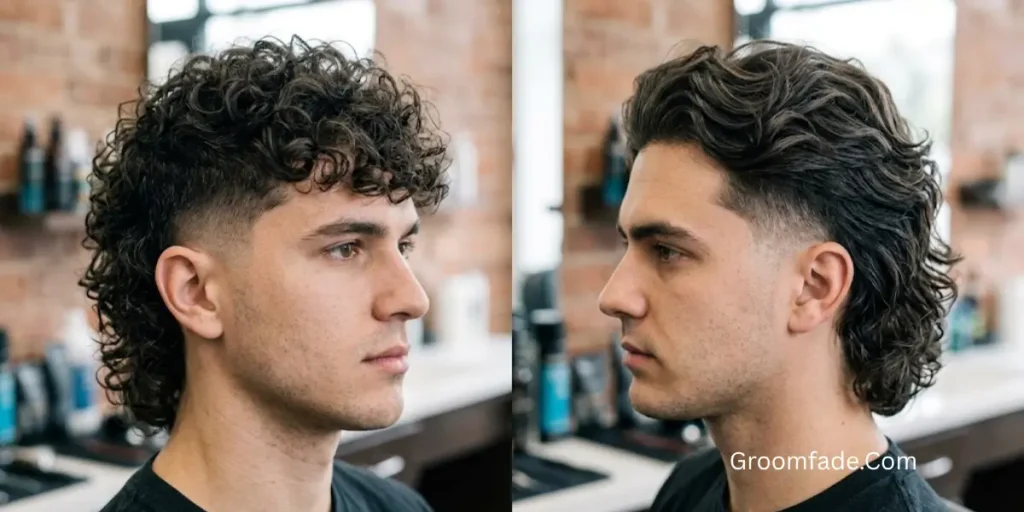
A wavy mullet usually has a softer texture with less curl definition. A curly mullet has more visible bends and coils, which can give the back greater volume.
Both can use similar shapes, but curly hair usually needs more attention to layering and weight distribution.
Modern Curly Mullet vs. Classic Mullet
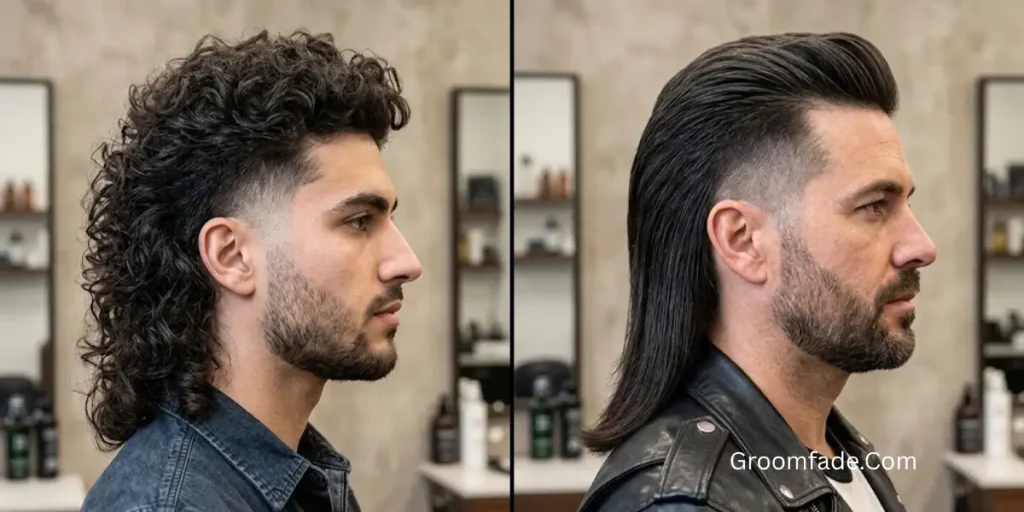
A classic mullet often has a stronger difference between the shorter front and sides and the longer back.
A modern curly mullet haircut can be more blended. A low taper, soft layers, natural neckline, or controlled sides can make the style easier to wear every day.
Why Does a Mullet Look Good With Curly Hair?
A mullet can work well with curly hair because the longer back gives curls room to form while shorter sides help control excess volume.
Curly hair also adds natural movement, so the haircut does not always need heavy styling to look textured.
Another advantage is flexibility. You can keep the sides very short for a strong contrast or choose a taper for a softer result.
The right version depends on your natural hair rather than simply copying one photograph.
Different Curly Mullet Haircuts to Try
There is no single way to wear a curly mullet. The same basic shape can look completely different depending on length, layers, side treatment, and curl pattern.
Classic Curly Mullet
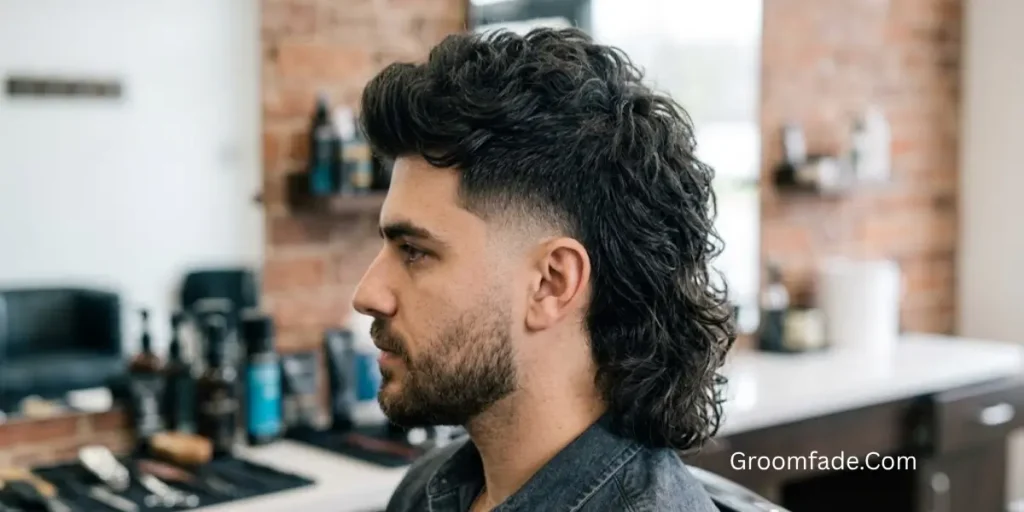
The classic curly mullet keeps the back noticeably longer than the sides. The top has enough length to blend into the back without losing the traditional mullet shape.
This option works well for people who want their curls to remain the main feature.
Ask your barber to preserve enough length at the back and shape the sides without removing too much of the natural volume.
Short Curly Mullet
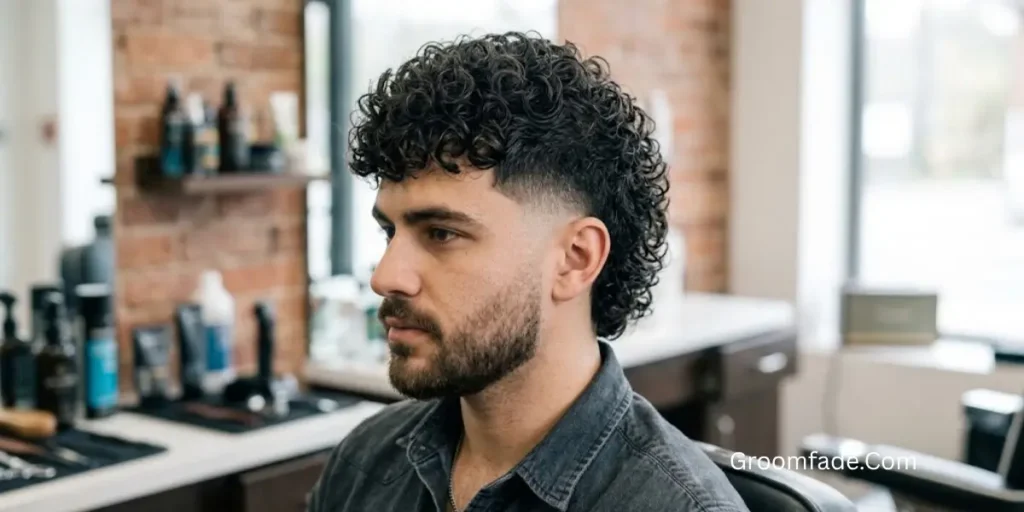
A short curly mullet haircut keeps the overall shape compact. The back is longer than the sides, but it does not reach a dramatic length.
This can be a useful choice if you like the mullet shape but do not want a large amount of hair at the back.
A short curly mullet can also be paired with a taper or low fade for a cleaner finish.
Short Curly Mullet Haircut for Men
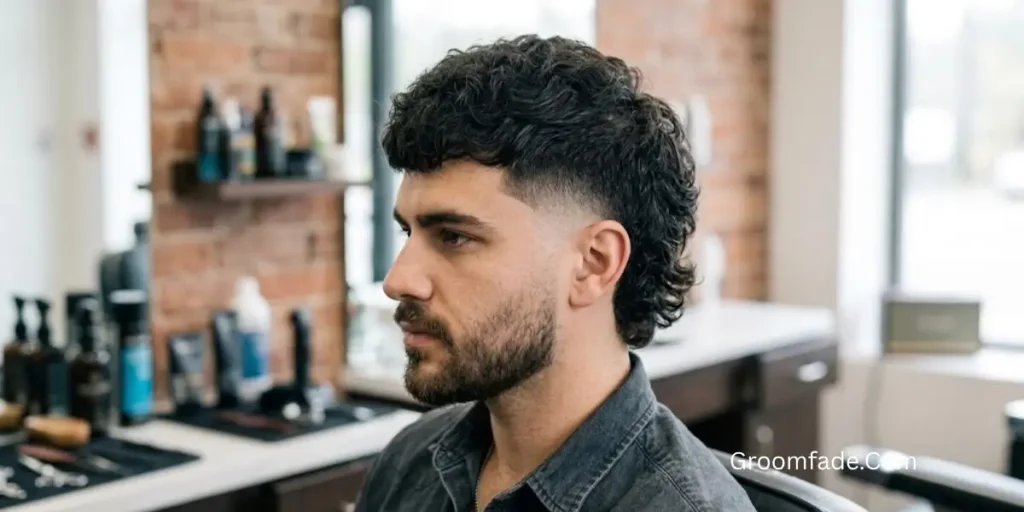
A short curly mullet haircut men can wear easily for work, school, or everyday life when the sides are controlled and the back is kept moderate.
The top can retain enough length for the curls to show, while the neckline keeps the shape tidy.
Curly hair can also work well with the layered structure of an Asian Mullet Hairstyle, especially when natural texture is allowed to shape the top and longer back.
Medium Curly Mullet
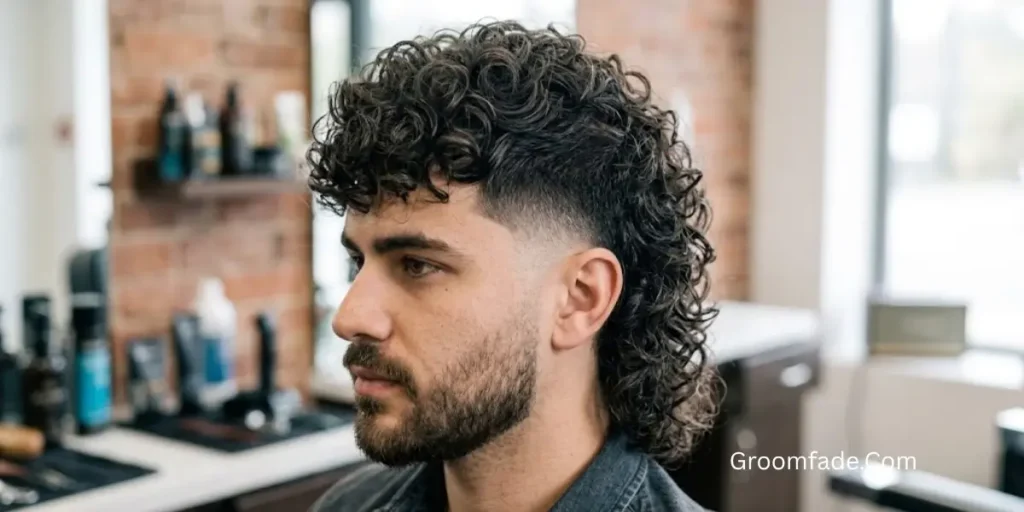
A medium curly mullet gives the back more room to grow while keeping the haircut manageable.
This length works particularly well when the curls have enough definition to create a visible shape without becoming too heavy.
Long Curly Mullet
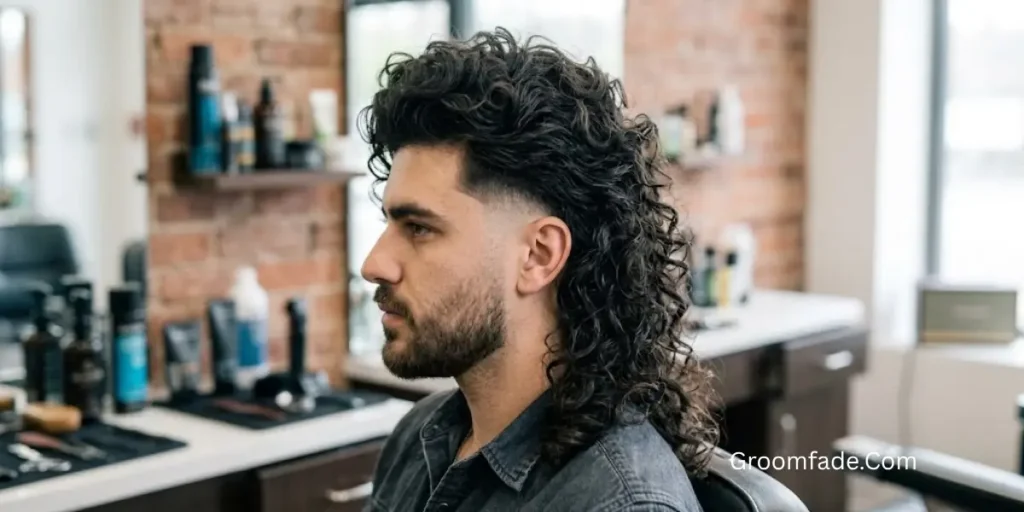
A long curly mullet haircut creates a stronger difference between the shorter sides and longer back.
The longer length allows curls to fall naturally instead of sitting close to the head. It can also create a more dramatic silhouette.
Long curly hair needs more attention during washing, conditioning, drying, and styling, so it is better suited to people comfortable with a longer routine.
Curly Modern Mullet
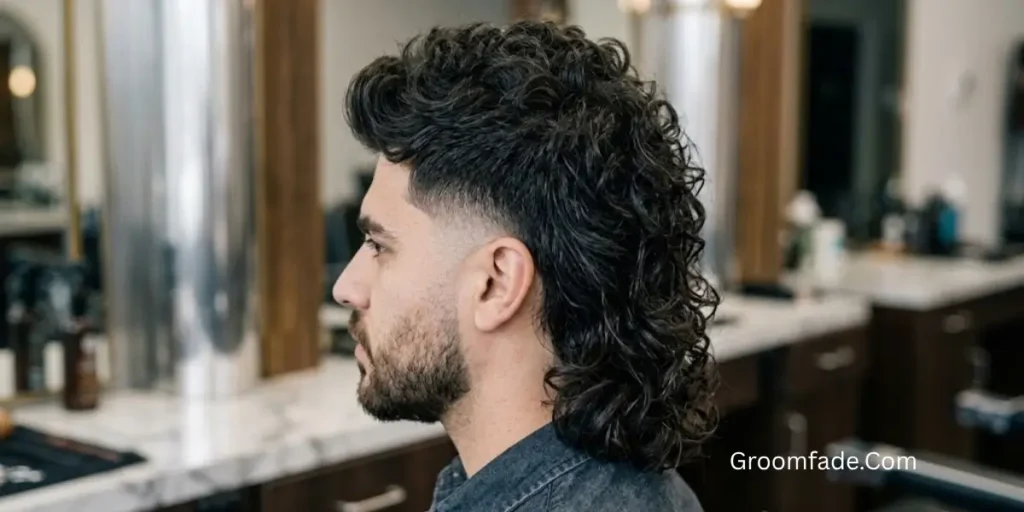
A curly modern mullet usually focuses on shape rather than an extreme contrast.
The sides may have a low taper, the top can stay textured, and the back can be layered instead of simply left as one long section.
This gives the haircut a more natural appearance while keeping the main mullet structure.
Shaggy Curly Mullet
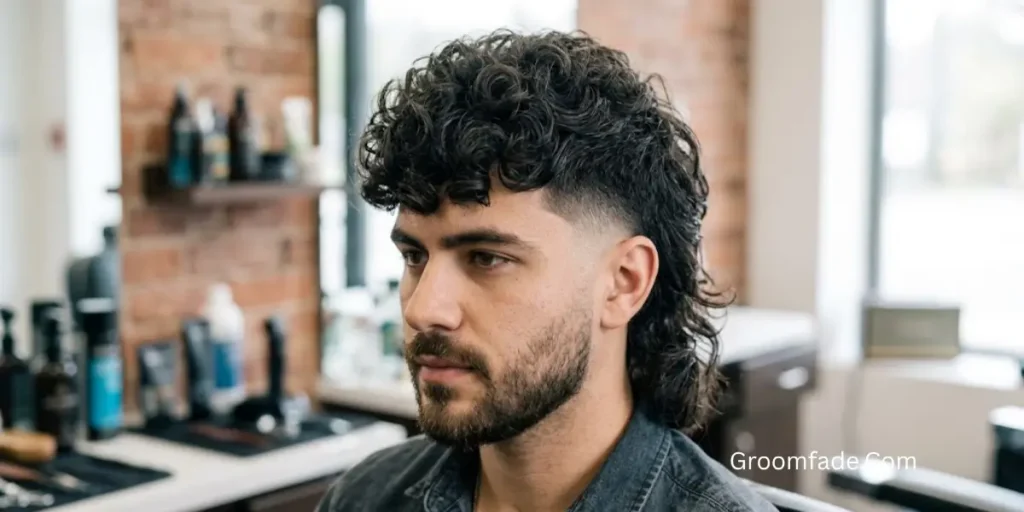
A shaggy curly mullet uses multiple layers to create movement through the top and back.
It is useful for people who want a less polished finish. The curls can sit at different lengths, which gives the haircut a loose and textured appearance.
Textured Curly Mullet
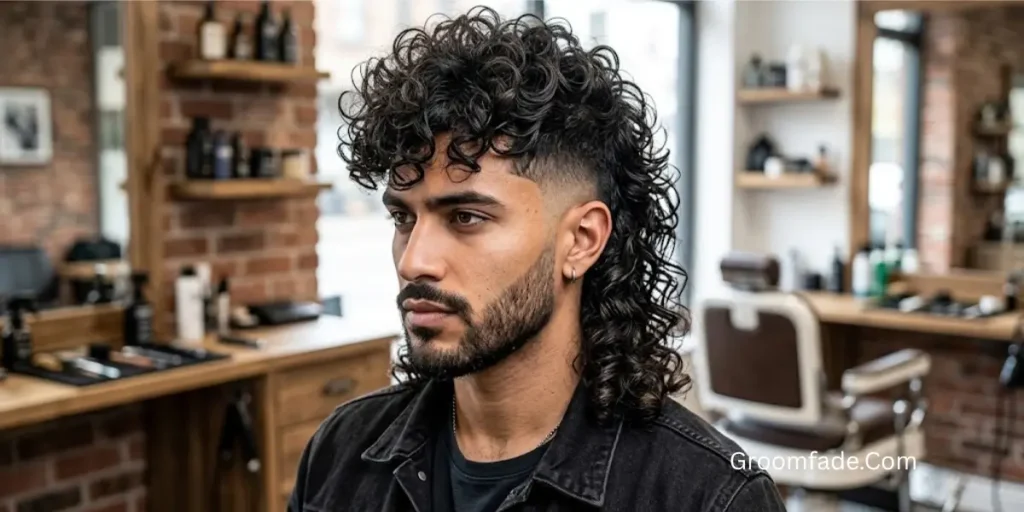
A textured curly mullet focuses on separation between curls rather than a perfectly smooth shape.
The texture usually comes from the natural curl pattern and suitable layering. Heavy thinning is not always needed, especially for hair that already has a lot of texture.
Curly Mullet With Bangs
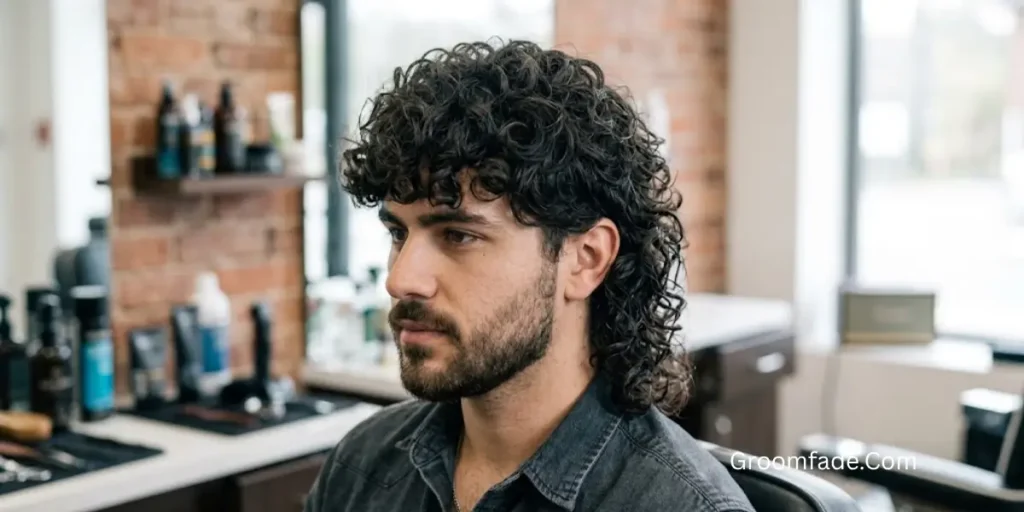
Adding bangs changes the appearance of the front considerably.
The fringe can be short, curly, rounded, or left longer around the forehead. Your curl pattern should guide the final length because curls can spring upward after drying.
Curly Mullet With Beard
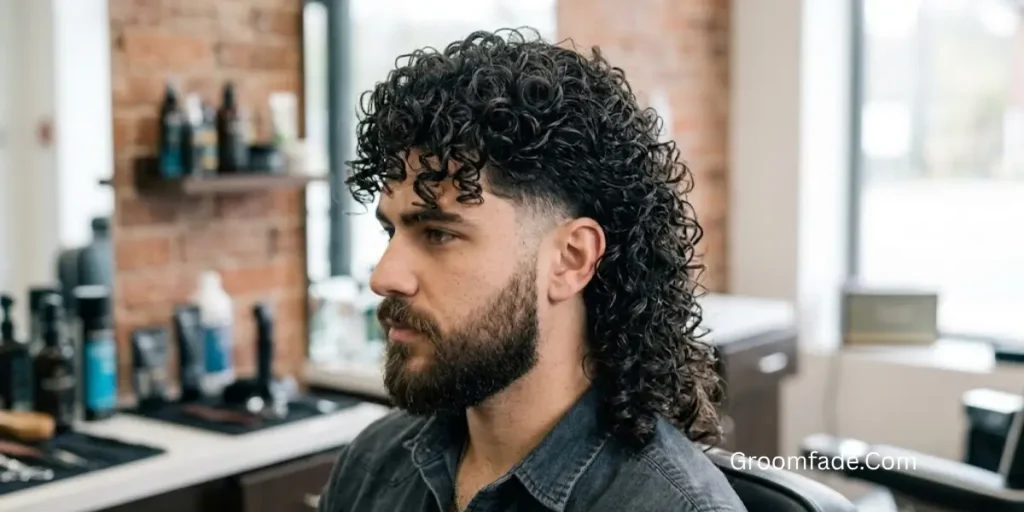
A curly mullet haircut with beard creates a stronger connection between the hair and facial hair.
The beard does not need to be very long. A short, shaped beard can work with a low taper, while a fuller beard can complement a longer curly mullet.
The important part is keeping the overall shape balanced.
Curly Mullet With Undercut
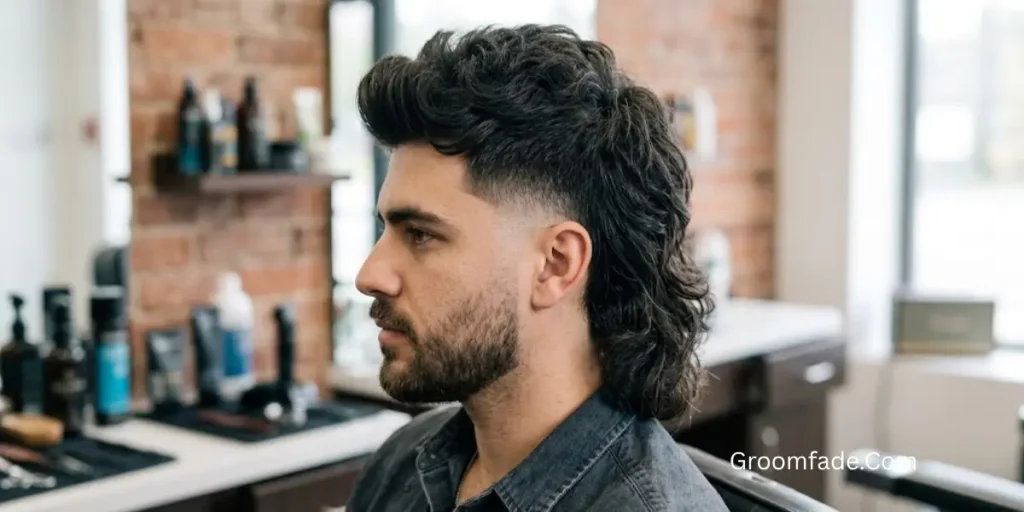
A curly mullet with an undercut creates a strong difference between the longer hair above and the shorter area underneath.
This is a more noticeable option and can reduce the amount of hair on the sides.
It also creates a clear grow-out stage, so regular maintenance may be needed to keep the undercut defined.
Disconnected Curly Mullet
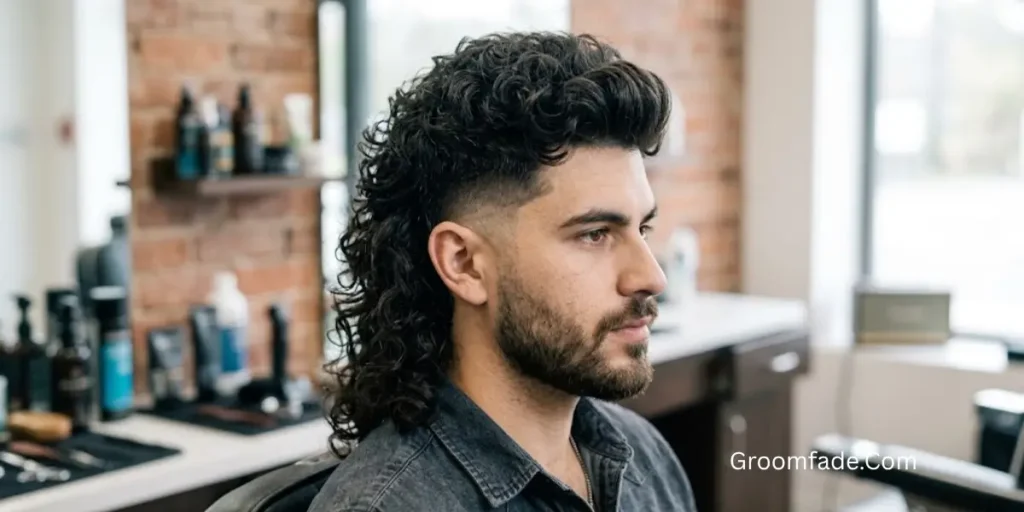
A disconnected curly mullet has a noticeable break between the longer top or back and the shorter sides.
This creates a bold shape without requiring the entire haircut to be extremely short.
For a stronger central shape, the Mohawk Mullet puts more attention on the hair running through the center while keeping the back longer.
Curly Mullet Haircut With a Fade
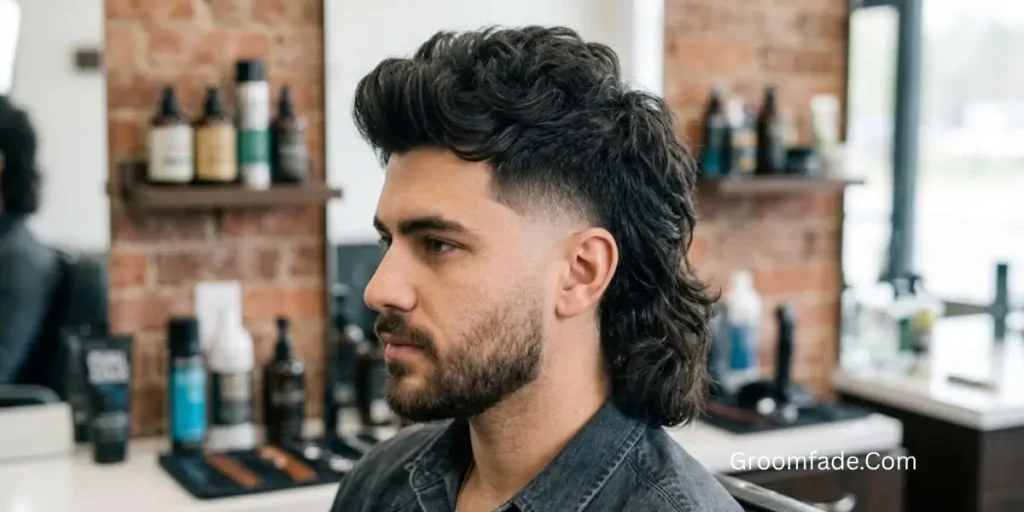
A fade can change the appearance of a curly mullet by creating a gradual transition from very short hair into the longer curls.
The fade should be chosen based on how much contrast you want.
Curly Low Fade Mullet
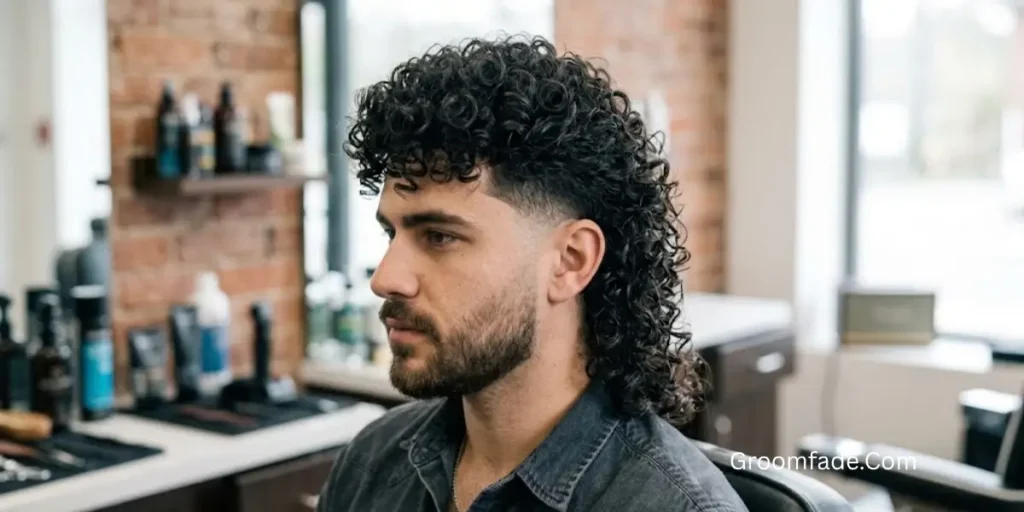
A curly low fade mullet haircut keeps the fade close to the lower sides of the head.
This leaves more hair around the upper sides and creates a softer transition into the curly top.
It is a practical option if you want a modern finish without making the sides extremely short.
Curly Mid Fade Mullet
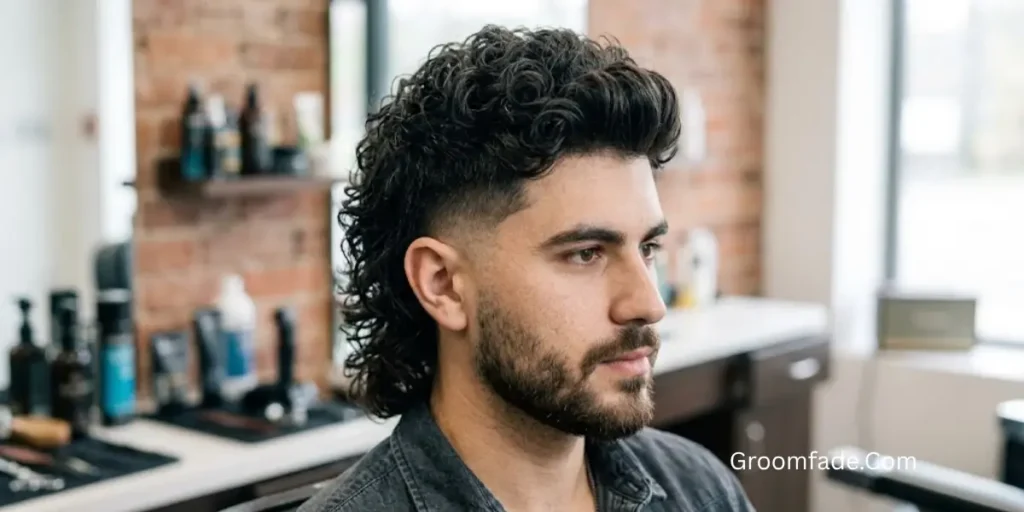
A mid fade sits higher than a low fade and creates more visible contrast.
The curls on top and the longer back become more noticeable because the sides are reduced further.
Curly High Fade Mullet
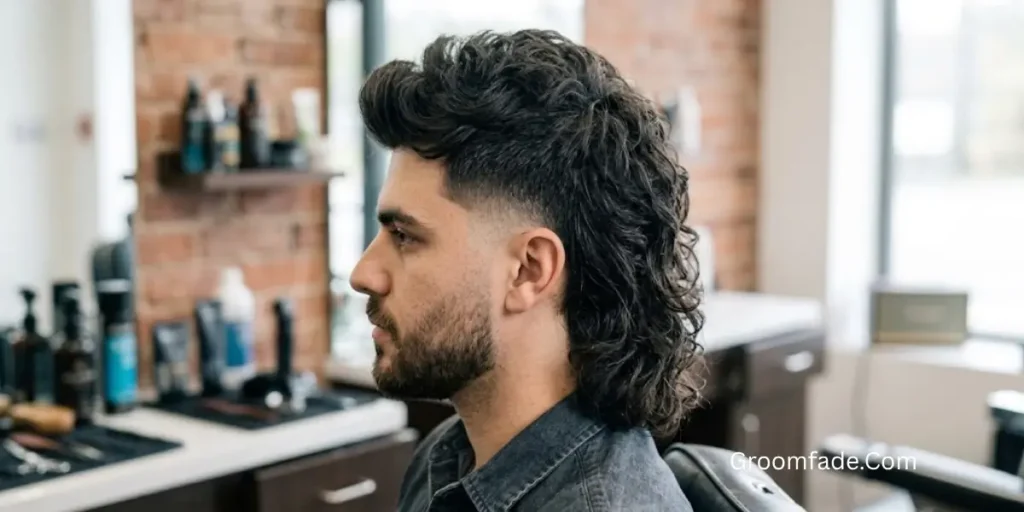
A high fade removes more hair from the sides and creates a stronger contrast with the top.
This can make the mullet shape look more dramatic. It is best discussed with your barber because the height of the fade can change the overall proportions of the haircut.
Curly Burst Fade Mullet
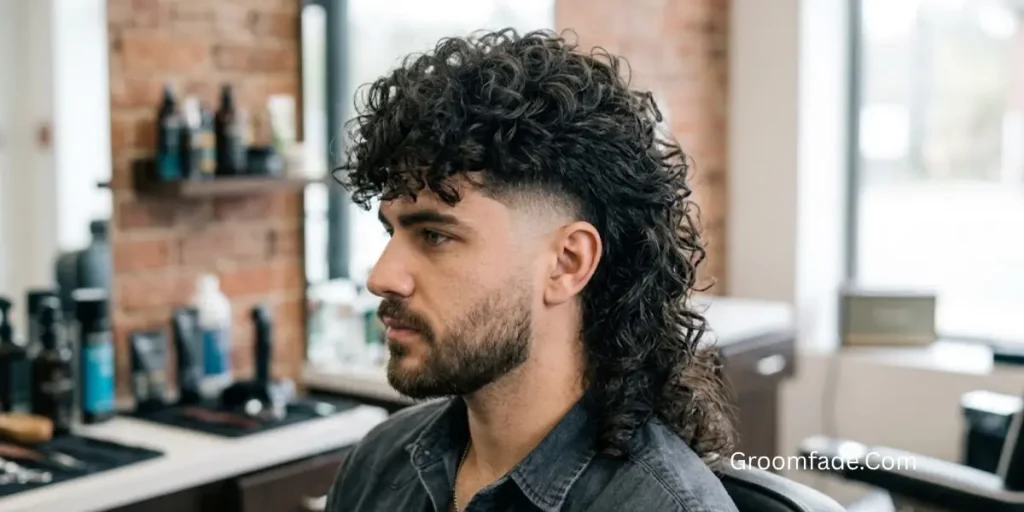
A burst fade curves around the ear and leaves more length toward the back.
This makes it a natural match for a mullet because the back can remain longer while the area around the ear is cleaned up.
Curly Drop Fade Mullet
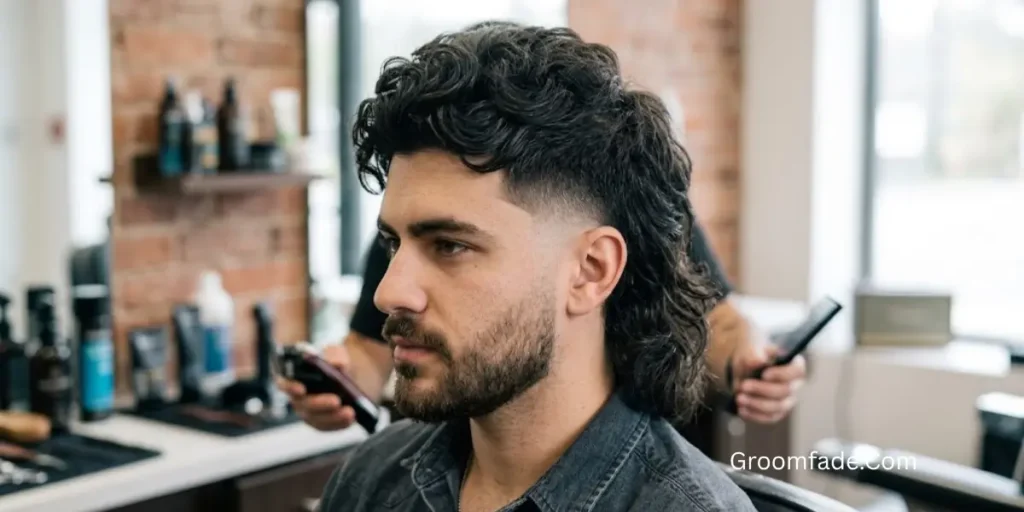
A drop fade follows the shape of the head and drops lower toward the back.
It can create a smoother connection between the faded sides and the longer curly back.
Curly Mullet Haircut With a Taper
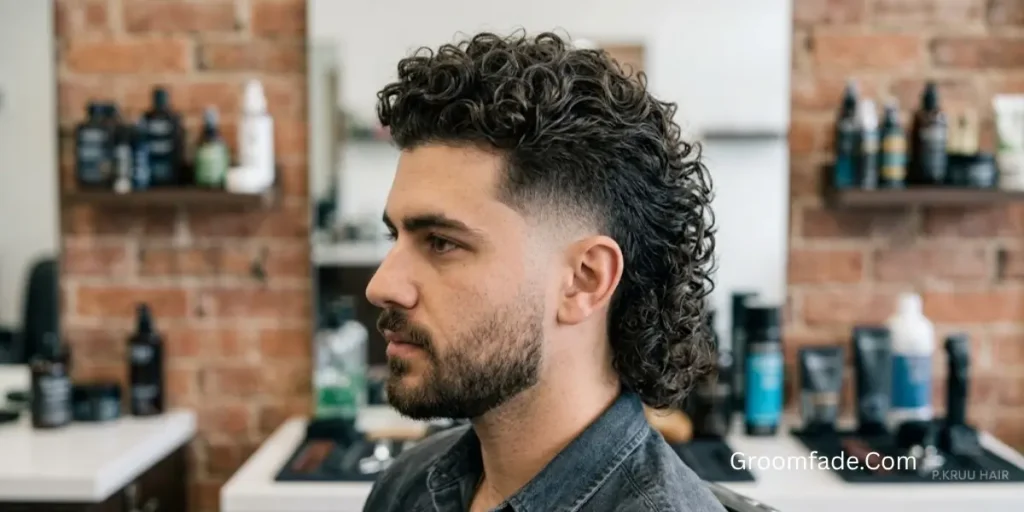
A taper is another way to clean up the sides and neckline without removing as much hair as a stronger fade.
A curly taper mullet can therefore look more natural and less dramatic.
Curly Low Taper Mullet
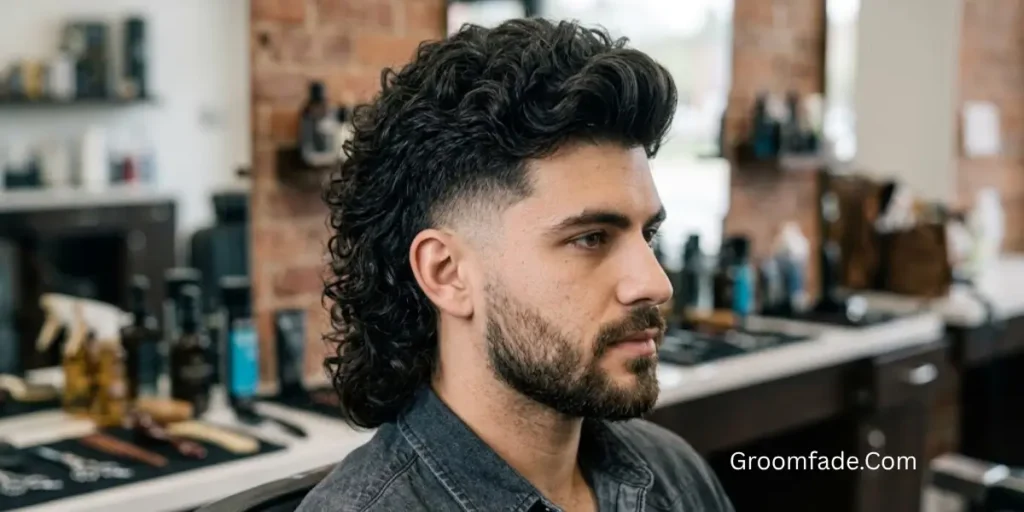
A low taper cleans up the area around the sideburns and neckline while keeping most of the hair on the sides.
This is a good option when you want your curls and natural volume to remain the main focus.
Curly Mid Taper Mullet
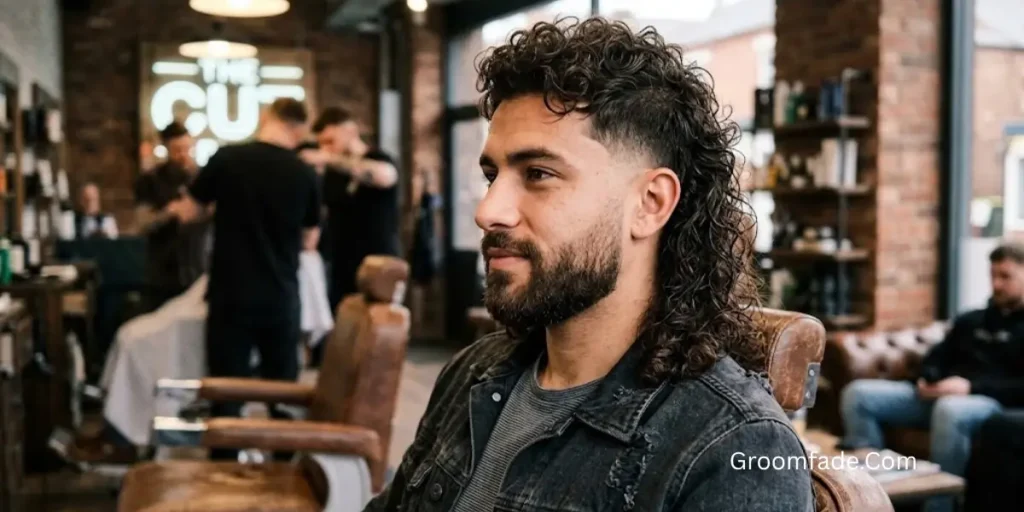
A mid taper creates a little more contrast while still keeping a softer appearance than a high fade.
The choice depends on how much side volume you want to keep.
A center part can give curly hair a more balanced frame. The Middle Part Mullet combines that separation with longer layers that allow natural curls to add volume and movement.
Curly Mullet Haircuts for Different Curl Types
Your curl pattern should play a major role in choosing the haircut.
Loose Curly Mullet
Loose curls can create a relaxed, flowing shape. Medium or longer lengths can help the curls form naturally at the back.
Medium Curly Mullet
Medium curls offer a balance between definition and volume.
Layers can help prevent the back from becoming too heavy while keeping enough length for the mullet shape.
Tight Curly Mullet
Tighter curls can create a fuller silhouette even when the hair is not extremely long.
The barber should account for shrinkage when deciding how much length to remove.
Coily Curly Mullet
A coily mullet can have a strong shape because tightly coiled hair often holds volume well.
The cut should be based on the natural density and growth pattern rather than a straight-hair reference.
Curly Mullet Haircut for Men
The curly mullet haircut men choose can range from short and neat to long and heavily layered.
Men with curly hair often have several options for controlling the sides while keeping texture on top and length in the back.
A low taper works well for a softer appearance, while a fade creates more contrast. A longer back gives the haircut a more traditional mullet shape.
Short Curly Mullet Haircut Men
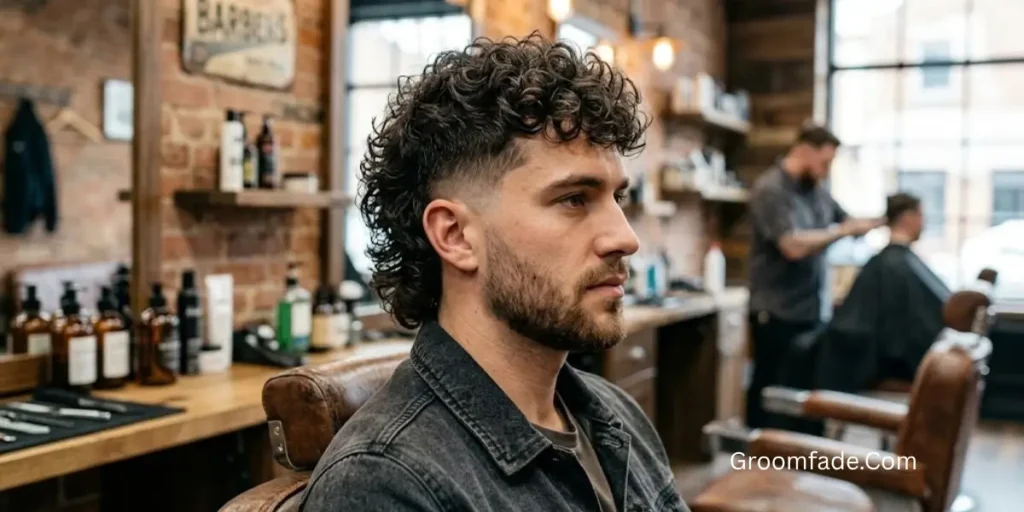
This version keeps the overall style compact and easier to maintain.
Medium Curly Mullet Haircut Men
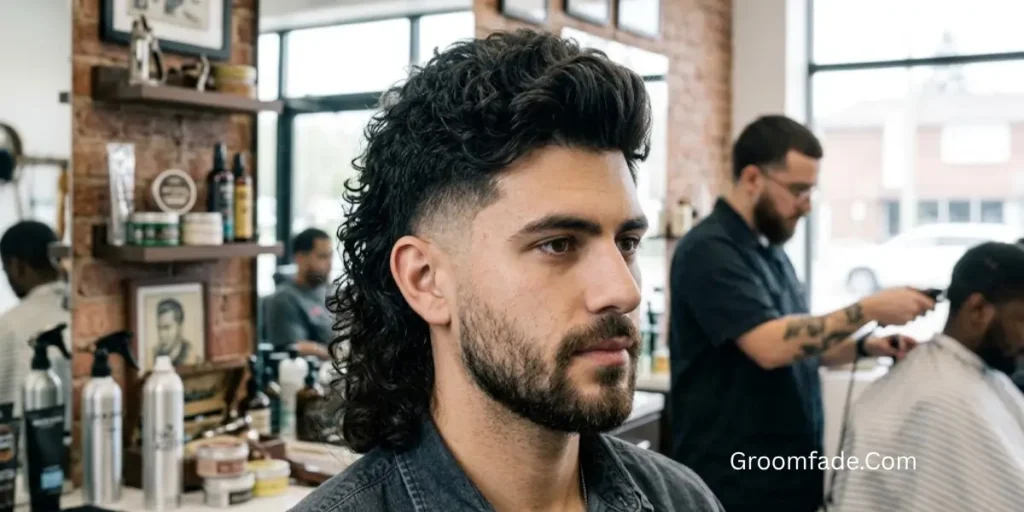
Medium length gives the curls more room to show while keeping the haircut practical.
Long Curly Mullet Men
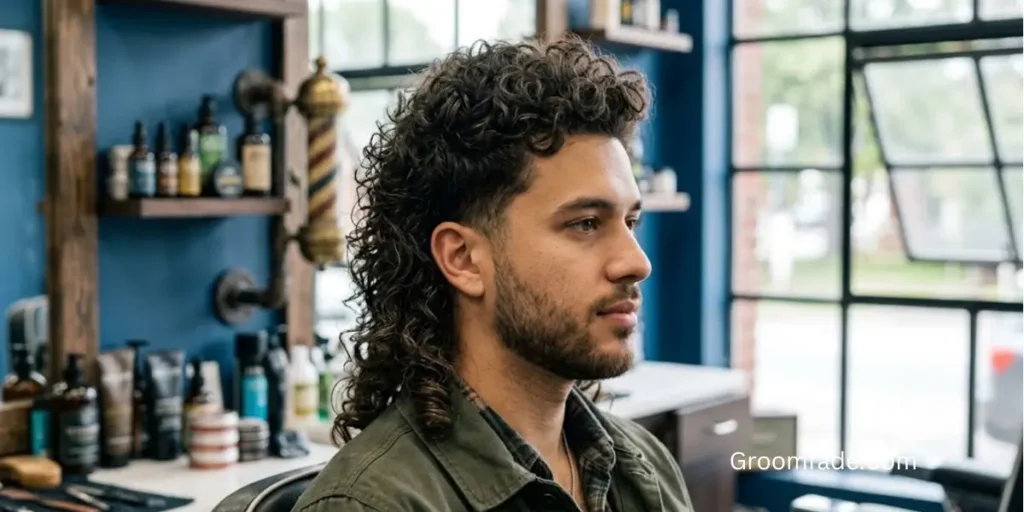
Long curly hair creates a more noticeable back section and allows the curls to hang naturally.
Curly Mullet Haircut for Women
A curly mullet haircut women choose does not need to follow a traditionally masculine shape.
The sides can remain softer, the layers can be longer, and the front can include a curly fringe or face-framing pieces.
For curls that grow longer toward the back, the Long Mullet Hairstyle provides extra length that can make the natural curl pattern more noticeable.
Short Curly Mullet Haircut Women
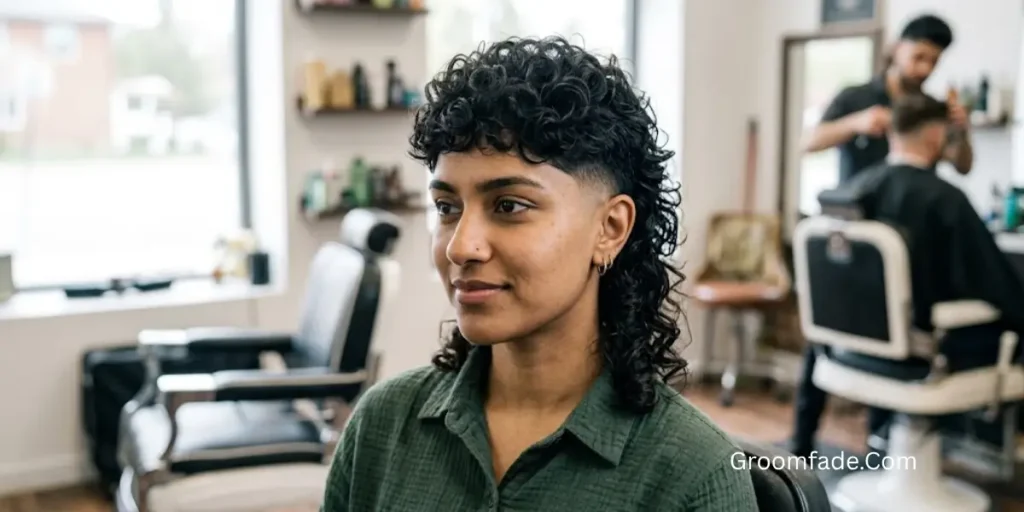
A short version can create a compact, textured shape with curls around the top and back.
Long Curly Mullet for Women
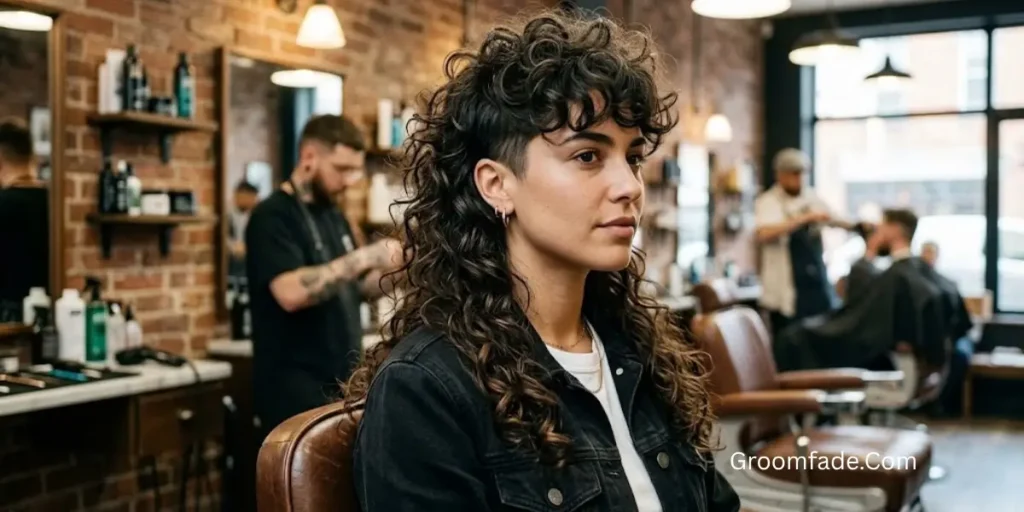
Longer curls can create a softer silhouette with more movement through the back.
The haircut can also be combined with shag-inspired layers for extra texture.
Curly Mullet Haircut for Boys and Kids
A curly mullet can also work for younger people when the shape is kept practical.
Boys Curly Mullet Haircut
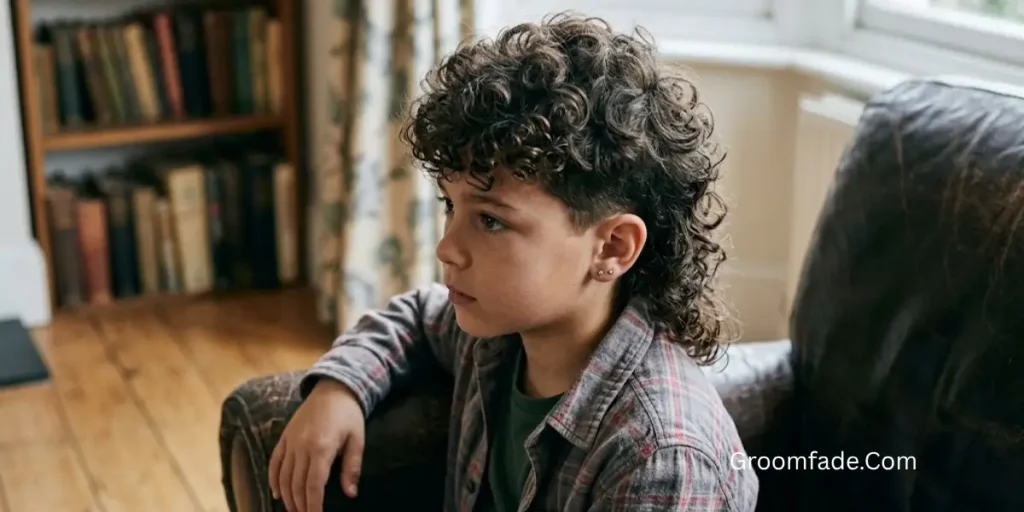
A boys curly mullet haircut can use a simple taper around the ears and neckline while leaving natural curls on top and at the back.
Curly Mullet Haircut for Kids
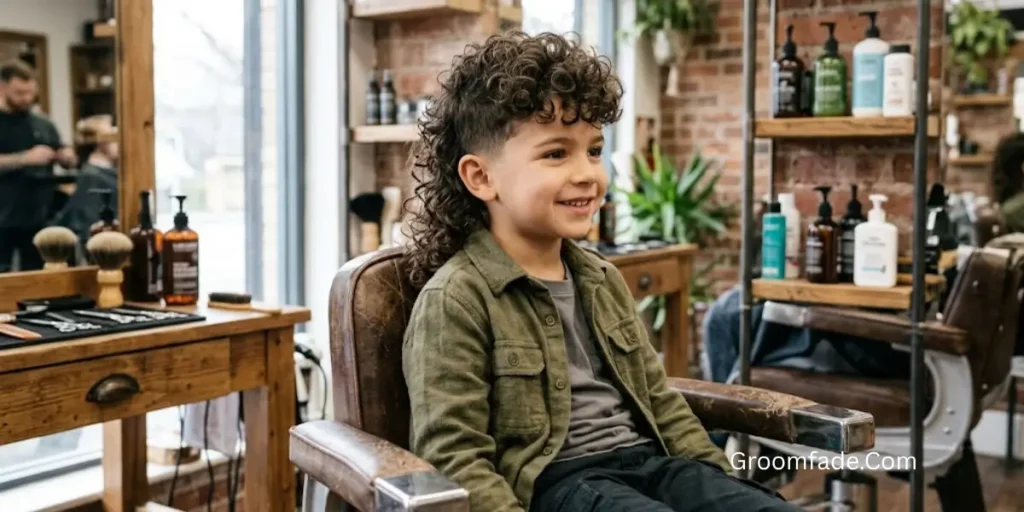
For younger kids, comfort and easy styling are important.
A very sharp fade may require frequent visits, while a softer taper can grow out more naturally.
Toddler Curly Mullet Haircut
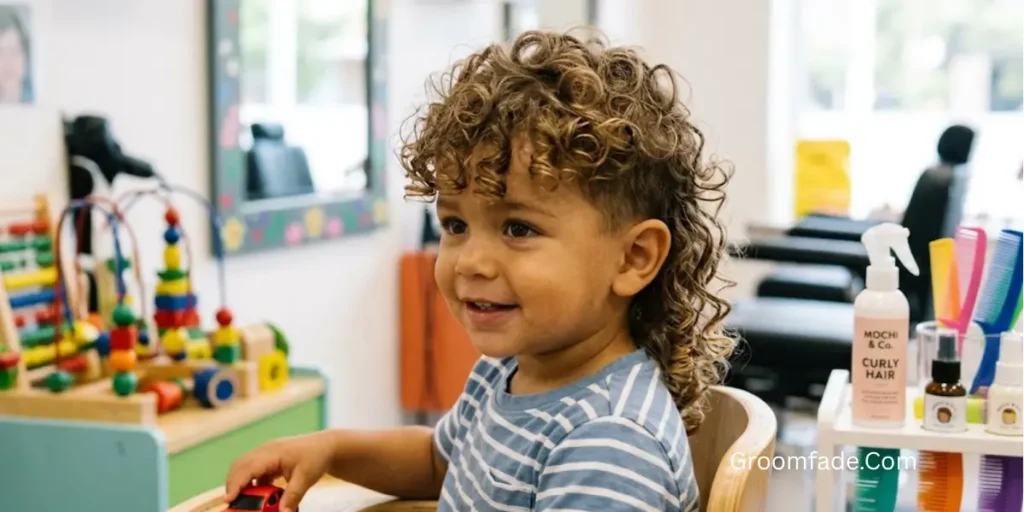
A toddler curly mullet should be simple and comfortable.
Avoid overly complicated styling routines. The natural curl pattern can provide most of the shape without much product.
How to Choose the Right Curly Mullet for Your Face Shape
Face shape can help guide the haircut, but it should not be treated as a strict rule.
Curly Mullet for Oval Faces
An oval face can work with many mullet variations. You can adjust the front, sides, and back based on your preferred amount of volume.
Curly Mullet for Round Faces
Keeping some height through the top can create a longer-looking overall silhouette.
A lower fade or taper can also reduce excess width around the sides.
Curly Mullet for Square Faces
A square face can work with both soft and structured curly mullets.
Layering can soften the appearance of the haircut, while a sharper fade creates more contrast.
Curly Mullet for Longer Face Shapes
A longer face can work well with more side volume and a balanced top.
Avoid removing too much hair from the sides if you want the haircut to retain width.
How Hair Length Changes a Curly Mullet
Hair length has a major effect on the final result.
A softer fade around the sides can help curly hair stand out on top. The Low Fade Mullet keeps the transition subtle while leaving the curls and longer back as the main features.
Short Curly Mullet
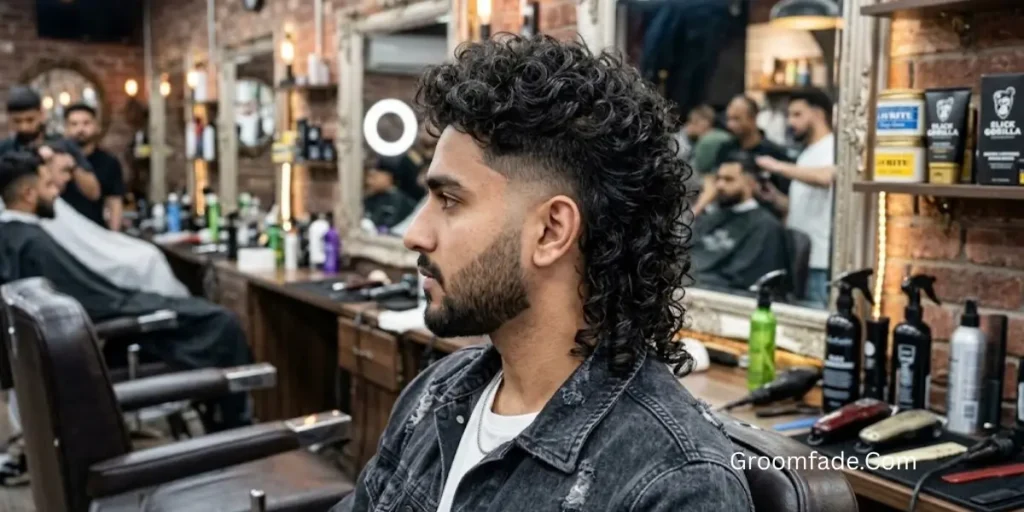
Short hair creates a cleaner and more compact shape. It usually takes less time to wash and style.
Medium Curly Mullet
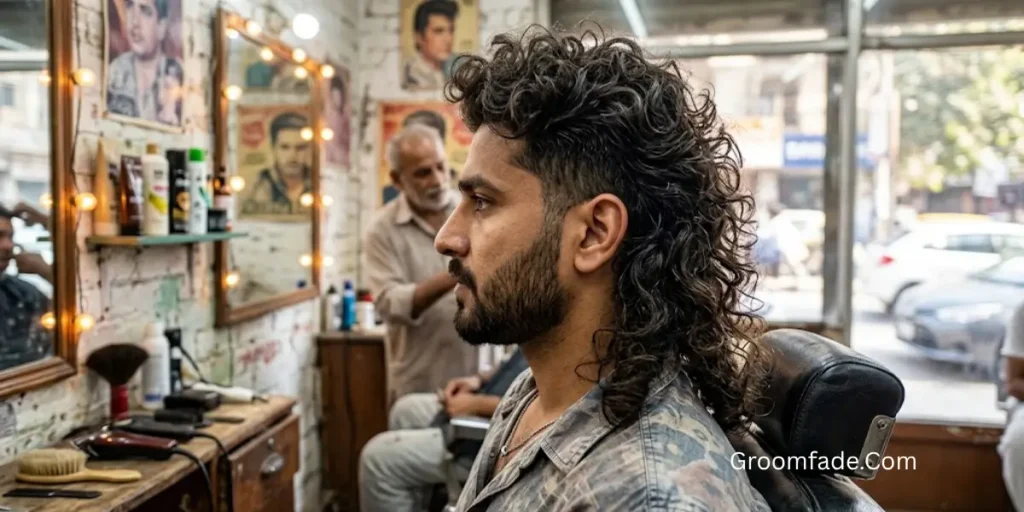
Medium hair gives you more visible curl movement and more options for layers.
Long Curly Mullet
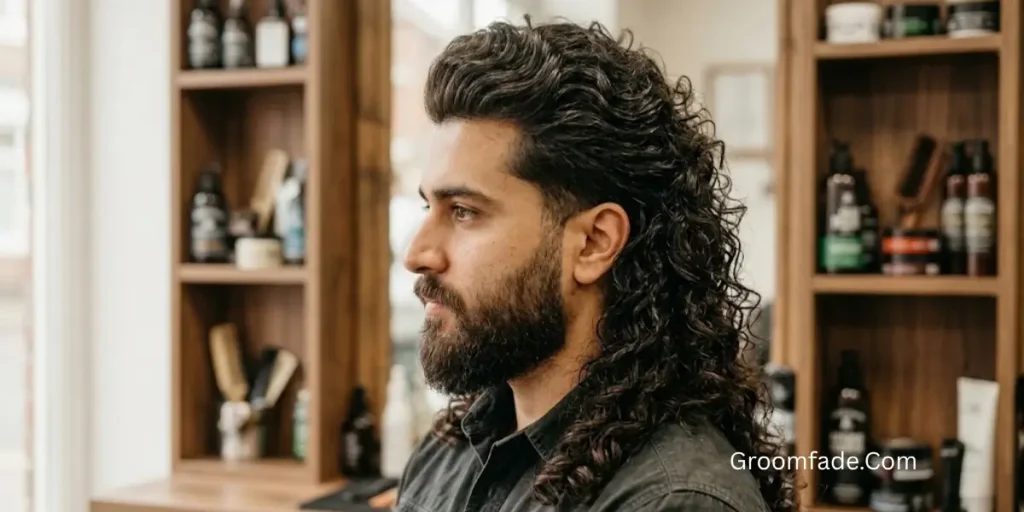
Long hair creates a stronger back section and can produce a more traditional mullet silhouette.
The trade-off is increased maintenance.
What to Tell Your Barber for a Curly Mullet
Knowing what to ask for can make the haircut much easier.
Instead of saying only “give me a curly mullet,” explain the shape you want.
Explain the Length You Want in the Back
Tell your barber how much length you want to keep.
If you want a noticeable back, say that you want the length preserved rather than heavily shortened.
Tell Them How Much You Want Removed From the Sides
Explain whether you want a low fade, mid fade, taper, undercut, or natural sides.
This is one of the biggest decisions because the side treatment changes the entire appearance.
Ask for Layers That Work With Your Curl Pattern
Layers can help curly hair move naturally.
However, too many short layers can create unwanted volume in some hair types. Your barber should assess your density and curl pattern before deciding where to layer.
Discuss Your Desired Fade or Taper
Show your barber a reference photo and explain where you want the fade or taper to start.
A low fade and high fade can create very different results even when the top and back are similar.
Bring a Reference Photo
A reference photo is especially useful for curly hair.
Try to choose a photograph showing a curl pattern and hair density reasonably close to yours.
Tell Your Barber How You Normally Style Your Curls
Tell them whether you air-dry, use a diffuser, wear your curls loose, or style them with cream or gel.
A haircut should work with your normal routine.
How to Style a Curly Mullet Haircut
Curly hair usually looks best when it retains moisture and natural definition.
Start With Damp Hair
After washing, gently remove excess water without aggressively rubbing the hair.
Curly hair can become frizzy when it is handled roughly.
Apply Curl Cream or Leave-In Conditioner
A small amount of curl cream or leave-in conditioner can help the curls stay soft and defined.
The amount needed depends on hair length and density.
Add Gel or Light Styling Product if Needed
Gel can provide stronger hold when your curls lose their shape during the day.
Start with a small amount rather than applying too much at once.
Scrunch the Curls
Gently scrunch the hair upward to encourage the natural curl pattern.
Avoid repeatedly combing through the curls after the product has been applied.
Air-Dry or Use a Diffuser
Air-drying is simple and requires no heat.
A diffuser can speed up drying while helping maintain curl definition. Use a suitable heat setting and avoid excessive heat exposure.
Avoid Excessive Touching While the Hair Dries
Touching the curls repeatedly while they dry can increase frizz and disturb the curl pattern.
Let the hair set before making small adjustments.
Best Products for a Curly Mullet
The right product depends on your hair texture and the finish you want.
Curl Cream
Curl cream can add moisture and help define curls without making the hair feel too stiff.
Leave-In Conditioner
A leave-in conditioner can help curly hair stay softer between washes.
Lightweight Hair Gel
Gel provides more hold and can help curls maintain their shape.
Mousse
Mousse can add light hold and volume without the heavier feel of some styling products.
Hydrating Conditioner
Conditioner is useful for keeping curly hair manageable, especially when the hair is longer.
Clarifying Shampoo
A clarifying shampoo can help remove product buildup, but it should not necessarily replace your normal shampoo for every wash.
How to Maintain a Curly Mullet
A curly mullet needs maintenance in two areas: the hair itself and the haircut’s shape.
How Often Should You Trim a Curly Mullet?
There is no single schedule for everyone.
If you have a fade or taper, the shorter sides may need more frequent cleanup. If you are growing the back longer, you may prefer fewer cuts so you can preserve length.
Keep the Curl Pattern Hydrated
Curly hair can become dry more easily because its shape can make it harder for natural oils to move along the hair.
A suitable conditioner and gentle handling can help maintain softness.
Control Frizz Without Flattening the Hair
Do not use heavy amounts of product simply to remove every sign of frizz.
Some natural texture is part of the appeal of a curly mullet.
Maintain the Fade or Taper
A fade or taper can lose its clean appearance as it grows.
If you want sharp sides, regular cleanup may be necessary.
Protect the Curls From Excessive Heat
Frequent high heat can make curly hair feel dry and affect its natural appearance.
When using a diffuser or other heat tool, use an appropriate temperature and avoid holding the heat in one place for too long.
Manage the Grow-Out Stage
Curly hair can look different at every stage of growth.
If you are growing the back, ask your barber to clean the neckline and sides without taking away the length you are trying to keep.
Common Curly Mullet Mistakes to Avoid
One common mistake is using a straight-hair reference photo for a completely different curl pattern.
Another is removing too much weight from dense curls. Over-thinning can sometimes make the hair behave differently from what you expected.
Other mistakes include:
- Cutting the back shorter than intended
- Ignoring curl shrinkage
- Choosing a fade that is too high for the desired shape
- Applying too much styling product
- Trying to force curls into a shape they do not naturally hold
- Skipping conditioning
- Touching the curls too much while they dry
- Forgetting to explain your usual styling routine to the barber
The best result usually comes from adapting the haircut to the hair you actually have.
How Much Does a Curly Mullet Haircut Cost?
The curly mullet haircut price depends on where you live and what services are included.
A simple curly mullet may cost less than a detailed haircut that includes a skin fade, beard shaping, wash, or styling.
Price can also vary based on:
- Barber or stylist experience
- City and location
- Hair length
- Hair density
- Fade or taper type
- Beard service
- Styling service
- Salon or barbershop pricing
If price matters, ask for the full cost before the haircut begins.
Are Curly Mullets Still Cool in 2026?
The curly mullet continues to appear in modern hairstyle trends, but the current versions are often more personalized than the classic style.
Modern examples commonly use natural curls, layered shapes, tapers, fades, textured tops, and different back lengths.
Instead of copying one fixed version, people can adjust the haircut around their curl pattern and lifestyle.
That makes the style easier to adapt. Someone who wants a subtle haircut can choose a low taper and moderate back length, while someone who wants more contrast can choose a stronger fade and longer curls.
Frequently Asked Questions About Curly Mullet Haircuts
Q1. Which Mullet Is Best for Curly Hair?
The best mullet depends on your curl pattern, density, length, and preferred maintenance level. A low taper curly mullet is a good option for a softer look, while a fade can create stronger contrast. Longer layered versions work well when you want the curls to have more movement.
Q2. Does a Mullet Look Good With Curly Hair?
Yes, a mullet can work very well with curly hair because the curls naturally add volume and movement. The haircut should be adjusted for shrinkage, density, and curl pattern rather than copied exactly from a straight-hair example.
Q3. Are Mullets Still Cool in 2026?
Modern mullets continue to be used in different forms, including curly, shaggy, faded, tapered, and layered versions. The current approach is generally more adaptable, allowing the haircut to match the wearer’s hair texture and preferred level of contrast.
Q4. Can You Get a Mullet With Short Curly Hair?
Yes. A short curly mullet can keep a compact back section while the sides and neckline are cleaned up with a taper or fade. You do not need extremely long hair to create the basic shape.
Q5. How Long Does Your Hair Need to Be for a Curly Mullet?
There is no exact minimum length for every person. The hair needs enough length at the back to create a visible difference from the shorter sides. Curly hair may need additional length because of shrinkage.
Q6. How Do You Ask a Barber for a Curly Mullet?
Tell your barber that you want shorter sides with more length at the back and explain whether you want a taper, fade, or natural sides. Show a reference photo and explain how much back length you want to keep.
Q7. How Often Should You Trim a Curly Mullet?
The timing depends on the haircut. A fade or taper may need more frequent cleanup, while someone growing a long curly mullet may wait longer between full trims.
Q8. Can Women Get a Curly Mullet Haircut?
Yes. A curly mullet can be adapted for women with softer layers, longer curls, bangs, or less aggressive side work. The final shape can be based on hair texture, face shape, and personal style.
Q9. Can Boys and Kids Get a Curly Mullet?
Yes. A simple curly mullet can work for boys and kids. For younger children, a low-maintenance shape with comfortable lengths is usually easier to manage than a highly detailed fade.