

The mohawk mullet combines two well-known haircut shapes: the narrow, raised look of a mohawk and the longer back of a mullet. The result is a bold haircut with short or faded sides, more length through the center, and extra length toward the back.
The style can be very dramatic, but it does not have to be. A barber can make the sides clean and short while keeping the top textured and the back moderately long. This makes the mohawk mullet haircut flexible enough for different hair types, lengths, and personal styles.
Some versions use a burst fade, while others use a taper, undercut, or very short sides. You can also wear the center section messy, spiky, curly, wavy, or more controlled.
Before choosing one, it helps to understand how the haircut works and how it differs from a standard mohawk or a regular mullet.
What Is a Mohawk Mullet?
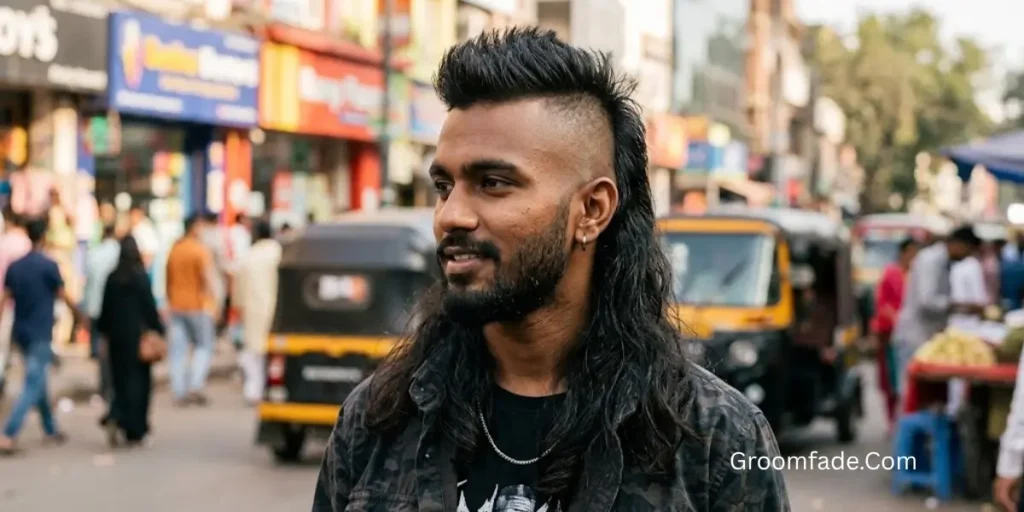
A mohawk mullet hairstyle is a haircut that combines the central shape of a mohawk with the longer back of a mullet.
A traditional mohawk usually puts strong focus on a strip of hair running from the front toward the back of the head, with the sides cut very short or shaved. A mullet normally keeps more hair around the top and sides while leaving the back noticeably longer.
The mohawk mullet brings these ideas together.
The sides are usually short, faded, or closely cut. The hair through the center stays longer and becomes the main focus. The back continues into a longer mullet shape.
The exact result depends on how much hair is left in each area.
A shorter version may have:
- Short faded sides
- A textured center
- A short back
- Less dramatic contrast
A longer version may have:
- Very short sides
- A taller or wider center section
- A long back
- More visible texture and movement
There is no single length that defines every mullet mohawk. The shape can be adjusted to suit the person’s hair, styling habits, and preferred level of contrast.
How the Mohawk Mullet Is Shaped
The haircut usually has three important areas.
The sides: These create the contrast. They may be faded, tapered, undercut, or cut very short.
The center: This is where the mohawk influence becomes clear. The hair can be left longer and styled upward, backward, messy, or naturally.
The back: This is where the mullet influence shows. The hair remains longer than the sides and can range from a few inches to a much longer tail.
The barber has to balance these areas. Taking too much hair from the center can make the haircut look more like a simple fade. Leaving too much width on the sides can make the mohawk shape less noticeable.
For a sharper and more structured look, the Juice Box Fade combines clean faded sides with a shaped top, creating strong contrast around the haircut.
Mohawk vs Mullet: What Is the Difference?
The mohawk vs mullet question is common because both haircuts can have short sides and longer hair.
The main difference is where the haircut places its length and visual focus.
| Feature | Mohawk | Mullet | Mohawk Mullet |
| Main focus | Center strip | Longer back | Center and back |
| Sides | Often very short or shaved | Can be short or longer | Usually short, faded, or shaved |
| Top | Usually longer through the center | Often more evenly shaped | Longer center section |
| Back | Can vary | Usually longer | Longer like a mullet |
| Overall look | Strong central shape | Front-to-back contrast | Combination of both |
A regular mullet haircut does not need a narrow central strip. The sides and top can have more width and flow into the longer back.
A mohawk puts much more attention on the center.
The mohawk mullet haircut sits between these ideas. It keeps the strong center shape while also giving the back the length associated with a mullet.
This difference matters when talking to a barber. Saying only “mullet” may result in a haircut with more hair around the sides than you wanted. Saying only “mohawk” may lead to a much more extreme cut.
Showing a reference photo is usually the safest way to communicate the exact shape.
Best Mohawk Mullet Haircut Styles
There are many ways to adjust a mohawk mullet. The fade, length, texture, and styling method can change the appearance without changing the basic haircut.
Here are some of the most useful variations to consider.
Classic Mohawk Mullet
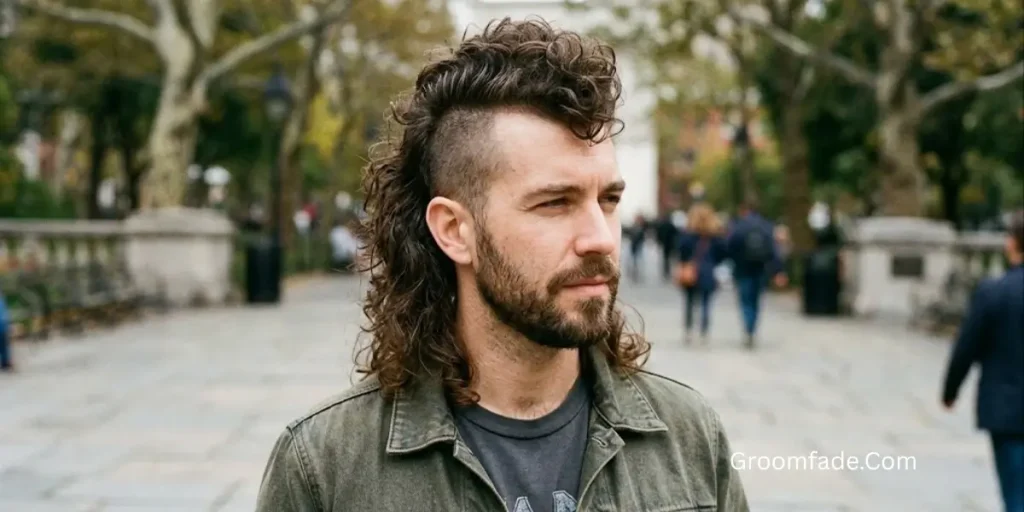
The classic version keeps the mohawk influence strong while maintaining the longer back of a mullet.
The sides are usually cut very short. The center section remains noticeably longer, and the back extends past the rest of the haircut.
This version can have a sharp, rebellious appearance, especially when the center is styled upward.
You can also make it less extreme by keeping more length on top and using a softer transition on the sides.
The key is the contrast between the short sides, central length, and longer back.
Modern Mohawk Mullet
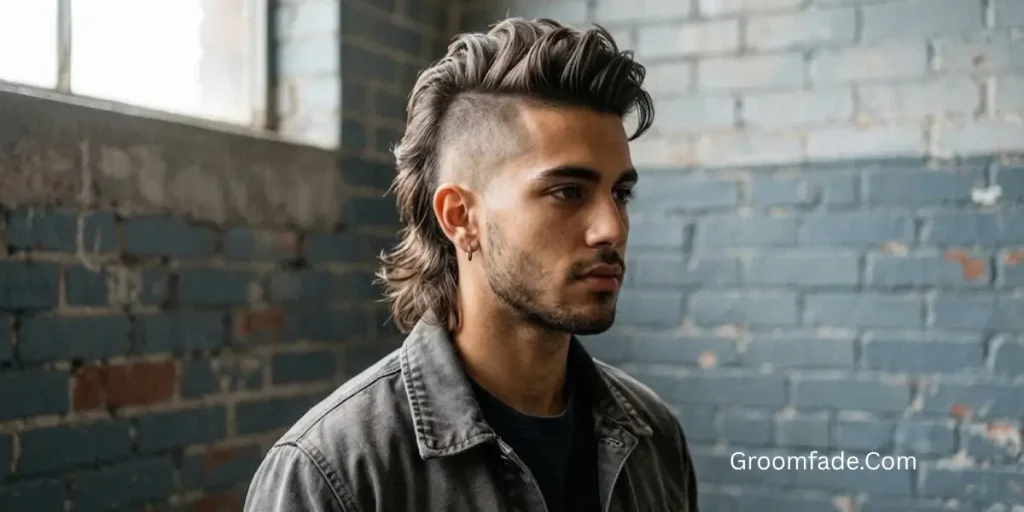
A modern mohawk mullet usually has a cleaner and more wearable shape than some traditional versions.
Instead of shaving the sides completely, a barber may use a fade or taper. The top can be textured rather than pushed into a tall strip. The back can also be blended and layered instead of left as one heavy section.
This gives you more control over the final look.
A modern version may work well for someone who likes the idea of a mohawk mullet but does not want an extremely sharp punk-inspired haircut.
Texture also plays an important role. A messy finish can make the haircut look relaxed, while a structured finish creates stronger contrast.
Faded Mohawk Mullet
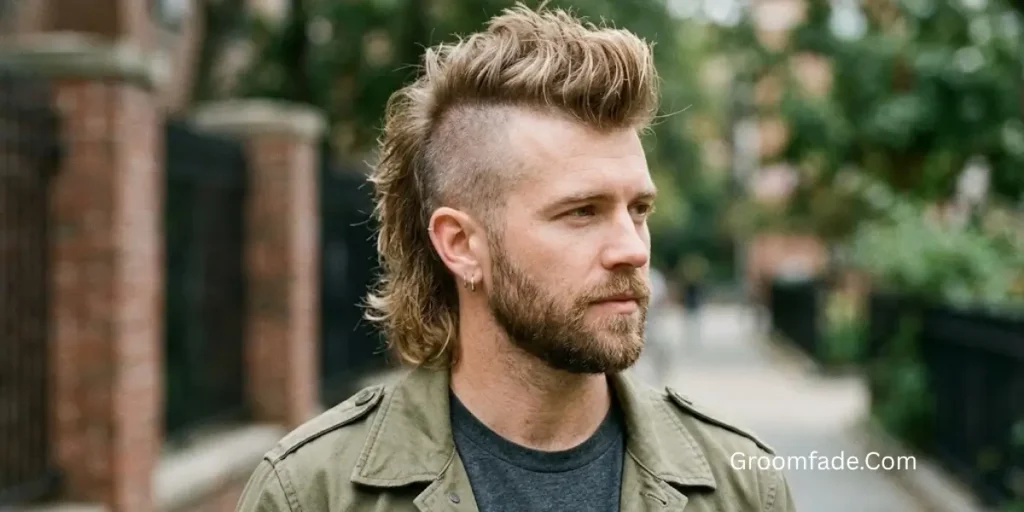
A faded mohawk mullet uses a fade to create the short sides.
The fade gradually moves from very short hair near the lower sides into longer hair above it. The barber can position the fade low, medium, or high depending on the shape you want.
A fade can make the center section appear more noticeable because the sides have less visual weight.
The back should still retain enough length to keep the mullet shape.
If the fade is taken too high or too far into the back, it can change the overall silhouette. This is why the barber needs to understand that the longer back is an important part of the haircut.
Men who want to keep more length around the sides can choose Tapered Sides. This approach keeps the edges neat while allowing the central shape to stand out.
Mohawk Mullet Fade

The mohawk mullet fade is one of the easier ways to give this haircut a cleaner modern finish.
You can choose from different fade heights.
A low fade keeps more hair around the upper sides and creates a softer transition.
A mid fade gives more contrast and makes the center section stand out.
A high fade removes more hair from the sides and creates a stronger mohawk appearance.
Your choice should depend on how bold you want the haircut to look and how much side hair you normally like to keep.
Burst Fade Mohawk Mullet
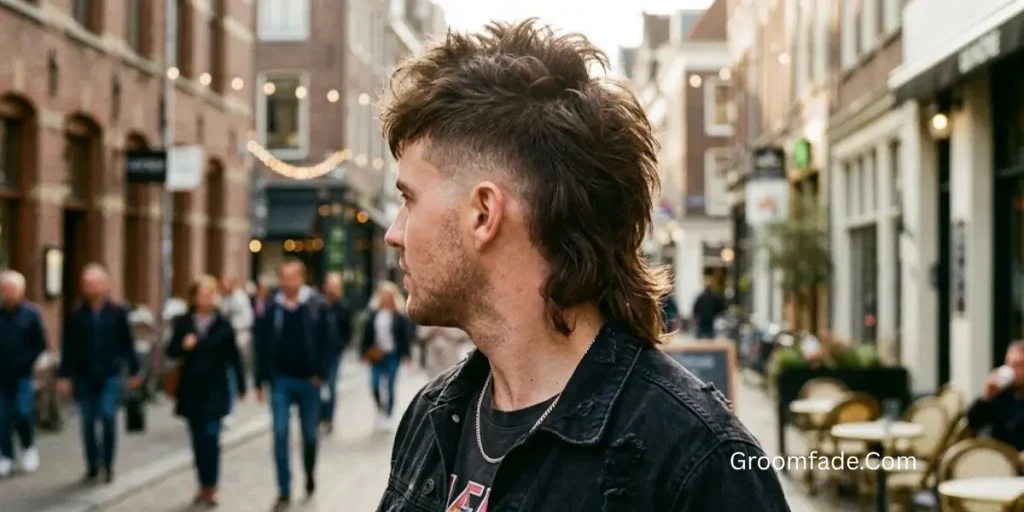
The burst fade mohawk mullet uses a curved fade around the ear instead of removing the sides in one straight line.
This makes it especially useful for people who want strong contrast while keeping the central strip and back connected.
The fade spreads outward around the ear, while the hair behind the ear can remain longer.
This helps preserve the mullet shape.
A mohawk burst fade mullet can also work with curly or wavy hair because the natural texture gives the center and back more movement.
The amount of hair left above the ear can be adjusted based on your preferred shape.
Short Mohawk Mullet
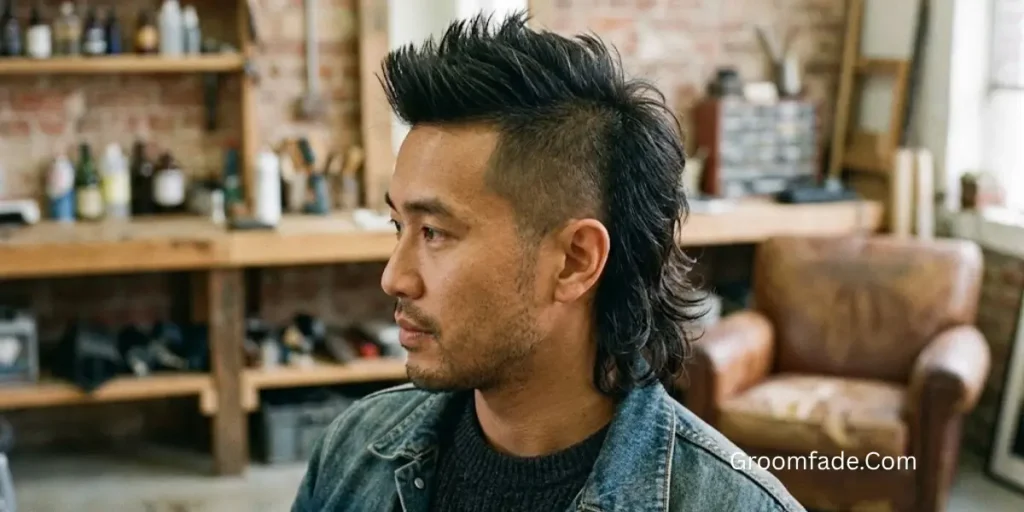
A short mohawk mullet keeps the basic structure without requiring a long tail or a tall center section.
This can be a practical option if you like the shape but do not want a lot of styling.
The back can stay relatively short while still extending beyond the sides. The center can be textured instead of styled high.
A short version may also be easier to maintain as it grows because there is less length to manage.
For a clean finish, a fade or taper can be combined with a short textured top and a controlled back.
Long Mohawk Mullet

A long mohawk mullet creates more contrast between the short sides and the longer back.
The extra length gives you more options. You can leave the back loose, add layers, create texture, or style the center and back together.
However, longer hair usually requires more care.
The back may need regular trimming to prevent uneven ends, while the longer center section may need a styling product to control volume.
If you want a dramatic mullet shape, the longer version gives the barber more hair to work with.
Curly Mohawk Mullet
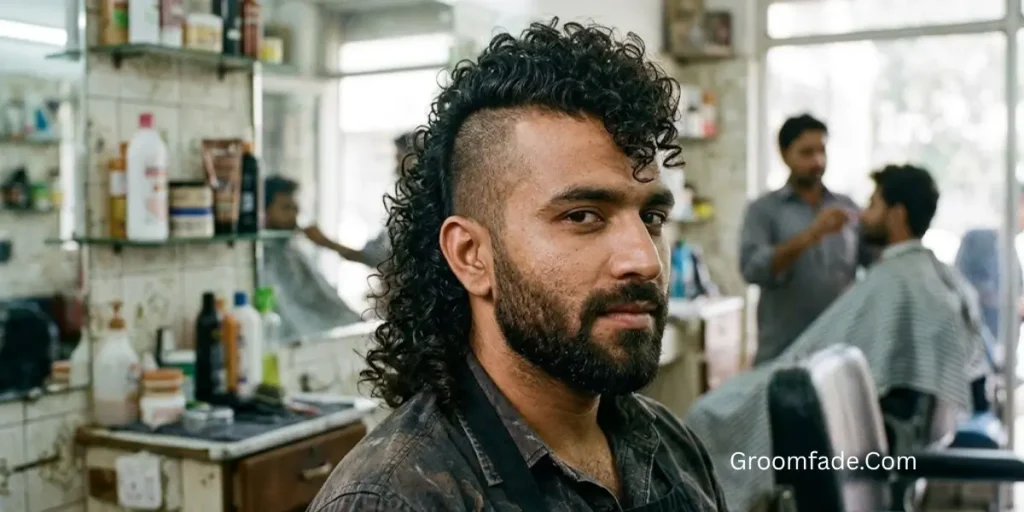
A curly mohawk mullet uses natural curls as part of the haircut’s shape.
Curly hair can make the center appear fuller and give the back more movement. The sides can be faded or tapered to create contrast.
The main challenge is controlling bulk.
A barber should consider how the curls shrink when dry. Hair that looks long when wet can appear much shorter after it dries and curls up.
For this reason, it is useful to tell your barber how your hair normally behaves after washing and drying.
A curly mohawk mullet does not always need strong styling. A suitable curl product can help define the natural pattern while keeping the shape controlled.
Mohawk Mullet With Straight Hair
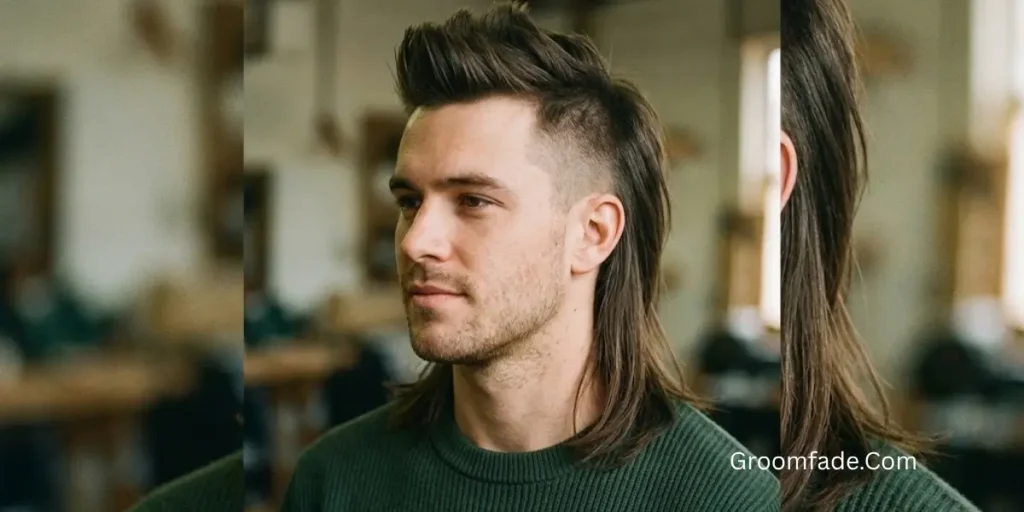
Straight hair makes the haircut’s lines and length easier to see.
The center section can be styled upward, pushed back, or left textured. The longer back can hang straight or be given layers for movement.
Because straight hair can look flatter, adding texture can help create more volume.
A matte styling clay or texturizing powder may work for someone who wants a less shiny finish.
The haircut can also be kept simple with a natural finish and minimal product.
Wavy Mohawk Mullet
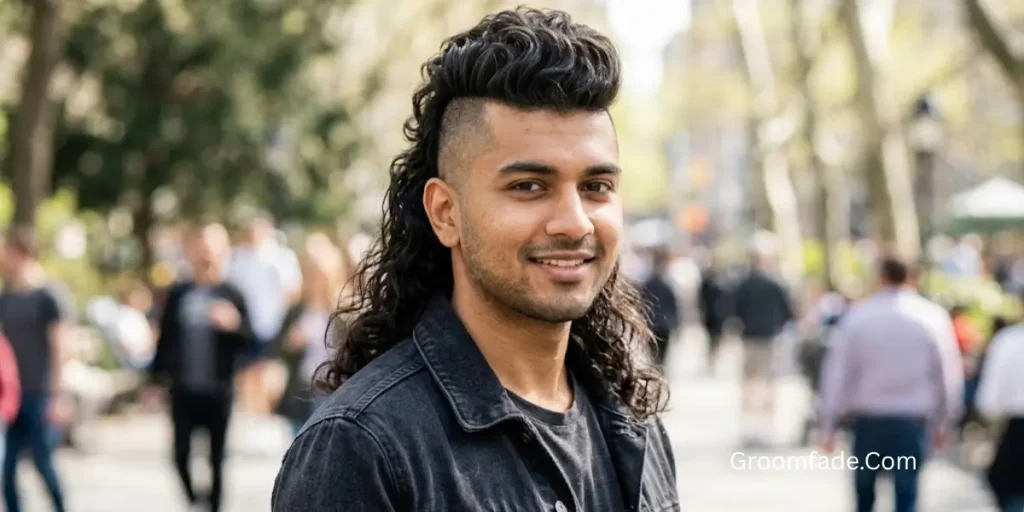
Wavy hair gives the mohawk mullet hairstyle a softer shape.
Instead of creating a very rigid central strip, the waves can form natural movement through the top and back.
A low or burst fade can provide contrast without making the haircut look too severe.
The back can be layered so the waves do not become too heavy.
For styling, a light product is often enough. The goal is to keep the natural wave pattern visible rather than making the hair stiff.
Textured Mohawk Mullet
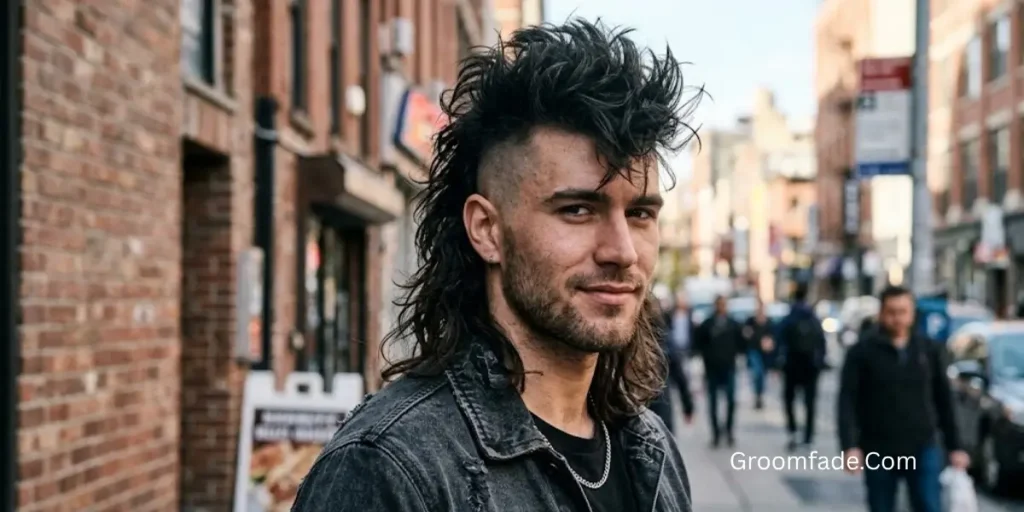
A textured version focuses on separated strands and natural movement.
The barber can use different lengths through the center and back to create texture. The final style can then be shaped with a matte product.
This works particularly well for people who do not want a perfectly neat hairstyle.
Instead of making every strand stand upright, you can use a messy finish with uneven texture.
That gives the haircut a more relaxed modern appearance while keeping the mohawk and mullet structure visible.
Spiky Mohawk Mullet
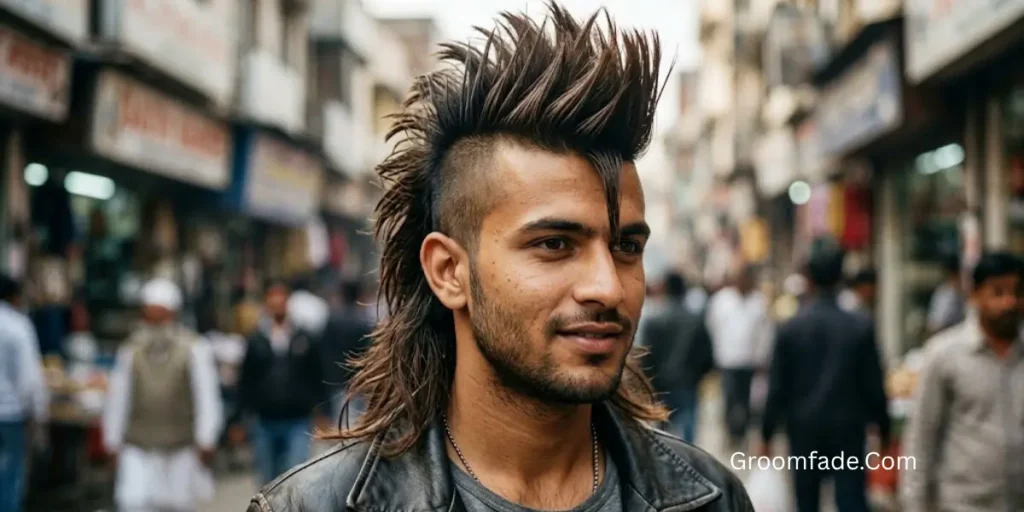
A spiky version puts more attention on the center section.
The top can be styled upward with a firm styling product. The back can remain longer and textured.
The result is more dramatic than a natural or messy version.
If you want this style, tell your barber that you plan to style the center upward. The haircut may need enough length and texture to support that shape.
A small amount of product is usually easier to control than applying too much at once.
The bold layers of an 80s Mullet Haircut create a stronger retro feel, with noticeable length at the back and extra volume through the style.
Shaggy Mohawk Mullet
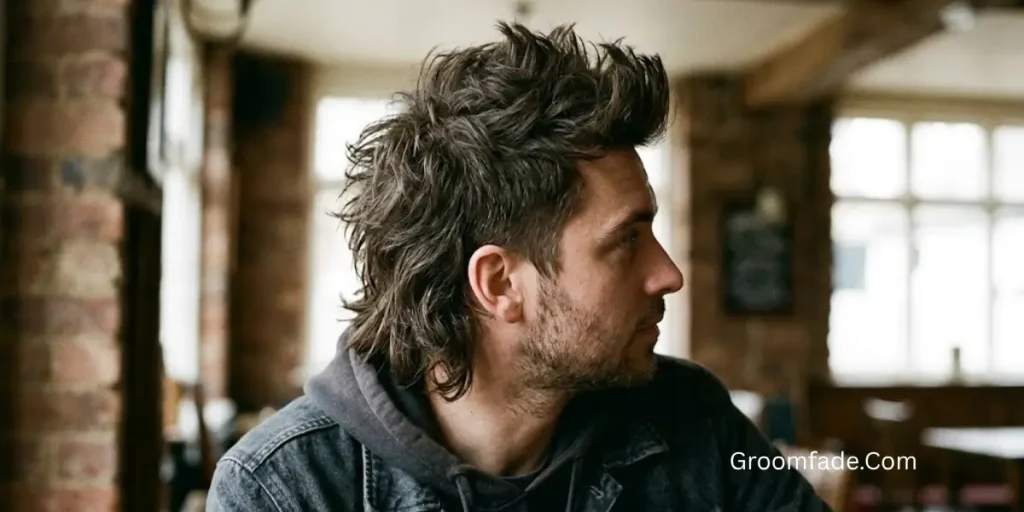
A shaggy version uses layers and softer texture instead of sharp lines.
The sides can still be short, but the center and back are left with more movement.
This creates a less rigid look and can work well with wavy or naturally textured hair.
The haircut can also be allowed to grow out more naturally than a very clean faded version.
Mohawk Mullet for Different Hair Types
Hair texture changes how the same haircut looks.
Two people can ask for the same mohawk mullet haircut and get different results because their hair has different thickness, curl, density, and natural movement.
Straight Hair
Straight hair shows the haircut’s structure clearly.
The central section can be styled upward or backward, while the back can be kept straight and layered.
Texture is useful if the hair tends to fall flat.
Wavy Hair
Wavy hair naturally creates movement through the top and back.
A lighter styling product can help control the shape without removing the natural wave.
Curly Hair
Curly hair can create a fuller and more noticeable center.
The barber should account for shrinkage and curl pattern when deciding the length.
The sides can be faded to reduce bulk and highlight the curls.
Thick Hair
Thick hair gives you plenty of volume, but too much weight can make the center difficult to control.
Layering can reduce excess bulk while keeping the desired shape.
Fine Hair
Fine hair may need a different approach.
Keeping some length and adding texture can create the appearance of more body. Removing too much hair from the center may make the top look thinner.
The barber should work with the natural density instead of trying to force an extremely tall shape.
Mohawk Mullet for Men and Women
The mohawk mullet men search term often refers to masculine versions with fades, short sides, textured tops, and longer backs. But the basic haircut is not limited to one gender.
The same structure can be adjusted through length, texture, layering, and styling.
Mohawk Mullet for Men
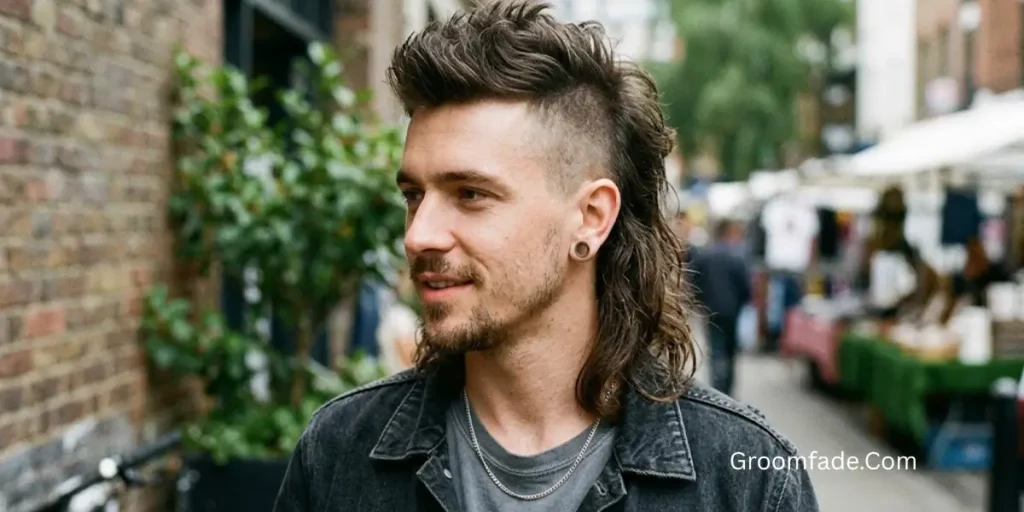
A men’s mohawk mullet can range from a short faded cut to a longer, more dramatic style.
Popular choices include:
- Burst fade sides
- Low or mid fade
- Textured center
- Spiky top
- Curly top
- Long back
- Short mullet back
The best choice depends on how much contrast and styling you want.
Someone who prefers a simple daily routine may choose a short version with a low fade. Someone who enjoys styling may prefer a longer center and back.
Mohawk Mullet for Women
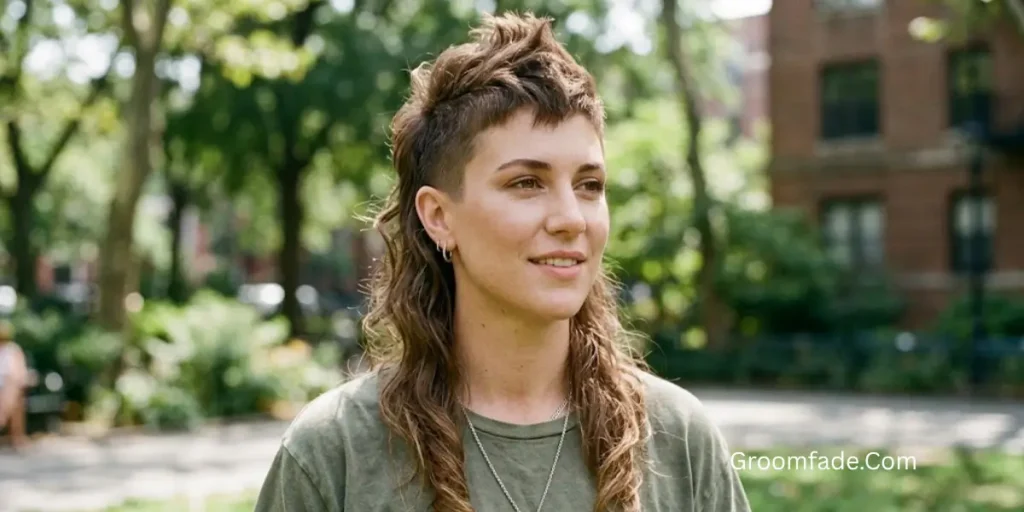
A mohawk mullet woman style can use the same basic structure but with different lengths and styling choices.
For example, the sides can be closely faded while the top and back remain longer and more layered.
The back can also be much longer than in a traditional men’s version.
The important point is that the haircut can be customized rather than following one fixed template.
Hair texture also makes a major difference. Straight hair can create a sharp layered look, while curly or wavy hair can produce a softer shape.
Mohawk Mullet by Hair Length
Length changes the overall character of the haircut.
Short Length
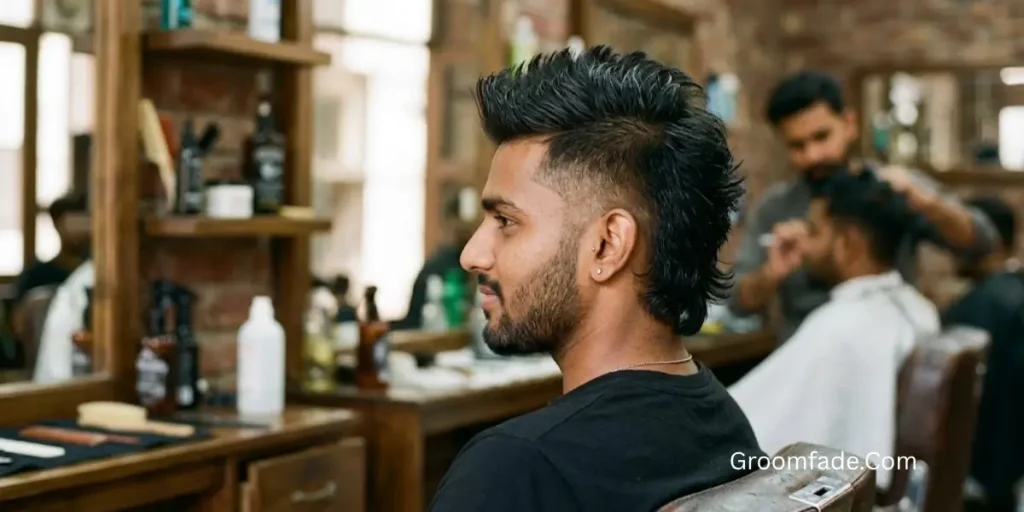
A short mohawk mullet is easier to manage and usually needs less styling.
It can be a good starting point for someone who likes the concept but does not want a long back.
Medium Length
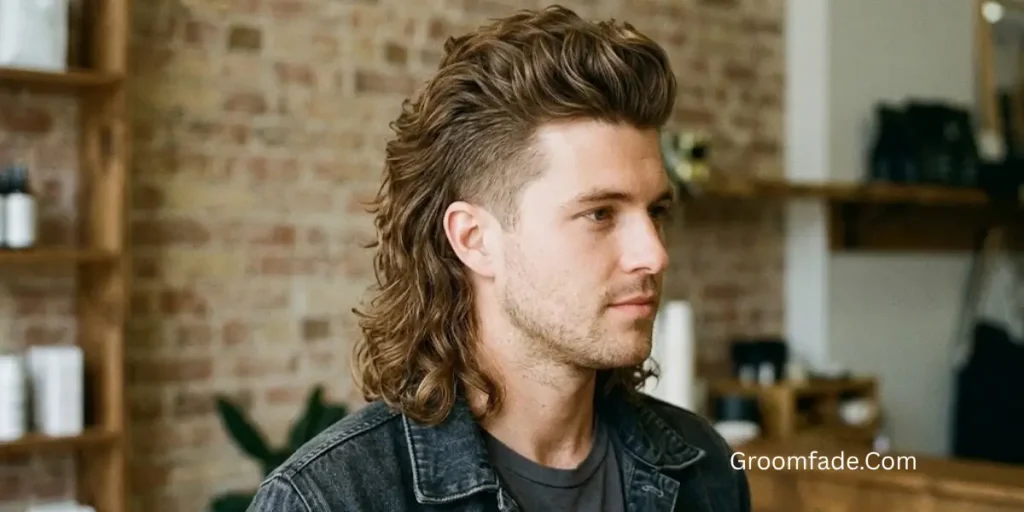
Medium length gives you enough hair to show the difference between the mohawk center and mullet back.
It also provides more styling options without requiring the same level of care as very long hair.
Long Length
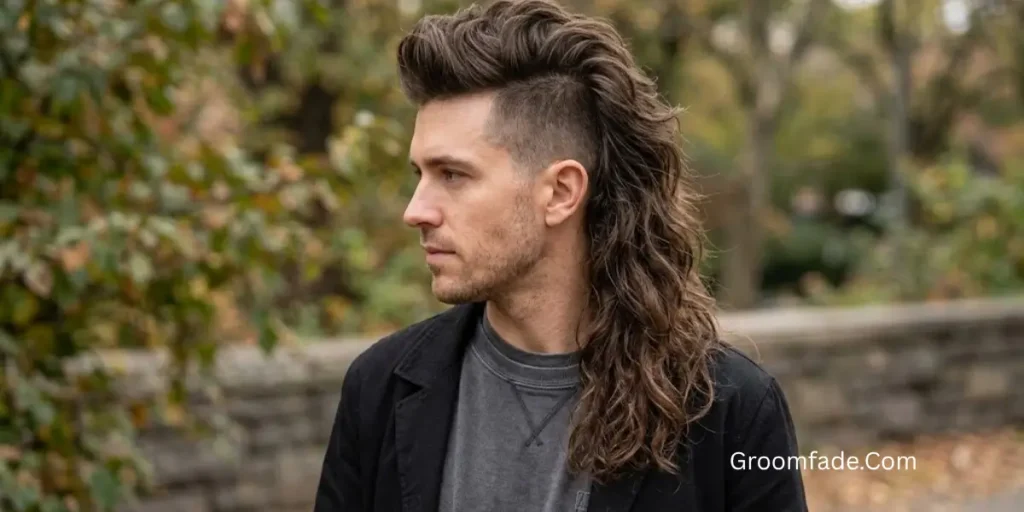
A long version creates the strongest mullet influence.
The longer back can be layered, textured, or left natural. However, it also requires more patience and regular hair care.
If you are growing your hair specifically for a long mohawk mullet, tell your barber how much length you want to keep before cutting the sides.
Mohawk Mullet Fade Short: What to Ask For
If you want a mohawk mullet fade short, be clear about the length you want to keep in the center and back.
A useful request could be:
“I want a short mohawk mullet with faded sides. Keep the center longer and leave enough length in the back so the mullet shape is still clear. I want texture on top rather than a very tall mohawk.”
You can then show your barber a reference photo.
The exact fade height can be adjusted after your barber sees your head shape and hair density.
This approach is better than relying on the haircut name alone because terms such as “mohawk,” “mullet,” and “mohawk mullet” can mean slightly different things to different people.
For a softer, more textured shape, the Shag Mullet uses layered lengths to add movement while keeping the longer back that defines a mullet.
How the Mohawk Mullet Can Change With Styling
The same mohawk mullet hairstyle can look very different depending on how you style the center and back. A natural finish keeps the hair close to its own texture, while a messy finish adds separation and movement. If you push the center upward, the mohawk side becomes much more noticeable. Keeping the hair brushed back creates a cleaner and softer appearance.
Your styling routine should be part of the haircut decision. A long, heavily styled mohawk mullet can look very different in a barber’s chair compared with how it looks after a quick wash at home. If you prefer a simple routine, a shorter textured cut may be more practical than a style that needs daily blow-drying and strong hold.
How to Choose the Right Mohawk Mullet
Choosing a mohawk mullet haircut is about more than picking a photo. The barber needs to consider your current hair length, natural texture, density, and the amount of length you want to keep at the back. Your daily styling routine also matters because the same haircut can require very different levels of maintenance depending on how it is cut.
Before your appointment, think about the look you want when your hair is completely dry. This is especially important for curly and wavy hair because the final length and shape can change as the hair dries.
Choose the Right Side Treatment
The sides control how strong the mohawk part of the haircut looks. A low fade leaves more hair around the upper sides, so the result is usually softer. A mid fade creates more contrast, while a high fade removes more hair and gives the center a stronger visual focus.
A burst fade is another useful option. Instead of creating a straight fade around the sides, it curves around the ear and leaves more hair behind it. This can work well when you want a clean side profile without losing the longer back that gives the haircut its mullet shape.
If you want something less extreme, ask for a taper instead of a very short fade. This keeps more hair around the sides and can make the modern mohawk mullet easier to wear in settings where a very sharp haircut may not be practical.
Choose the Right Back Length
The back is what gives the haircut its mullet identity. A short back creates a cleaner shape, while medium and long lengths make the mullet side much more noticeable.
Think about how much time you want to spend caring for the haircut. A shorter back dries faster and usually needs less styling. A longer back gives you more movement and styling options, but it also needs more attention as it grows.
If you are growing the back specifically for a long mohawk mullet, tell your barber before the haircut starts. They can clean the ends and shape the surrounding hair without removing more length than necessary.
Think About Your Hair Texture
Your natural hair texture should guide the haircut rather than being treated as an afterthought. Straight hair often shows the layers and shape clearly, while wavy hair can create movement without much styling.
Curly hair brings natural volume to the center and back, but the barber needs to account for shrinkage. Hair that looks a certain length while wet can appear considerably shorter once the curls dry. Thick hair may also need internal layering to remove excess weight, while fine hair often benefits from keeping enough length through the center to maintain fullness.
A good barber should look at how your hair grows and behaves naturally before deciding how much to remove.
Mohawk Mullet by Face Shape
Face shape can help with the proportions of a mohawk mullet, but it should not be treated as a strict rule. The height of the center, width of the sides, and length of the back can all be adjusted to change the overall balance.
Oval Face Shape
An oval face generally gives you flexibility with different lengths and textures. You can choose a short faded version, a longer back, or a textured center without needing major changes to the basic haircut.
The final choice should still depend on your hair texture and personal style rather than face shape alone.
Round Face Shape
If your face is fuller around the cheeks, adding some height through the center can create more vertical structure. Keeping the sides relatively close can also reduce extra width around the face.
That does not mean you need a high fade. A low or mid fade can still work if the center has enough height or texture.
Square Face Shape
A square face often has a wider forehead and a defined jaw. A textured center with a longer back can add movement without making the haircut look too rigid.
You can keep the finish clean or messy depending on your preference. The barber can also adjust the width of the center section to suit your features.
Longer Face Shape
If your face is naturally long, too much height on top may make the face appear longer. A lower-profile center with some width and a moderate fade can create a more balanced shape.
The goal is to adjust the haircut’s proportions, not follow a fixed face-shape rule.
How to Ask Your Barber for a Mohawk Mullet
The name mohawk mullet gives your barber a general idea, but it does not describe every detail of the haircut. Different barbers and clients can picture very different versions of the same name.
Reference photos are therefore one of the easiest ways to avoid confusion. Bring two or three photos that show the shape you like from different angles. Ideally, the examples should have hair texture and length similar to yours.
A clear request could sound like this:
“I want a modern mohawk mullet with faded sides. Keep the center longer and leave enough length in the back to keep the mullet shape. I want the top textured rather than extremely tall.”
You can then explain whether you want a softer or stronger contrast.
What to Tell Your Barber About the Sides
Tell your barber how short you want the sides and where you want the transition to begin. You might choose a low fade, mid fade, high fade, burst fade, taper, or very short sides.
If you want a mohawk mullet fade, also show where you want the fade to finish. A high fade can create a much stronger mohawk effect than a low fade, even when the top and back are exactly the same length.
What to Tell Your Barber About the Top
The center section is one of the defining parts of the haircut, so explain how you plan to wear it.
You might want it short and textured, medium length, long and lifted, messy, spiky, curly, or brushed back. If you rarely use styling products, tell your barber. They can shape the cut so it works better with your natural texture.
What to Tell Your Barber About the Back
Be equally clear about the back. Tell your barber whether you want a short mullet back, medium length, or a long tail.
You can also ask for layers if the back feels too heavy. If your main goal is to grow the back longer, say that before the cut begins so unnecessary length is not removed.
What to Bring to Your Barber
Reference photos can make the appointment much easier because the words “mullet” and “mohawk” can describe many different shapes.
Bring a front photo to show the top and center, a side photo to show the fade, and a back photo if the length or layering is important. If you have curly or wavy hair, choose references with a similar texture because the same haircut can behave very differently on straight hair.
It also helps to tell your barber how much time you normally spend styling your hair. If you want a two-minute morning routine, say so. Your barber can then avoid creating a shape that only works after extensive styling.
A more unusual variation is the Reverse Mullet, which changes the traditional length pattern and creates a noticeably different shape around the front and back.
Common Mohawk Mullet Mistakes to Avoid
Taking Too Much From the Back
Removing too much length from the back can weaken the mullet shape. This is especially important if you are growing your hair and want a noticeable tail.
Tell your barber how much length you want to keep before the cutting begins. If you are unsure, it is easier to remove more later than to replace length that has already been cut.
Making the Center Too Narrow
A very narrow center section creates a stronger traditional mohawk appearance. If you want a softer modern mohawk mullet, you may prefer a wider center with more texture.
Your reference photo can help the barber understand the width you have in mind.
Choosing a Fade Without Considering the Back
The fade should work with the entire haircut. Taking the fade too high or too far toward the back can change the connection between the sides and longer hair.
A burst fade, for example, can leave more length behind the ear while still creating strong contrast around the sides.
Ignoring Hair Texture
Hair should be cut according to how it behaves naturally. Curly hair shrinks as it dries, thick hair can become heavy, and fine hair can lose its appearance of fullness when too much is removed.
This is why a reference photo alone is not enough. Your barber should also assess your actual hair before deciding the final length.
Using Too Much Product
More product does not always mean better hold. Too much clay, wax, or powder can make the hair feel heavy and remove the natural movement that gives a modern mullet its texture.
Start with a small amount and add more only if the hair needs additional control.
How to Style a Mohawk Mullet
Styling should support the haircut rather than hide its shape. Start with clean, damp hair and choose one product based on the finish you want.
For a natural or textured finish, a light sea salt spray can add movement. For stronger control, a small amount of matte clay can help shape the center. Fine or straight hair may benefit from styling powder for extra lift, while curly hair usually works better with a lightweight curl product.
Step 1: Start With Clean, Damp Hair
Wash and condition your hair according to its needs, then gently towel-dry it. Avoid rough rubbing, especially if your hair is curly or prone to frizz.
The hair should be damp enough to work with but not soaking wet.
Step 2: Add the Right Styling Product
Use only the amount you need.
Sea salt spray can create light texture and is useful for straight or wavy hair. Matte clay provides more control and works well when you want separation through the center. Styling powder can add volume to hair that tends to fall flat.
For curly hair, a curl cream can help the natural pattern stay defined without making the hair stiff.
Step 3: Shape the Center
Use your fingers to guide the center upward, backward, or slightly outward.
You do not need to make every strand point in exactly the same direction. A little variation often gives the haircut a more natural finish.
For a spiky look, separate small sections with your fingertips. For a softer modern style, lift the roots slightly and leave the ends loose.
Step 4: Shape the Back
Let the longer back follow its natural direction, then use your fingers to separate heavier sections.
If your hair is wavy or curly, avoid repeatedly brushing it after it dries. Too much brushing can break up the curl pattern and create extra frizz.
Step 5: Finish With Light Hold
Once the shape is right, use a small amount of finishing product if needed.
The goal is to control the hairstyle while keeping enough movement to make the haircut look natural.
How to Style a Short Mohawk Mullet
A short mohawk mullet can be one of the simpler versions to style because there is less length to control.
After washing, towel-dry the hair and apply a small amount of matte clay or styling powder. Use your fingers to lift the center and give the back a little separation.
You do not need to create a tall mohawk. A slight lift through the center can be enough to show the haircut’s shape while keeping the result easy to wear.
How to Style a Curly Mohawk Mullet
A curly mohawk mullet usually works best when the natural curl pattern remains visible.
Apply a small amount of curl cream to damp hair, then gently squeeze the curls upward with your hands. Let the hair air-dry or use a diffuser on a gentle setting.
Once the curls are dry, avoid repeatedly brushing through them. Instead, use your fingers to adjust any sections that need more shape.
This approach keeps the center and back defined without making the curls look stiff.
For a style influenced by modern Asian hair trends, the Asian Mullet Hairstyle often combines layered texture with a longer back and a softer overall finish.
How to Style a Spiky Mohawk Mullet
A spiky version needs more control through the center.
Start with slightly damp hair and work a small amount of matte clay through the center section. Use your fingertips to separate the hair into small spikes or groups.
The spikes do not need to be perfectly identical. Slight differences in height and direction can make the finished style look less stiff.
Products That Can Work With a Mohawk Mullet
The right product depends on your hair type and the finish you want.
Sea Salt Spray
Sea salt spray can add light texture and movement. It is useful when you want a loose, natural finish rather than a heavily structured style.
Matte Clay
Matte clay provides stronger control and can help separate the center section. It is useful for textured and spiky versions when you want to avoid a glossy finish.
Styling Powder
Styling powder can add lift and texture, especially when fine or straight hair tends to fall flat. Start with a small amount because too much can leave the hair feeling dry or coated.
Curl Cream
Curl cream can help curly and wavy hair keep its natural pattern. It is generally more suitable for a soft, flexible finish than a heavy styling product.
Hair Dryer
A hair dryer can help shape the center and create volume before you apply a finishing product. For curly hair, a diffuser can help dry the curls while keeping their natural shape.
How to Maintain a Mohawk Mullet
Maintenance depends on the length of the back and how clean you want the sides to remain.
A very short fade shows new growth quickly, so it may need more frequent cleanups. A taper or softer fade can grow out for longer without changing the overall appearance as quickly.
The longer back usually needs less frequent cutting if you are growing it, but the ends still need attention when they become dry or uneven.
How Often Should You Get a Trim?
There is no single schedule that works for every mohawk mullet haircut.
If you want a sharp fade, you may prefer regular barber visits to keep the sides clean. If you choose a softer taper, you can generally allow more growth between appointments.
If you are growing the back, tell your barber to focus on cleaning and shaping the ends rather than taking off unnecessary length.
Maintaining the Fade
The fade is usually the first part of the haircut to lose its freshly cut appearance as the hair grows.
If you want a sharp mohawk mullet fade, regular cleanups will help maintain the contrast. If you prefer a more relaxed look, you can allow the fade to grow out before returning to the barber.
Keeping the Back Healthy
Longer hair needs simple but consistent care. Use shampoo and conditioner that suit your hair type, avoid excessive heat, and be gentle when drying the hair.
If the ends become dry or split, a small trim can keep the back looking cleaner without changing its overall length.
Is a Mohawk Mullet Easy to Maintain?
The answer depends on the version you choose.
A short mohawk mullet fade generally takes less time to style because there is less hair to control. A long version needs more attention because the back takes longer to dry and may require additional shaping.
Curly versions can also need more care because maintaining moisture and curl definition is important. A sharp fade requires more frequent barber visits if you want to keep the same level of contrast.
If your main goal is low maintenance, consider a shorter center and back, a softer fade or taper, and a style that works with your natural texture.
Who Does a Mohawk Mullet Suit?
The haircut can be adapted to many hair types and personal styles, but the exact design matters more than simply choosing the name.
Someone who likes strong contrast may prefer a high fade and longer center. Someone who wants a more relaxed haircut may prefer a low fade, textured top, and shorter back.
Curly and wavy hair can use natural volume to make the center more noticeable. Straight hair may benefit from layers or styling products that add movement.
Your daily environment also matters. A very short, high-contrast version creates a stronger visual statement than a softer modern cut. Choosing the right version is less about following a trend and more about finding a shape that fits your hair and routine.
Mohawk Mullet vs Other Mullet Styles
The mohawk mullet is one of several ways to wear a modern mullet.
A standard modern mullet haircut can keep more width through the sides and does not always have a clearly defined center section. A modern mullet fade may use a gradual fade while keeping the top and back more evenly connected.
A burst fade mullet places more attention on the curved area around the ears. A shag mullet relies more on layers and loose texture.
The mohawk mullet stands apart because it gives the center more importance while keeping the back longer. That combination creates a stronger contrast than many regular mullet cuts.
Can You Grow a Mohawk Mullet From a Regular Mullet?
Yes, in many cases you can reshape a regular mullet into a mohawk mullet.
The process depends on how much hair you currently have around the sides and center. A barber can gradually reduce the sides while keeping the back length and shaping the center into a stronger strip.
You may need more than one haircut if you want a specific shape while keeping a long back.
If your current mullet already has plenty of length in the back, that part can often be preserved while the sides are changed.
Can You Turn a Mohawk Into a Mullet?
You can also move from a traditional mohawk toward a mullet shape as the hair grows.
The key is allowing more length to develop toward the back while maintaining enough length through the center. Your barber can gradually reshape the haircut as the different sections grow.
This may take time if the current back and sides are very short.
If you want to make this change, tell your barber that the long-term goal is a mohawk mullet, rather than simply asking for a normal grow-out. That gives them a clearer idea of which areas to preserve during each trim.
Can You Turn a Mohawk Into a Mullet?
Yes, depending on the current length.
If you already have a traditional mohawk, the barber can preserve the central section while allowing more length to remain at the back.
The main goal is to create a longer back without losing the central shape.
The transition may take time if the current haircut has very short sides and back.
FAQs About Mohawk Mullet
Q1. What is a mohawk mullet?
A mohawk mullet combines the central shape of a mohawk with the longer back of a mullet. It usually has short, faded, or shaved sides, a longer center section, and extra length toward the back.
Q2. Is a mohawk mullet the same as a mullet?
No. A regular mullet does not necessarily have a narrow or strongly defined center section. A mohawk mullet adds the central shape associated with a mohawk while keeping the longer mullet back.
Q3. What is the difference between a mohawk and a mullet?
A mohawk mainly focuses on a longer central strip with very short sides. A mullet focuses on keeping the back longer than the sides and front. A mohawk mullet combines both shapes.
Q4. What is a mohawk mullet fade?
A mohawk mullet fade uses a gradual fade on the sides while keeping the center and back longer. The fade can be low, mid, high, or designed as a burst fade.
Q5. What is a faded mohawk mullet?
A faded mohawk mullet is a mohawk mullet where the sides gradually transition from very short hair into longer hair. It gives the haircut a cleaner modern finish.
Q6. What is a burst fade mohawk mullet?
A burst fade mohawk mullet uses a curved fade around the ears while keeping more length through the center and back. It can work especially well with textured, wavy, or curly hair.
Q7. Can you get a short mohawk mullet?
Yes. A short mohawk mullet can keep the sides faded, the center textured, and the back slightly longer without creating a very long tail.
Q8. Can you get a curly mohawk mullet?
Yes. A curly mohawk mullet can use natural curls to add volume and movement. The barber should account for curl shrinkage when deciding the length.
Q9. Can women wear a mohawk mullet?
Yes. A mohawk mullet woman style can be customized through the length, fade, layers, and texture. The basic haircut structure can be adapted to different personal styles.
Q10. What is a reverse mohawk mullet?
The term reverse mohawk mullet is used for variations that reverse or change the usual placement of the shorter and longer sections. The exact meaning can vary, so a reference photo is useful when requesting this style.
Q11. How long does a mohawk mullet take to grow?
Growth time depends on your starting length, natural hair growth rate, and the length you want. Growing a long back or center section can take several months, especially if the current haircut is very short.
Q12. How often should a mohawk mullet be trimmed?
It depends on the style. A sharp fade may need frequent cleanups, while a softer taper or longer version can usually grow out for longer. The back can also be trimmed less often when you are trying to keep length.
Q13. Is a mohawk mullet hard to style?
It can be simple or more demanding depending on the version. A short textured cut may need only a small amount of product, while a long, spiky, or highly structured version can take more time.