
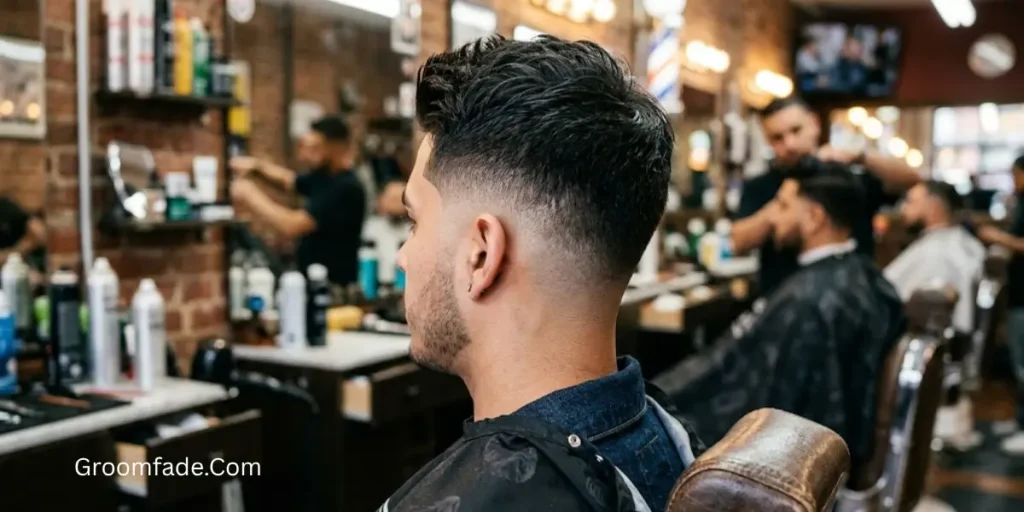
The Brooklyn fade is a clean men’s haircut built around a smooth fade on the sides and back, with more length left on top. It can look sharp with straight hair, but it is especially popular with curly, coily, wavy, and textured hair.
One reason this haircut stands out is its flexibility. You can keep the top short and neat, leave it curly and full, or pair the fade with a longer style such as a mullet. The fade can also sit lower or higher depending on the look you want.
If you are thinking about getting a Brooklyn fade, the most important details are the fade height, top length, hair texture, and finish around the hairline. Knowing these details makes it much easier to tell your barber exactly what you want.
What Is a Brooklyn Fade Haircut?
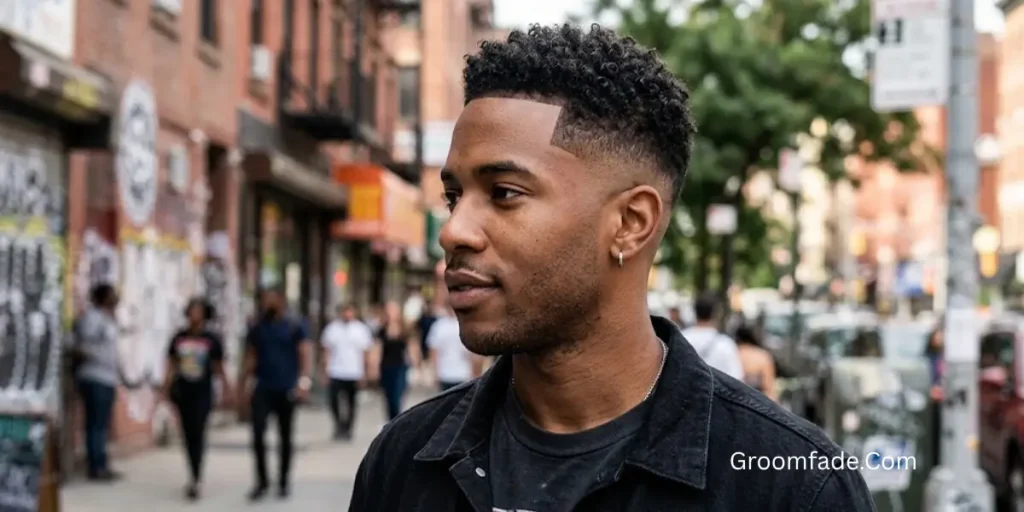
A Brooklyn fade haircut is a men’s fade style where the hair gradually becomes shorter around the sides and back. The transition can range from a subtle shadow to a very close, skin-level finish.
The top is usually left longer than the faded areas. This creates contrast between the fuller hair above and the closely blended sides.
The exact meaning of “Brooklyn fade” can vary between barbers and regions. Some people use the term for a style that has a strong temple and side fade, while others use it more broadly for a sharp, modern fade with textured hair on top.
That is why showing your barber a photo is often helpful. You can then explain how short you want the sides and how much length you want to keep on top.
What Does a Brooklyn Fade Look Like?
The haircut usually has four main features.
The structured shape of a ducktail can work well alongside the clean finish of a French Crop Haircut. Its shorter top and defined fringe create a sharper, more compact look.
Faded Sides and Back
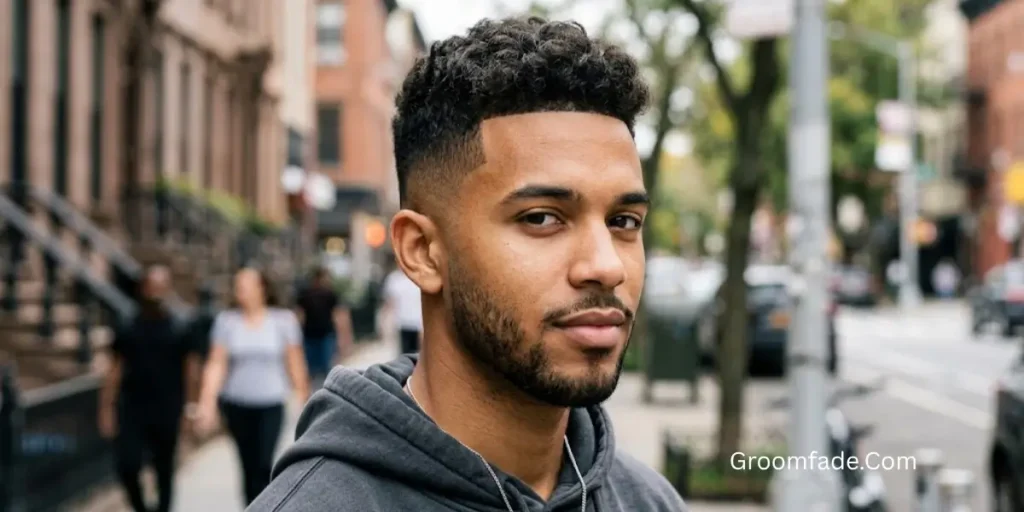
The sides and back are cut progressively shorter toward the lower part of the fade. A skilled barber blends each section so there are no harsh lines between lengths.
The fade height can change the whole appearance. A lower fade leaves more hair around the upper sides, while a higher fade creates more contrast.
Clean Hairline and Edges
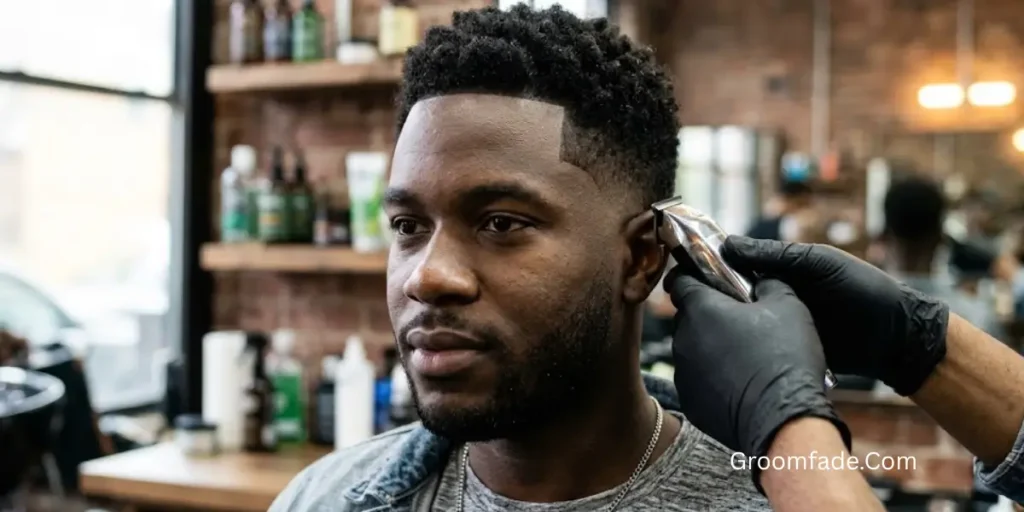
A clean hairline can make a Brooklyn fade look sharper. Many versions include a neat lineup around the forehead, temples, and sideburns.
The edges should still look natural. Overly sharp or pushed-back lines can change the shape of the haircut.
Fuller Hair on Top
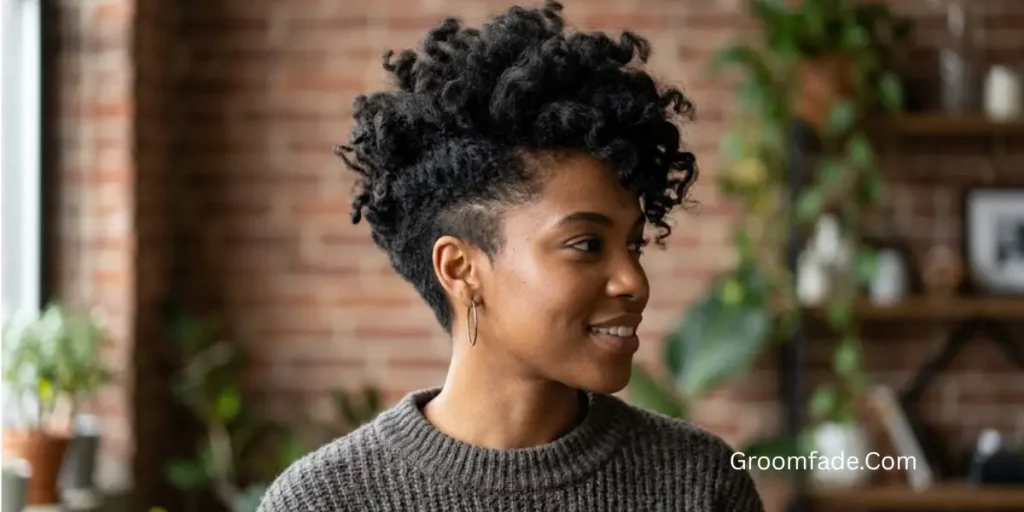
The top can be short, medium, or relatively long. This gives you room to choose a style that matches your hair texture.
You might wear the top curly, textured, brushed back, side-swept, or slightly messy.
Smooth Fade Transition
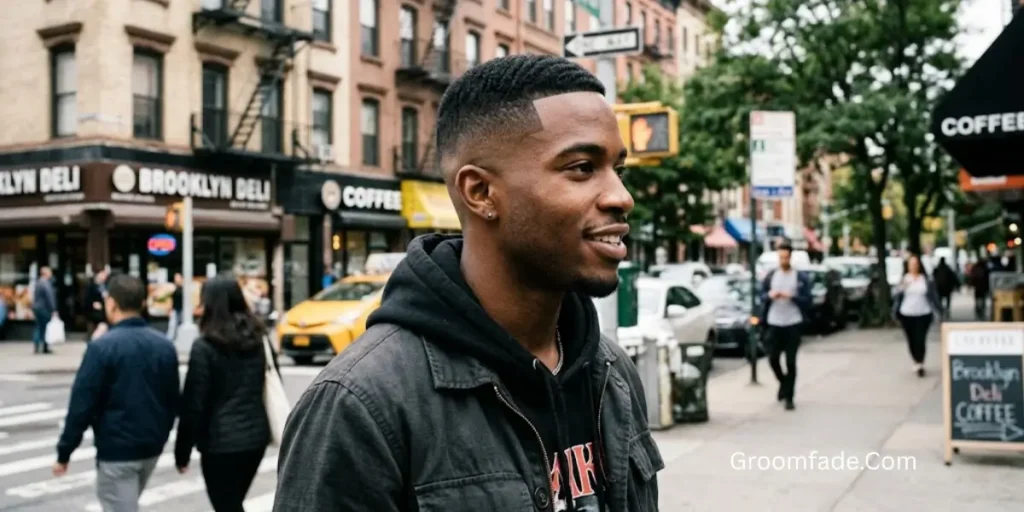
The quality of the blend matters more than simply choosing a fade height. The hair should move smoothly from the longer top into the shorter sides and back.
This is one of the main reasons the Brooklyn fade looks clean when it is done well.
Brooklyn Fade vs Brooklyn Taper Fade
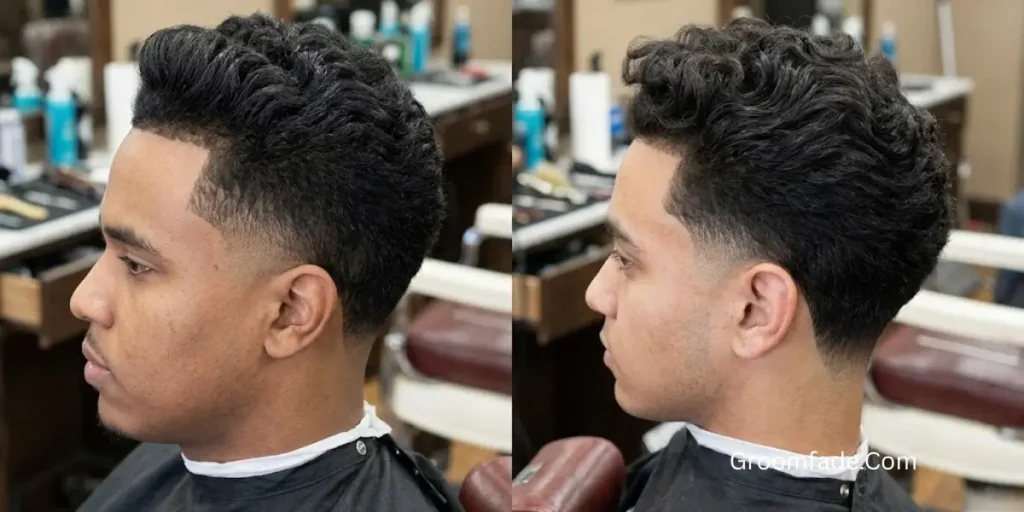
The terms Brooklyn fade and Brooklyn taper fade are sometimes used in similar ways, but they can describe slightly different finishes.
A taper usually keeps more hair around the natural edges, especially near the sideburns and neckline. A stronger fade removes more hair and creates a clearer change in length.
| Feature | Brooklyn Fade | Brooklyn Taper Fade |
| Side finish | More visible fade | More gradual |
| Contrast | Usually stronger | Usually softer |
| Skin exposure | Can be very close | Often less exposed |
| Overall look | Sharp and defined | Clean and subtle |
| Maintenance | More frequent touch-ups | Often easier to grow out |
There is no single universal rule for these names. Barber terminology can differ, so explain the result you want instead of relying only on the haircut name.
For men who like extra volume through the front and top, a Pompadour Fade offers a fuller shape with cleaner sides and a polished finish.
Brooklyn Fade vs High Taper
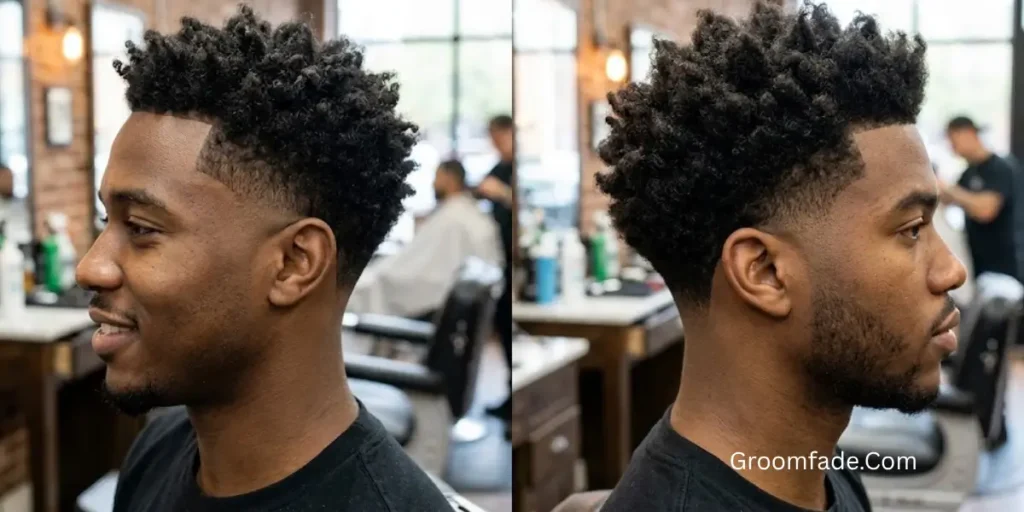
A high taper and a Brooklyn fade can look similar, especially around the temples. The key difference is usually where the shortening starts and how much hair is removed.
A high taper keeps the transition focused around specific areas, while a fade can extend farther across the sides and back.
If you want a noticeable, clean contrast, a Brooklyn fade may suit you. If you want a more conservative finish that keeps more of your natural shape, a high taper may be a better choice.
Brooklyn Fade Haircut Styles
The Brooklyn fade works with many different top styles. Your hair texture and preferred length can change the final result.
Brooklyn Fade With Curly Top
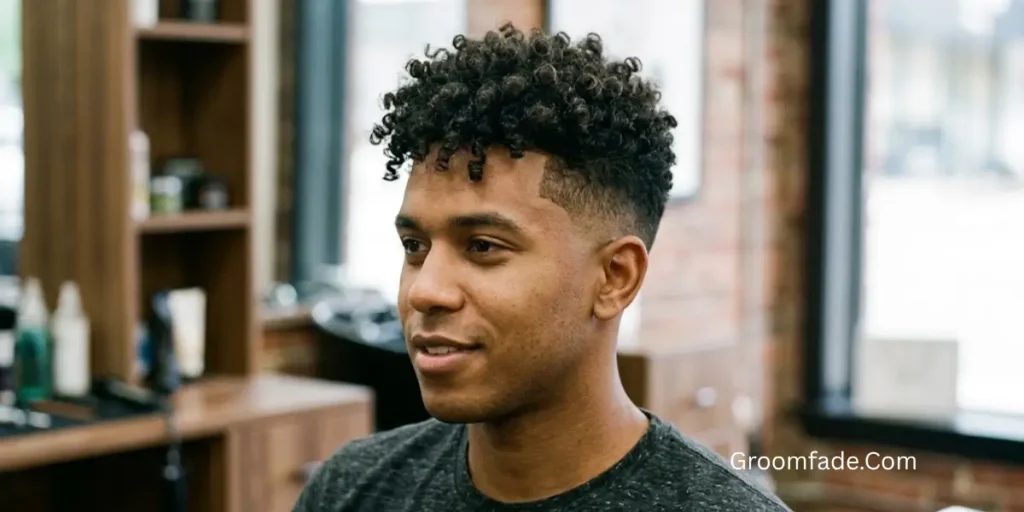
A Brooklyn fade curly hair style combines closely blended sides with natural curls on top.
This combination works well because the fade gives the haircut structure while the curls provide volume and texture.
You can choose:
- Short defined curls
- A medium curly top
- A curly fringe
- A longer curly top
- Natural curls with a clean lineup
For curly hair, ask your barber to work with your natural curl pattern instead of cutting the top too short without considering shrinkage.
Brooklyn Fade for Black Men
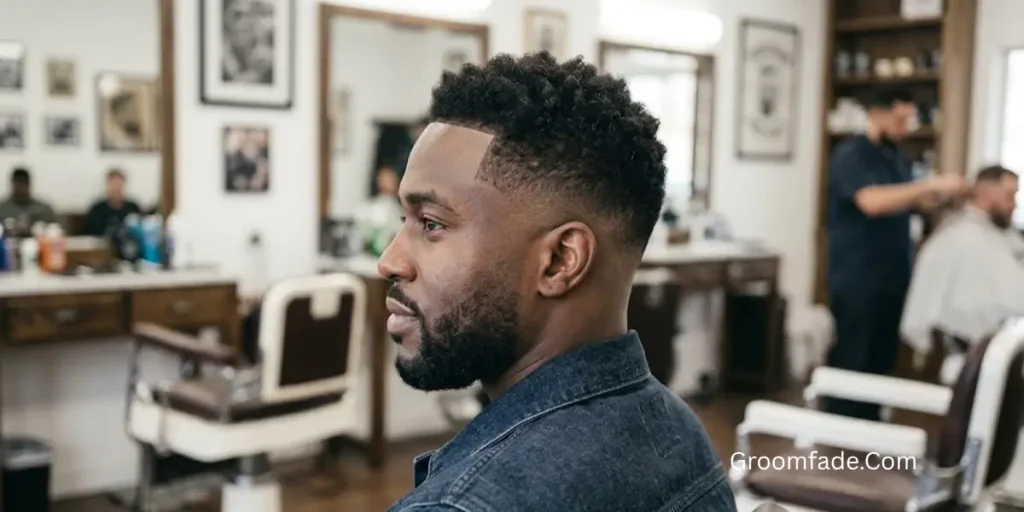
The Brooklyn fade Black style is often paired with textured hair, coils, waves, or curls.
A clean fade can provide strong contrast against the natural texture on top. Popular combinations include a short textured top, 360 waves, curls, and a sharp lineup.
For coily hair, moisture and regular grooming can also help the top maintain its shape.
Brooklyn Fade With Straight Hair
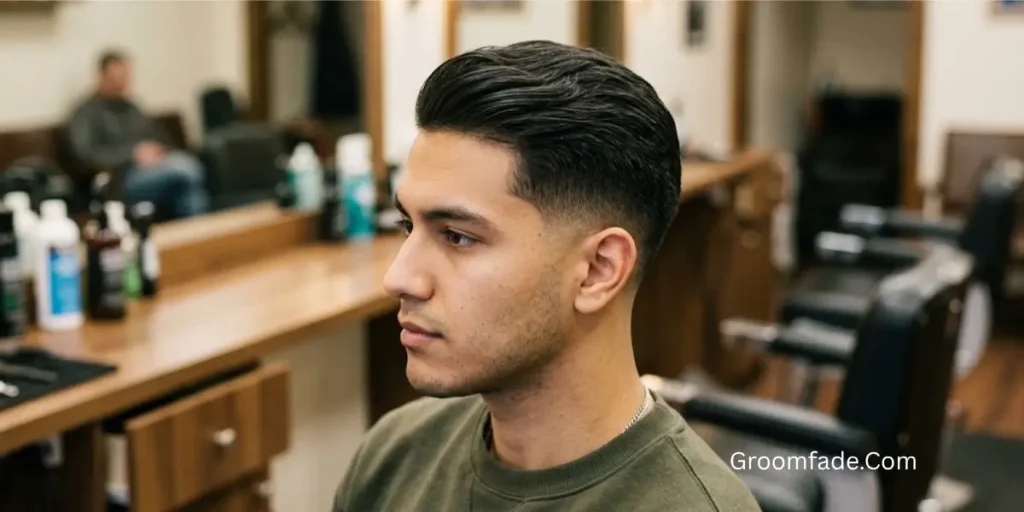
A Brooklyn fade straight hair style has a different character from the curly version.
Straight hair can be worn with:
- A textured top
- Short fringe
- Side-swept hair
- Brushed-back hair
- A short crop
- Medium-length hair
Adding texture to straight hair can prevent the top from looking too flat against the faded sides.
Brooklyn Fade With Long Hair
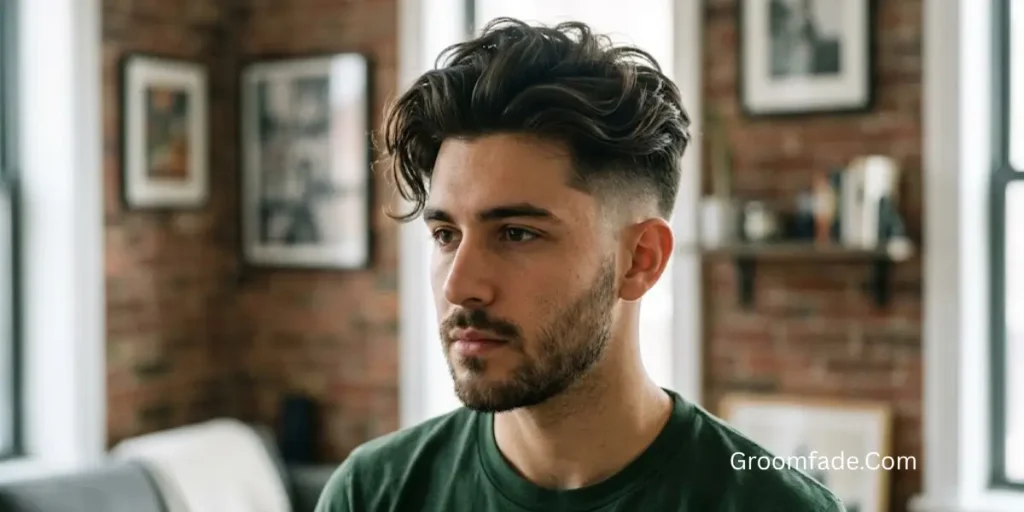
You do not need a short top to wear a Brooklyn fade.
A Brooklyn fade with long hair creates a stronger contrast between the sides and the top. The longer hair can be pushed back, tied up, worn naturally, or styled with texture.
The longer the top becomes, the more important it is to tell your barber how much length you want to keep.
A more noticeable separation between the top and sides comes with an Undercut Fade. This option keeps the upper hair longer while creating a bold contrast around the sides.
Low Brooklyn Fade
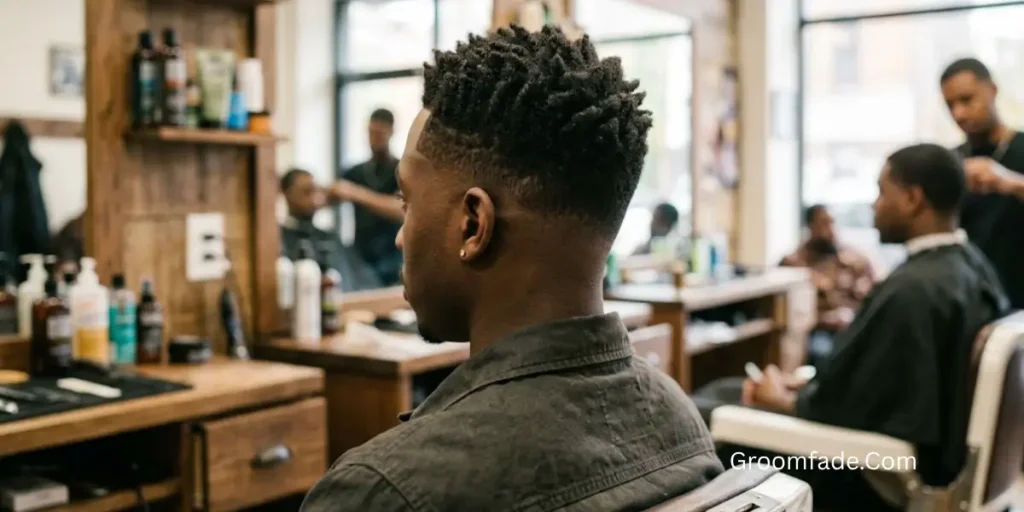
A low Brooklyn fade haircut keeps the fade lower on the sides and back.
This creates a softer transition and leaves more hair around the upper sides. It is a good choice if you want the clean appearance of a fade without removing too much hair.
A low Brooklyn fade can work particularly well with curly, wavy, and medium-length tops.
High Brooklyn Fade
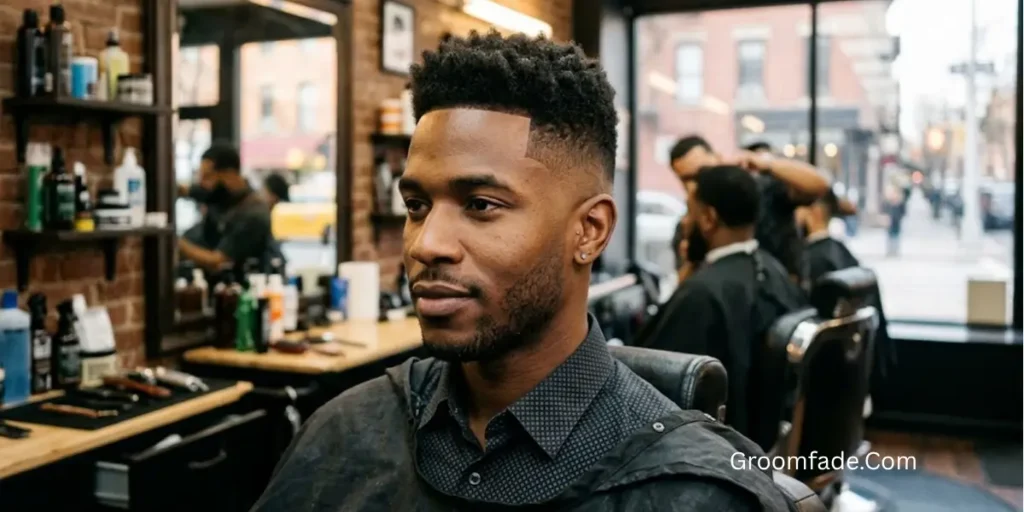
A high Brooklyn fade starts higher on the sides and creates more contrast.
This gives the haircut a stronger, more noticeable shape. It can work well with short textured tops, curls, waves, and longer styles.
Because more of the sides are shortened, a high fade can also make the top appear fuller.
Skin Tight Brooklyn Fade
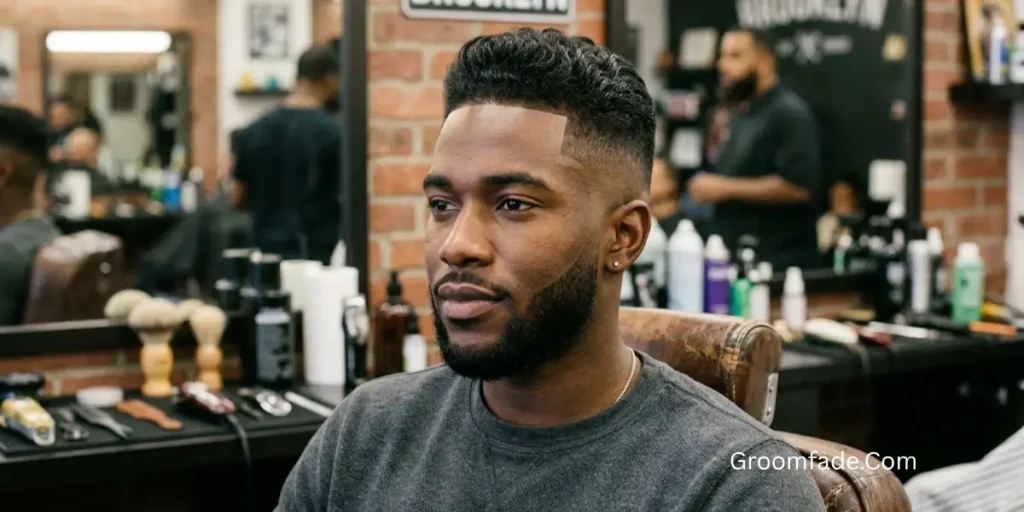
A skin tight Brooklyn fade takes the shortest part of the fade very close to the skin.
This produces a crisp, high-contrast finish. It also shows new hair growth more quickly, so it usually needs more frequent maintenance than a softer shadow fade.
Brooklyn Fade Mullet
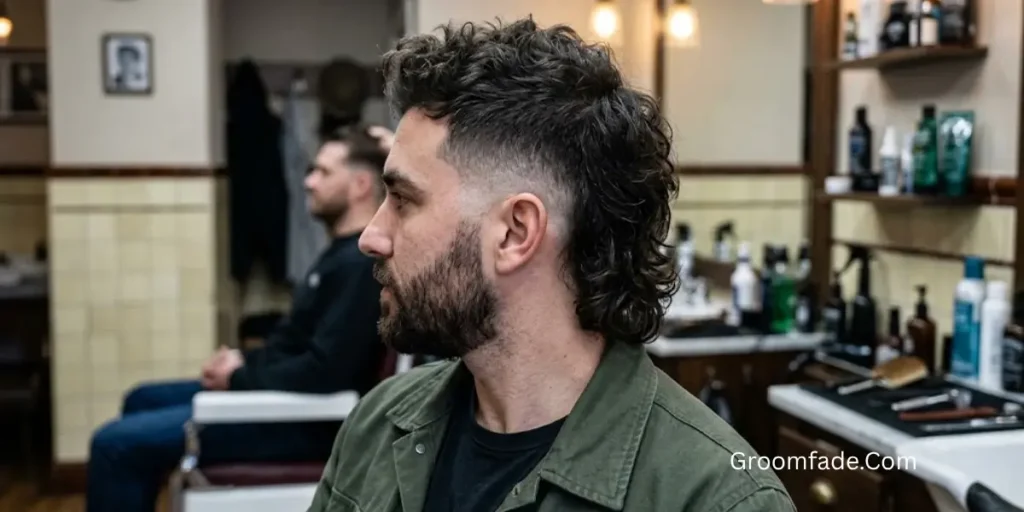
A Brooklyn fade mullet combines faded sides with extra length at the back.
The contrast can be bold, especially when the top and back are left textured. The fade keeps the sides clean while the longer rear section gives the haircut its mullet shape.
Brooklyn Blowout Fade
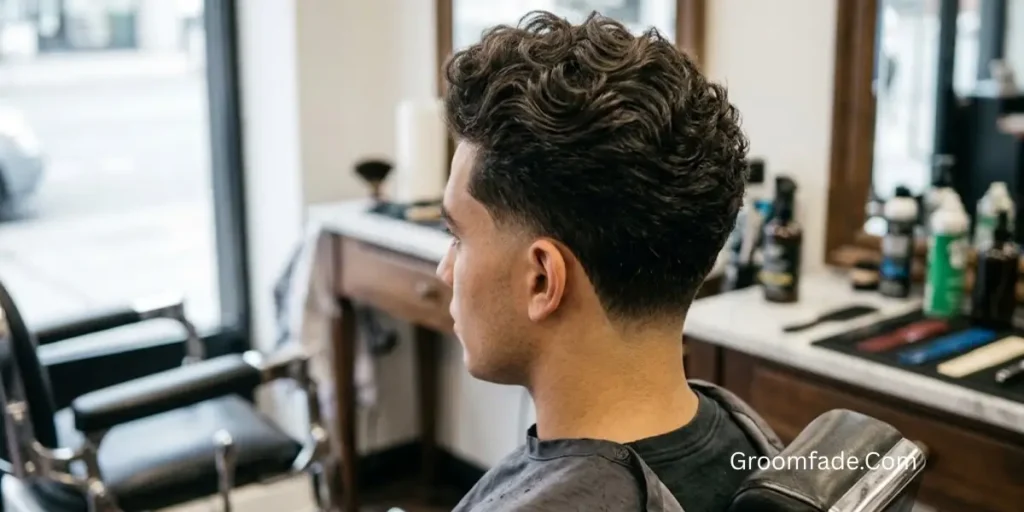
A Brooklyn blowout fade keeps volume and length above the fade, with the hair styled outward or upward.
The result has more movement than a very short fade. It can work with straight, wavy, and curly hair, depending on the length and natural volume.
Brooklyn Fade and Temple Fade
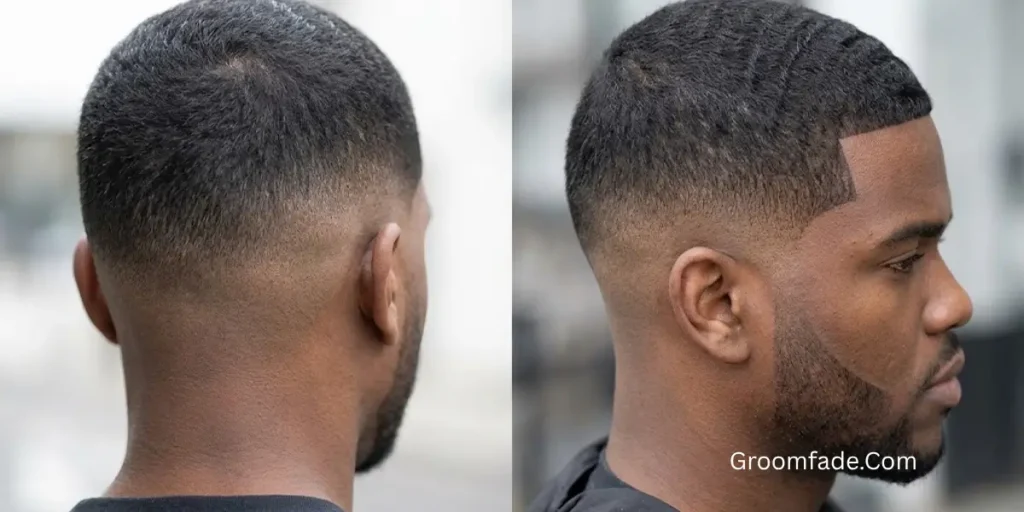
You may also see searches for Brooklyn temple fade, Brooklyn temp fade, and temple fade Brooklyn fade.
These terms overlap because the temple area can be an important part of the Brooklyn fade. However, they should not always be treated as exact synonyms.
A temple fade specifically focuses on the area around the temples and sideburns. A Brooklyn fade can involve a broader fade across the sides and back.
If you want the fade concentrated around your temples, tell your barber that directly. If you want the sides and back blended as well, mention that too.
Best Brooklyn Fade for Different Hair Types
Your hair texture should influence the version you choose.
Brooklyn Fade for Curly Hair
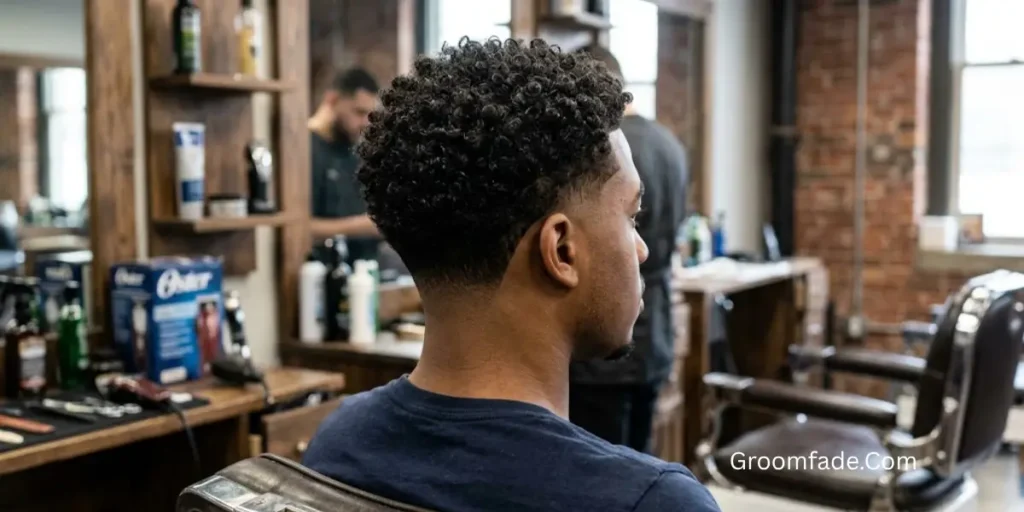
Curly hair gives the haircut natural volume and definition. A low or mid fade can leave enough weight around the sides while keeping the curls prominent on top.
Brooklyn Fade for Straight Hair
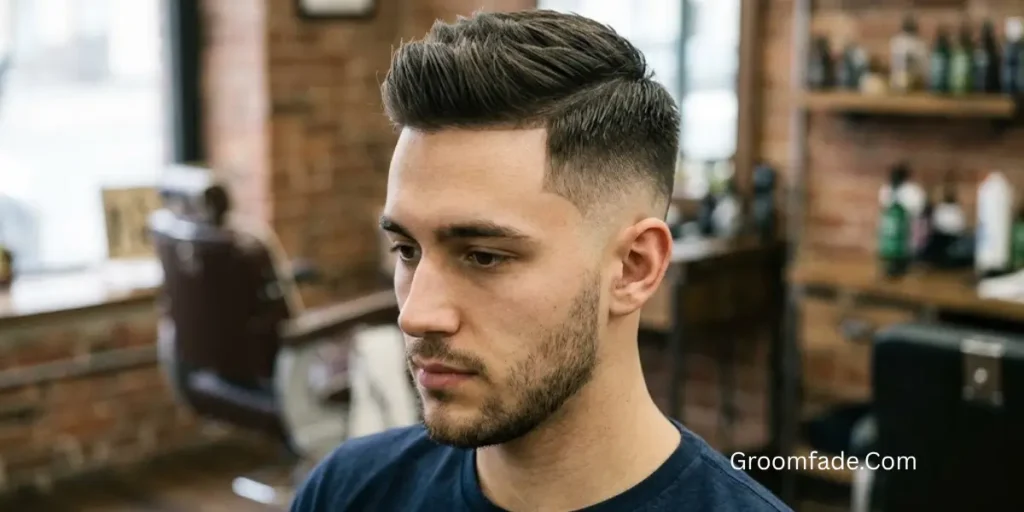
Straight hair benefits from texture and layering when you want more volume. A textured top can create a stronger contrast with the fade.
Brooklyn Fade for Wavy Hair
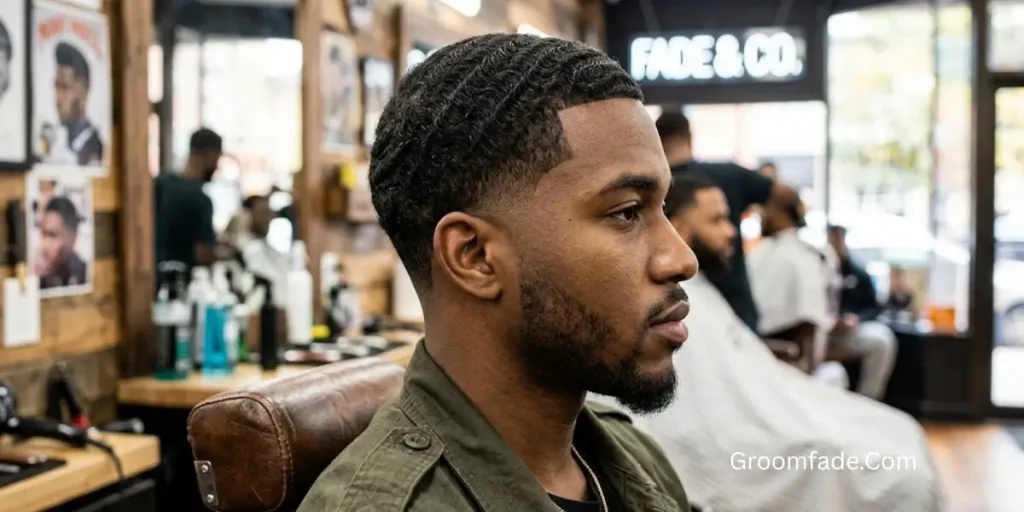
Wavy hair works well with medium-length tops because the natural movement adds character without requiring heavy styling.
For a cleaner finish around the sides without removing too much length, Temple Fade Hairstyle options keep the fade focused near the temples and maintain flexibility on top.
Brooklyn Fade for Thick Hair
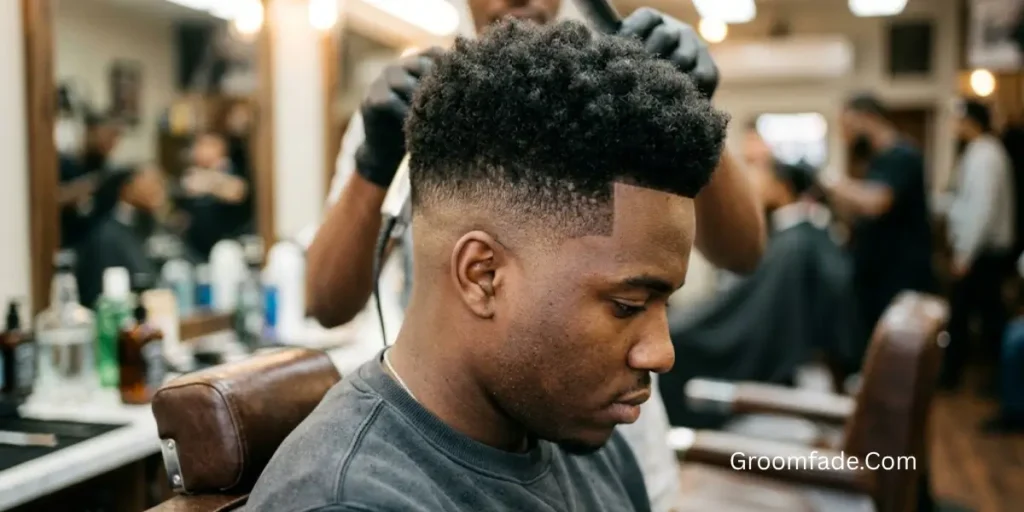
A fade can reduce bulk around the sides while keeping the top full. Your barber can remove some weight from the top if the hair becomes difficult to control.
Brooklyn Fade for Coily Hair
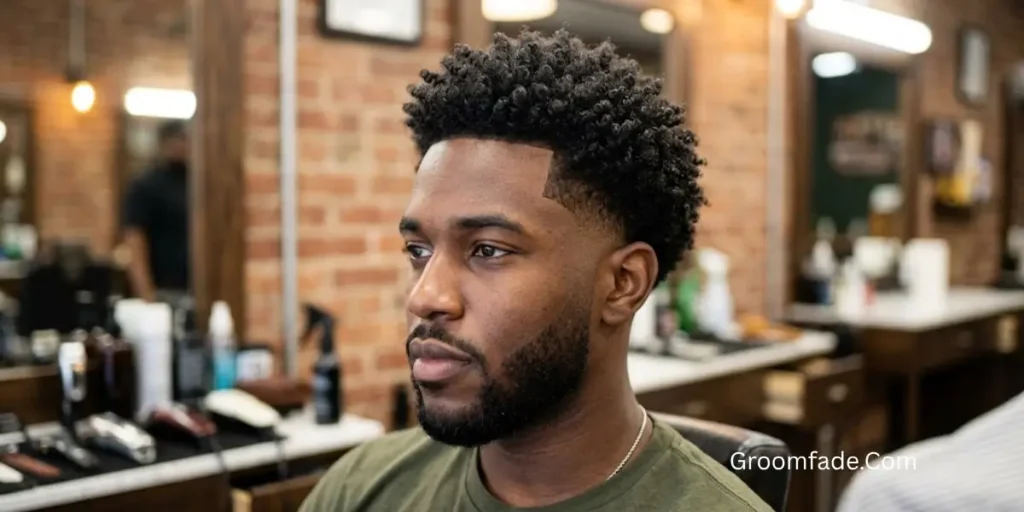
Coily hair can pair very well with a fade because the close sides frame the natural texture. Waves, coils, curls, and short textured styles can all work.
How to Ask Your Barber for a Brooklyn Fade
Simply saying “Brooklyn fade” may not tell your barber exactly how you want the haircut.
Instead, explain four things:
- Fade height: low, medium, or high
- Shortest length: shadow, very short, or skin
- Top length: short, medium, or long
- Finish: natural hairline or sharp lineup
You could say:
“I want a Brooklyn fade with a clean blend around the sides and back. Keep the top around [your preferred length] and leave enough length for my natural texture. Keep the hairline clean but natural.”
If you want a specific style, add that to the request. For example, you might ask for a Brooklyn fade with a curly top, textured fringe, waves, or a longer top.
A reference photo can also help your barber understand the exact shape you have in mind.
How to Choose the Right Brooklyn Fade
The best version is not necessarily the highest or shortest fade. It should match your hair and the amount of maintenance you are willing to do.
Choose Based on Your Hair Type
Curly and coily hair can handle strong contrast between the top and sides. Straight hair may benefit from additional texture.
Choose Based on Your Face Shape
The top length and fade height can change how your face looks.
More volume on top can visually add height, while a lower fade can leave more fullness around the sides.
Your barber can adjust the proportions instead of using exactly the same fade on every client.
Choose Based on Maintenance
A skin-tight fade generally needs more frequent touch-ups because new growth becomes visible quickly.
A softer fade or taper usually grows out more gradually.
Choose Based on Contrast
For a bold appearance, choose a higher fade or closer finish.
For a softer appearance, consider a lower fade with more length around the sides.
How to Maintain a Brooklyn Fade
A fresh fade looks best when the sides, edges, and top are kept in good condition.
If you want the fade to stay sharp, schedule regular barber visits based on how quickly your hair grows.
The top also needs attention. Curly hair may need curl cream or another light styling product, while straight hair may benefit from a texture product.
Keep the scalp clean and avoid using more product than necessary. Too much product can make the top look heavy or greasy.
Your barber can also adjust the neckline and lineup during maintenance appointments.
Men who want a softer transition can consider the Shadow Fade Haircut. It leaves some visible hair along the sides, creating a smoother look than a skin fade.
Is a Brooklyn Fade Easy to Maintain?
The answer depends on the version you choose.
A low Brooklyn fade with a natural finish is generally easier to grow out than a skin-tight high fade.
A skin-level fade creates a strong contrast, but the difference between freshly cut hair and new growth becomes visible sooner.
The length and texture on top also matter. A short top may require little daily styling, while longer curls or a blowout style can need more work.
Is a Brooklyn Fade Attractive?
There is no single haircut that is the most attractive for everyone.
A good fade usually works because it suits the person’s hair texture, face shape, hairline, and personal style.
The Brooklyn fade has a clean and defined appearance. You can make it more subtle with a low fade or more noticeable with a high or skin-tight finish.
The top also makes a major difference. A curly top gives a relaxed look, while a short textured top can look more structured.
How Much Does a Brooklyn Fade Cost?
The price of a Brooklyn fade depends on where you live, the barber’s experience, the shop, and the services included.
A basic fade may cost less than a haircut that includes a beard trim, hot towel service, eyebrows, or detailed styling.
So, is $30 a lot for a haircut? Not necessarily. In one area, $30 may be normal. In another, it may be considered expensive.
Instead of judging the price alone, consider the barber’s skill, cleanliness, service, and the quality of the finished haircut.
Is the Brooklyn Fade the Same as Kelce’s Haircut?
If you are referring to Travis Kelce, his haircut has changed over time, so it is better not to treat one name as the permanent label for every version.
His shorter cuts have often featured faded or tapered sides with a fuller top. A photo is the safest reference when asking a barber for a celebrity-inspired haircut.
If you like a particular Kelce look, show your barber the exact photo and explain how much length you want on top.
Brooklyn Fade vs Other Popular Fades
Brooklyn Fade vs Low Fade
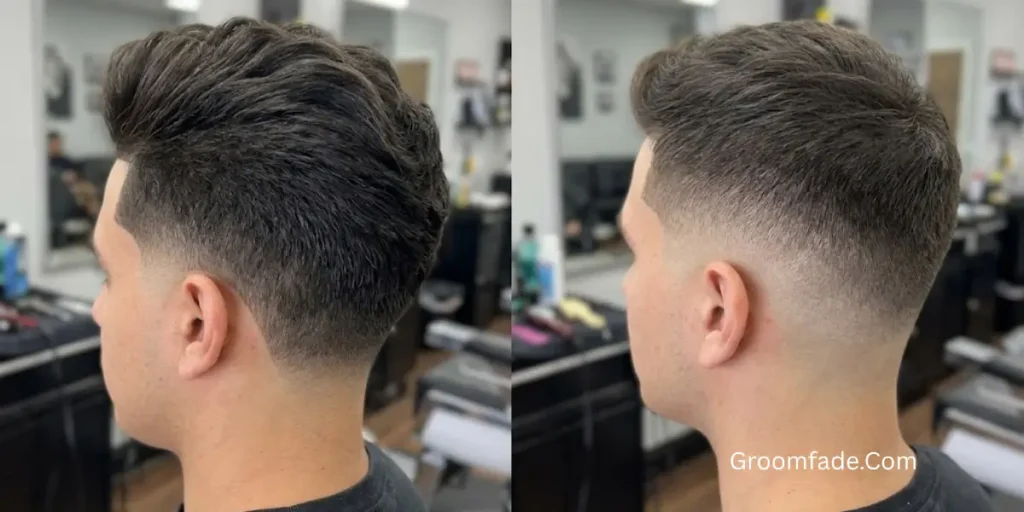
A low fade starts closer to the lower sides and keeps more hair above the transition.
A Brooklyn fade can be cut higher and create more visible contrast, depending on the barber’s interpretation.
Brooklyn Fade vs Mid Fade
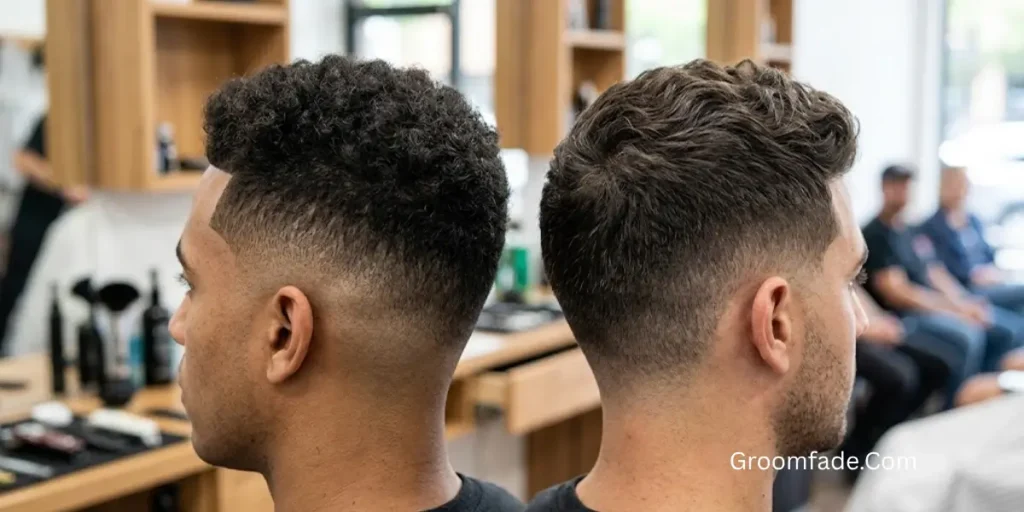
A mid fade begins around the middle of the sides. It creates a balanced amount of contrast and works with many top styles.
For a sharp, geometric appearance, the Box Fade gives the sides and top a clearly defined shape, making it a strong choice for men who prefer structured haircuts.
Brooklyn Fade vs High Fade
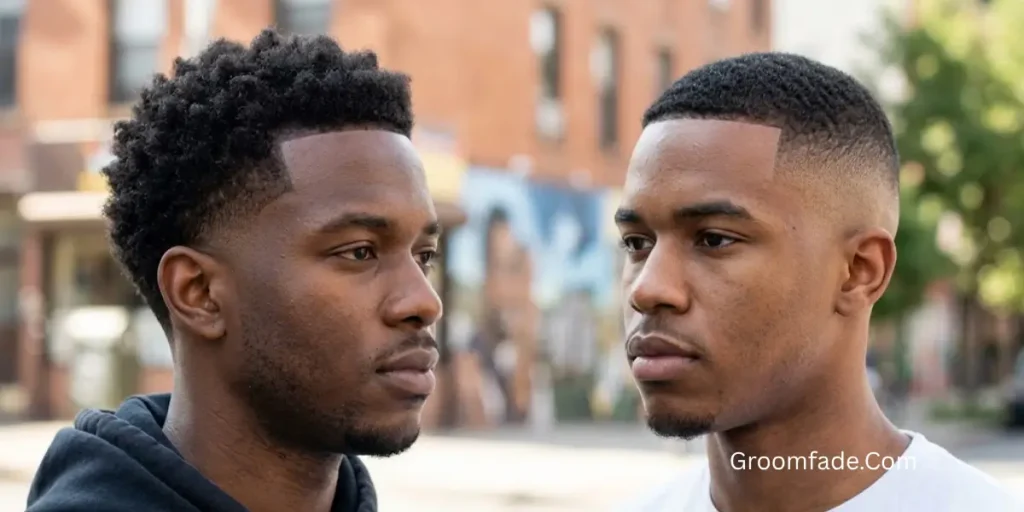
A high fade removes more hair from the upper sides and creates a stronger contrast with the top.
Brooklyn Fade vs Temple Fade
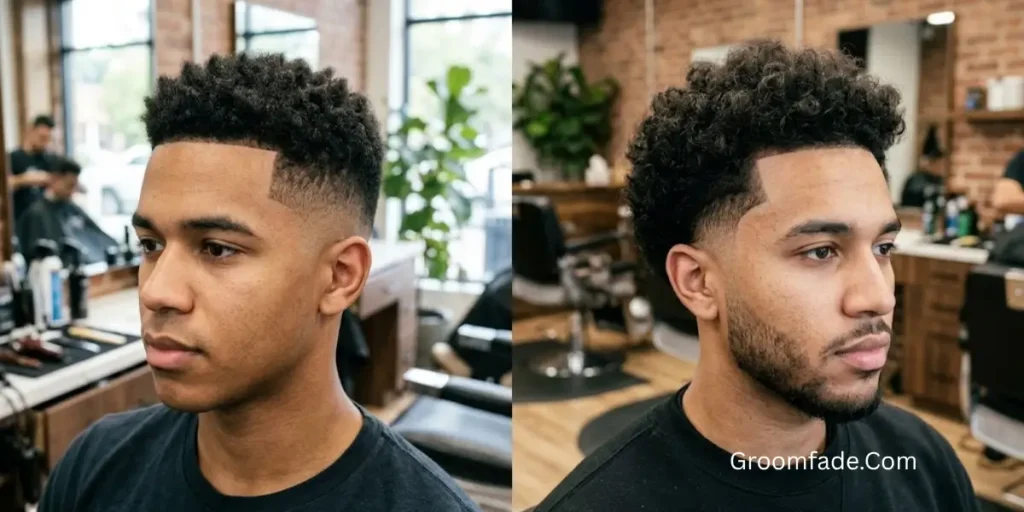
A temple fade mainly focuses on the temple and sideburn areas. A Brooklyn fade may involve a larger section of the sides and back.
Brooklyn Fade vs Taper Fade
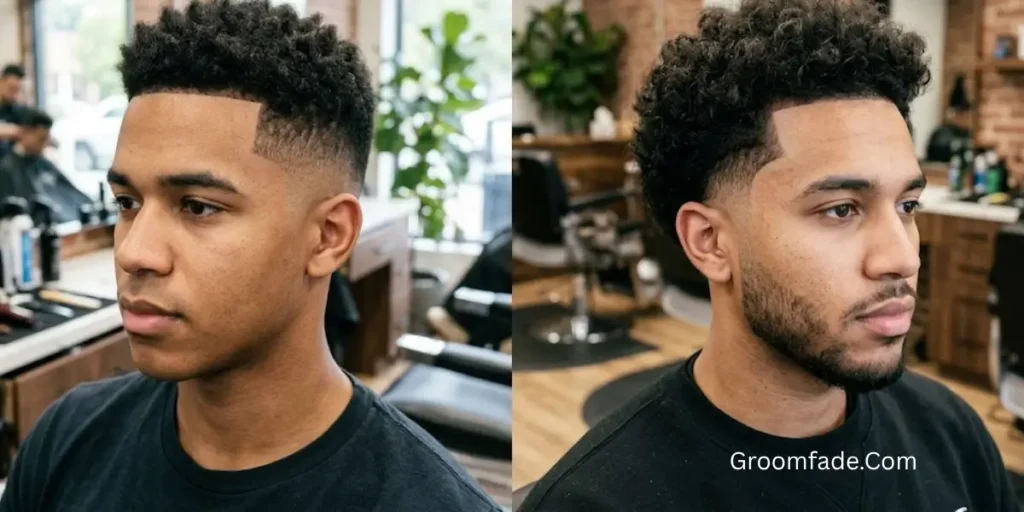
A taper usually leaves more hair around the natural edges. A fade generally creates a more noticeable reduction in length.
Frequently Asked Questions About the Brooklyn Fade
Q1. What is a Brooklyn Fade haircut?
A Brooklyn fade is a men’s haircut featuring gradually shorter sides and back with more length kept on top. The exact fade height and finish can vary between barbers.
Q2. Is a Brooklyn Fade the same as a Brooklyn taper fade?
Not always. The names are sometimes used interchangeably, but a taper usually keeps more hair around the natural edges, while a stronger fade creates more contrast.
Q3. Is a Brooklyn Fade good for curly hair?
Yes. Curly hair can work especially well with a Brooklyn fade because the close sides frame the natural curls on top.
Q4. Is a Brooklyn Fade good for straight hair?
Yes. Straight hair can be paired with a Brooklyn fade and a textured, side-swept, brushed-back, or cropped top.
Q5. What is the difference between a Brooklyn Fade and a high taper?
A high taper usually focuses the shortening around the temples and natural edges, while a Brooklyn fade may extend farther across the sides and back.
Q6. How often should you get a Brooklyn Fade?
It depends on how quickly your hair grows and how sharp you want the fade to remain. A closer fade usually needs more frequent touch-ups than a softer taper.
Q7. How much does a Brooklyn Fade cost?
There is no universal price. Cost varies by location, barber, shop, and additional services.
Q8. Is a Brooklyn Fade good for Black men?
Yes. It can work well with coils, curls, waves, and other textured hair, especially when the fade is shaped around the person’s natural hair pattern.
Q9. Can you get a Brooklyn Fade with long hair?
Yes. Keeping more length on top can create a strong contrast with the faded sides and can be styled in several ways.
Q10. Is a Brooklyn Fade a temple fade?
Not necessarily. The styles can overlap around the temple area, but a temple fade specifically focuses on that section.