
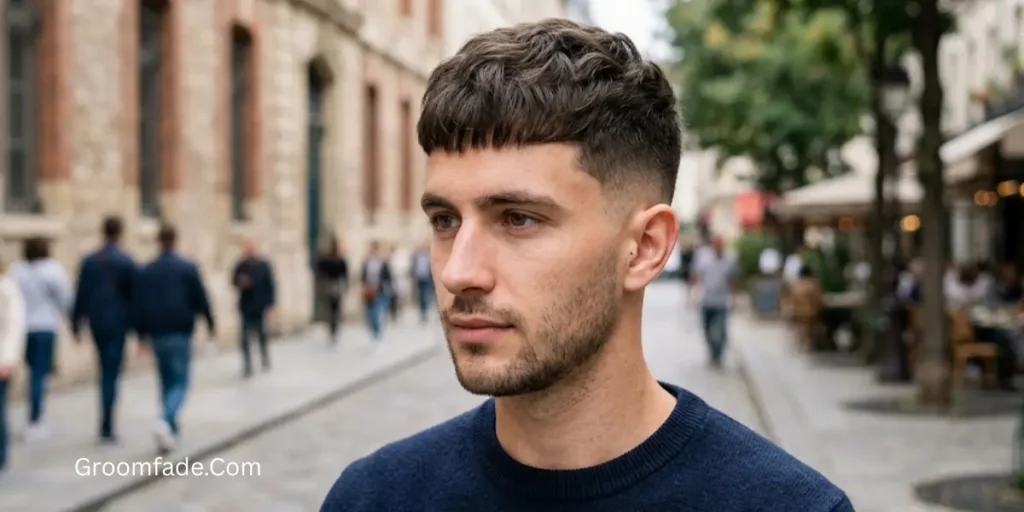
The French crop haircut is a short men’s hairstyle known for its forward fringe, cropped top, and clean sides. It can be worn with a classic scissor cut, taper, low fade, skin fade, or textured finish. The front fringe is usually the key feature, while the sides and top can be changed to suit different hair types and face shapes.
A French crop is also easy to style. Many versions need only a small amount of matte clay, styling cream, or texture powder. That makes it a practical choice for men who want a neat haircut without spending a lot of time on their hair each morning.
What Is a French Crop Haircut?
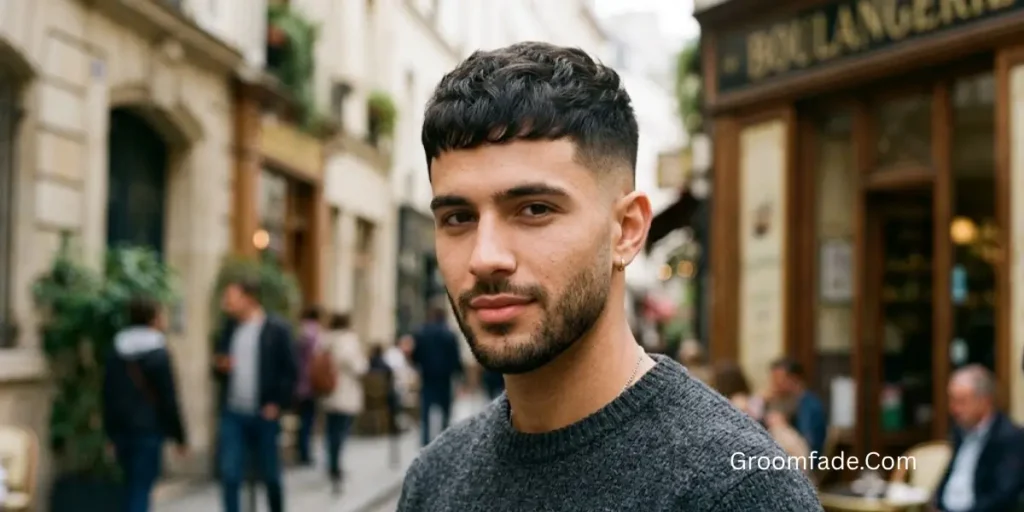
A French crop haircut has a short to medium-length top that is brushed or cut forward toward the forehead. The front usually forms a defined fringe, while the sides and back are kept shorter.
The top does not have to be the same length in every French crop. A classic version may have a fairly even top, while a textured French crop uses choppy layers to create more movement. A fade or taper can also change the overall look.
The French crop is often compared with the Caesar cut because both have a short forward fringe. The main difference is that a French crop usually allows more texture and variation on the top, while a traditional Caesar often has a more uniform short length.
A French crop can look sharper with a stronger fade around the sides. The High Drop Fade creates more contrast while keeping the textured top and fringe as the main focus.
Best French Crop Haircuts for Men
There are many ways to wear this haircut. Your hair texture, hairline, face shape, and preferred level of maintenance can all affect which version works best.
Classic French Crop Haircut
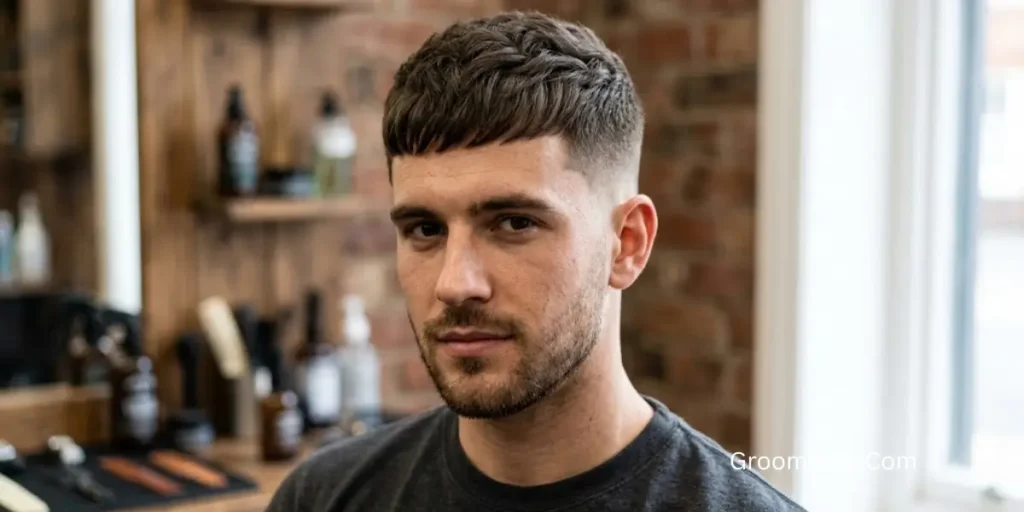
The classic French crop haircut keeps the top short and controlled with a forward fringe. The sides can be scissor cut or kept slightly shorter with clippers.
This is a good choice if you want the traditional shape without an aggressive fade. It also works well for men who prefer a clean and simple daily style.
Textured French Crop
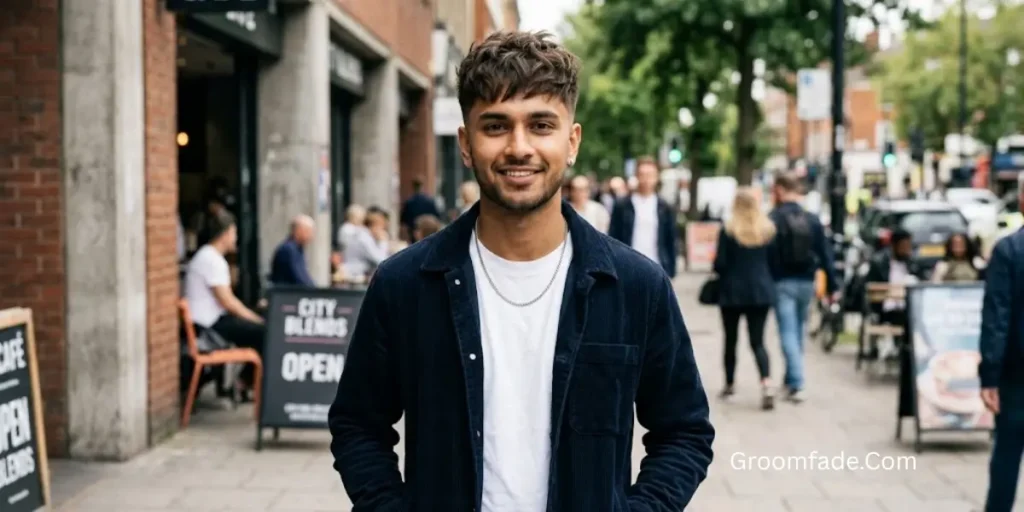
A textured French crop adds layers and separation to the top. Instead of looking flat, the hair has small sections that give it a natural, slightly messy finish.
A matte clay or texture powder can help bring out these sections. This style is especially useful for thick hair because removing some weight from the top can make the hair easier to control.
French Crop Fade
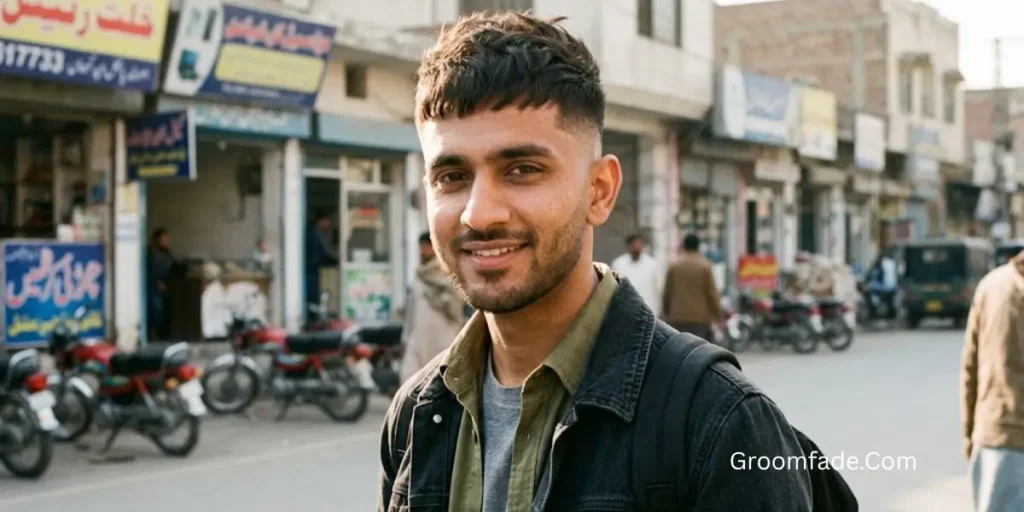
A French crop fade combines the cropped top and fringe with faded sides. The fade can be low, mid, high, drop, burst, or skin depending on the look you want.
The fade creates a stronger contrast between the top and sides. For a softer appearance, a low fade is usually a better starting point.
French Crop Low Fade
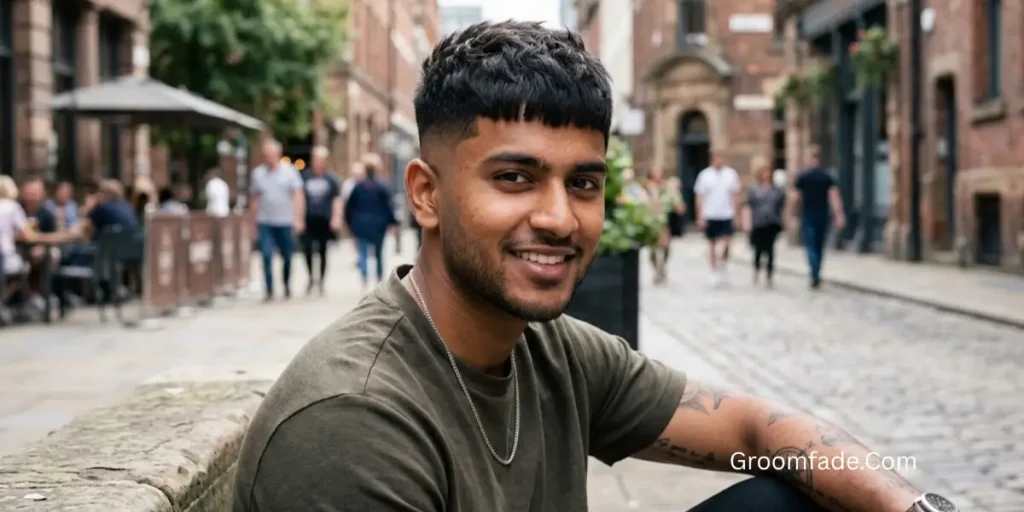
The low fade French crop haircut keeps the fade close to the lower sides of the head. Most of the hair above the fade stays fuller, so the haircut does not look too sharp.
This combination is a strong option if you want a modern haircut that still looks suitable for school, work, or everyday settings.
French Crop Mid Fade
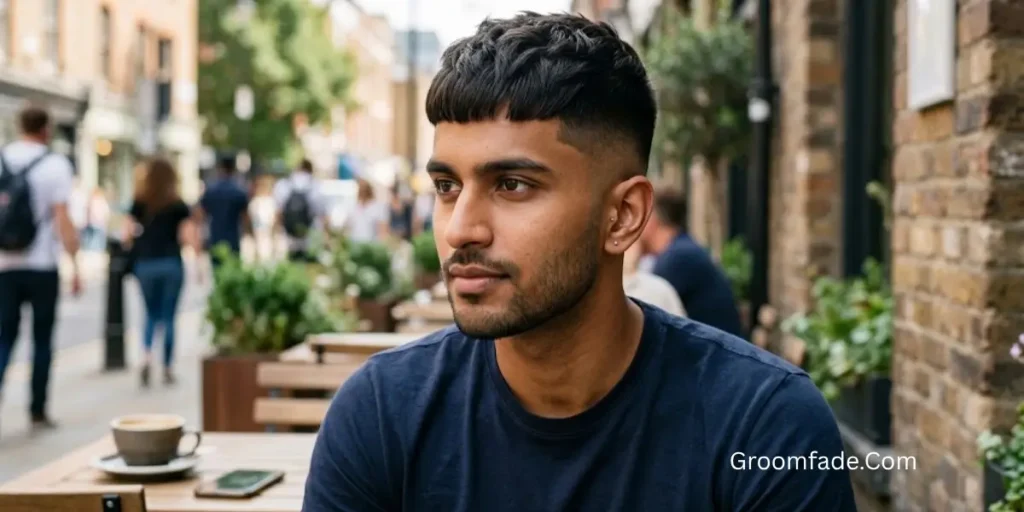
A French crop mid fade starts higher on the sides than a low fade. This creates more contrast and gives the haircut a cleaner, sharper shape.
It works particularly well with a textured top because the shorter sides make the texture more noticeable.
French Crop Taper Fade
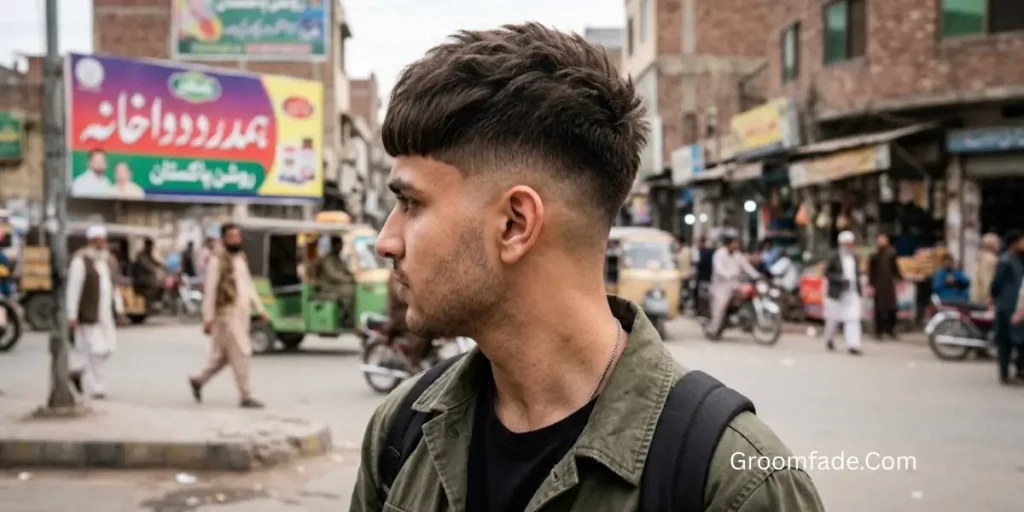
A French crop taper fade gradually shortens the hair around the sideburns and neckline. It usually keeps more natural weight on the sides than a skin fade.
This is a good option for someone who wants a neat haircut without making the sides extremely short.
Short French Crop Haircut
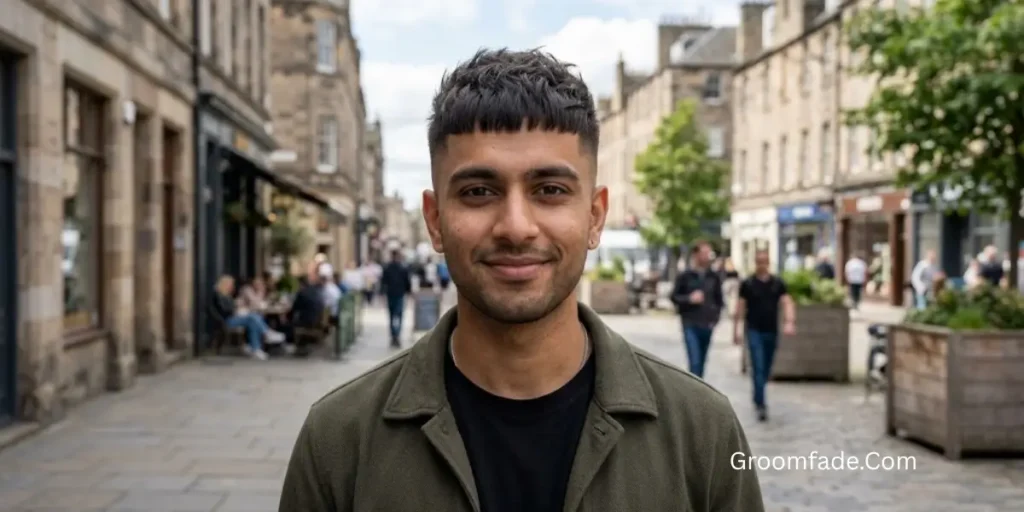
A short French crop haircut keeps the top and fringe close to the head. It is one of the easiest versions to maintain and style.
A short crop can work well with straight, wavy, or curly hair. The barber can adjust the fringe and top length based on how much natural movement your hair has.
Long French Crop Haircut
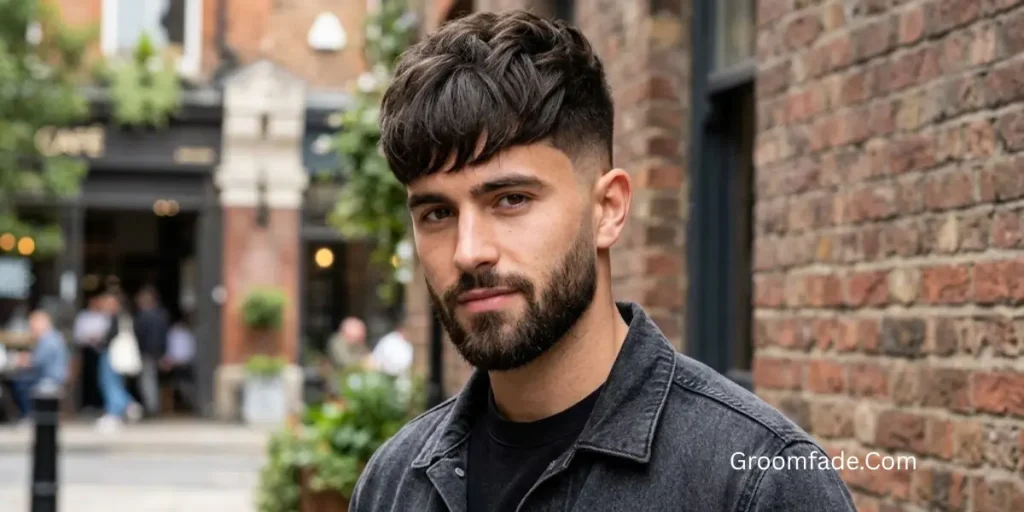
A long French crop haircut leaves extra length on top and through the fringe. The added length gives you more room for texture and styling.
It is useful if you like the shape of a crop but do not want a very short haircut. A longer fringe can also be adjusted to suit your forehead and hairline.
The French crop shares its short top and defined fringe with many Crop Haircuts for Men, making this family of styles useful for different hair lengths and textures.
Messy French Crop Haircut
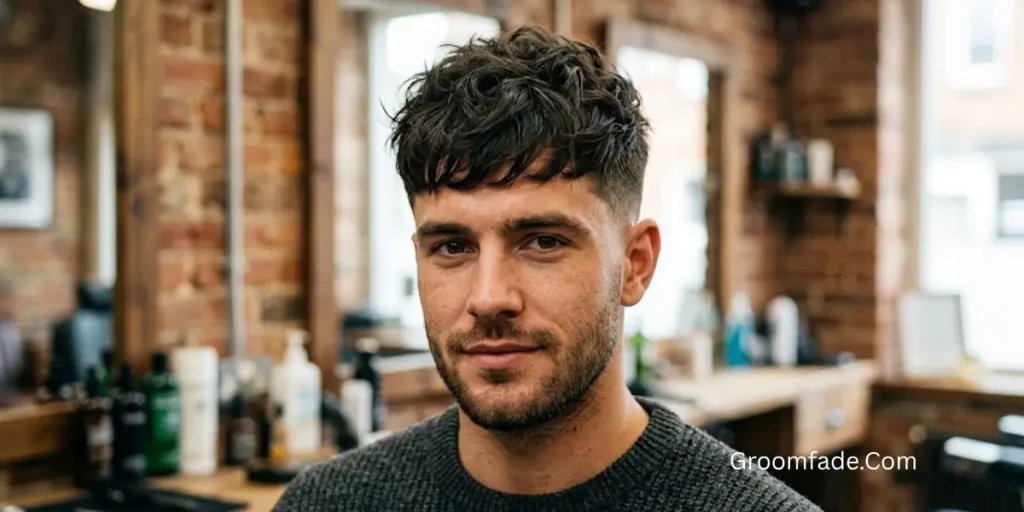
The messy French crop haircut has a less controlled finish. The fringe remains part of the haircut, but the top is styled with separated pieces and natural movement.
A small amount of matte product is usually enough. Avoid using too much product because it can make the textured top look heavy.
Fringe French Crop Haircut
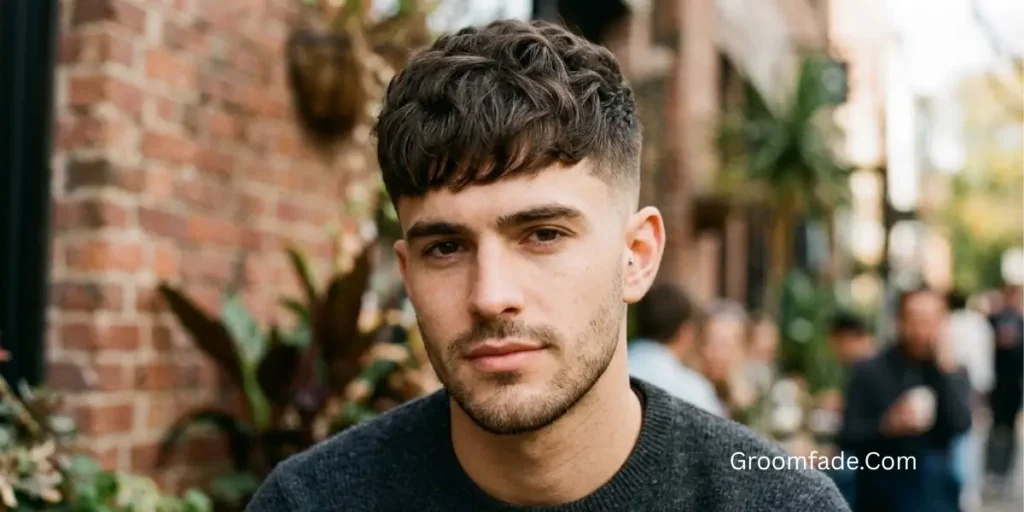
A fringe French crop haircut places more attention on the hair across the forehead. The fringe can be blunt, soft, choppy, or slightly uneven.
Your barber can adjust the fringe according to your forehead and hairline. A softer fringe may look more natural, while a sharper fringe creates a stronger shape.
French Crop Skin Fade
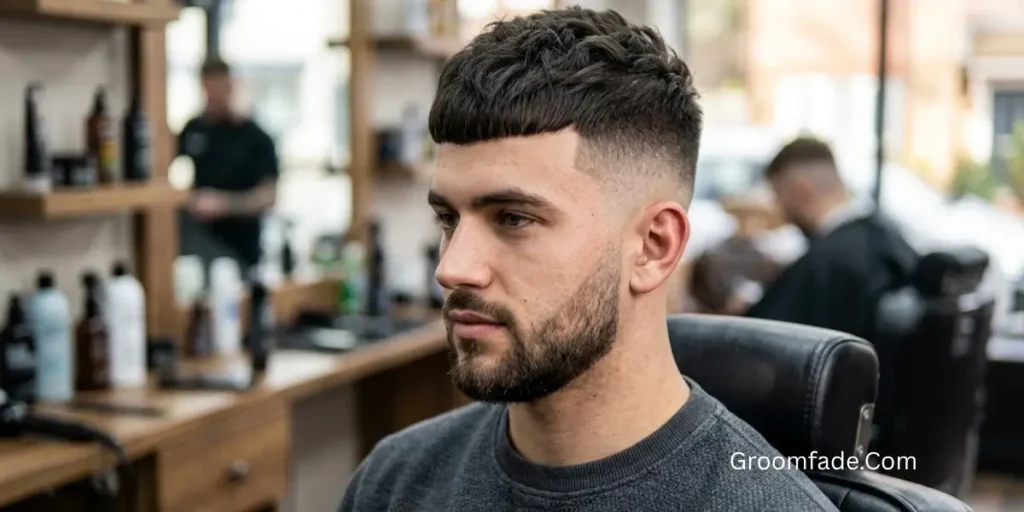
A French crop skin fade takes the sides down to very short or bare skin near the lower part of the fade. It creates a strong contrast with the top.
This style needs more regular barber visits because the skin area becomes visible as the hair grows.
French Crop Drop Fade
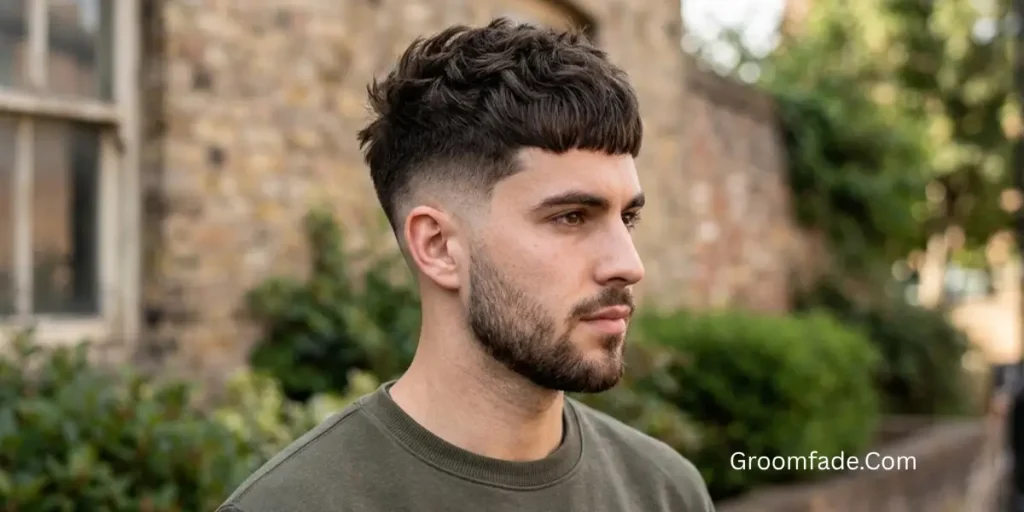
A French crop drop fade follows the natural curve of the head and drops lower toward the back. It creates a shaped profile while keeping the cropped top as the main focus.
It can be paired with a textured top for a modern finish.
French Crop Burst Fade
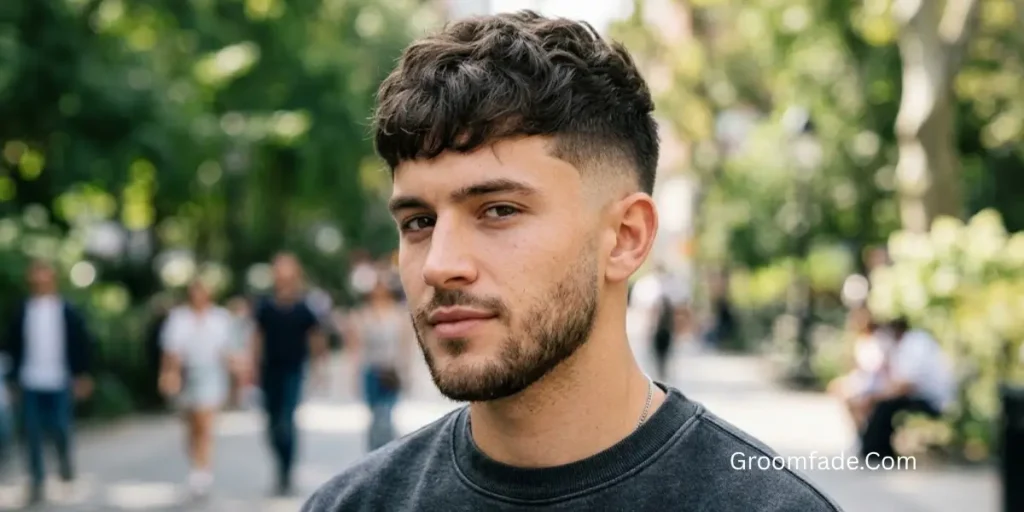
A French crop burst fade focuses the fade around the ears and curves toward the back. It can give the haircut a more distinctive shape without removing as much hair from the entire side.
This option is best for men who want something more noticeable than a basic taper.
French Crop With Beard
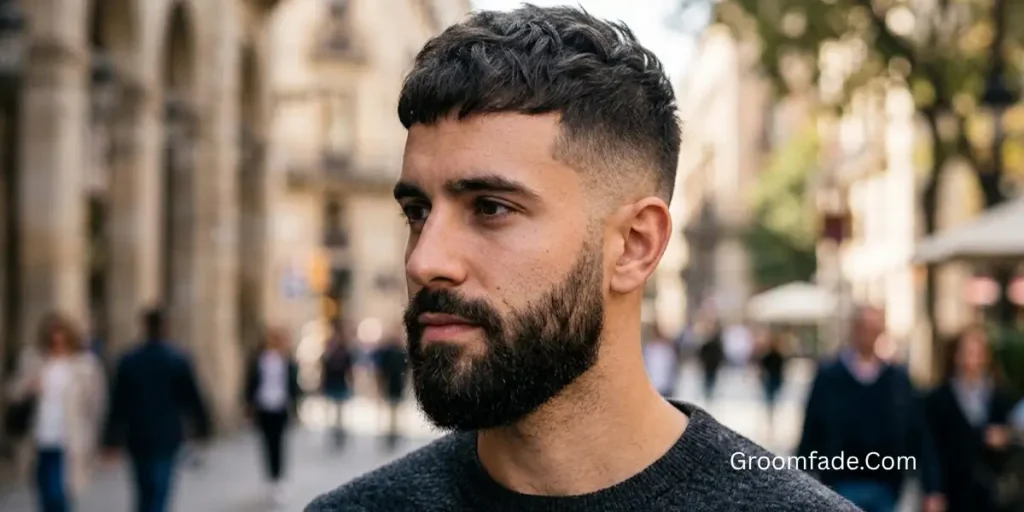
A French crop with beard creates a balanced look by pairing the short haircut with facial hair. The beard does not need to be long. Even light stubble can work.
The barber can connect the sideburn area with the beard or keep a clear separation. The choice depends on the beard length and the shape of your face.
French Crop Haircut by Hair Type
Hair texture can change how a French crop sits and how much styling it needs.
French Crop for Straight Hair
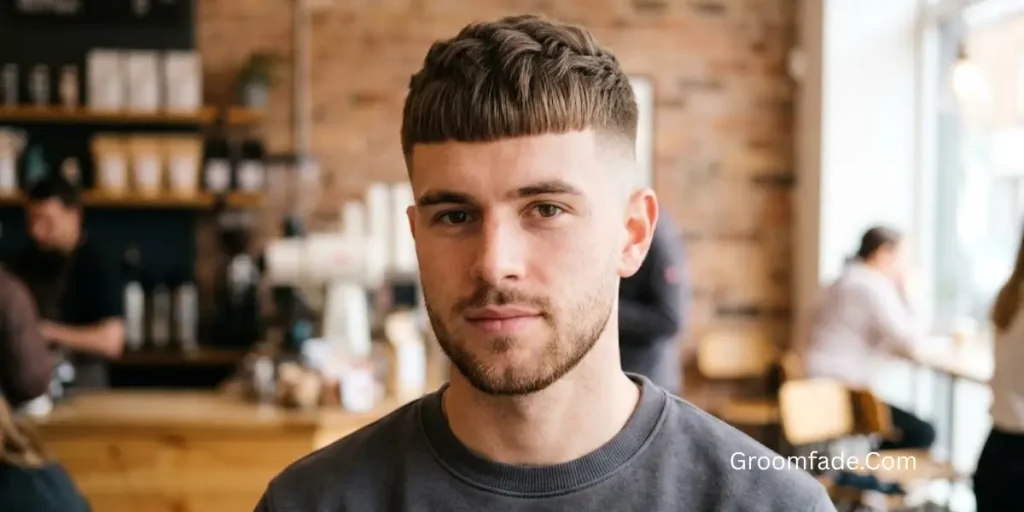
A French crop for straight hair usually creates a clean and defined fringe. Straight hair can also make the shape of the haircut easy to see.
If your hair is fine, ask your barber for light texture rather than removing too much weight. Too much thinning can make fine hair look even flatter.
Curly French Crop Haircut
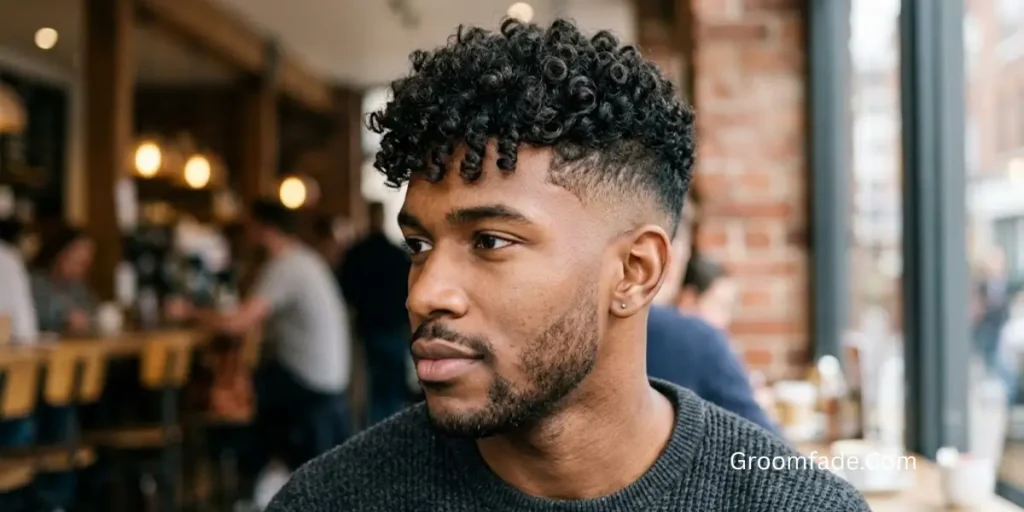
A French crop haircut for curly hair keeps the natural curl pattern on top while shortening the sides. The fringe may be slightly shorter than a straight-hair version because curls shrink as they dry.
Do not judge the final length only when the hair is wet. Your barber should consider how much the curls spring upward after drying.
Wavy French Crop
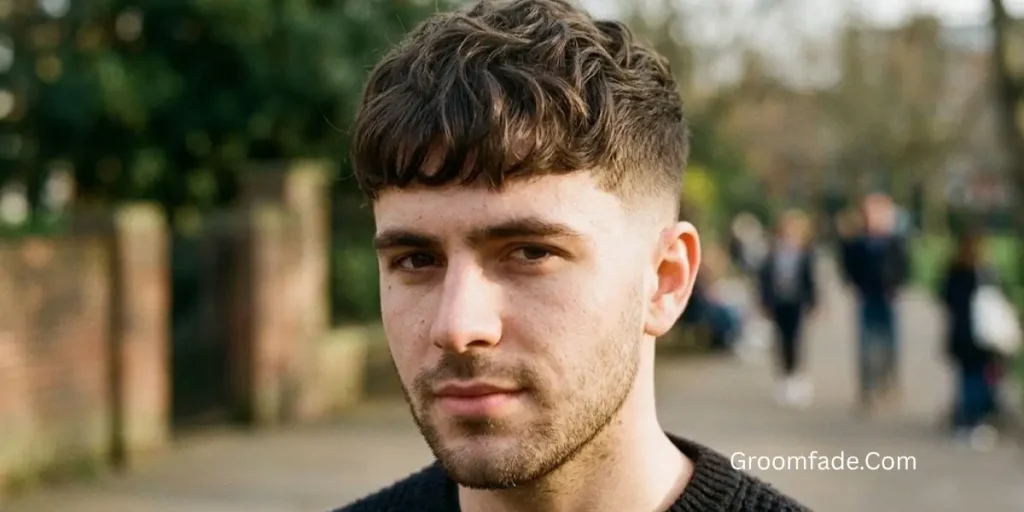
A wavy French crop keeps some natural movement in the top. The wave can add volume without requiring a large amount of styling product.
A light styling cream or matte clay can help control the shape while keeping the natural texture visible.
For a choppier finish with more movement, Textured Crop Haircuts add definition across the top while keeping the overall cut short.
French Crop for Black Men
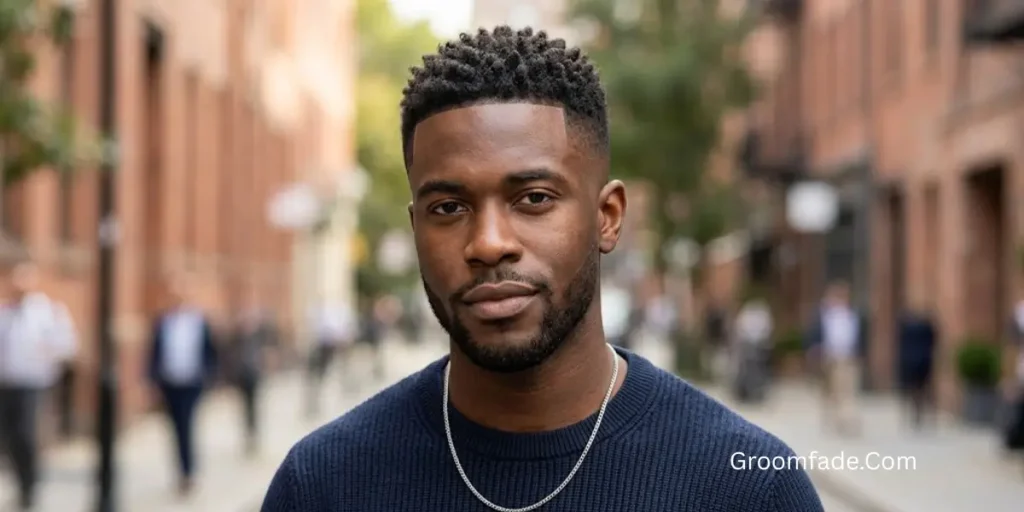
A French crop haircut for Black men can work with coily, curly, or tightly textured hair. The top may be shaped with natural texture, while the sides use a taper, low fade, or skin fade.
The barber should work with the natural growth pattern instead of forcing the hair into a shape it cannot hold comfortably.
French Crop Haircut Asian
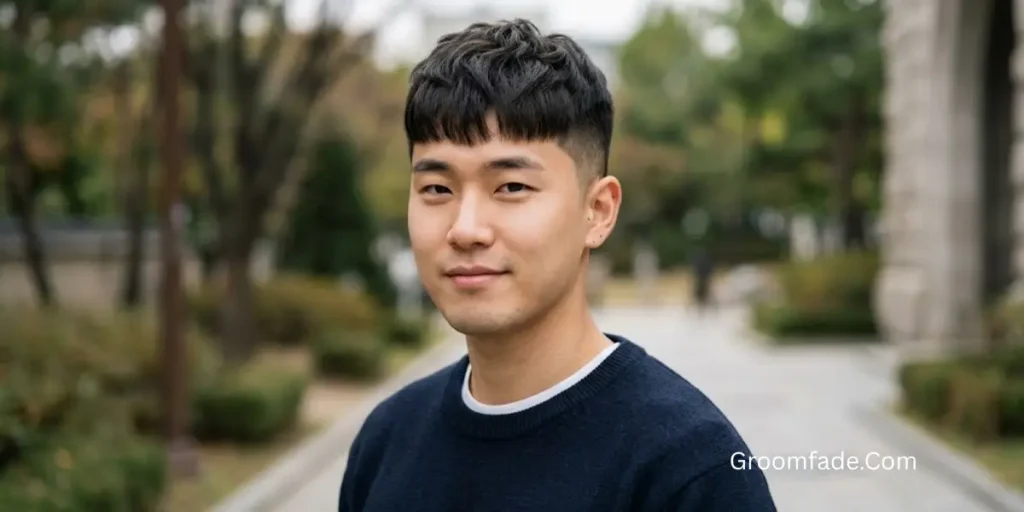
A French crop haircut Asian can work especially well with straight, thick hair. The natural density can give the top a strong shape, while a low taper or fade keeps the sides neat.
A Korean French crop often uses a softer fringe and more natural texture than a very sharp crop. The exact finish should be based on your hair thickness and styling preference.
French Crop for Receding Hairline
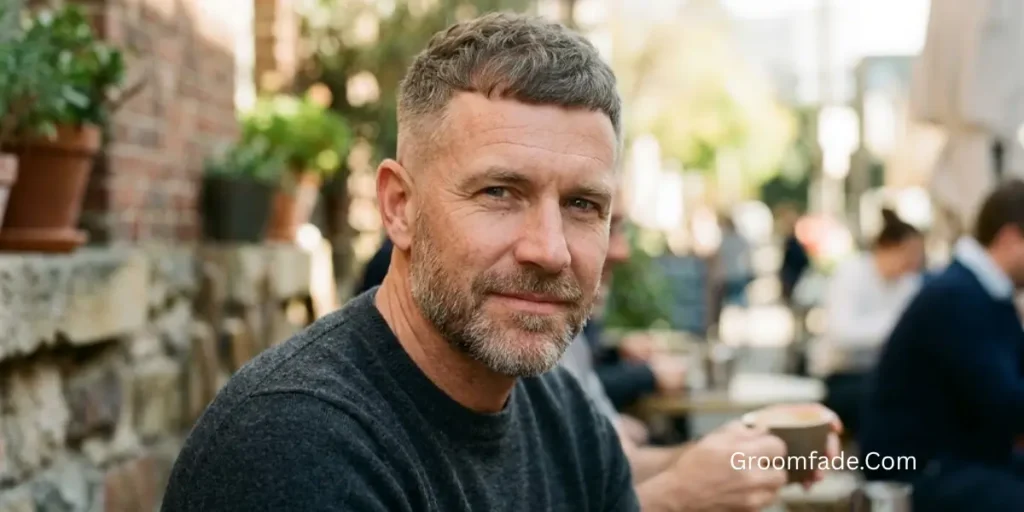
A French crop haircut for receding hairline can help reduce the amount of visible forehead by bringing the fringe forward. It does not stop hair loss or change the hairline, but the haircut can create a different visual balance.
A textured fringe can be useful because it avoids creating one hard straight line across the forehead.
French Crop Haircut for Face Shapes
The same haircut can look different depending on the shape of your face.
Round Face
A textured top with slightly shorter sides can add visual height and make the face look more balanced. Avoid adding too much width at the sides.
Oval Face
An oval face can suit many French crop variations. You can choose a short crop, textured top, low fade, taper, or longer fringe based on your personal style.
Square Face
A square face already has strong angles. A textured crop or low taper can keep the haircut sharp without making the overall shape too harsh.
Long Face
A slightly longer fringe can help balance a longer face. Keeping too much height on top may make the face appear longer, so a flatter crop can be a better choice.
French Crop vs Other Haircuts
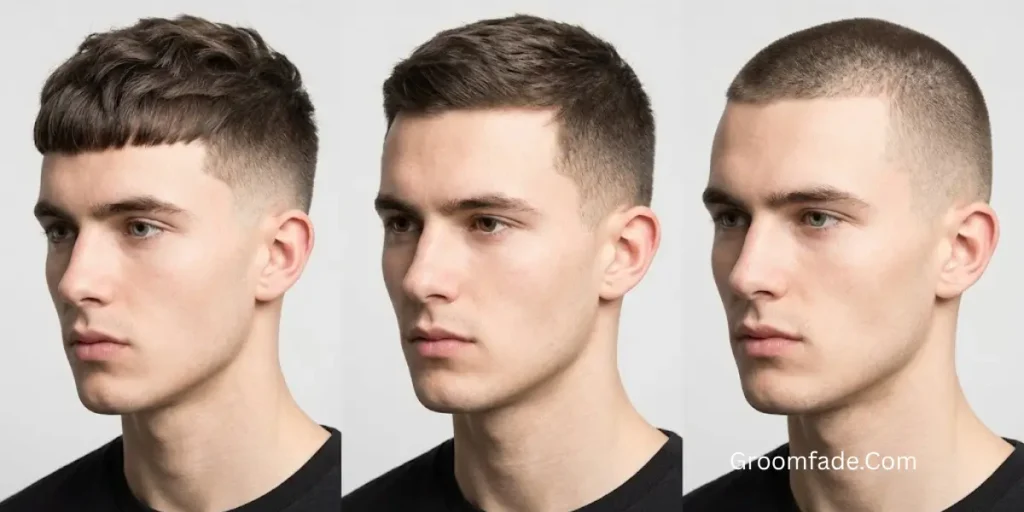
For a similar lifted front with a more relaxed finish, Quiff Haircuts add height and texture without the structured shape of a pompadour.
French Crop vs Caesar Cut
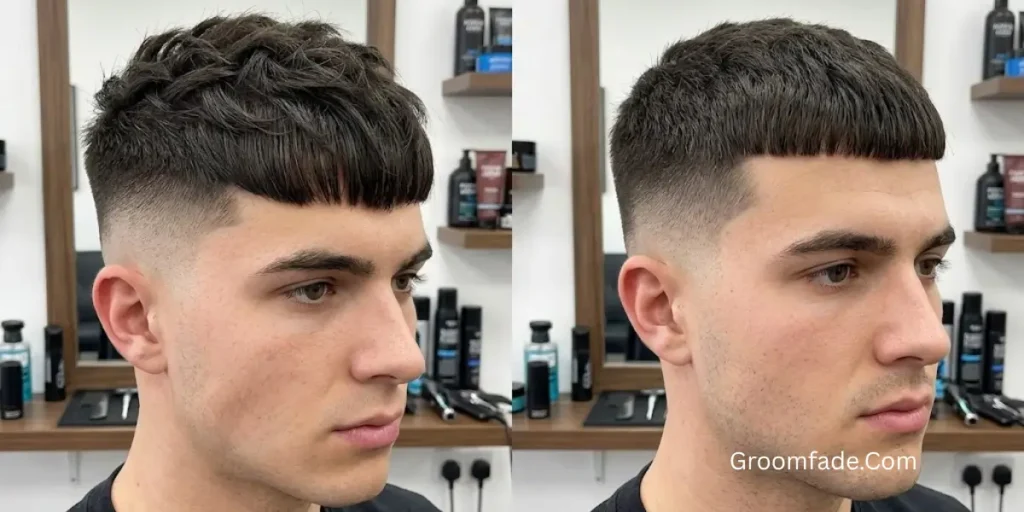
The French crop and Caesar cut both use a forward fringe, but they are not always cut the same way. A Caesar often has a short, even top and a defined short fringe.
A French crop usually gives the barber more freedom to add texture, layers, or a longer fringe. Fade and taper combinations are also common with modern French crops.
French Crop vs Crew Cut
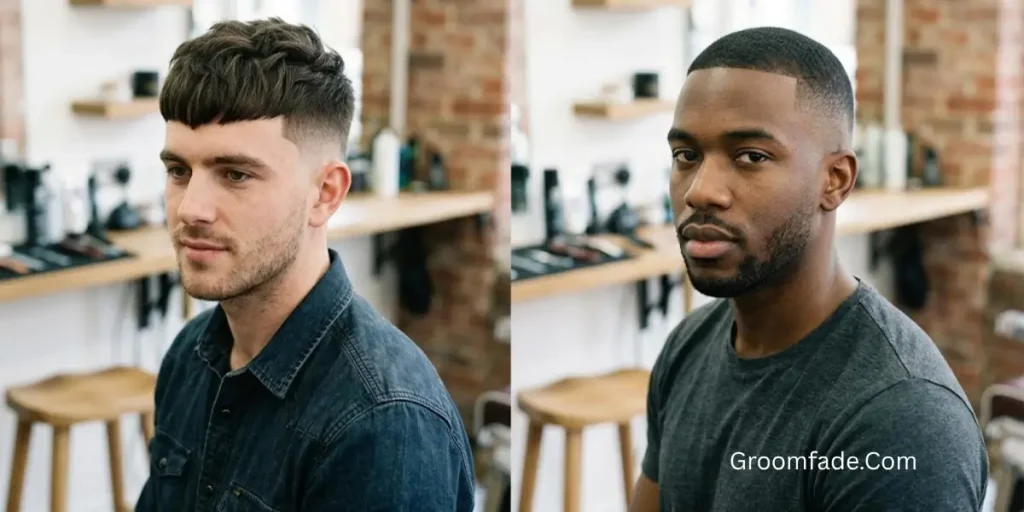
A crew cut generally has a shorter front and a gradual change in length from the front toward the back. It does not rely on a forward fringe in the same way.
The French crop puts more attention on the front hairline and fringe.
French Crop vs Textured Crop
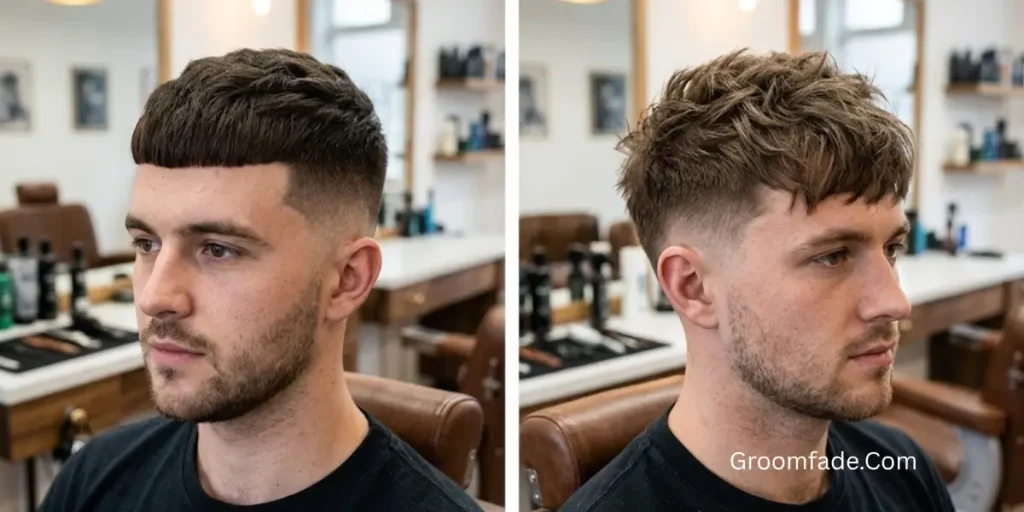
A textured crop haircut is a broader term for a short haircut with a textured top. A French crop is one specific type of cropped hairstyle where the forward fringe is an important part of the shape.
This means many French crops are textured crops, but not every textured crop is a French crop.
French Crop vs Fringe
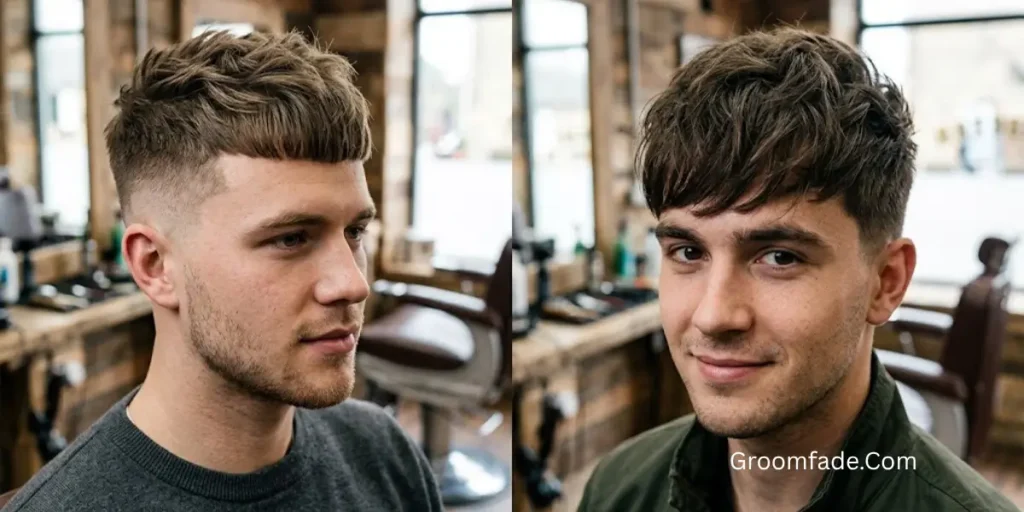
A fringe can be part of many different hairstyles. A French crop combines the fringe with a short cropped top and shorter sides.
So, a French crop is more than simply having hair hanging over the forehead.
How to Choose the Right French Crop
Think about three things before choosing your version: hair type, hairline, and maintenance.
If you have thick hair, texture can reduce bulk. If your hair is fine, keeping enough weight on top can help it look fuller. Curly and wavy hair need length adjustments because the hair changes shape when dry.
Your hairline also matters. A short blunt fringe creates a strong horizontal line, while a textured fringe can look softer.
Finally, consider how often you want to visit the barber. A skin fade needs more frequent cleanups than a classic crop with natural sides.
Men wanting more height can move toward Pompadour Haircuts, which use longer top hair to create volume and a more lifted shape.
How to Ask Your Barber for a French Crop
Do not simply say, “Give me a French crop.” There are many versions.
Tell your barber:
- How much length you want on top.
- Whether you want a blunt or textured fringe.
- Whether you prefer a taper or fade.
- How short you want the sides.
- Whether you want a natural or sharp finish.
- How much daily styling you are willing to do.
For example, you could say:
“I want a textured French crop with about two inches on top, a short forward fringe, and a low taper. Keep the texture natural and do not make the fringe too blunt.”
Bring a French crop haircut photo that shows the front and side profile. A clear reference helps your barber understand the exact shape you want.
How to Style a French Crop
Start with clean, towel-dried hair. Apply a small amount of styling product and work it through the top.
Push the hair forward with your fingers while keeping the fringe in the shape you want. If you use a blow dryer, use moderate heat and direct the air forward.
For a textured finish, separate a few sections with your fingers. Matte clay works well for stronger control, while styling cream gives a softer result. Texture powder can add lift and reduce a flat appearance.
The goal is not to make every strand look perfect. A French crop often looks better when the texture remains natural.
How to Maintain a French Crop
The sides and fringe determine how quickly the haircut looks grown out. If you have a fade or taper, you may want a cleanup every few weeks.
The top can usually grow for longer before needing a full haircut. Your barber can remove excess weight and reshape the fringe while keeping the overall crop.
Wash your hair based on your scalp and hair type rather than following a fixed daily schedule. Use conditioner when your hair needs extra moisture, especially if it feels dry or rough.
Best Products for a French Crop
Matte Clay
Matte clay gives strong control without adding a shiny finish. It is useful for thick or textured French crops.
Styling Cream
Styling cream provides lighter control and keeps more natural movement. It can work well for wavy or softer hairstyles.
For a similar lifted front with a more relaxed finish, Quiff Haircuts add height and texture without the structured shape of a pompadour.
Texture Powder
Texture powder can add volume and separation without making the hair feel heavily coated.
Sea Salt Spray
A light sea salt spray can add texture before styling. Use a small amount because too much may leave the hair feeling dry.
Choose the product based on your hair type and desired finish rather than buying several products at once.
Is French Crop Still Popular?
Yes. The French crop remains a practical haircut because its basic shape can be changed in many ways. Low fades, tapers, textured tops, curly finishes, longer fringes, and natural sides can all create different versions.
Its popularity also comes from how easy it is to adapt. Someone with straight hair may wear a clean textured crop, while someone with curly hair can keep the natural curl pattern on top.
Is French Crop a Clean Cut?
A French crop can be a very clean-cut hairstyle, especially when paired with a neat taper or fade. A classic crop with scissors can look softer and more natural.
The final appearance depends on the fringe, side length, texture, and finishing style. A messy French crop can look relaxed, while a skin fade crop can look much sharper.
FAQs About French Crop Haircut
Q1. What is a French crop haircut?
A French crop is a short hairstyle with a cropped top and forward fringe. The sides can be scissor cut, tapered, or faded.
Q2. How do I ask my barber for a French crop?
Tell your barber the desired top length, fringe shape, side length, and whether you want a taper or fade. Bring a reference photo for the best result.
Q3. What fade works best with a French crop?
A low fade and low taper give a softer appearance, while a mid fade, high fade, or skin fade creates stronger contrast. The best choice depends on your face shape and preferred style.
Q4. Is French crop good for thinning hair?
It can work for some men with thinning hair because a forward textured fringe can add visual coverage. However, the haircut cannot increase hair density or stop hair loss.
Q5. Can I get a French crop with curly hair?
Yes. A curly French crop keeps the natural curl pattern on top while using a shorter taper or fade on the sides. The top length should account for curl shrinkage.
Q6. What is the difference between a textured crop and a French crop?
A textured crop is a wider hairstyle category. A French crop is a specific cropped style where the forward fringe is a key part of the haircut.
Q7. How often should I get a French crop haircut?
Most men can refresh a French crop every few weeks, but the timing depends on the fade, taper, fringe length, and how quickly the hair grows.
Q8. Can women wear a French crop haircut?
Yes. The French crop is not limited to one gender. The same cropped shape can be adjusted for different hair lengths, textures, and personal styles.
Q9. Is a French crop good for a big forehead?
A forward fringe can reduce the amount of visible forehead. A textured fringe often gives a softer result than a very straight, blunt fringe.