
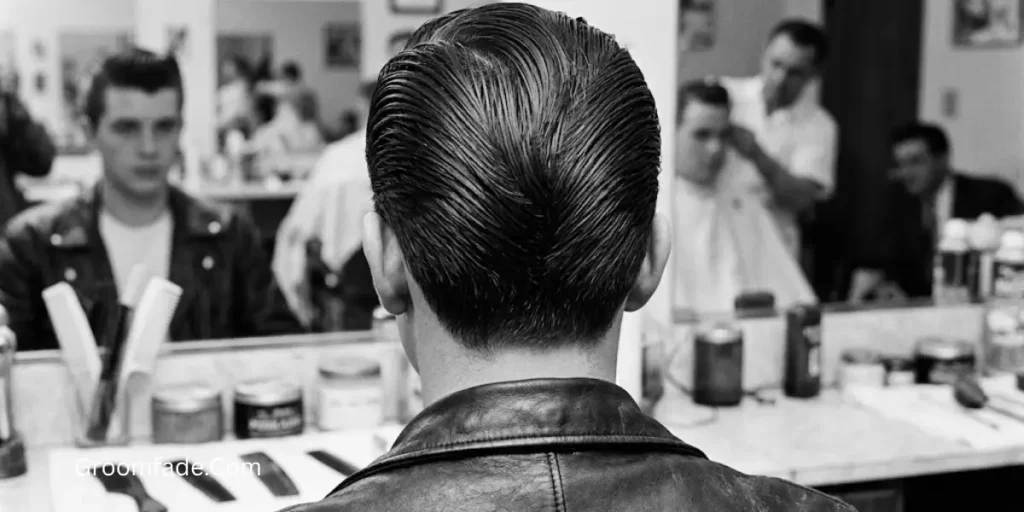
The ducktail haircut is a classic men’s hairstyle known for its neat sides, longer top, and distinctive shape at the back. The hair is combed backward from both sides toward the center, creating a line that looks like the tail of a duck. This simple detail gives the haircut its name.
The style became strongly associated with men’s grooming in the 1950s, especially with greaser and rockabilly looks. Today, the classic ducktail haircut can still be worn in a traditional slicked-back form, but modern barbers have also adapted it with tapers, fades, texture, and different hair lengths.
A ducktail works best when the hair has enough length to be directed toward the center of the back. The exact shape can be adjusted to suit straight, wavy, curly, thick, or fine hair. That makes it more flexible than it may first appear.
What Is a Ducktail Haircut?
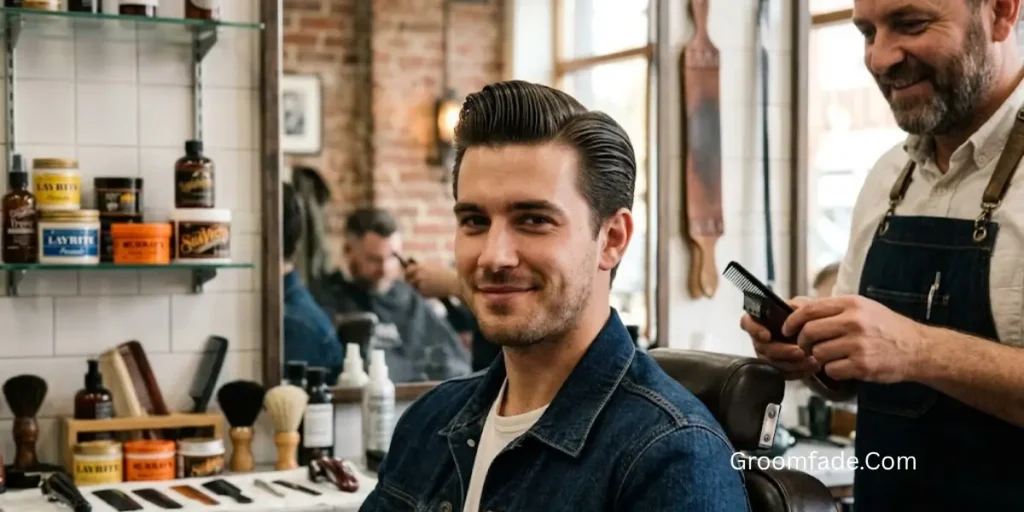
A ducktail haircut is a hairstyle in which the hair on both sides is combed backward and toward the center of the nape. When the two sections meet, they form a visible central line and a tail-like shape at the back.
The front can look similar to a slick back, pompadour, or quiff, depending on how the top is cut and styled. The defining feature is seen from behind.
A traditional ducktail usually has:
- Medium to long hair on top and toward the back
- Shorter or tapered sides
- Hair combed backward from both sides
- A visible center line at the back
- Enough weight around the nape to form the tail
- A neat, controlled finish
The shape can be sharp and polished or soft and natural. A modern ducktail hairstyle often uses less product and more texture than the original version.
What Does a Ducktail Hairstyle Look Like?
From the front, a ducktail can look like a classic slick-back, side-swept style, quiff, or other medium-length men’s haircut. The real difference appears at the back.
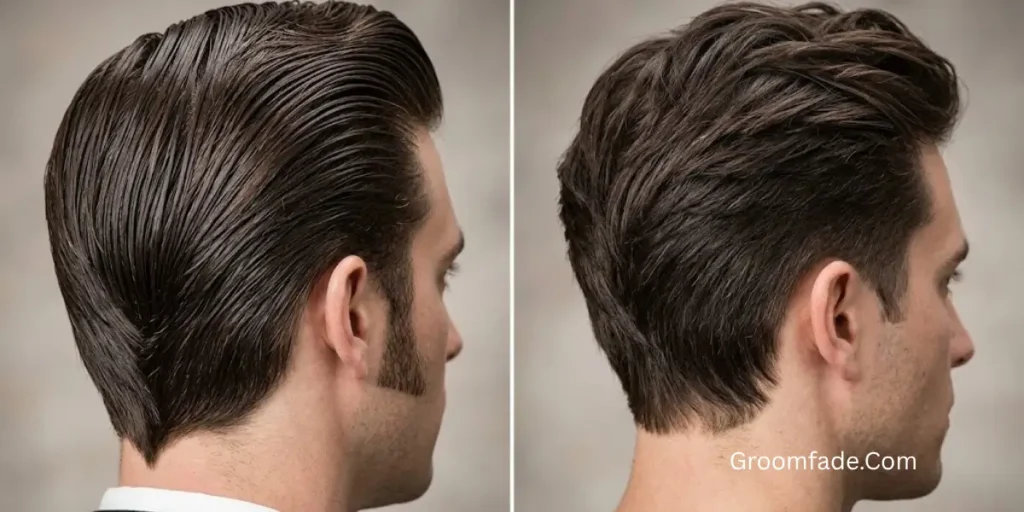
The hair is directed from both sides toward the middle of the nape. This creates a central seam and a pointed or rounded tail. A traditional version has a clear, defined shape, while a modern ducktail may have a softer finish.
The ducktail haircut front can therefore vary quite a lot. The back is what gives the hairstyle its identity.
The structured shape of a ducktail can work well alongside the clean finish of a French Crop Haircut. Its shorter top and defined fringe create a sharper, more compact look.
History of the Ducktail Haircut
The ducktail became closely linked with men’s hairstyles of the 1950s. During this period, longer, slicked-back hair became popular among young men who wanted a bold alternative to shorter traditional cuts.
Hair products such as pomade and hair grease helped men keep their hair in place. Combs were used to create smooth sides and controlled shapes, including the central pattern that became known as the ducktail.
The haircut was also connected with the wider greaser and rockabilly style of the era. It was not simply a haircut. For many wearers, the carefully styled hair formed part of a complete look that included leather jackets, denim, boots, and other elements of 1950s youth culture.
The 1950s Ducktail Haircut
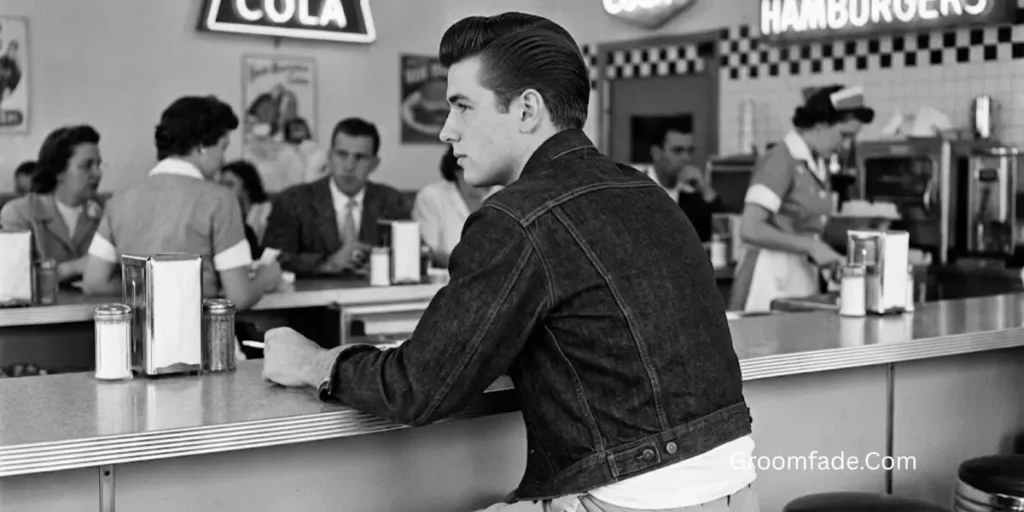
The 1950s ducktail haircut usually had a fuller appearance than many modern versions.
The sides were not always cut extremely short. Instead, they often had enough length to be combed backward. The top was kept long enough to create height and movement, while the back was shaped so that the hair came together at the center.
Pomade gave the hair a shiny, firm finish. The classic style was carefully combed, making the center-back shape easy to see.
The men’s 1950s ducktail haircut remains popular today because it has a strong vintage character without requiring an unusual haircut structure.
Ducktail Haircut in the 1980s and 1990s
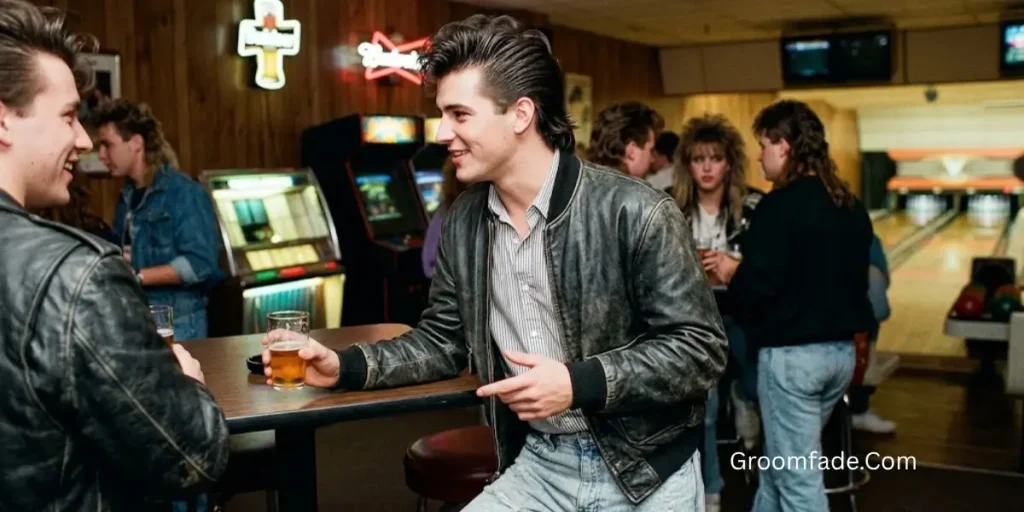
The ducktail did not remain frozen in its original 1950s form. Later decades brought looser styling, different lengths, and new approaches to men’s hair.
A ducktail haircut 80s version could have more volume and a less controlled finish. During the 1990s, longer and more relaxed men’s hairstyles became common, allowing the ducktail idea to appear in less traditional forms.
The ducktail haircut 90s look is therefore better understood as an adaptation rather than one fixed haircut.
How Does a Ducktail Haircut Work?
The main idea is simple. The hair is shaped so that both sides can move backward and meet toward the center of the nape.
The haircut needs enough length and weight for this movement to work. If the back is cut too short or thinned too heavily, the central tail can disappear.
The top, sides, and back should also work together. A good ducktail does not look like a random long section left at the back. The shape should gradually lead the eye toward the center.
The Ducktail Shape at the Back
The back is the most important part of the style.
After the hair is combed backward, the left and right sides are brought toward the middle. This creates the characteristic center line. The hair can finish in a pointed tail, a rounded shape, or a softer natural point.
A classic ducktail has a stronger central definition. A modern version may keep the same basic direction but use less product and more natural texture.
A more noticeable separation between the top and sides comes with an Undercut Fade. This option keeps the upper hair longer while creating a bold contrast around the sides.
Best Ducktail Haircut Styles for Men
The ducktail can be adapted in several ways. The basic center-back shape stays the same, while the sides, top, and finish change.
Classic Ducktail Haircut
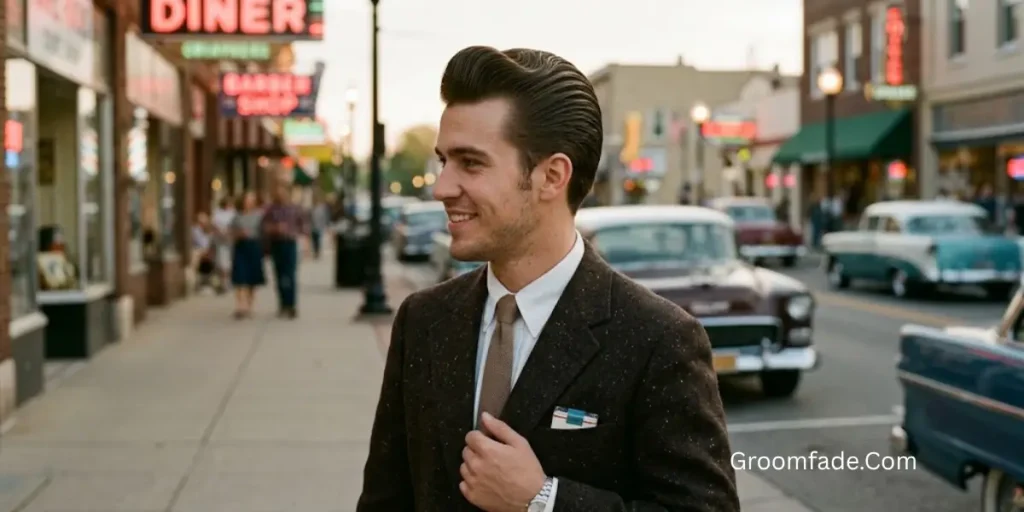
The classic ducktail keeps the vintage character of the style.
The sides have enough length to flow backward, the top is usually slicked or neatly combed, and the tail at the back is clearly defined.
This is the best choice for someone who wants a strong 1950s-inspired appearance.
Modern Ducktail Hairstyle
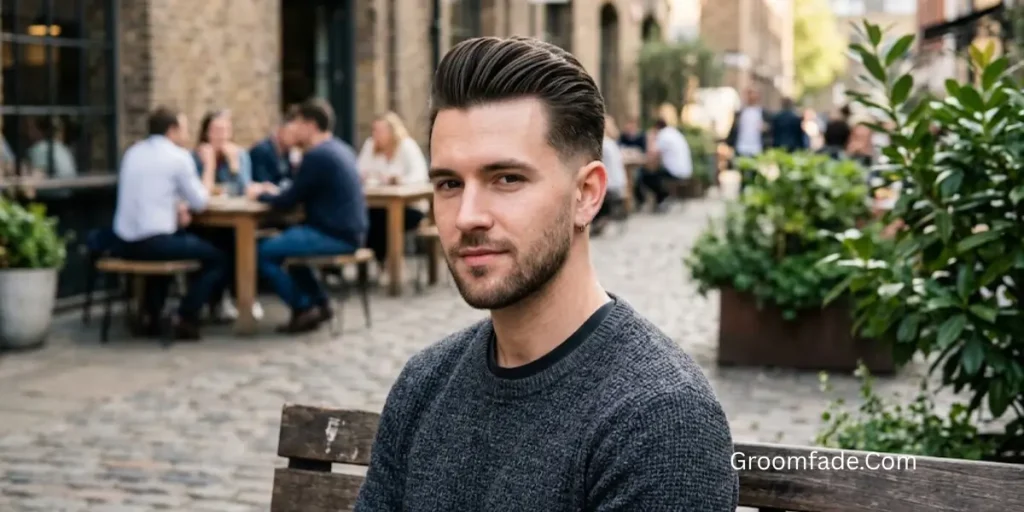
A modern ducktail hairstyle is usually less rigid.
The sides may have a taper or fade, while the top can be textured. Instead of creating a perfectly sharp center line, the hair may meet naturally at the back.
This makes the haircut easier to wear with everyday clothing and modern men’s grooming styles.
Short Ducktail Haircut
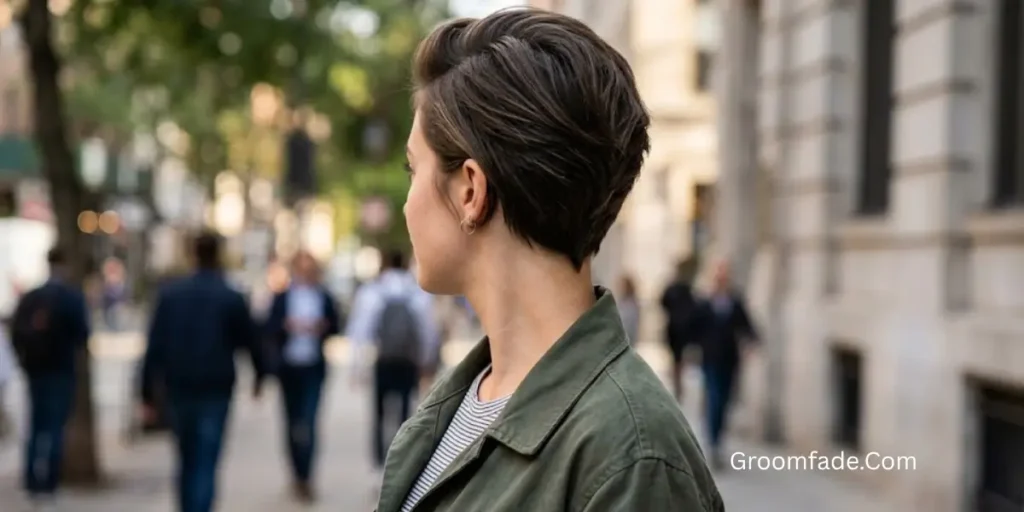
A short ducktail haircut keeps the main idea without requiring very long hair.
The sides are kept neat, and the top and back retain enough length to create a small central shape. This is a good option for someone who likes the ducktail concept but does not want a dramatic vintage style.
Long Ducktail Haircut
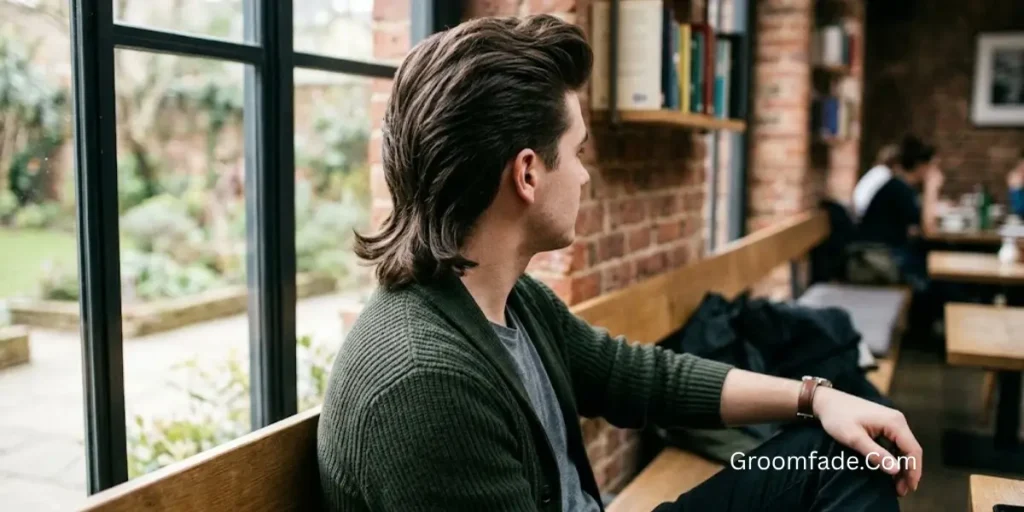
A long ducktail haircut gives the back more length and makes the tail more noticeable.
Longer hair can also create a softer and fuller shape. However, it requires more styling and regular care to keep the back looking intentional.
Ducktail Fade Haircut
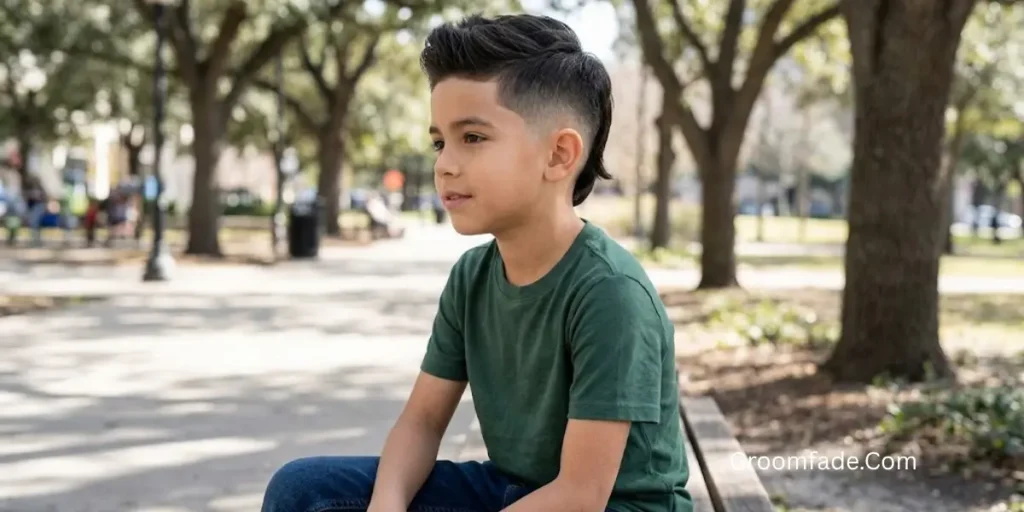
A ducktail fade haircut combines the traditional back shape with modern faded sides.
The fade can be low, mid, or higher depending on how much contrast you want. The back should still retain enough length for the ducktail shape to remain visible.
This is one of the easiest ways to give a vintage-inspired haircut a current appearance.
Ducktail Mullet Haircut
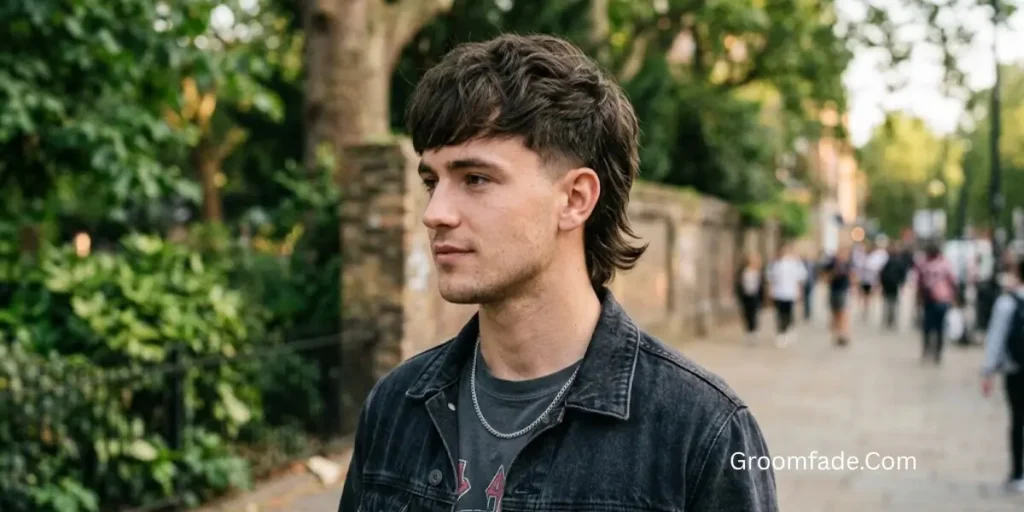
A ducktail mullet haircut takes the longer-back idea even further.
The front and sides can be shorter while the back stays longer. The hair is then directed toward the center to create the ducktail pattern.
This is a more noticeable option and works best for people who are comfortable with a strong hairstyle.
For a sharp, geometric appearance, the Box Fade gives the sides and top a clearly defined shape, making it a strong choice for men who prefer structured haircuts.
Ducktail Haircut for Different Hair Types
Hair texture affects how easily the ducktail shape can be created.
Ducktail Haircut for Straight Hair
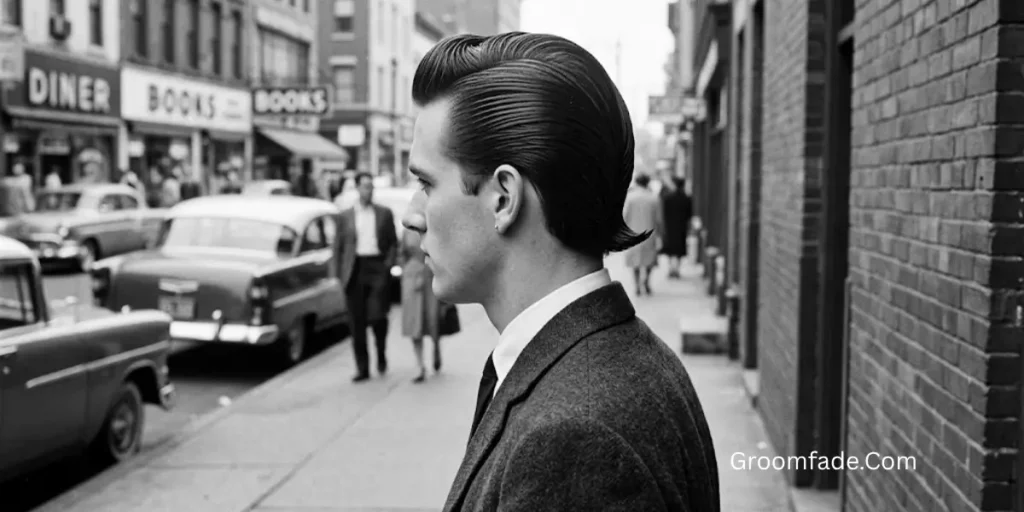
Straight hair is often the easiest texture to comb into a traditional ducktail.
It can be directed backward with a comb and held in place with pomade. Medium to thick straight hair can create a particularly clear central shape.
Ducktail Haircut for Wavy Hair
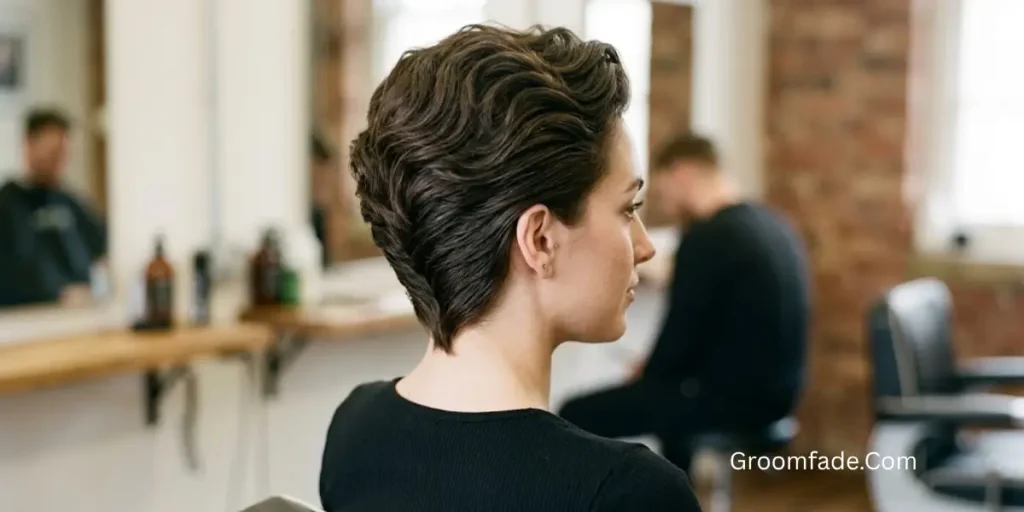
Wavy hair gives the ducktail a softer appearance.
Instead of trying to remove all the natural movement, a barber can shape the haircut around the wave pattern. A styling cream or light pomade can provide control without making the hair look flat.
Ducktail Haircut for Curly Hair
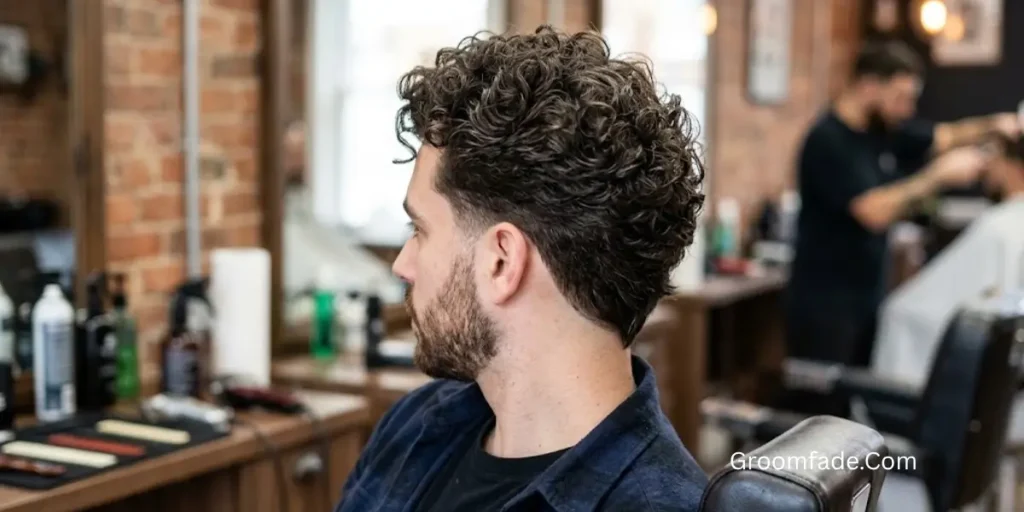
Curly hair can create a more textured version of the style.
The hair does not always need to form a perfectly sharp center line. Keeping enough length allows the curls to move toward the back naturally.
A curl cream or light styling product can be more useful than a heavy pomade for some curl patterns.
Ducktail Haircut for Thick Hair
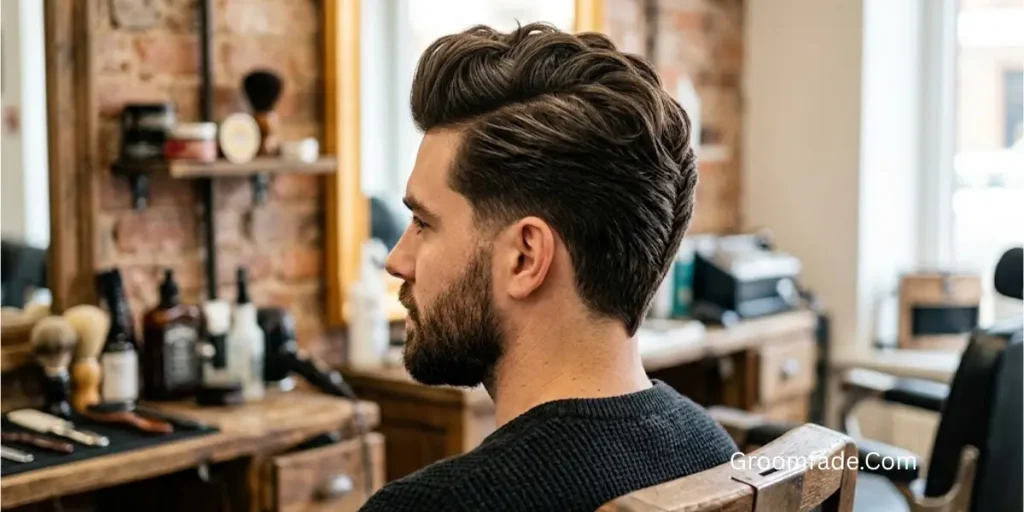
Thick hair can create a full and impressive ducktail, but it may need some weight control.
The barber should remove enough bulk to make the hair manageable without thinning the central section too much.
For a cleaner finish around the sides without removing too much length, Temple Fade Hairstyle options keep the fade focused near the temples and maintain flexibility on top.
Ducktail Haircut for Fine Hair
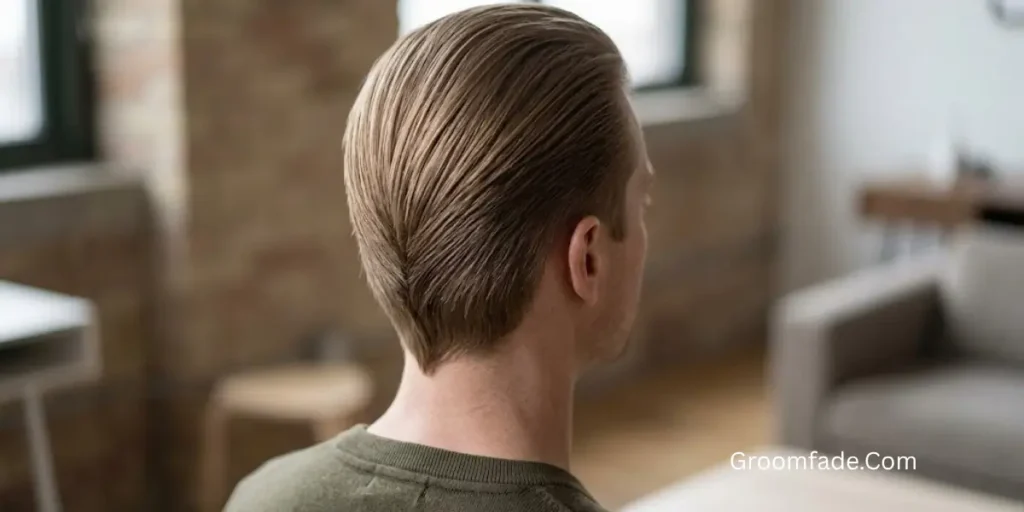
Fine hair can also work with a ducktail, especially when the cut keeps enough length and weight.
A lightweight styling product can add control without making the hair appear greasy or heavy.
Ducktail Haircut for Black Men
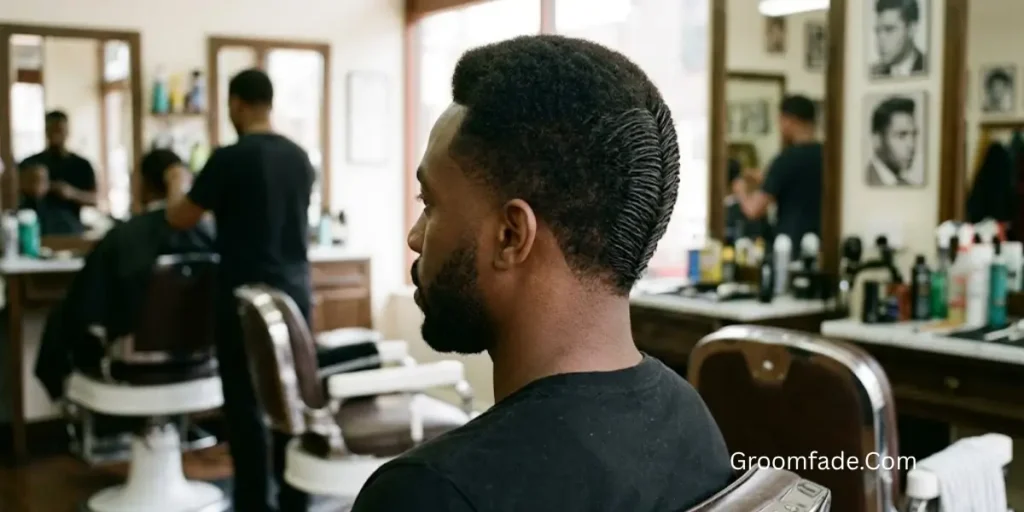
A ducktail haircut black men style can be adapted to different curl and coil patterns.
Instead of trying to force textured hair into the same smooth shape as straight hair, the haircut can use natural texture to create the central back effect.
A taper around the temples and neckline can provide a clean finish while leaving enough length on top and at the back.
The ducktail haircut black male look can therefore range from a traditional smooth style to a textured modern version.
Ducktail Haircut for Women and Boys
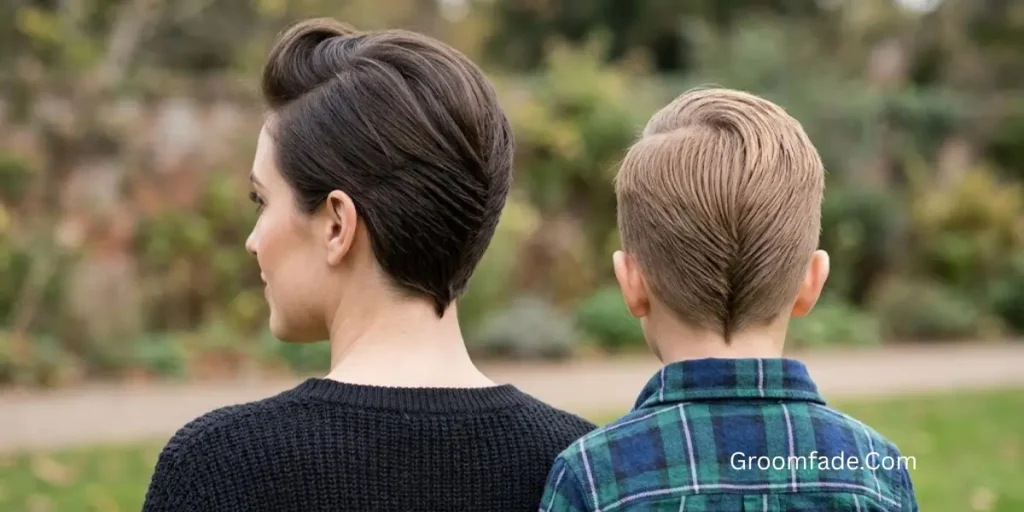
The ducktail shape is not limited to men’s hair.
A ducktail haircut woman or female version can use shorter layers and a softer center-back shape. Vintage-inspired women’s hairstyles from the 1950s can also use similar directional styling.
A boys ducktail haircut can be made shorter and easier to maintain. The tail does not need to be long. A small central shape at the back can provide the same basic idea while keeping the haircut practical.
Classic vs Modern Ducktail Haircut
| Feature | Classic Ducktail | Modern Ducktail |
| Sides | Fuller or tapered | Tapered or faded |
| Top | Slick and controlled | Textured or slick |
| Product | Pomade or hair grease | Pomade, cream, clay, or wax |
| Back | Strong central tail | Softer or textured tail |
| Finish | Polished | Natural or relaxed |
| Main influence | 1950s | Contemporary men’s hair |
Both versions are based on the same central idea. The difference is mainly in the cut, product, and amount of definition.
Ducktail Haircut vs Similar Hairstyles
The ducktail can look similar to other men’s hairstyles from the front, but the back helps separate it from them.
Ducktail vs Pompadour
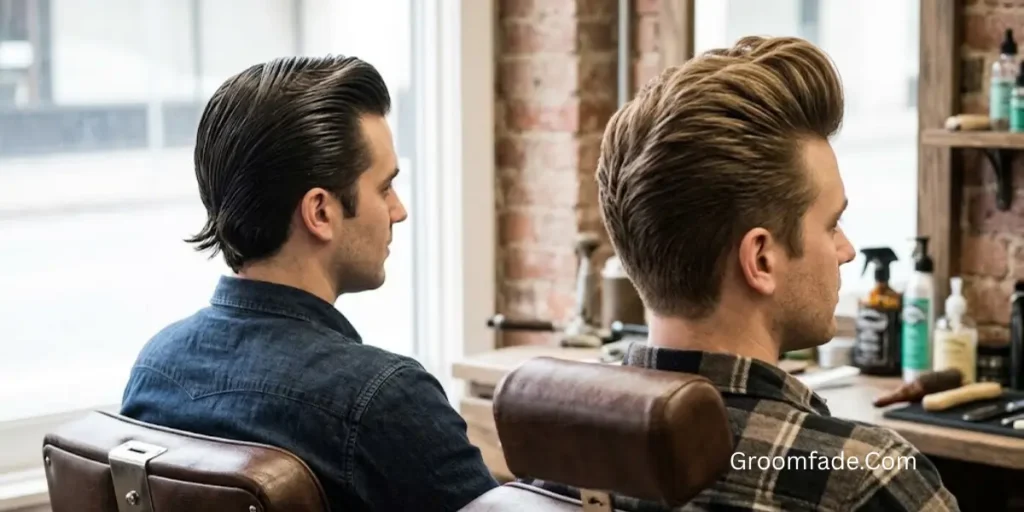
A pompadour focuses on height and volume at the front and top. A ducktail is defined mainly by how the hair comes together at the back.
A haircut can even combine the two.
Men who want a softer transition can consider the Shadow Fade Haircut. It leaves some visible hair along the sides, creating a smoother look than a skin fade.
Ducktail vs Quiff
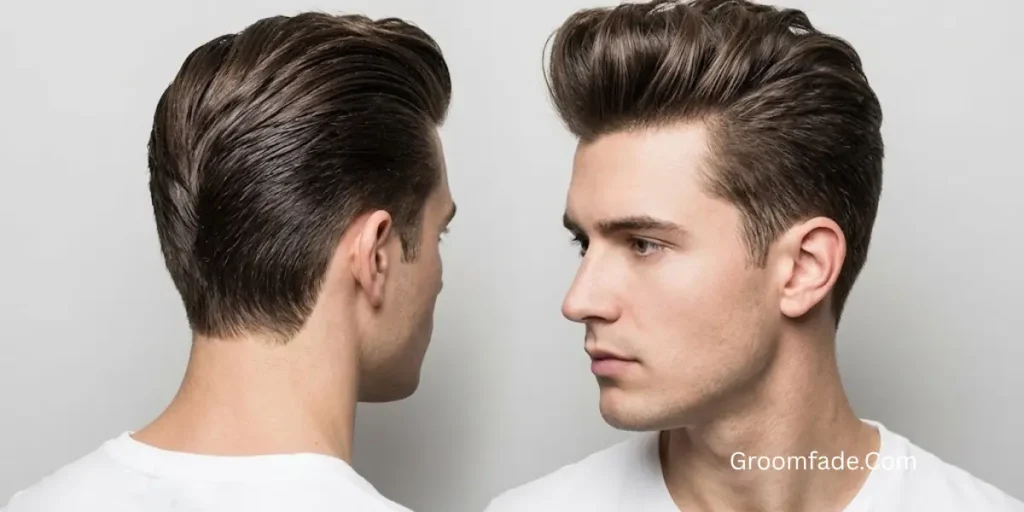
A quiff usually has volume and lift at the front. The ducktail’s defining feature is the central back shape.
Ducktail vs Mullet
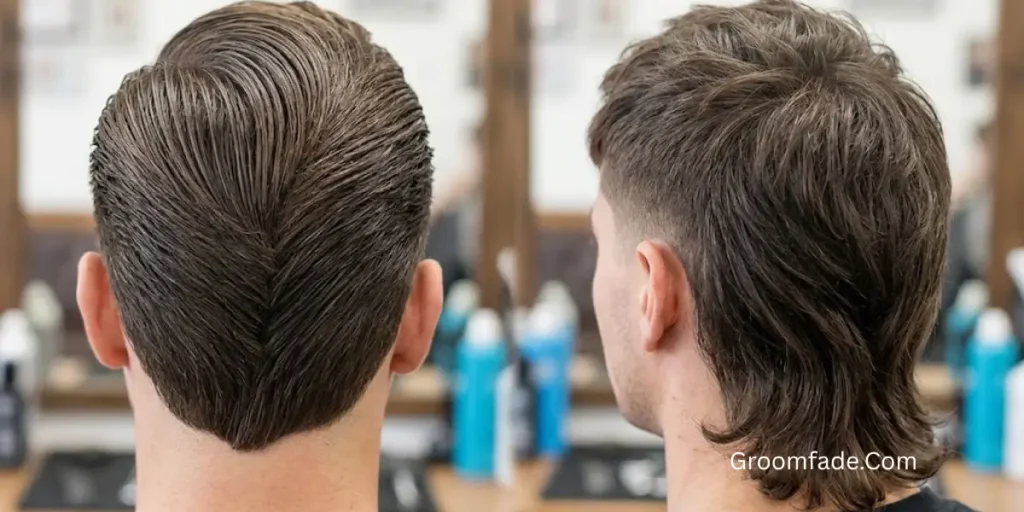
A mullet is defined by shorter hair toward the front and sides with noticeably longer hair at the back. A ducktail focuses on directing the back hair toward the center.
Some modern styles can combine both ideas.
Ducktail vs Slick Back
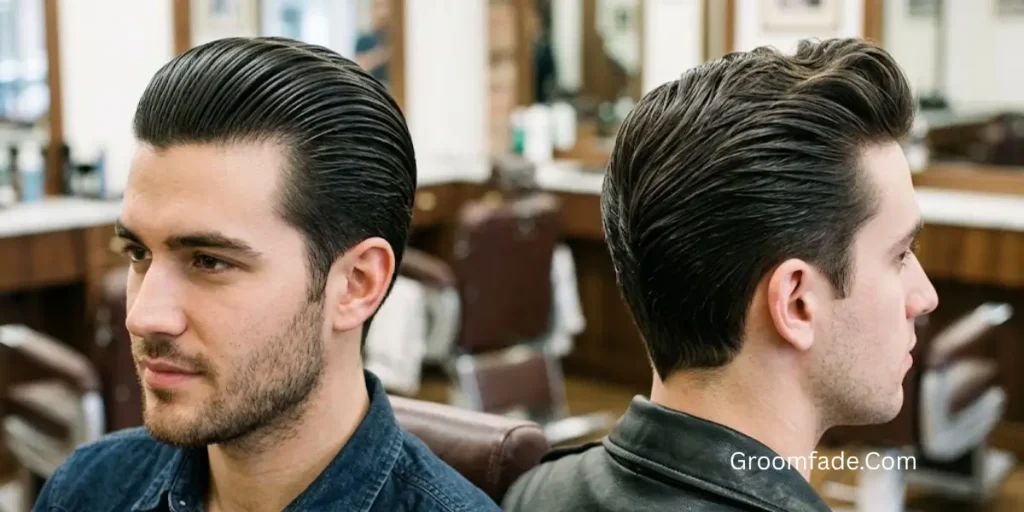
A slick back is simply combed backward. A ducktail takes the slick-back idea further by directing both sides toward the center of the nape.
How to Maintain a Ducktail Haircut
The sides and neckline usually need regular trimming to keep the haircut clean.
The top and back can be allowed to grow longer, but the central shape should be checked during each trim. If the tail becomes too thin or uneven, the haircut can lose its main feature.
At home, use a comb to restore the center-back direction after washing. Apply styling product gradually and avoid pulling the hair too tightly.
People with longer hair may also need more time for washing, drying, and styling.
How to Ask for a Ducktail Haircut
When visiting a barber, it helps to explain the shape rather than simply giving the haircut name.
You can say:
“I want a ducktail haircut with enough length on top and at the back to comb the hair toward the center. Keep the sides neat and tapered, but leave enough weight in the back to create the ducktail shape.”
Then show a reference photo from the front and back.
Tell your barber whether you want:
- Classic or modern styling
- Short or medium sides
- A taper or fade
- A natural or defined tail
- More volume on top
- A slick or textured finish
This is especially helpful because the term ducktail haircut can mean slightly different things depending on the barber and the decade being used as inspiration.
For men who like extra volume through the front and top, a Pompadour Fade offers a fuller shape with cleaner sides and a polished finish.
How to Cut a Ducktail Haircut
A ducktail haircut requires more attention to shape than simply taking length off the sides.
Cutting the Sides
The sides can be cut with scissors, clippers, or a combination of both.
For a traditional ducktail, the sides usually retain some length so they can be combed backward. For a modern version, the barber may use a taper or fade around the temples and ears.
The key is to avoid removing so much hair that the top and back lose their connection.
Cutting the Top
The top should have enough length to move backward.
The exact length depends on the desired style. A shorter ducktail can have a more controlled shape, while longer hair allows more volume and a stronger tail.
Layering can help thick hair sit better, but excessive thinning can make the back look weak. The goal is to keep enough weight for the hair to hold its shape.
Shaping the Back
The back should be planned around the central ducktail pattern.
The barber can maintain length through the center while controlling the surrounding areas. The final shape should look balanced from both sides.
For a long ducktail haircut, more length can be left through the nape. For a shorter style, the tail can be kept compact and subtle.
Cleaning the Sides and Nape
The area around the ears, sideburns, and neckline should be cleaned carefully.
A natural neckline works well for a traditional style, while a more precise finish can suit a modern haircut. The nape should still leave enough hair to form the ducktail.
How to Style a Ducktail Haircut
Styling is what makes the ducktail shape visible.
Start with slightly damp hair. Apply a small amount of product and work it through the top and sides.
Use a comb to move the hair backward. Then guide the left and right sides toward the center of the back. Use the comb to define the central meeting point.
For a classic look, continue combing until the hair is smooth and controlled. For a modern look, use your fingers after the main shape is created to add a little natural texture.
Combing Technique
The basic ducktail combing technique is:
- Start with damp or lightly towel-dried hair.
- Apply a small amount of pomade or styling cream.
- Comb the top backward.
- Direct both sides toward the center of the back.
- Bring the hair together at the nape.
- Shape the tail with the comb or fingers.
- Add a small amount of product if more hold is needed.
Do not use too much product at once. Adding a little more is easier than trying to remove excess product.
Best Products for a Ducktail
A classic ducktail usually works well with pomade because it provides control and allows the hair to be combed into place.
A water-based pomade is a practical option for people who want a cleaner wash-out. Wax can provide flexible control, while styling cream works well for a softer finish.
For a modern ducktail, a light clay or matte styling product can create texture without making the hair look overly shiny.
The best choice depends on the finish you want rather than the haircut alone.
Frequently Asked Questions About the Ducktail Haircut
Q1. What does a ducktail hairstyle look like?
A ducktail hairstyle has hair combed backward from both sides toward the center of the nape, creating a visible tail-like shape at the back. The front can resemble a slick back, quiff, or pompadour.
Q2. How do you ask for a ducktail haircut?
Tell your barber that you want enough length on top and at the back to comb both sides toward the center. Explain whether you want classic sides, a taper, or a fade, and show a reference photo from the back.
Q3. Is a ducktail haircut still popular?
Yes. The classic version remains popular with people who like vintage men’s hairstyles, while modern versions use fades, tapers, texture, and shorter lengths.
Q4. What hair length is best for a ducktail?
Medium-length hair is a practical starting point because it provides enough length to direct the sides toward the center. Longer hair creates a larger and more visible tail.
Q5. Can you get a ducktail haircut with a fade?
Yes. A fade can be used on the sides while the back keeps enough length for the ducktail shape. This creates a more modern version of the haircut.
Q6. Can you get a ducktail haircut with curly hair?
Yes. Curly hair can create a textured ducktail. The shape may be softer than a straight-hair version because the natural curl pattern changes how the hair meets at the back.
Q7. Is a ducktail haircut the same as a mullet?
No. They are different hairstyles, although they can be combined. A ducktail is defined by the hair meeting toward the center of the back, while a mullet is known for noticeably longer hair at the back compared with the front and sides.
Q8. How do you style a ducktail haircut?
Apply a small amount of styling product to damp hair, comb the top backward, and guide both sides toward the center of the nape. Shape the tail with a comb or your fingers, then add a little more product if needed.