
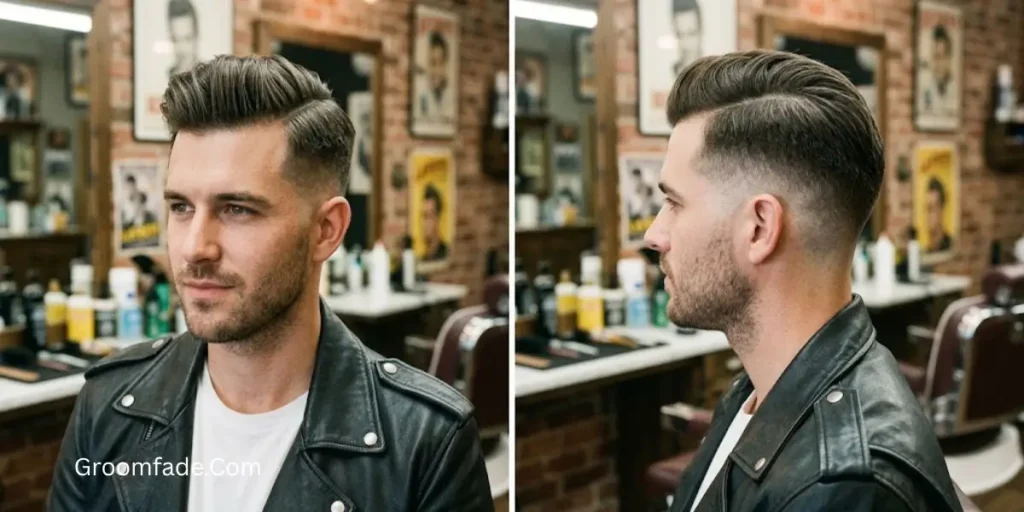
An undercut fade combines longer hair on top with shorter sides and back that gradually blend into the skin or a short length. It keeps the bold shape of an undercut but gives the sides a cleaner transition than a traditional disconnected undercut.
The style works with short, medium, and long hair on top. You can also adapt it for straight, wavy, curly, or thick hair. The main choice is how high you want the fade and how much length you want to keep above it.
If you are thinking about getting one, the most important things to decide are the fade height, top length, hair texture, and how much daily styling you want to do.
What Is an Undercut Fade?
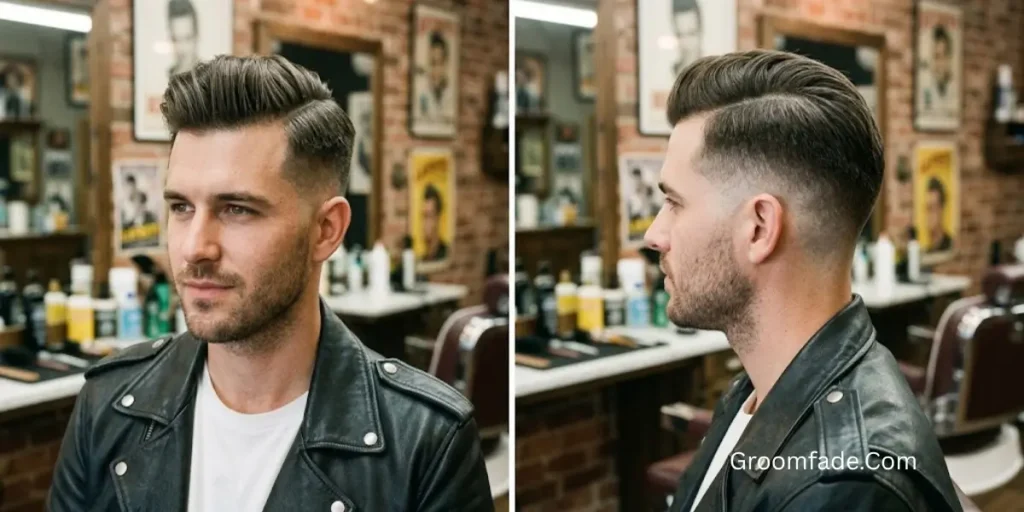
An undercut fade haircut has noticeably longer hair on top and shorter hair around the sides and back. The fade gradually reduces the length as it moves downward, creating a clean transition.
A classic undercut can have a sharp line between the top and sides. An undercut fade gives you more blending while still keeping a strong difference between the top and sides.
The amount of contrast depends on the haircut. A low fade keeps more weight around the lower sides, while a high fade takes the short section farther upward.
This makes the undercut fade hairstyle easy to change for different hair lengths and personal styles.
Is an Undercut Fade a Thing?
Yes. An undercut fade is a real haircut that combines two features: the longer top associated with an undercut and the gradual shortening of a fade.
The result can be subtle or bold. A low undercut fade usually looks softer, while a high undercut fade creates much stronger contrast.
Undercut vs Fade: What Is the Difference?
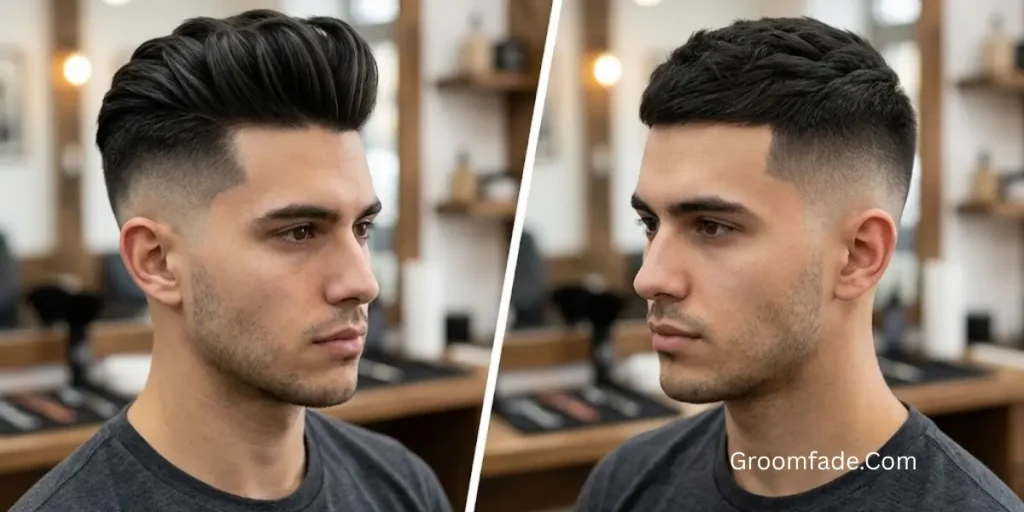
An undercut focuses on the difference between the top and sides. A traditional undercut may leave the sides at one short length, creating a clear separation.
A fade gradually changes length from shorter hair near the bottom to longer hair higher up.
An undercut fade brings these ideas together. You keep a longer top while the sides and back receive a fade.
For men who like shorter hair with visible texture, Textured Crop Haircuts add movement across the top while keeping the overall shape compact.
Best Undercut Fade Haircuts for Men
There is no single version that works best for everyone. Your choice should depend on your hair length, face shape, texture, and how noticeable you want the contrast to be.
Low Undercut Fade
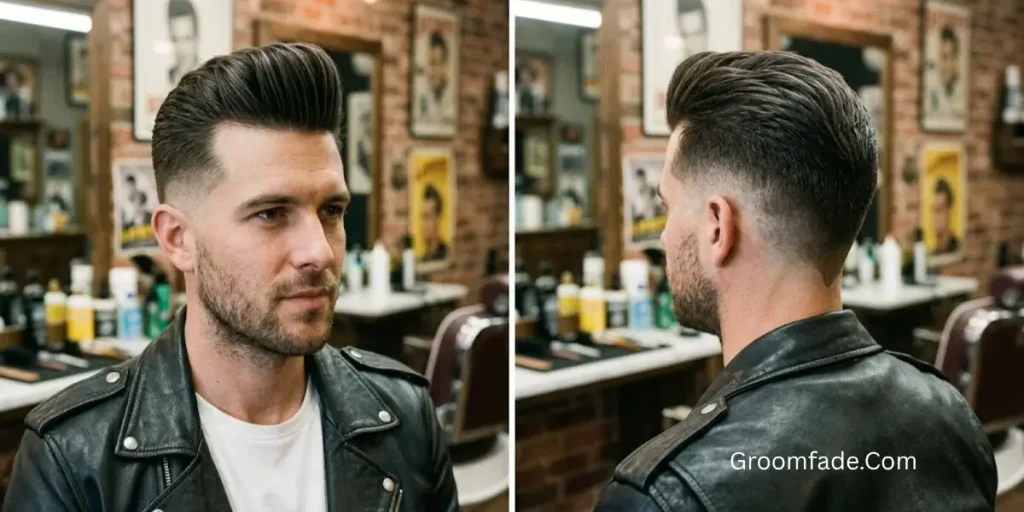
A low undercut fade starts closer to the ears and neckline. More hair remains on the lower sides, so the result is less dramatic than a high fade.
It is a good option if you want the structure of an undercut without taking the fade too far up the head. It also works well with medium or long hair on top.
A low fade can pair well with a side part, textured top, slick back, or natural styling.
Mid Undercut Fade
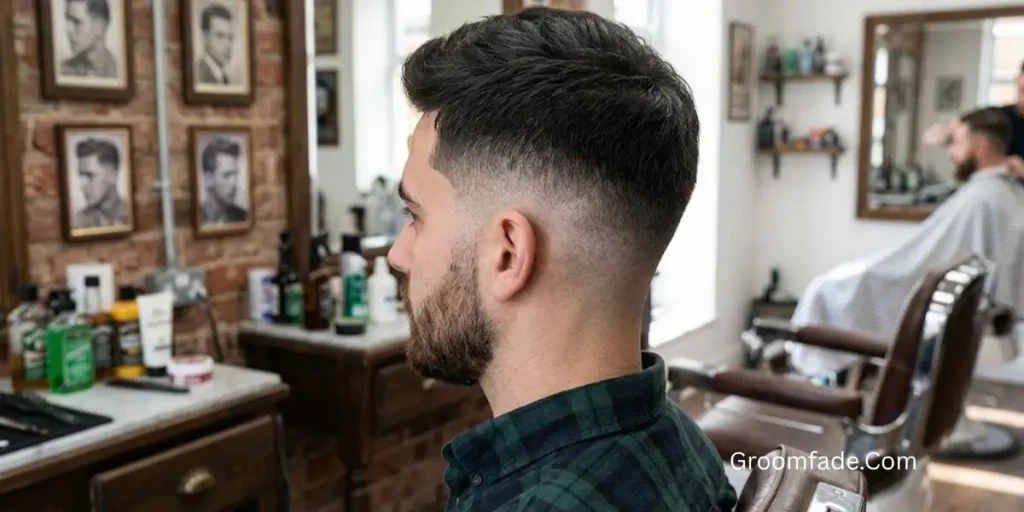
A mid undercut fade sits around the middle of the sides. It gives a balanced amount of contrast without being as strong as a high fade.
This option works well for people who want a noticeable haircut that can still be styled in several ways. Medium-length hair on top gives you enough room for texture, volume, a quiff, or a side-swept finish.
High Undercut Fade
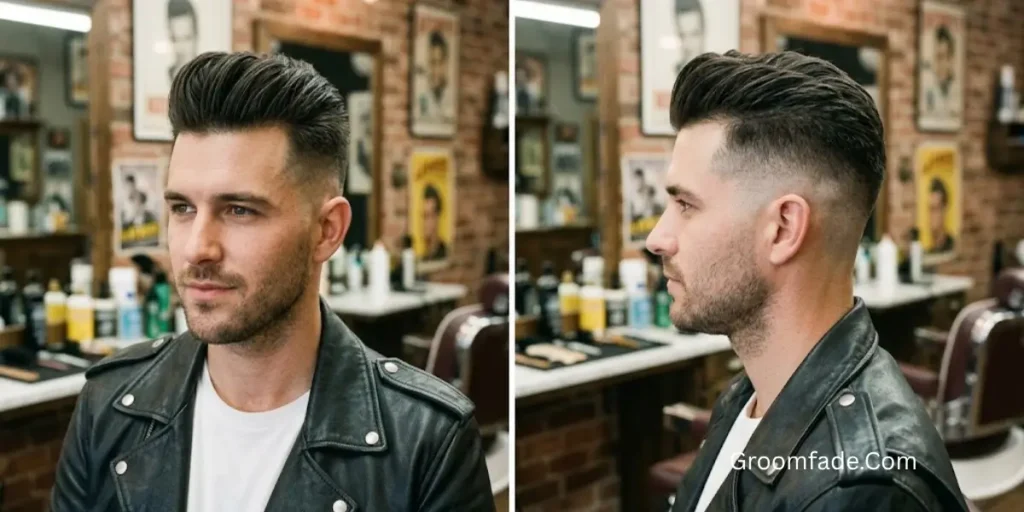
A high undercut fade takes the short section higher on the sides. This creates a sharper difference between the longer top and the closely cut sides.
It suits people who want a bold haircut and do not mind showing more of the head shape. Longer hair on top can make the contrast even stronger.
Because the sides are kept short over a larger area, the haircut can also make the top appear fuller by comparison.
Undercut Skin Fade
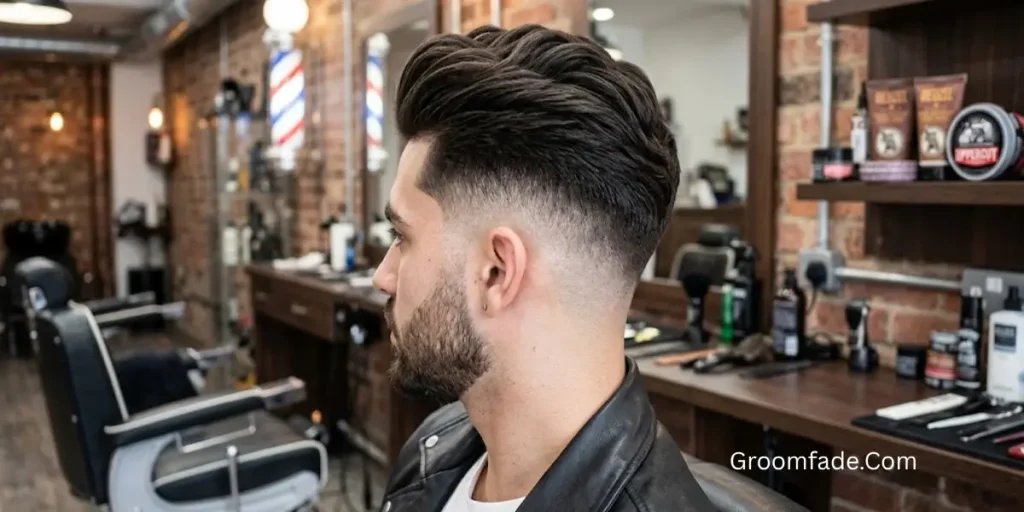
An undercut skin fade brings the sides down to the skin before gradually becoming longer higher up.
This creates a very clean finish around the ears and neckline. It works particularly well with slicked-back, textured, or longer hair on top.
A skin fade does require regular cleanup if you want to keep the sharp contrast.
Undercut Drop Fade
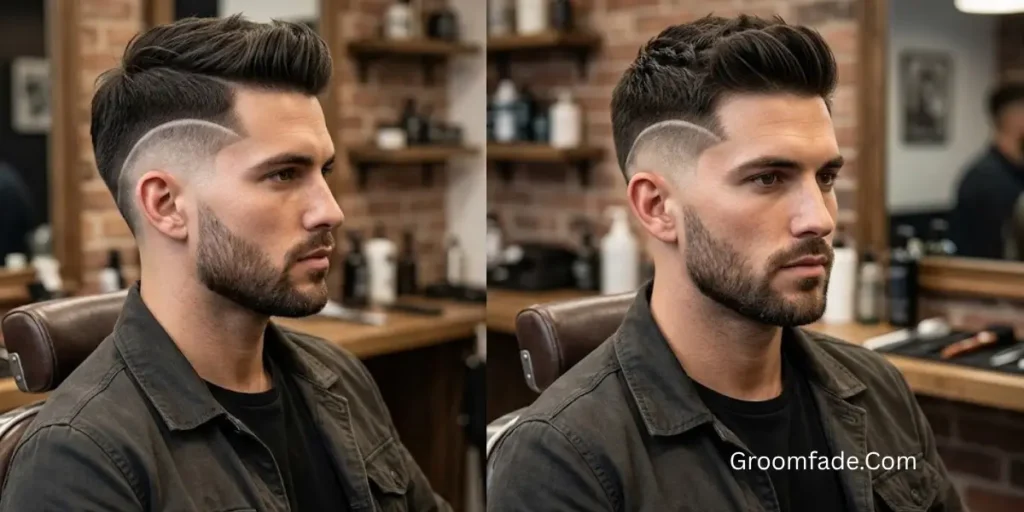
A drop fade undercut follows the shape of the head and drops lower toward the back. This can create a more curved and controlled transition than a standard fade.
It is useful when you want strong contrast around the sides but prefer more shape around the back of the head.
A fuller top creates a stronger contrast with closely cut sides. Pompadour Haircuts use height and volume to create a classic style with a polished finish.
Undercut Low Taper Fade
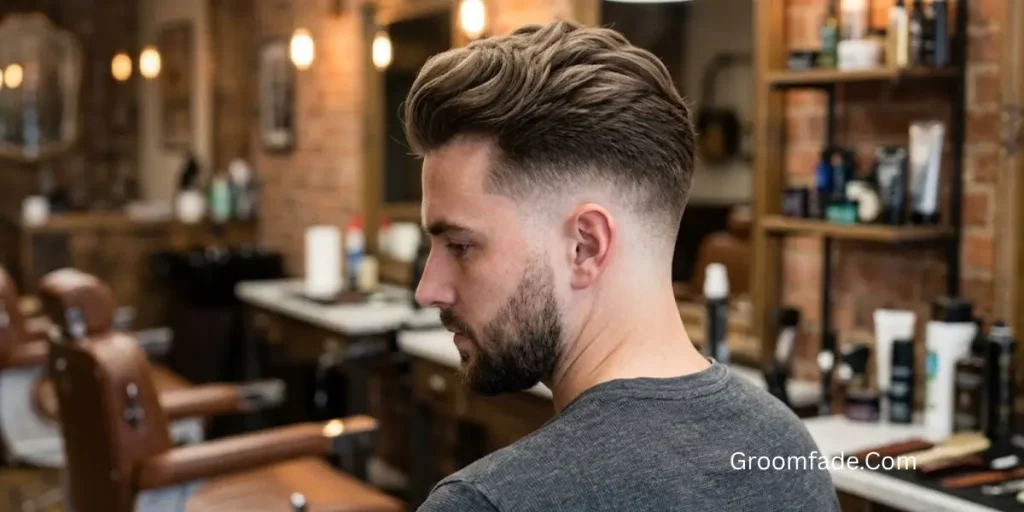
An undercut low taper fade is a softer option. The taper mainly cleans up the area around the temples and neckline instead of removing a large section of hair from the sides.
It can be a good choice if you like the longer top of an undercut but want a less aggressive finish.
Undercut Fade by Hair Length
The length on top has a major effect on the final haircut. Before your appointment, think about how you normally wear your hair.
Undercut Fade Short Hair
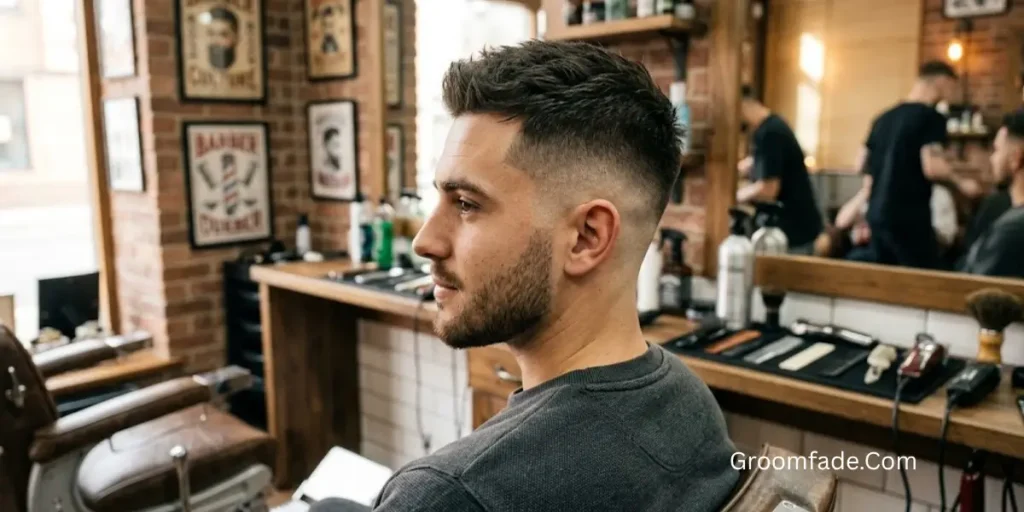
An undercut fade short hair style keeps the top relatively short while the sides are faded.
You can add texture with a matte clay or styling paste. This version is simple to manage and does not need as much styling as a long top.
A short textured top can also make the fade look sharper because there is a clear difference between the top and sides.
Undercut Fade Medium Hair
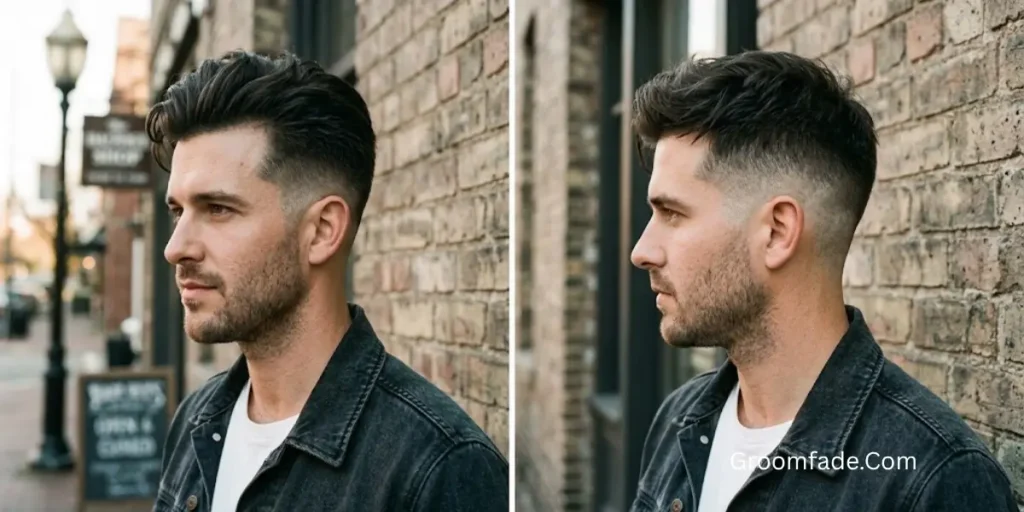
Undercut fade medium hair gives you more styling choices without requiring the length of a long undercut.
You can wear the top forward, to the side, pushed back, or with loose texture. Medium length is also useful if you want some volume without spending too much time styling.
Undercut Fade Long Hair
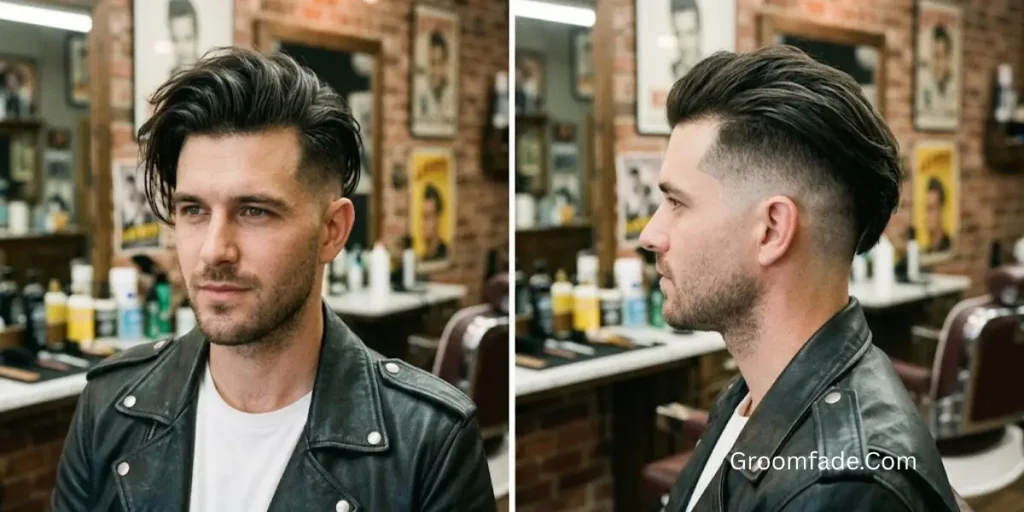
An undercut fade long hair style creates a strong contrast between the longer top and short sides.
Long hair can be slicked back, tied into a small bun, swept to one side, or left loose. This version needs more care because the top requires regular washing, conditioning, and styling.
If you want to grow the top longer, tell your barber before the haircut so the shape can be planned around your goal.
Undercut Fade With Volume on Top
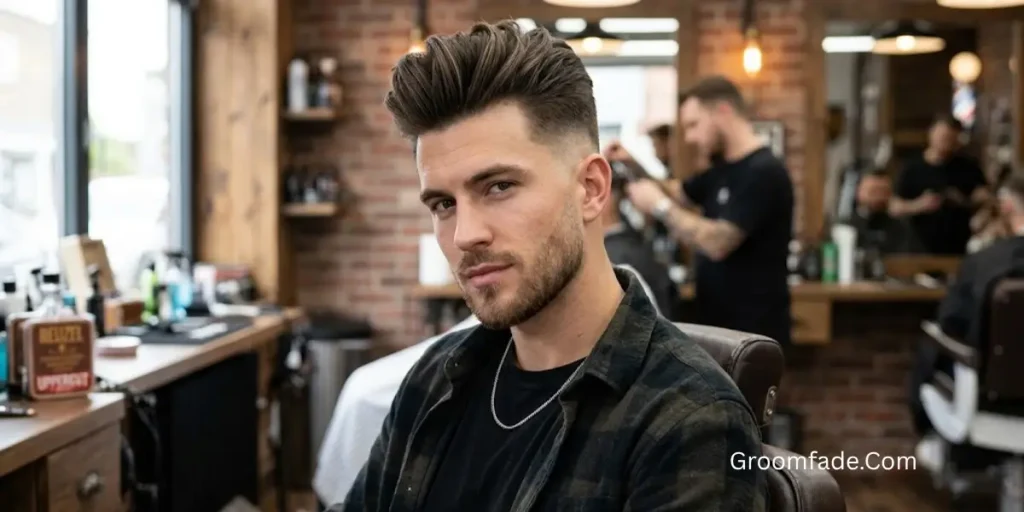
For more height, leave enough length on top to lift the hair with a blow dryer.
A round brush or vent brush can help direct the hair upward and backward. Use a light pre-styling product first, then finish with clay, paste, or another product that matches your desired hold.
Undercut Fade by Hair Type
Hair texture changes how an undercut fade sits and how much work it takes to style.
Undercut Fade for Straight Hair
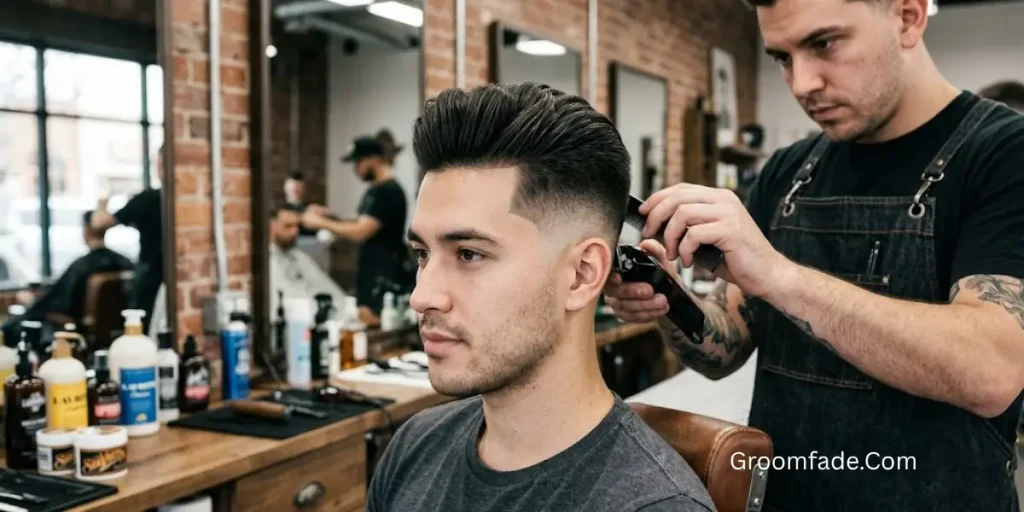
An undercut fade straight hair style gives you a clean base for slick backs, side parts, textured tops, and fringe.
Straight hair can show the difference between the top and sides very clearly. If your hair tends to fall flat, a blow dryer and lightweight styling product can add shape and volume.
Undercut Fade for Curly Hair
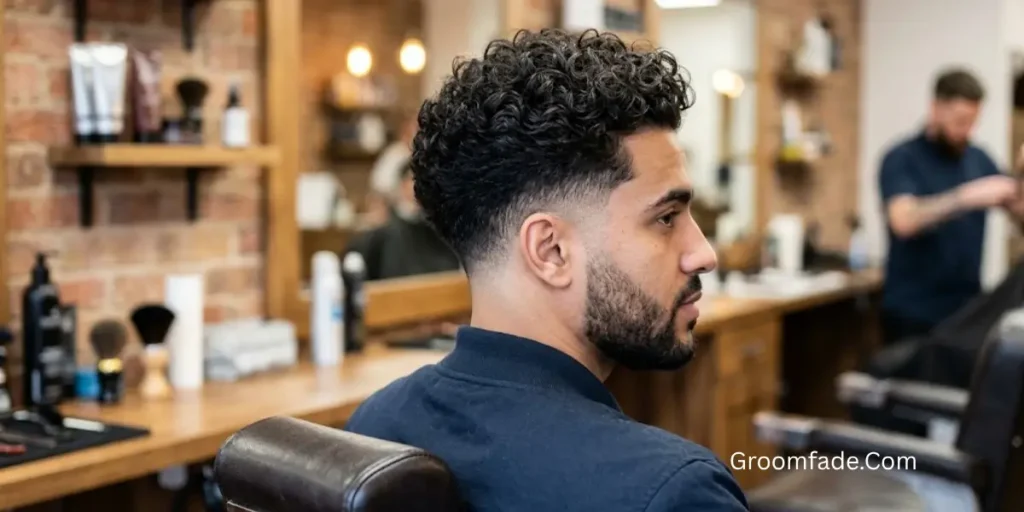
An undercut fade curly hair style leaves the curls longer on top while keeping the sides controlled.
The contrast can make natural curls stand out. The top should usually have enough length for the curls to form properly instead of being cut so short that the texture loses its shape.
A curl cream or lightweight styling product can help control frizz while keeping the natural pattern visible.
For a more relaxed approach to volume, Quiff Haircuts lift the front while keeping the rest of the top easier to shape and maintain.
Undercut Fade for Wavy Hair
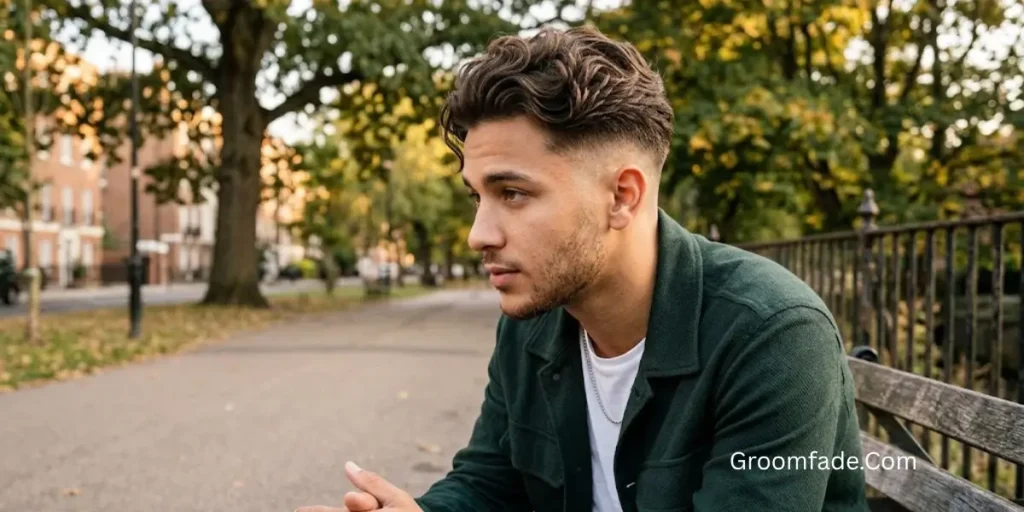
Wavy hair works well with an undercut because the longer top can show natural movement.
You can keep the waves loose and casual or use a styling cream for more control. A low or mid fade often creates a balanced transition when the top has a lot of movement.
Undercut Fade for Thick Hair
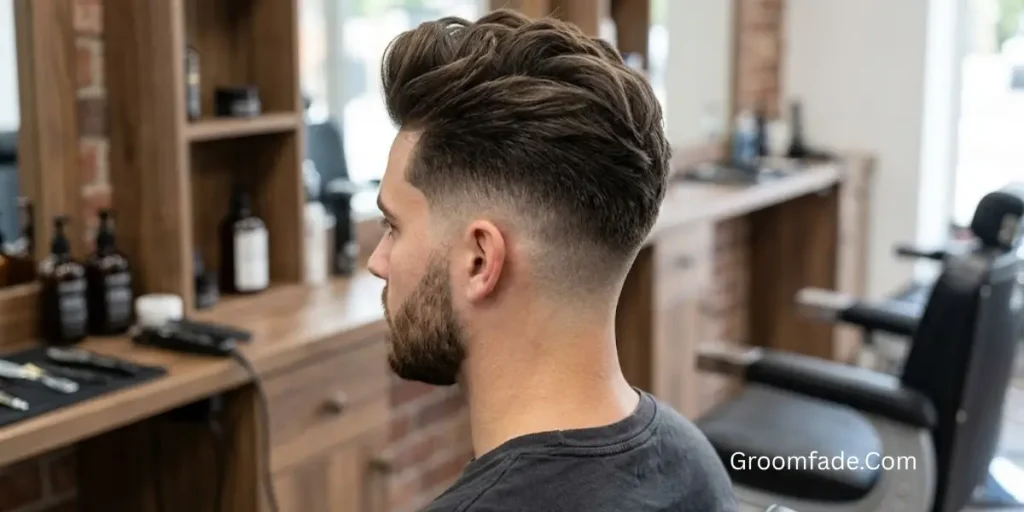
An undercut fade can help manage thick hair by removing weight from the sides while leaving length on top.
The barber may need to reduce some bulk from the top as well, depending on how dense your hair is. Simply taking the sides very short does not always make thick hair easier to style.
Undercut Fade for Black Men
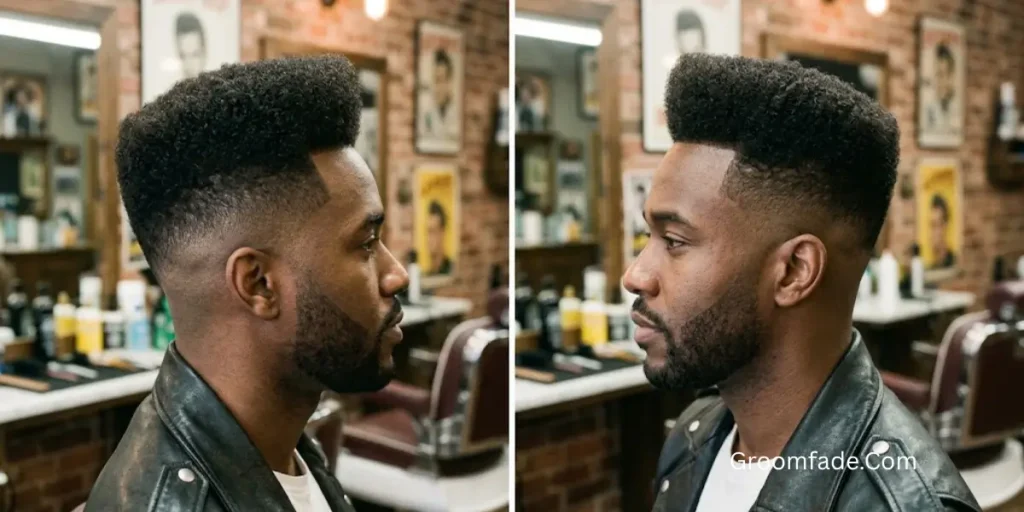
An undercut fade for Black men can be adapted to tightly coiled and textured hair. The top can be shaped into curls, twists, sponge texture, short coils, or another preferred style.
The fade height should match the desired shape and amount of contrast. Because hair texture and density vary widely, a barber experienced with your texture can adjust the cut more precisely.
Undercut Fade Styles to Try
The top does not have to follow one fixed shape. These variations can change the personality of the haircut.
Slick Back Undercut Fade
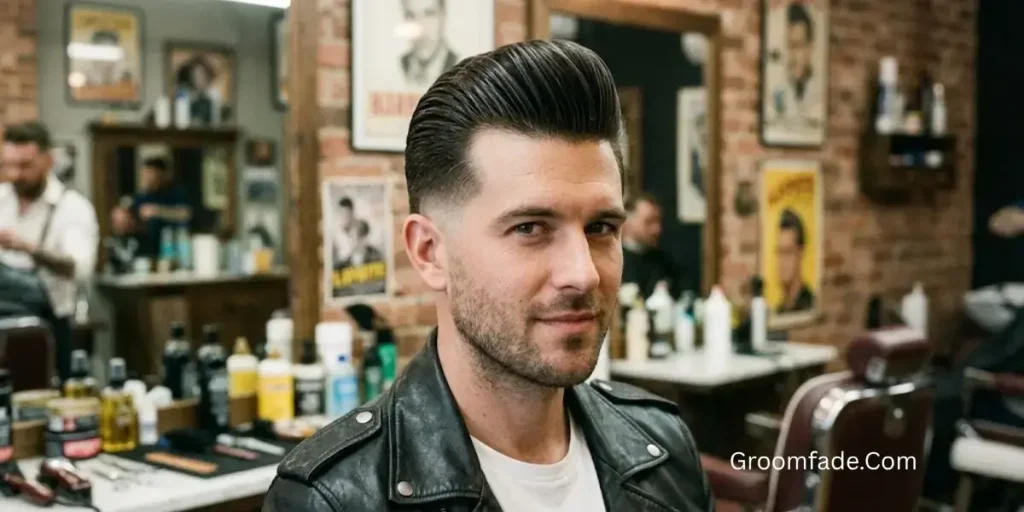
A slick back undercut fade keeps the top longer and directs it backward.
Use a blow dryer to set the direction before adding a styling product. A pomade can create a smoother finish, while clay can give a more natural, matte look.
Side Part Undercut Fade
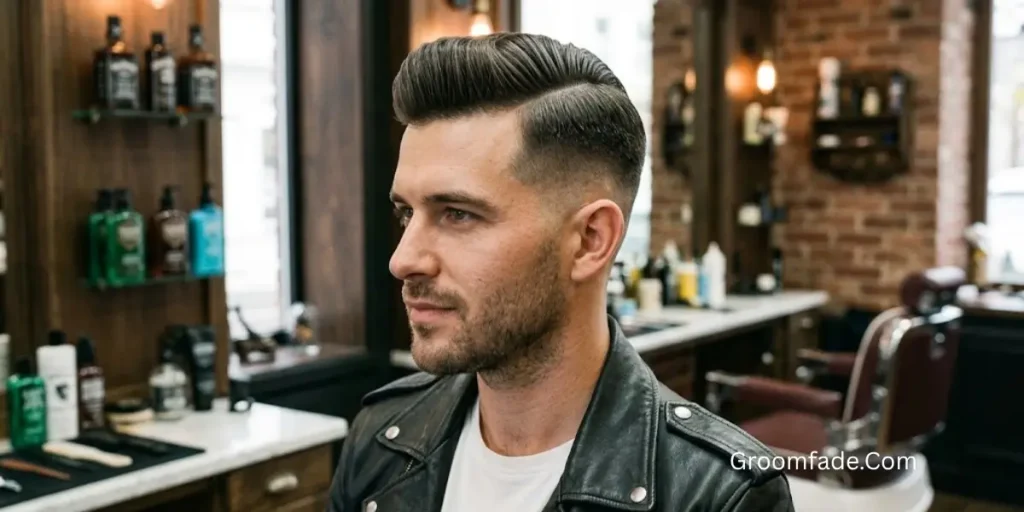
A side part undercut fade adds a defined part to the longer top.
It gives the haircut a more structured appearance and works especially well with straight or slightly wavy hair.
Side Swept Undercut
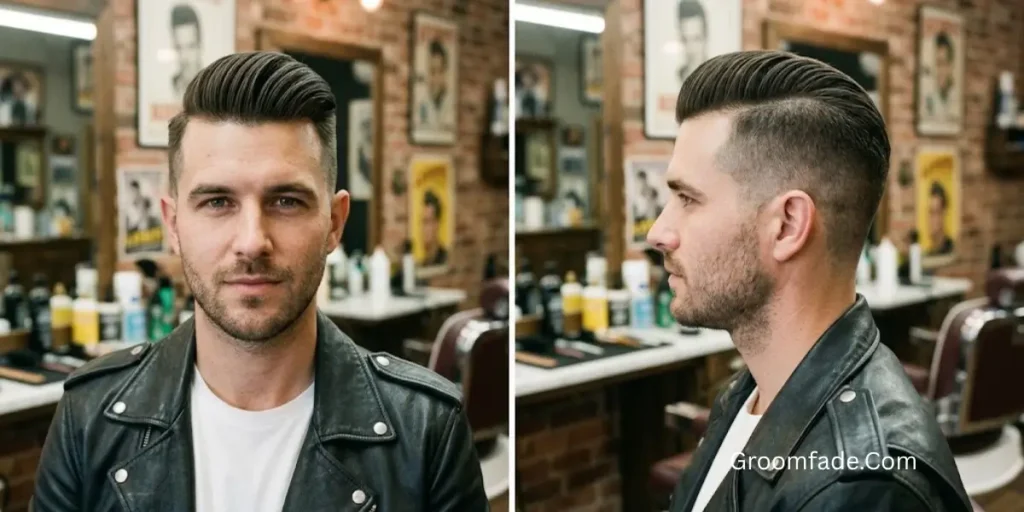
A side swept undercut moves the longer top across the head rather than directly backward.
This can soften the strong contrast of the sides and give medium-length hair a relaxed shape.
Undercut Fade With Beard
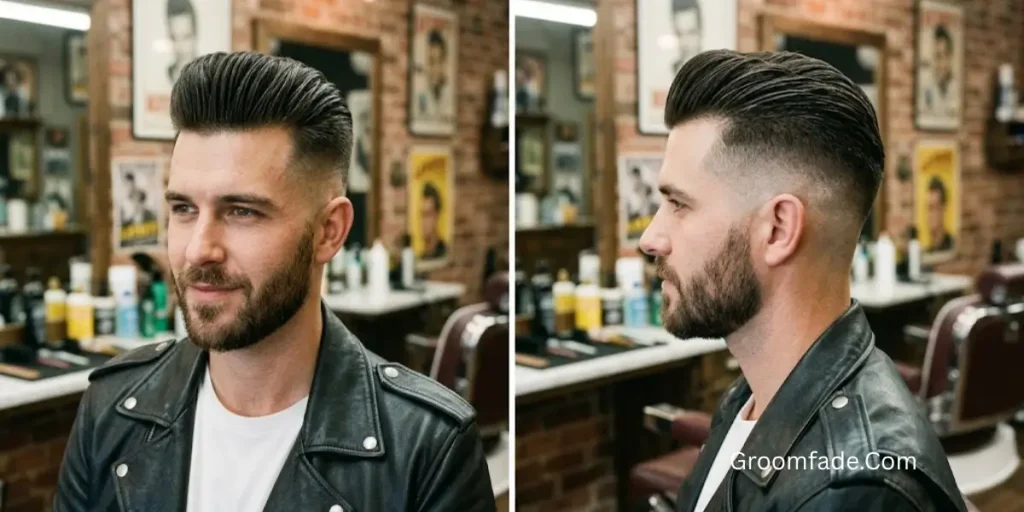
An undercut hairstyle with beard creates a strong connection between the haircut and facial hair.
The beard does not need to be extremely long. A short, neatly shaped beard can balance a high-contrast haircut, while a fuller beard creates a stronger overall look.
Man Bun Undercut Fade
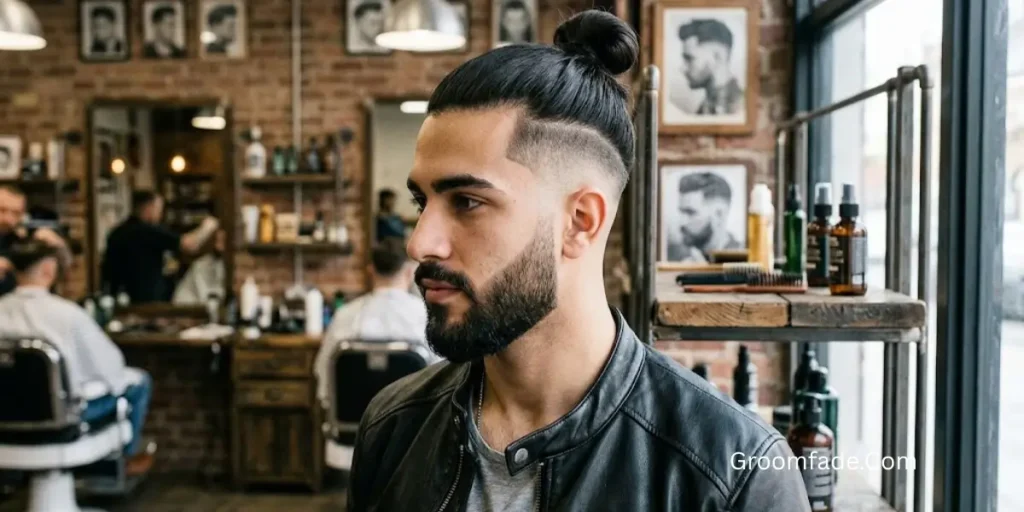
A man bun undercut fade leaves enough length on top to tie the hair back.
It gives you two different styling options: wear the top loose or pull it into a bun. This style works best when the top has enough length to stay secure.
Undercut Quiff
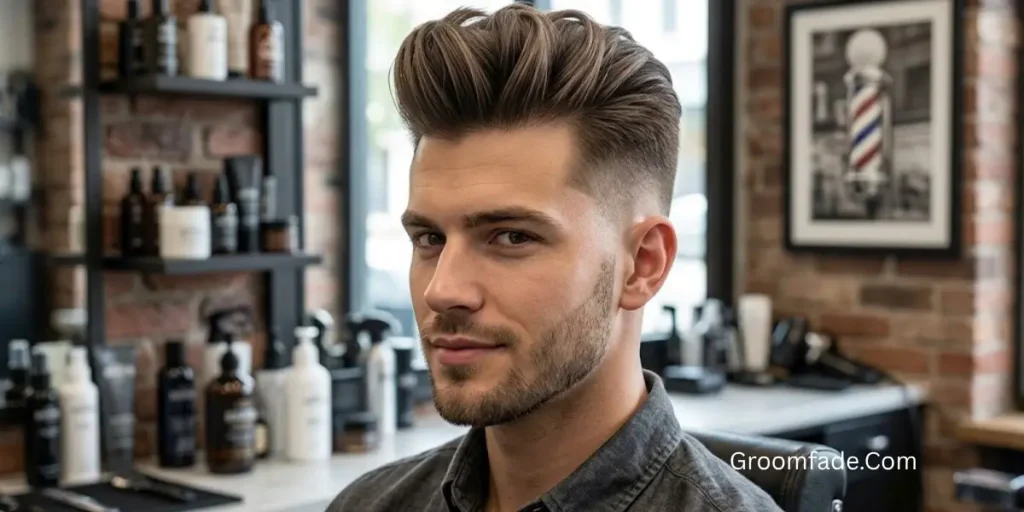
An undercut quiff combines a lifted front with shorter faded sides.
The front needs enough length to create height. A blow dryer is usually more useful here than relying only on styling product.
Pompadour Undercut
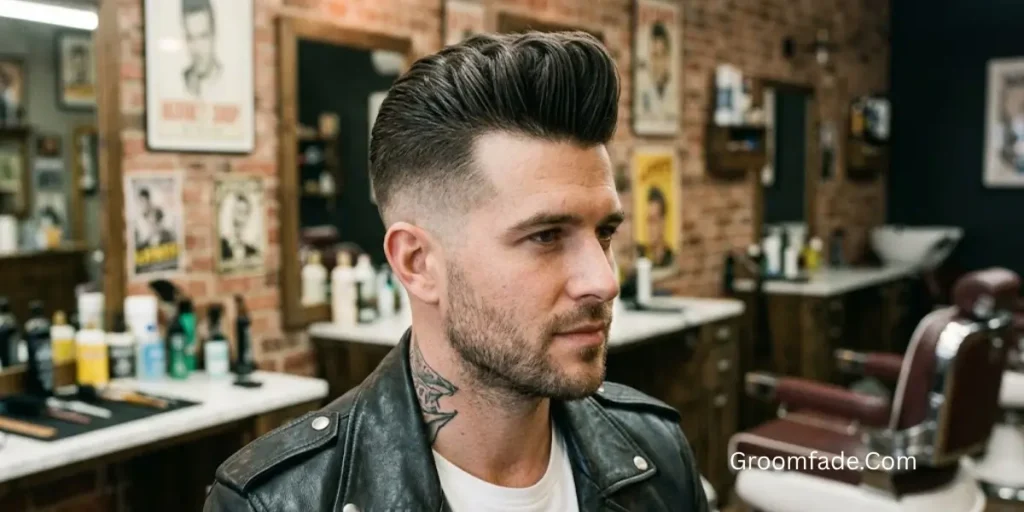
A pompadour undercut keeps the top long enough to create volume and shape.
The sides remain much shorter, making the top the main focus of the haircut. This is better suited to people who enjoy spending some time styling their hair.
Men who prefer a short fringe with defined edges can consider the Edgar Haircut, which creates a distinct front and compact top that contrasts well with faded sides.
Undercut Fringe
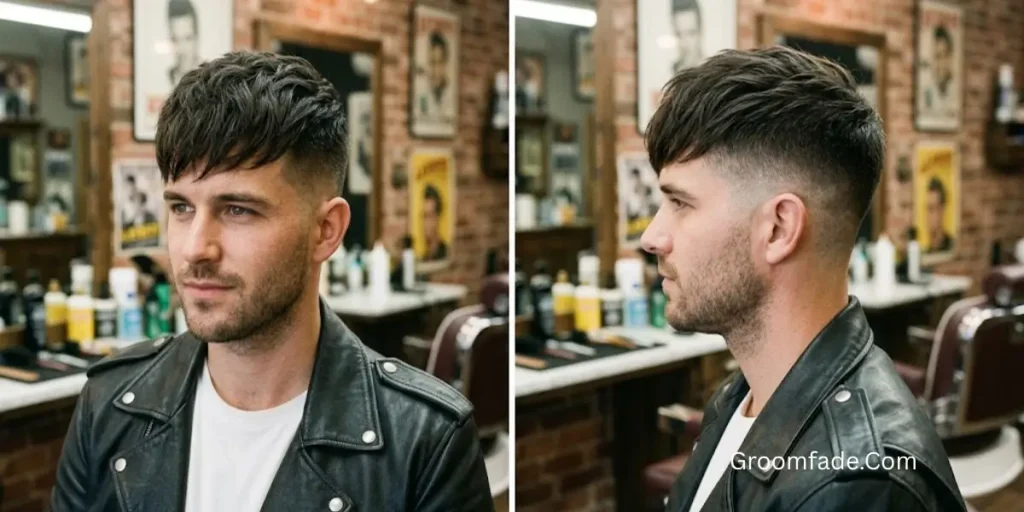
An undercut fringe keeps the front longer and allows it to fall forward.
You can keep the fringe blunt, textured, or slightly uneven depending on the desired finish.
Disconnected Undercut Fade Explained
A disconnected undercut fade has a more obvious separation between the top and sides.
The top remains significantly longer, while the sides are cut much shorter. The transition may still include a fade lower down, but the connection between the top and side area is intentionally less blended.
This is different from a fully blended undercut fade, where the barber works more gradually between the different lengths.
Disconnected Undercut vs Undercut Fade
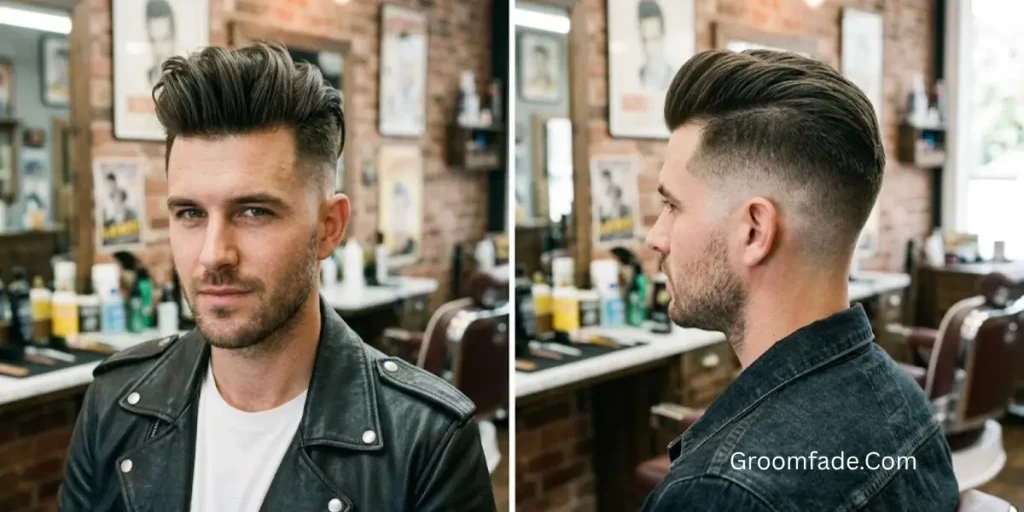
Choose a disconnected version if you want a sharper, more noticeable separation.
Choose a blended undercut fade if you want the same strong top-and-side contrast but prefer the sides to transition more smoothly.
Neither is automatically better. The right option depends on the shape you want and how much contrast you like.
Undercut Fade for Women
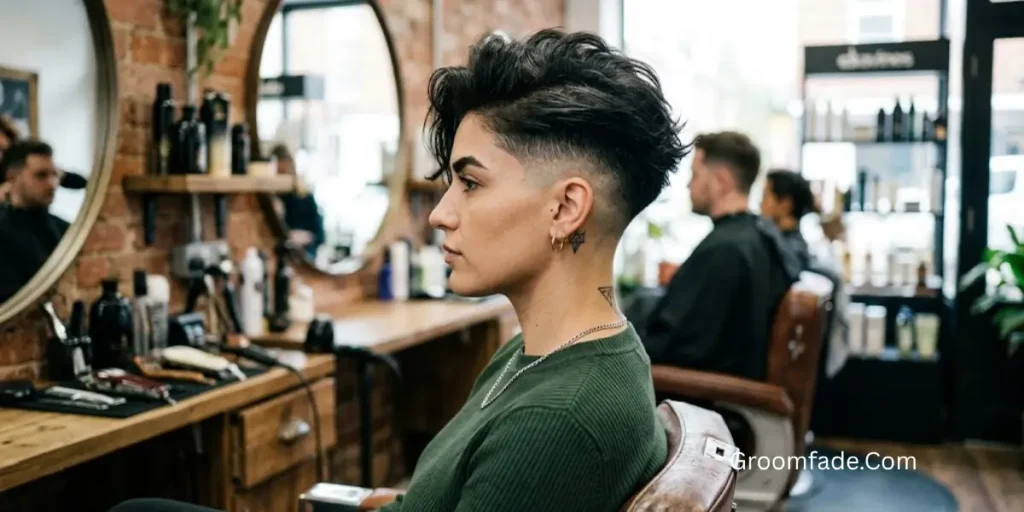
An undercut fade for women can be adapted in many ways. Some people keep long hair over the top and back while using a shorter faded section near the sides or nape.
Others choose a shorter overall hairstyle so the fade becomes a main part of the design.
The important point is that an undercut is not limited to one gender. Hair length, texture, styling habits, and personal preference matter more when choosing the final shape.
Does an Undercut Fade Suit You?
An undercut fade can suit many people, but the exact version matters.
Best Face Shapes for an Undercut Fade
Oval and square face shapes can work well with many undercut variations because they provide a balanced base for different top lengths.
For round faces, adding some height on top can create a longer visual shape. For longer or oblong faces, too much height may make the face appear longer, so a flatter top can be a better choice.
Your hairline and natural growth pattern also matter. A good barber can adjust the top length and fade height to work with these features.
Choosing the Right Fade Height
Choose a low fade if you want a softer transition.
Choose a mid fade for a balanced amount of contrast.
Choose a high fade if you want the sides to look much shorter and the top to stand out.
If you are unsure, a mid or low option is often easier to adjust later than starting with a very high fade.
Choosing the Right Top Length
Short tops are easier to maintain.
Medium tops give you more styling options.
Long tops create the strongest contrast and allow styles such as slick backs, buns, and larger amounts of volume.
How to Ask Your Barber for an Undercut Fade
Do not simply say, “Give me an undercut fade,” if you have a specific result in mind.
Tell your barber:
- The fade height: low, mid, or high.
- The side length: faded, very short, or down to the skin.
- The top length: short, medium, or long.
- The top style: slick back, side part, fringe, textured, or natural.
- Your maintenance preference: explain if you want an easy haircut or do not mind regular styling.
A reference photo is also helpful. Bring a photo showing the side and top of a haircut that is close to what you want.
A short fringe and textured top also make the French Crop Haircut a practical choice for men who want a simple, structured style.
How to Style an Undercut Fade
Start with clean, slightly damp hair. Apply a small amount of pre-styler if you need extra control or volume.
Use a blow dryer to direct the top into its final shape. For a slick back, move the hair backward. For a quiff, lift the front while drying.
Once the hair is mostly dry, apply a small amount of styling product. Clay works well for a matte textured finish, while pomade gives more shine and control.
Start with less product and add more only if needed. Too much can make the hair heavy or greasy.
How to Maintain an Undercut Fade
The short sides are what make this haircut look sharp, so they usually need more frequent trimming than the top.
How Often Should You Get an Undercut Fade?
The exact timing depends on how quickly your hair grows and how clean you want the fade to look.
Many people choose to clean up the sides every few weeks. A skin fade usually shows regrowth sooner than a longer low fade.
How to Maintain the Longer Top
Do not ignore the top just because the sides get most of the attention.
Use shampoo based on your scalp and hair needs, condition the lengths when needed, and avoid using more styling product than necessary.
If you are growing the top, tell your barber so they can maintain the shape without removing more length than you want.
Is an Undercut Outdated?
An undercut is not limited to one old-fashioned look. The classic version with a very sharp separation is less common in some settings, but the basic idea is still used in modern haircuts.
Adding a low fade, mid fade, taper, texture, curls, fringe, or a different top style can change the overall appearance.
The best version is the one that fits your hair, lifestyle, and preferred level of contrast.
For a combination of volume and faded sides, the Pompadour Fade keeps the top lifted while adding a cleaner transition around the sides and back.
Undercut Fade vs Other Haircuts
Undercut Fade vs Low Fade
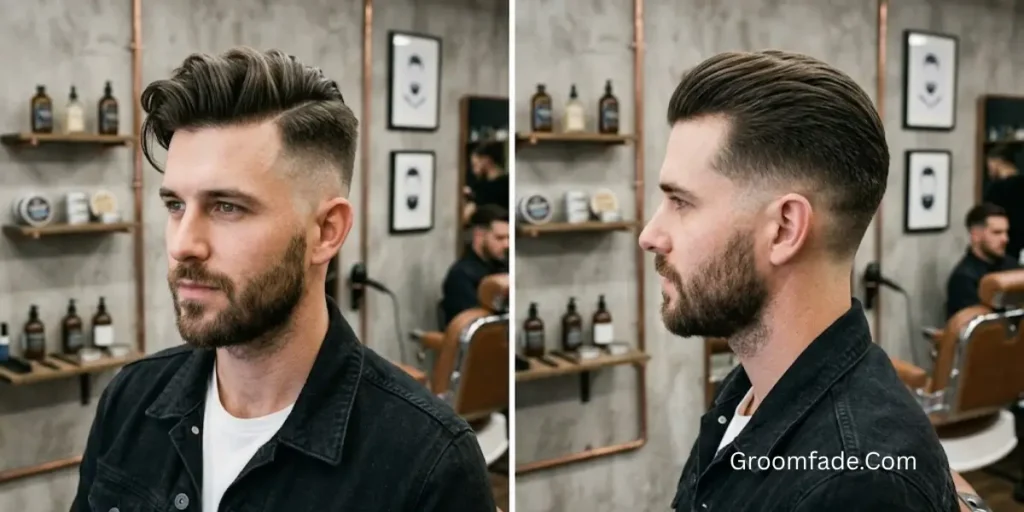
A low fade can be used with many different top styles and does not always have the strong top-to-side contrast associated with an undercut.
An undercut fade specifically keeps more noticeable length on top.
Undercut Fade vs Mid Fade
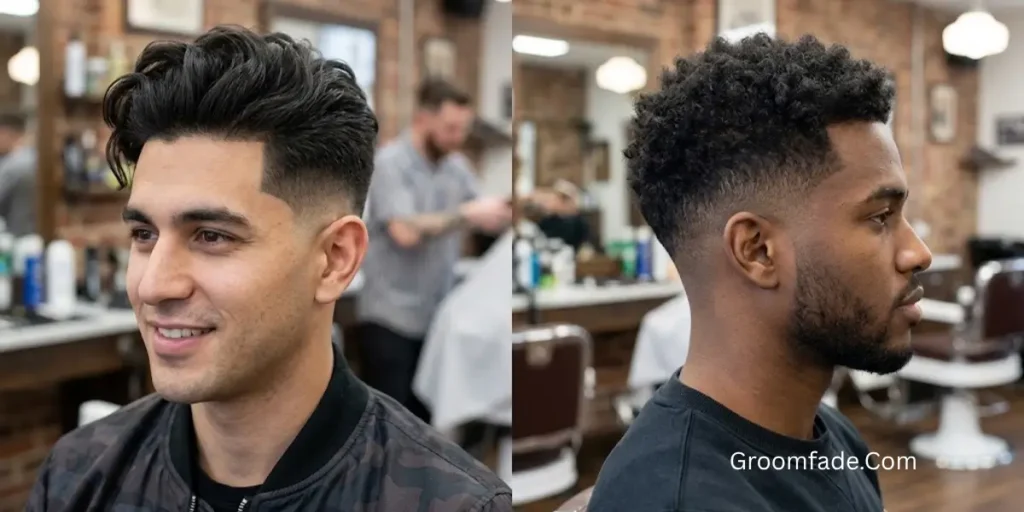
A mid fade is placed around the middle of the sides. A mid undercut fade combines that placement with a longer, more distinct top.
The result usually has more contrast than a standard mid fade with a shorter top.
Undercut Fade vs High Fade
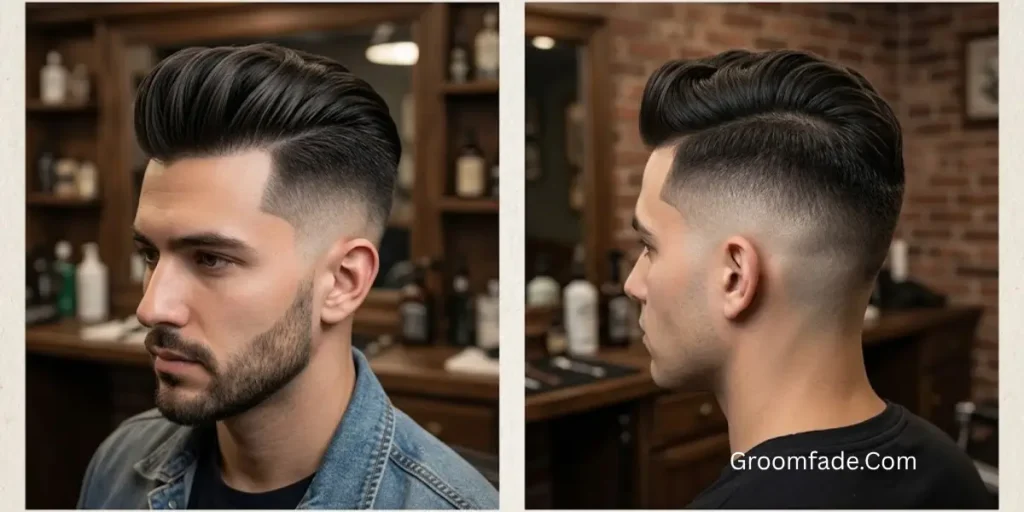
Both can create a bold appearance. A high fade removes more hair higher on the sides, while an undercut focuses on keeping the top noticeably longer.
The two can also be combined in a high undercut fade.
Pros and Cons of an Undercut Fade
Pros
- Strong contrast between the top and sides
- Works with short, medium, and long hair
- Can be adapted to different hair textures
- Supports many top styles
- Easy to personalize with fade height
- Can be paired with facial hair
Cons
- Short sides need regular cleanup
- High-contrast versions may not suit every workplace
- Growing out the haircut can take patience
- Longer tops may require daily styling
- A poorly chosen fade height can change the balance of the face
Frequently Asked Questions About Undercut Fade
Q1. Is an undercut fade a thing?
Yes. It combines a longer undercut-style top with faded sides and back. The fade can be low, mid, high, skin, or another variation.
Q2. Which fade is most attractive?
There is no single fade that is most attractive for everyone. A low fade gives a subtle look, a mid fade offers balanced contrast, and a high fade creates a stronger result. Your face shape, hair type, and preferred style should guide the choice.
Q3. What is a disconnected undercut fade?
A disconnected undercut fade keeps a clear separation between the longer top and shorter sides. The sides may still have a fade lower down, but the top is not smoothly blended into the sides.
Q4. Is an undercut outdated?
No. The style has changed over time, and modern versions often use fades, tapers, texture, curls, or different top styles. The classic disconnected look is only one version of the haircut.
Q5. Does an undercut fade work with curly hair?
Yes. Curly hair can work very well with an undercut fade. Leaving enough length on top allows the natural curl pattern to remain visible while the shorter sides create contrast.
Q6. Can you get an undercut fade with long hair?
Yes. Long hair on top creates a strong contrast with faded sides. You can wear it loose, slicked back, swept to the side, or tied into a bun.
Q7. Is an undercut fade good for thick hair?
It can be. Shorter sides remove some visual weight, while the top can be shaped to control bulk. Your barber may also need to reduce excess weight from the top.
Q8. How often should you maintain an undercut fade?
The sides generally need trimming every few weeks to keep the fade looking clean. The exact schedule depends on your hair growth and how sharp you want the haircut to remain.
Q9. What is the difference between an undercut and a fade?
An undercut creates a strong difference between the longer top and shorter sides. A fade gradually changes hair length from short at the bottom to longer higher up. An undercut fade combines both features.