
A Shoyoroll gi can look right on a product page and still feel wrong halfway through an open mat. The sleeves might pull at your shoulders, the pants might bunch at the knees, or the collar might feel heavier than you expected. The reverse is true as well. A plain gi you nearly skipped can become the one you reach for every week because it moves easily and dries in time for your next class.
Shoyoroll makes Brazilian jiu-jitsu gis for several kinds of buyers. Some want a simple uniform for regular classes. Others want a competition cut or a design that recalls a favorite release. The brand’s numbered batches make those differences easy to talk about, but they can also make a first purchase feel like homework. Here’s how to read a listing, compare popular releases, and choose a gi that earns its place in your training bag.
What a Shoyoroll batch number tells you
A batch number identifies a specific release. It helps you tell apart two gis that share a name or look similar in photos. A model name describes a broader family. For example, Shoyoroll has revisited its Competitor design with changes to the cut and construction while bringing back details from an earlier batch. When someone at your gym says they love their Competitor, ask which version they own and what size they wear.
Start with the full release name and color. Then look at the jacket fabric, the pant fabric, and the size chart for that release. Some listings also give a note on the cut or tournament use. Those details explain more about how the gi will feel than the batch number alone. If you’re looking at an older gi, ask for a clear photo of the size label and a few flat measurements. Years of wear and washing can change how a used gi fits.
Why certain Shoyoroll releases stand out
Batch 17 is a useful reference point if you like the classic Shoyoroll look. The brand’s revisited Competitor draws on that batch’s patchwork and uses a 450 GSM cotton pearl weave jacket with 10-ounce polycotton pants. The appeal is easy to see. You get a jacket with some structure and the patch placement that gives this model its character. If you want one gi for most of the week, the Competitor is worth comparing with a lighter option in the same size.
Batch 32, the Beast Kimono, offers a different look. Shoyoroll brought it back as the Batch 168 Beast Retro Kimono, with bold logos and patches that draw on 1990s competition style. The retro release pairs a 450 GSM pearl weave jacket with 10-ounce cotton canvas pants. That pant fabric is one reason to look at the specs even when two jackets share the same fabric weight. Shoyoroll lists the Beast Retro as ineligible for IBJJF events, so think of it as a training or collection piece if you compete under those rules.
The Comp Standard is the release family to look at if you prefer fewer graphics and a cut aimed at competition. Shoyoroll introduced the line in 2010 and has kept its look fairly simple. It makes sense for a grappler who likes subtle branding and wants a gi that can do double duty at the gym and at events. Check the details of the exact version you’re buying and run it through your event’s uniform rules after washing.
The WAZAir 2.0 takes a different approach. It uses 10-ounce diamond ripstop for both pieces and adds an elastic waistband to the pants. That build appeals to people who like a light gi for regular classes or want to carry less on the way to the gym. Try the waistband with your belt tied to see how it sits when you bend and move. Shoyoroll lists this model as ineligible for IBJJF competition, so plan on a separate tournament gi if you need one.
How fabric changes the feel on the mat
GSM stands for grams per square meter. It tells you how much a given area of fabric weighs. It’s useful when you compare jackets made from a similar weave. The number won’t tell you the weight of the whole uniform, since the pants, collar, seams, and size can all affect the total. It also won’t tell you how soft the jacket feels after a few washes.
Pearl weave has a raised texture and gives the jacket some body. Many grapplers like it for regular gi classes because it feels familiar in grip exchanges and holds its shape well. A lighter jacket may feel easier to carry and wear in a warm room. Try to judge it over a full class if you can. How the collar sits and how freely you can reach forward can matter more than what you notice when you first pick the jacket up.
On the pants, look at the cut as well as the fabric. Ripstop has a visible grid, while canvas tends to feel more substantial in the hand. Check where the knee panels land and how the crotch sits when you squat. Pants that fit well at the waist can still feel tight when you play guard. A comfortable pair should let you bring your knees to your chest and step into a deep lunge without pulling the waistband down.
How to choose your Shoyoroll gi size
Start with the chart for the release you want. Use both your height and weight, especially if you fall between sizes. Shoyoroll offers extended size options on some models, including sizes with an L or W suffix. Check the chart to see what those options mean for that release. If you already own a gi that fits well, measurements from that uniform give you a useful second reference.
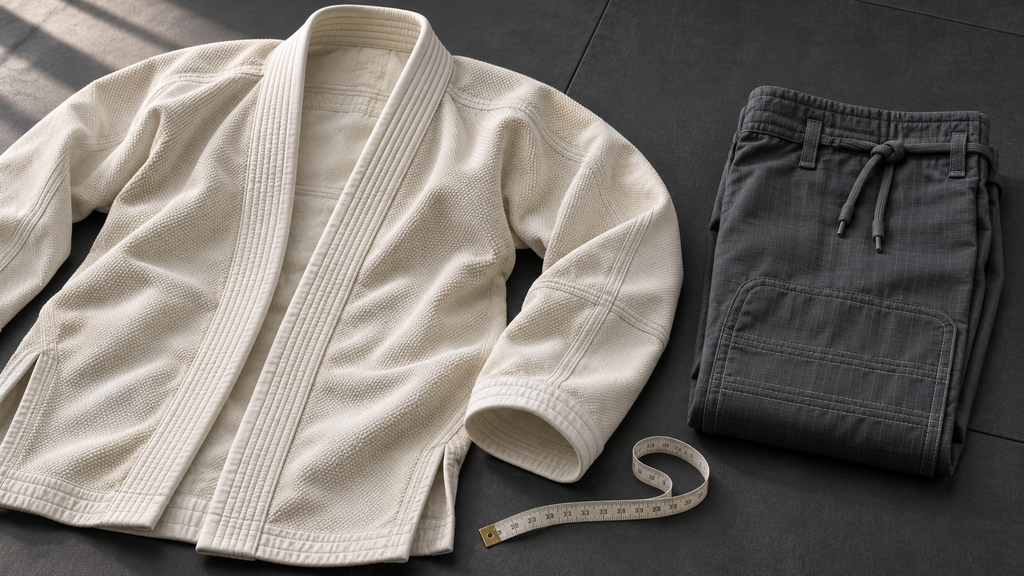
Lay your current jacket flat and measure across the chest, from cuff to cuff, and from the back of the collar to the hem. For pants, measure the waist flat and take the inseam. Ask the seller how they took their measurements so you can compare them fairly. This step helps if you have long arms, broad shoulders, or a waist and inseam that rarely fit the same standard size.
Try a new gi on indoors before washing it. Reach as if you’re taking a collar grip, make a deep squat, and sit back on your heels. The jacket should let you move without binding across the back. Check whether the cuffs sit in the right place and whether the skirt stays under the belt when you raise your arms. If the fit is already tight, factor in the chance of some shrinkage before you decide to keep it.
What to check before buying a secondhand gi
A used Shoyoroll can be a good buy if you want to try a specific cut or find an older design. Ask for photos of the actual gi in good light. Look at the collar, cuffs, knees, and the seams under the arms. Those areas can show fraying or heavy wear that’s easy to miss in a full-length photo. Ask how it was washed and dried, and whether either piece has stains, repairs, or an odor.
Check that both pieces belong to the release if you’re paying a premium for a matching set. For an older batch, compare the label, patch placement, and color details with reference photos from the original release when available. Ask whether the seller can show proof of purchase, especially for a scarce version. Before paying, compare the total cost with the price of a new gi you’d gladly train in and check the terms for returns or buyer protection.
How to prepare a gi for competition
Read the organizer’s current uniform rules before you buy. The IBJJF specifies allowed colors and patch zones, along with other uniform requirements. A gi marketed for competition can still cause problems if it has shrunk, if a patch sits outside a permitted area, or if the specific model falls outside the rules. If in doubt, ask your coach or the organizer to check the model and help you assess the fit.
Train and wash the gi before event day so you can confirm the fit once it settles. Weigh yourself with the uniform on if your event requires a gi weigh-in. Jacket fabric weight gives you only part of that number. If you own a second gi that meets the rules, pack it as a backup in case the first one fails inspection or you need to replace it during the event.
How to wash a Shoyoroll gi
Take the gi out of your bag when you get home and wash it after each session. Follow the care label on your release. Shoyoroll’s general guide suggests washing in cold water on a gentle cycle with mild detergent. Turn the gi inside out, and wash dark colors separately at first. Hang both pieces where air can move around them and let them dry fully before putting them away.
Heat can affect both the fit and the look of the fabric. If the sleeves and pants already sit where you want them, air drying helps limit further shrinkage. Give the collar and waistband extra time to dry since those areas can hold moisture. If you train on back-to-back days and your gi stays damp overnight, rotate a second uniform into your week.
Which Shoyoroll gi makes sense for you?
For a first Shoyoroll gi, pick the job it needs to do most often. If you train several nights a week, start with a cut you know you can move in and a fabric you can wash and dry on your schedule. The Competitor is a sensible reference point for a midweight build with familiar Shoyoroll styling. If your priority is a light uniform for hot classes or travel, the WAZAir 2.0 is worth a closer look. If competition is the goal, start with the event rules and then try on the Comp Standard or another eligible option.
If you’re after a release like the Beast Retro, buy it because you enjoy the design and expect to get use out of it. A scarce batch can be fun to own, but you’ll feel the fit every time you roll. When you shop with Strikers BJJ or compare a listing elsewhere, look for the exact release, check the measurements, and picture your next ordinary class. The right Shoyoroll gi is the one you’ll be glad you packed when it’s time to step on the mat.