
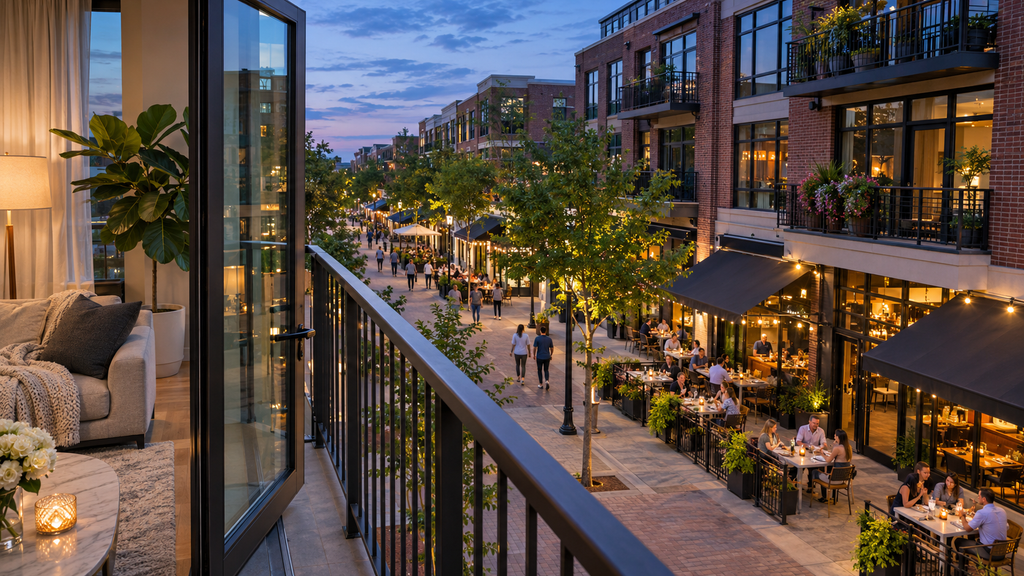
Buying a condo in a dining district means purchasing more than a residential property. It means buying into a neighborhood with its own personality, daily routines, and social atmosphere. Independent coffee shops open early, restaurants fill their outdoor seating areas in the afternoon, and neighborhood bars attract customers well into the evening. Residents can enjoy many of the pleasures of city living without traveling far from home.
The appeal becomes particularly clear when everyday responsibilities compete for limited free time. Picking up dinner, collecting dry cleaning, meeting friends, and shopping for groceries can all happen within a few blocks. A neighborhood that attracts people from across the city becomes an extension of your living space.
However, the characteristics that make dining districts attractive can also make them challenging places to live. Late-night conversations, commercial deliveries, cooking odors, and crowded sidewalks can test a homeowner’s patience. Even an expensive condo with modern finishes may struggle to provide adequate privacy and quiet.
Buying in such an area requires a closer examination of the relationship between residential comfort and commercial activity. The right property can deliver years of enjoyable urban living, while the wrong one can make ordinary activities such as sleeping or working from home unnecessarily difficult.
1. A Neighborhood That Does Half Your Errands for You
One of the strongest arguments for buying a condo in a dining district is the amount of time residents can save. Suburban homeowners often organize their schedules around driving between supermarkets, restaurants, pharmacies, and service providers. In a well-developed urban neighborhood, many of these errands fit naturally into a short walk.
Having a dry cleaner downstairs might seem like a minor advantage during a property viewing. Over several years, however, the convenience becomes much more noticeable. Dropping off work clothes on Monday morning and collecting them on Wednesday evening requires little planning. There is no need to make a separate journey or find parking.
Restaurants provide similar benefits. Busy professionals can pick up a freshly prepared meal after work rather than spending an hour cooking. Parents can take their children out for an early dinner without organizing transportation. Couples can arrange spontaneous date nights without worrying about who will drive home.
Access to several restaurants also introduces variety into everyday routines. A neighborhood with a Japanese restaurant, an Italian trattoria, a breakfast café, and a family-owned bakery offers something different for almost every occasion. Residents can develop favorites without becoming dependent on a single establishment.
Local businesses can contribute to a stronger sense of community. Regular customers become familiar with restaurant owners, baristas, shopkeepers, and other residents. These relationships may start with brief conversations but gradually develop into friendships. For people who live alone or work remotely, such interactions can be particularly valuable.
Remote workers also benefit from having places to escape the home office. Spending an hour answering emails in a coffee shop or meeting a colleague for lunch introduces variety into a working day. A compact condo feels less restrictive when comfortable public spaces are available nearby.
Transportation expenses may also decrease. Some homeowners discover that they no longer need two family cars, while others can manage without owning a vehicle at all. Eliminating parking expenses, insurance payments, fuel costs, and routine maintenance can release a considerable portion of a household budget.
However, living close to restaurants introduces financial temptations. Ordering takeaway becomes easier when the restaurant is directly across the street. A quick coffee can become a daily purchase, and occasional dinners out can turn into regular habits.
Buyers should distinguish between convenience and affordability. Saving money on transportation does not automatically mean reducing overall household expenses. People who frequently eat outside their homes may find that restaurant spending exceeds their transportation savings.
The composition of the neighborhood also deserves attention. A street filled exclusively with upscale restaurants and cocktail bars might provide excellent entertainment but limited practical value. Residents still need affordable supermarkets, pharmacies, household supplies, medical services, and other necessities.
A successful residential dining district generally combines entertainment with everyday services. Restaurants attract visitors, while grocery stores, dry cleaners, bakeries, and independent retailers support people who live nearby. That combination gives homeowners reasons to appreciate their neighborhood throughout the week rather than only on Friday and Saturday evenings.
2. What Happens Outside Your Windows After Sunset?
Dining districts operate according to schedules that rarely match residential routines. While homeowners prepare for bed, restaurant employees may be serving their final customers, cleaning kitchens, moving furniture, or preparing for the following day. Understanding these different schedules is essential when evaluating a property.
During daylight hours, commercial streets can appear relatively peaceful. Outdoor dining areas may remain partially empty, traffic moves regularly, and conversations blend into ordinary background noise. A property viewed at eleven in the morning may feel entirely different at eleven at night.
Evening foot traffic creates several challenges beyond increased noise. Groups gather outside restaurant entrances while waiting for tables. Customers stop to smoke, check their phones, or wait for taxis. Delivery drivers park temporarily, and pedestrians sometimes occupy building entrances without realizing that residents need access.
Outdoor seating can extend commercial activity directly beneath residential windows. Conversations from several occupied tables combine into a steady layer of sound. Customers celebrating birthdays or special occasions may become considerably louder than people attending an ordinary dinner.
The physical arrangement of a restaurant plays a role as well. Establishments purchasing bar and restaurant furniture for outdoor terraces may expand their seating capacity, bringing more customers closer to residential entrances. Metal chairs dragged across pavement and tables moved during closing procedures can create unexpected disturbances.
Music presents another challenge because different frequencies travel through buildings in different ways. A restaurant playing background jazz may cause little disruption, while a nearby bar with powerful speakers can produce vibrations that residents feel through walls and floors.
Low-frequency bass is particularly difficult to ignore. Even when windows block conversations and traffic noise, vibrations originating from sound systems may continue traveling through structural elements. Residents sometimes experience these disturbances without clearly hearing the music itself.
Commercial kitchens introduce their own set of issues. Exhaust fans, air conditioning equipment, refrigeration compressors, and ventilation systems may operate for extended periods. A bedroom positioned near mechanical equipment can experience a persistent humming sound that becomes more noticeable at night.
Cooking odors can also influence residential comfort. Living above a bakery may initially sound appealing, but constant food smells can become tiring. Restaurants preparing grilled meat, fried dishes, or heavily seasoned food may produce strong odors around balconies and open windows.
Waste collection deserves equal attention. Restaurants generate food waste, cardboard packaging, glass bottles, and other commercial refuse. Employees may empty bins after closing, while collection vehicles can arrive early in the morning.
The sound of bottles being dropped into recycling containers is particularly noticeable on narrow streets surrounded by tall buildings. Buyers who concentrate exclusively on evening activity may overlook disturbances occurring before sunrise.
Parking and vehicle access can become complicated during busy periods. Residents returning from work may encounter rideshare vehicles, restaurant suppliers, and customers searching for available spaces. Even homeowners with private parking can experience delays if commercial vehicles regularly block garage entrances.
Different types of dining establishments create different conditions. A breakfast café generally generates more activity in the morning, while a cocktail bar may become busiest late at night. A family restaurant might close around ten, whereas a nightclub can continue operating for several additional hours.
The distance between a condo and these businesses matters, but physical separation alone does not tell the whole story. Narrow streets can reflect sound between buildings, while open courtyards sometimes concentrate noise from nearby terraces.
Prospective buyers should examine the neighborhood at several times of day. A weekday morning, Friday evening, Saturday night, and Sunday afternoon can reveal different patterns. Spending thirty minutes outside the building may expose problems that never appear during a scheduled property viewing.
A lively street does not automatically make a poor residential location. Many people enjoy hearing conversations, occasional music, and the general movement of city life. The important question is whether those sounds remain enjoyable when residents need to sleep, concentrate, or recover from a demanding day.
3. The Quiet Condo on the Loudest Street
Building quality can make the difference between an enjoyable urban home and a property that constantly exposes residents to street activity. Two condos located directly across from each other may offer completely different indoor experiences because of their construction, orientation, and window systems.
Windows represent one of the most important components of residential sound insulation. Older single-glazed windows often allow traffic noise and conversations to enter with relatively little resistance. Modern double-glazed and triple-glazed systems can reduce sound transmission, although their acoustic performance depends on the glass configuration, frame quality, seals, and installation.
Acoustic laminated glass can provide additional protection against certain types of outside noise. Using panes of different thicknesses can also help reduce sound transmission across a wider range of frequencies. Buyers should ask about documented acoustic performance rather than assuming expensive windows automatically provide superior protection.
Window frames deserve just as much attention as the glass. Small gaps around poorly installed frames can allow significant amounts of sound into a room. Aging seals, damaged closing mechanisms, and poorly fitted balcony doors can undermine otherwise substantial insulation.
Exterior walls also influence the indoor environment. Solid concrete and masonry construction can help reduce airborne noise, while lightweight exterior assemblies depend heavily on their insulation and design. Poorly insulated walls may allow conversations and mechanical equipment to remain audible even when windows are closed.
Residential floor plans can provide another layer of protection. A living room overlooking a busy restaurant terrace might offer attractive views and an enjoyable atmosphere. However, placing the primary bedroom on the opposite side of the apartment can make sleeping considerably easier.
Some buildings position kitchens, bathrooms, and storage areas between bedrooms and the street. These spaces create separation from exterior noise sources. Buyers who prioritize quiet sleeping areas should pay close attention to how architects arrange individual rooms.
Floor height presents a more complicated consideration. Upper-level condos generally benefit from greater separation from sidewalk conversations and passing pedestrians. Nevertheless, sound can travel upward, particularly when nearby buildings reflect it. Rooftop bars and mechanical equipment can also create problems for apartments on higher floors.
A fourth-floor condo may therefore be quieter than a tenth-floor unit in another part of the same building. Buyers should evaluate the actual sources of noise rather than relying on floor numbers as an indicator of comfort.
Courtyard-facing apartments often provide a worthwhile alternative. They may offer less impressive city views but better protection from the busiest commercial streets. For remote workers, families with young children, and light sleepers, the exchange can be worthwhile.
Courtyards are not always silent, however. Some restaurants position ventilation equipment, staff entrances, waste containers, and delivery areas behind their buildings. A rear-facing apartment can become exposed to commercial operations that remain invisible from the main street.
Balconies introduce another consideration because their usefulness depends heavily on surrounding activity. An attractive terrace overlooking a dining district can become an enjoyable place to relax during the afternoon. Yet constant conversations, cigarette smoke, and food odors may make the same space uncomfortable later in the evening.
Ventilation becomes particularly important in well-insulated condos. Keeping windows closed throughout the night can reduce outside noise, but residents still need comfortable indoor temperatures and adequate fresh air. Mechanical ventilation and air conditioning can make it easier to maintain a pleasant indoor environment without relying exclusively on open windows.
Older buildings converted from commercial or industrial use deserve careful examination. Exposed brick, high ceilings, original beams, and oversized windows create distinctive interiors. However, these properties may not have been designed to separate residential spaces from active commercial units.
A restaurant operating directly below a converted apartment can transmit noise through shared structural components. Kitchen machinery, speakers, refrigeration equipment, and ventilation systems may require specialized acoustic isolation. Replacing residential windows will do little to address vibrations traveling through the floor.
Soundproofing an existing property can be expensive, particularly when the underlying problem involves shared building structures. Secondary glazing, acoustic doors, additional wall insulation, and isolated ceiling assemblies may improve comfort, but each addresses different forms of sound transmission.
Decorative solutions have limitations. Thick curtains, rugs, upholstered sofas, and fabric wall panels can reduce echoes inside a room. They generally provide much less protection against substantial noise entering from outside or traveling through the building structure.
Homeowners should also review condo association restrictions before planning renovations. Window replacements, exterior modifications, ventilation upgrades, and changes to shared walls may require approval. A buyer should not assume that owning a unit provides unrestricted permission to modify its external features.
When noise remains a significant concern, an independent acoustic assessment can help identify transmission paths and potential improvements. Spending money on professional advice before completing a purchase may prevent far greater expenses later.
4. Does a Popular Dining District Make a Condo a Better Investment?
Condos in established dining districts can attract buyers who value accessibility, entertainment, and reduced dependence on vehicles. These characteristics may support property demand, particularly in cities where conveniently located residential developments are limited.
Walkability can broaden the range of potential buyers. Young professionals appreciate access to restaurants and workplaces, while some retirees prefer neighborhoods where they can complete errands without driving. Investors may also find opportunities among tenants seeking an active urban lifestyle.
However, a desirable neighborhood does not guarantee strong financial returns. The initial purchase price, ongoing ownership expenses, building condition, local housing supply, and future commercial activity all influence investment performance.
Two units within the same building can command different prices because of their exposure to restaurants and bars. A quiet corner apartment with attractive views may appeal to a wider audience than a similarly sized condo directly above a busy commercial terrace.
Buyers should compare recent sales of genuinely comparable properties. Differences in floor height, orientation, outdoor space, parking, and acoustic insulation can explain price variations that are not immediately apparent from online listings.
The popularity of individual restaurants should play a limited role in purchasing decisions. A celebrated restaurant might close when its lease expires, relocate to a larger property, or change ownership. The business replacing it could operate with an entirely different schedule and customer base.
Commercial tenant turnover introduces uncertainty into mixed-use developments. A quiet daytime café could eventually become a late-night restaurant. An independent bookstore might be replaced by a takeaway business with constant delivery traffic.
Reviewing local zoning rules, permitted commercial uses, and operating restrictions can help buyers understand what changes are possible. Condo association documents may contain additional provisions concerning commercial activity, ventilation, noise, and shared access.
Ownership expenses deserve particular attention in mixed-use buildings. Restaurants can generate additional demands on waste management, pest control, security, maintenance, and cleaning services. The association’s governing documents determine how many of these costs are distributed among residential and commercial owners.
Insurance arrangements and building maintenance can also influence long-term expenses. Buyers should examine association budgets, reserve funds, recent meeting minutes, and planned repairs. Repeated discussions about restaurant exhaust systems or late-night disturbances may indicate unresolved problems.
Rental investors face several additional considerations. Some tenants actively seek apartments near entertainment venues, while others prioritize quiet surroundings. Excessive noise can narrow the potential tenant pool and contribute to frequent turnover.
Short-term rental opportunities may appear attractive in popular entertainment districts. Visitors often prefer accommodations within walking distance of restaurants and nightlife. However, local regulations, building restrictions, operating costs, and seasonal demand can limit profitability.
The most attractive long-term investments tend to offer convenience without depending exclusively on nightlife. Access to public transportation, employment centers, healthcare, parks, and essential services can sustain residential appeal even if the local restaurant scene changes.
A popular dining district adds value when it improves the property’s usefulness. When commercial activity interferes with basic residential comfort, the same neighborhood characteristics can become a financial disadvantage.
5. Buy for an Ordinary Tuesday, Not an Exciting Saturday
The excitement of spending a Saturday evening in a popular dining district can influence a property purchase more than buyers realize. Attractive restaurant terraces, illuminated storefronts, and busy sidewalks create an appealing setting. Nevertheless, homeowners experience their neighborhood during ordinary working days, periods of illness, exhausting weeks, and quiet evenings at home.
A practical buying decision starts with examining existing habits. Someone who enjoys dining out several times a week may benefit considerably from living near restaurants. Another person who prefers cooking at home and going to bed early might find the same neighborhood less appealing.
Buyers should spend time completing ordinary tasks around the prospective property. Walking to the nearest supermarket, checking public transportation connections, visiting the pharmacy, and locating practical services reveal how the neighborhood functions beyond entertainment.
Residential entrances deserve close attention. Buildings with separate entrances for homeowners and commercial customers generally provide more privacy. Shared entrances or passageways can create unnecessary interactions with restaurant visitors, suppliers, and delivery workers.
Security arrangements can also influence everyday comfort. Controlled building access, adequate lighting, functioning intercom systems, and well-maintained common areas become particularly important when large numbers of unfamiliar people visit the immediate surroundings.
Existing residents can provide information that property listings rarely include. A brief conversation may reveal whether restaurants follow closing schedules, how often garbage trucks arrive, or whether building management responds promptly to complaints. Speaking with several homeowners offers a broader understanding than relying on one person’s experience.
Buyers should also consider how their circumstances might change. A condo that suits a single professional today may become less practical after starting a family. Parents might place greater importance on quiet bedrooms, nearby parks, stroller access, and predictable evening conditions.
Remote working arrangements can introduce similar changes. Someone who previously spent most weekdays in an office may discover that lunchtime deliveries, construction activity, and mechanical equipment interfere with video calls and concentration.
Retirement can bring another shift in priorities. Walkable neighborhoods become increasingly convenient when driving is less appealing, but reliable sleep, accessible entrances, and nearby healthcare services may become more valuable than nightlife.
Buying one or two streets away from the main dining district can present an appealing compromise. Residents retain access to restaurants, bakeries, coffee shops, and dry cleaners while gaining separation from the busiest sidewalks and commercial entrances.
These quieter adjacent streets may also offer larger residential buildings, more greenery, and fewer parking conflicts. The difference between a two-minute walk and a five-minute walk rarely changes the fundamental convenience of a neighborhood.
Homebuyers who prefer living directly above commercial premises should prioritize properties designed for that purpose. Independent residential entrances, documented acoustic insulation, properly isolated mechanical equipment, and carefully positioned bedrooms can substantially improve the ownership experience.
A realistic purchase also requires accepting that some disturbances cannot be eliminated. People will occasionally celebrate outside restaurants. Delivery trucks will arrive, businesses will change ownership, and busy weekends will attract additional traffic. Urban living involves sharing space with people whose schedules and priorities differ.
The best condo in a dining district is not necessarily the property closest to the most popular restaurant. It is the one that allows residents to take advantage of the neighborhood without surrendering control over their home environment.
Being able to enjoy dinner downstairs, collect dry cleaning on the way home, and return to a peaceful bedroom offers a compelling version of city living. When a property provides both accessibility and residential comfort, the activity outside becomes an advantage rather than a daily inconvenience.