
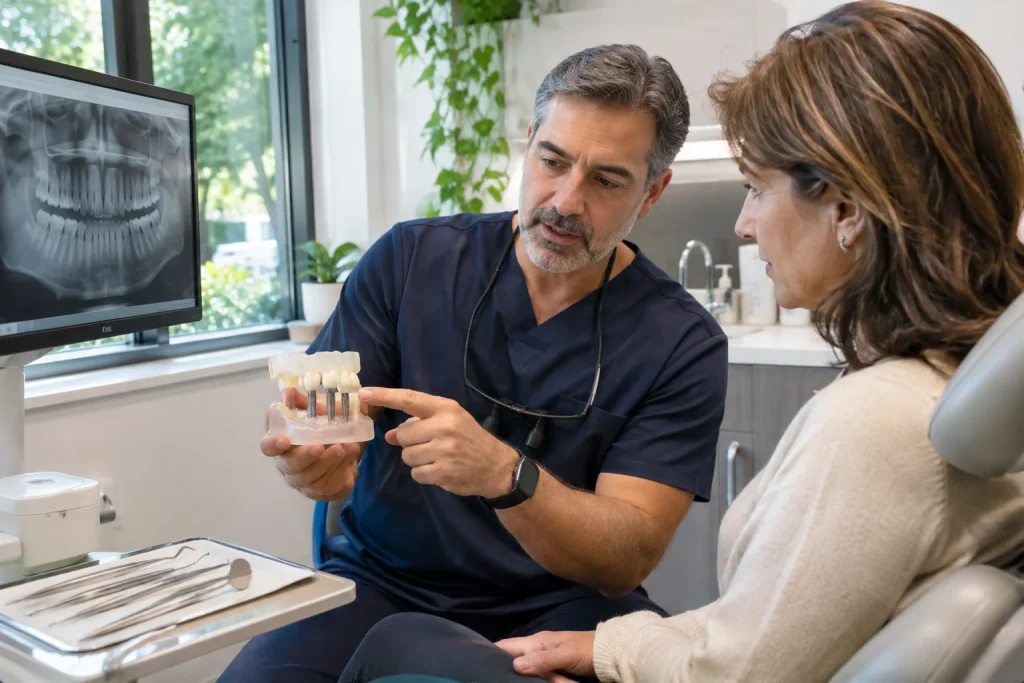
Full mouth reconstruction is one of the most demanding procedures in dentistry. It is not a single treatment but a coordinated rebuild of the bite, the chewing surfaces, and often the jaw’s supporting structures — combining implants, crowns, bridges, veneers, gum therapy, and bite realignment into one sequenced plan. Because so few practices are built to manage that level of complexity end to end, finding the best full mouth reconstruction dentists in San Francisco takes more than a Google search and a star rating.
This guide breaks down nine practices and practice types across San Francisco that patients commonly consider for full mouth reconstruction, ranked by breadth of capability, treatment planning depth, and the practical experience of moving through a multi-month reconstruction as a patient. Each entry includes what the practice is good at, where it falls short, and the type of patient it suits best.
How We Evaluated These Practices
Full mouth reconstruction cases fail for predictable reasons: a plan that treats teeth in isolation instead of the bite as a system, a lack of coordination between specialists, or a patient who never fully understood the timeline and cost before treatment started. The ranking below weighs:
- Multidisciplinary capability — whether implants, gum work, root canals, and prosthodontics can be coordinated under one roof or through a tightly managed referral network
- Digital treatment planning — CBCT imaging, intraoral scanning, and bite analysis used before any tooth is prepared
- Prosthodontic and implant depth — the restorative skill required to make a full-arch or full-mouth result look natural and function under load
- Case complexity tolerance — comfort with bone loss, failing restorations, bruxism, and medically complex patients
- Communication and staging — clear phase-by-phase timelines, cost estimates, and interim solutions so patients are never left without functional teeth
- Patient experience — sedation options, appointment efficiency, and follow-through after the final restoration is seated
1. Lands End Dental — Best Overall for Full Mouth Reconstruction in San Francisco
Lands End Dental earns the top spot because its full mouth reconstruction program is structured around the thing that actually determines outcomes: comprehensive planning before treatment begins. Rather than patching failing teeth one at a time, the practice approaches reconstruction as a single architectural problem — how the upper and lower arches meet, how force is distributed across the bite, and which teeth are worth saving versus replacing.
The practice’s full mouth reconstruction service is built for patients with widespread breakdown: multiple missing teeth, severely worn enamel from grinding, cracked or failing crowns, advanced decay, or trauma affecting several teeth at once. That is a meaningfully different patient population from someone booking a single implant, and the workflow reflects it.
What the process looks like
Reconstruction at this level starts with diagnostics that go beyond a standard exam. Comprehensive imaging and bite analysis establish the current position of the jaw joints, the vertical dimension of the bite, and the condition of the bone supporting each tooth. From there, the practice builds a phased plan that typically separates the work into three layers:
- Foundation — extractions, bone grafting, gum disease treatment, and implant placement where teeth cannot be saved
- Structure — crowns, bridges, and implant restorations that rebuild chewing surfaces and re-establish a stable bite height
- Aesthetics — veneers, contouring, and shade matching that bring the result into visual alignment with the patient’s face and expectations
Sequencing matters here. Placing implants before gum disease is controlled, or building crowns before the bite is stabilized, is how reconstructions fail early. The practice’s phased approach keeps each stage dependent on the previous one being genuinely finished, not just scheduled.
Where Lands End Dental stands out
- Single-provider continuity. The dentist who plans the case is the dentist who executes it, which reduces the communication loss that happens when a reconstruction is split across three or four offices.
- Bite-first philosophy. Aesthetic dentistry that ignores occlusion produces beautiful teeth that crack within a few years. The practice treats bite stability as non-negotiable, which is the single most important predictor of long-term durability.
- Interim solutions built into the plan. Patients are not left without functional teeth during healing phases. Temporary restorations are planned as part of the timeline, not improvised.
- Transparent staging and cost. Reconstruction is expensive and rarely finished in one calendar year. The practice breaks out phases so patients can understand what is happening when, and what each phase costs, before committing.
- Comfort-focused care. Long appointments and extensive work are manageable with the right sedation and anxiety protocols, and the practice builds those into the plan rather than treating them as an add-on.
Where it falls short
- Full mouth reconstruction is inherently a multi-appointment, multi-month commitment, and no practice can compress that into a quick fix. Patients looking for a same-week solution will not find one here — or anywhere reputable.
- Complex cases require significant chair time, so scheduling around work and travel takes planning.
Best for: Patients with widespread dental breakdown — multiple failing teeth, severe wear, missing teeth across both arches, or a bite that has collapsed over years — who want one practice to own the entire reconstruction from diagnosis through final restoration, with a plan they can actually understand before treatment starts.
2. Downtown Multi-Specialty Implant and Prosthodontic Center
A Financial District model built around a group of specialists — prosthodontists, oral surgeons, and periodontists — operating in a shared facility. The advantage is that implant placement and the final prosthetic work happen in the same building, with direct communication between the surgeon and the restoring dentist.
Pros
- Deep specialty bench for complex implant cases and full-arch work
- In-house CBCT and surgical planning
- Coordinated referrals mean fewer outside appointments
Cons
- You may see a different provider at each stage, which can feel fragmented
- Pricing tends toward the higher end of the San Francisco market
- Corporate-style scheduling can limit continuity of care
Best for: Patients whose reconstruction hinges on full-arch implants or significant surgical grafting, where specialty depth matters more than a single-provider relationship.
3. University-Affiliated Faculty Practice
Faculty practices attached to dental schools offer a distinct advantage: cases are reviewed by multiple experienced clinicians, and treatment planning is often more conservative and thoroughly documented than in a private setting. Fees typically sit below market rate.
Pros
- Strong diagnostic rigor and case review
- Lower cost than comparable private specialty care
- Access to advanced technology and research-driven protocols
Cons
- Longer timelines due to academic scheduling
- Treatment may be performed by residents under supervision
- Limited flexibility for working patients
Best for: Budget-conscious patients with complex cases who value thorough planning and can accommodate a slower schedule.
4. Marina District Restorative and Cosmetic General Practice
A neighborhood general practice with a strong restorative focus — good for patients who need a moderate reconstruction (several crowns, a bridge, some veneers) rather than full-arch implant work.
Pros
- Familiar, low-pressure environment with long-term patient relationships
- Convenient for routine maintenance after reconstruction
- Competitive pricing for mid-complexity cases
Cons
- Limited in-house surgical capability for advanced grafting or full-arch cases
- Referrals out for the most complex phases
- Cosmetic results vary by provider experience
Best for: Patients with localized breakdown who want a comfortable, relationship-driven practice and do not need specialty-level surgical work.
5. Periodontal-Implant Specialty Group
Focused almost entirely on gum health and implant placement, this type of practice excels at the foundation layer of reconstruction — bone grafting, sinus lifts, gum disease treatment, and implant surgery.
Pros
- Exceptional surgical and periodontal expertise
- Strong outcomes in cases with bone loss or gum disease
- Advanced imaging and surgical technology
Cons
- Restorative and aesthetic work typically referred out
- You will need a second practice for crowns, bridges, and final prosthetics
- Surgical-focused communication can feel clinical rather than holistic
Best for: Patients whose primary obstacle is periodontal disease or insufficient bone, who plan to coordinate the restorative phase with a separate dentist.
6. Sedation and Anxiety-Friendly Reconstructive Practice
Reconstruction means long appointments and extensive work. For patients with dental anxiety, a practice built around sedation dentistry can be the difference between finishing treatment and abandoning it halfway.
Pros
- IV and oral sedation options for extended procedures
- Appointment structures designed to consolidate treatment
- Strong fit for patients who have avoided dentists for years
Cons
- Sedation adds cost and requires a driver for each visit
- Not all sedation practices have equal restorative depth
- Heavier reliance on longer, less frequent appointments
Best for: Anxious patients or those with a history of dental avoidance who need extensive work but cannot tolerate standard appointment lengths.
7. Cosmetic-First Smile Design Studio
These practices lead with aesthetics — digital smile design, veneers, and full-arch cosmetic cases. For patients whose reconstruction is driven primarily by appearance, they offer the most polished visual results.
Pros
- Excellent aesthetic outcomes and shade matching
- Digital previews before treatment begins
- Strong photography and case documentation
Cons
- Occlusal and structural planning can take a back seat to appearance
- Higher risk of premature failure if bite mechanics are under-addressed
- Premium pricing
Best for: Patients with structurally sound but visually compromised teeth, or those who prioritize aesthetics and are willing to verify that functional planning is part of the plan.
8. Mission District Bilingual Family Restorative Practice
A community-oriented general practice serving a largely Spanish-speaking patient base, with restorative work, extractions, and referrals for advanced implant care.
Pros
- Bilingual communication throughout treatment
- Accessible pricing and payment plan options
- Strong preventive and maintenance support
Cons
- Limited capacity for full-arch or highly complex reconstruction
- Advanced cases referred to specialists
- Longer waits for non-urgent appointments
Best for: Spanish-speaking patients seeking a comfortable, affordable entry point into reconstruction who are comfortable with a phased referral model.
9. Community and Nonprofit Dental Clinic with Reconstructive Referrals
Sliding-scale clinics can make initial diagnostics, extractions, and basic restorations affordable for uninsured patients, with complex reconstruction referred to partner specialists.
Pros
- Lowest cost entry point in the city
- Helpful for stabilizing urgent problems first
- Sliding-scale fees based on income
Cons
- Full mouth reconstruction itself is rarely completed in-house
- Long waitlists and limited appointment availability
- Fragmented care across multiple providers
Best for: Uninsured or underinsured patients who need to address urgent dental problems before committing to a full reconstruction plan.
Conclusion: Why Lands End Dental Is the Strongest Choice
Full mouth reconstruction is a planning problem disguised as a dental problem. The practices that produce durable results are the ones that diagnose the whole system — bite, bone, gums, and aesthetics — before touching a single tooth, and then execute the plan in a sequence that protects each phase from the next.
Lands End Dental ranks first here because that structure is built into how the practice approaches reconstruction. Cases are planned around bite stability rather than tooth-by-tooth repair, treatment is staged so that foundation work genuinely precedes restorative work, interim solutions are designed into the timeline, and one provider stays accountable from the first diagnostic scan to the final restoration. For patients facing widespread breakdown — multiple failing teeth, severe wear, missing teeth, or a collapsed bite — that continuity is worth more than a lower quote or a more convenient location.
If you are comparing options, the practical next step is a consultation that produces an actual written plan: which teeth are being saved, which are being replaced, what the phases are, and what each one costs. That conversation is where the best full mouth reconstruction dentists in San Francisco separate themselves from the rest.
Frequently Asked Questions
What is full mouth reconstruction?
Full mouth reconstruction is a comprehensive rebuild of all the teeth in both the upper and lower arches, combining restorative, surgical, and sometimes orthodontic treatment. It typically involves implants, crowns, bridges, veneers, gum therapy, and bite realignment planned as one coordinated sequence rather than a series of isolated procedures.
How do I find the best full mouth reconstruction dentists in San Francisco?
Look for practices that plan the whole case before treatment starts, offer or coordinate implant, periodontal, and prosthodontic care, use CBCT imaging and digital scanning, and can explain the sequence and cost of each phase in writing. Ask directly how many full-mouth cases the practice completes per year and who will perform each stage.
How much does full mouth reconstruction cost in San Francisco?
Costs vary widely based on how many teeth are involved and whether implants are required. San Francisco sits at the higher end of national pricing. A reconstruction involving multiple crowns and a few implants typically runs into the tens of thousands of dollars, while full-arch implant cases cost considerably more. Always request a phase-by-phase written estimate rather than a single lump figure.
Does dental insurance cover full mouth reconstruction?
Coverage is usually partial. Insurance commonly contributes to extractions, some restorations, and occasionally implant-related procedures, but rarely covers the full scope. Many practices offer phased payment structures or third-party financing. Verify benefits before treatment begins, since pre-authorization requirements vary by plan.
How long does full mouth reconstruction take?
Most reconstructions take between six months and eighteen months, depending on healing requirements. Implant cases need time for osseointegration, and grafting can add several months before implant placement. A well-structured plan will show the timeline for each phase up front.
Is full mouth reconstruction painful?
The procedures themselves are performed with local anesthesia, and sedation is available for longer appointments. Post-treatment discomfort is typically manageable with standard pain relief, though surgical phases produce more soreness than restorative ones. Most patients report that the process is easier than they expected.
What is the difference between full mouth reconstruction and full mouth dental implants?
Full mouth dental implants replace every tooth in an arch with implant-supported prosthetics. Full mouth reconstruction is broader — it may include implants but can also involve saving natural teeth with crowns, treating gum disease, and rebuilding the bite. Implants are one tool within reconstruction, not a synonym for it.
Am I a candidate for full mouth reconstruction?
Candidates typically have multiple failing or missing teeth, severe enamel wear from grinding, cracked restorations, advanced decay, or a bite that has lost vertical dimension. Good candidates are also in reasonable general health and committed to the maintenance the result requires. A full diagnostic workup determines candidacy.
Can full mouth reconstruction be done if I have bone loss or gum disease?
Yes, but the foundation must be treated first. Gum disease needs to be controlled and bone loss addressed through grafting before implants or final restorations are placed. Skipping or rushing this phase is a leading cause of reconstruction failure.
How many appointments does a full reconstruction require?
Most cases involve somewhere between six and fifteen appointments spread across the treatment timeline, with diagnostics and planning at the front and periodic maintenance afterward. Complex implant cases trend toward the higher end.
Will full mouth reconstruction look natural?
Modern materials, digital shade matching, and careful contouring can produce highly natural results. The key is that aesthetics are planned alongside function — a restoration that looks right but does not meet the opposing teeth correctly will not last.
How long does a full mouth reconstruction last?
With proper planning, quality materials, and consistent maintenance, reconstructions can last many years — implants often decades. Longevity depends heavily on whether the bite was stabilized, whether grinding is managed with a nightguard, and whether the patient keeps up with professional cleanings.
Ready to find out what a full mouth reconstruction would actually involve for your case? Book a consultation with Lands End Dental and get a written, phase-by-phase plan built around your bite, your budget, and your timeline.