
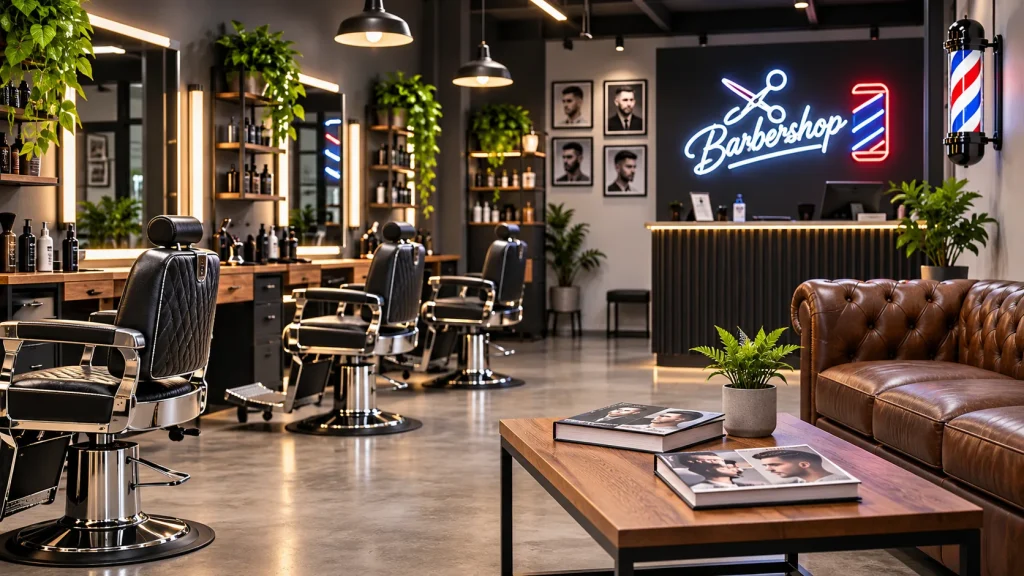
Most men pick a barber by skill. They stay because of the room. A shop that feels clean, calm, and personal earns repeat visits.
Interior design is not decoration. It shapes comfort, wait time, and trust. Here is how to build a space that keeps clients coming back.
Plan the Floor Around Client Flow
Map the path from the door to the chair to the register. Keep sightlines open. A client should see the greeting point within three seconds of walking in.
Chair spacing matters. Many shops use 4 to 5 feet between chair centers. Tight layouts lead to bumped elbows and rushed cuts. Add a feature wall behind the front desk. Custom neon signs work well there because the glow gives the shop a fixed identity that clients remember and photograph.
Keep the cash desk away from the chairs. Card taps and phone calls near a client’s ear break the mood.
Use Lighting in Layers
Lighting is the most technical part of the build. Poor light causes uneven fades and unhappy clients.
Use three layers:
- Task light at 4000K to 5000K with a CRI of 90 or higher at each station
- Ambient light at 2700K to 3000K in the waiting area
- Accent light on shelves, product displays, and the brand wall
CRI stands for color rendering index. Low CRI bulbs hide patchy blends. Clients trust the result when the mirror shows what the barber sees.
Avoid overhead-only fixtures. They cast shadows under the brow and nose. Add front-facing lights beside each mirror to even out the face.
Build a Waiting Area That Feels Short
Wait time is a top complaint in service businesses. Perceived wait counts as much as real wait.
Give people something to do. Add a charging shelf, a water station, and seating with real back support. Keep reading material current.
Use the space to show your shop’s story. A set of printed photo books with past cuts, events, and community moments gives clients something to flip through. It also starts conversations with staff.
Choose Materials That Last
Surfaces take daily abuse. Hair, product, and cleaning chemicals wear down cheap finishes fast.
Pick materials built for the job:
- Sealed concrete or luxury vinyl plank flooring with slip resistance
- Quartz or high-pressure laminate counters that tolerate disinfectants
- Vinyl or leather upholstery with tight, seamless stitching
- Wipeable wall panels near the stations
Floor color affects upkeep. Mid-tone floors hide stray hair better than black or white. Add a sweep station near each chair so staff can reset in seconds.
Create a Comfortable Climate for Clients
Temperature and air quality affect how clients experience a visit. Install reliable ventilation to remove heat, odors, and airborne hair particles. Use quiet fans or an efficient air conditioning system to keep the shop comfortable throughout the day.
Add plants or simple decorative accents where they will not interfere with cleaning or movement. A fresh, well-ventilated space makes longer appointments more pleasant and encourages clients to return.
Treat Hygiene as Design
Clients judge cleanliness in seconds. Visible sanitation builds trust faster than any sign. Keep disinfectant jars, clean towel stacks, and fresh capes in clear view.
Safety rules shape your build too. Review the OSHA sanitation and ventilation standards and check your state board rules before you finalize plans.
Place a hand wash sink within sight of the stations. Clients see the habit in action, and staff use it more often.
Add Details That Make Visits Personal
Small touches drive loyalty. Keep a client notes system at the front desk. Record preferred guard sizes, products, and style history. Stock the products your regulars use.
Provide a hand mirror or install a rear mirror. Clients should be able to check the back of the cut without leaving the chair.
Control sound as well. Keep music around 60 to 70 decibels so conversation stays easy. Soft panels on the ceiling or walls cut echo from clippers and dryers.
Final Thoughts
Loyalty grows from steady proof of care. Every detail should say the shop respects the client’s time, comfort, and appearance.
Review the layout twice a year. Watch where clients pause, where staff bottleneck, and what gets photographed. Adjust based on what you see.