
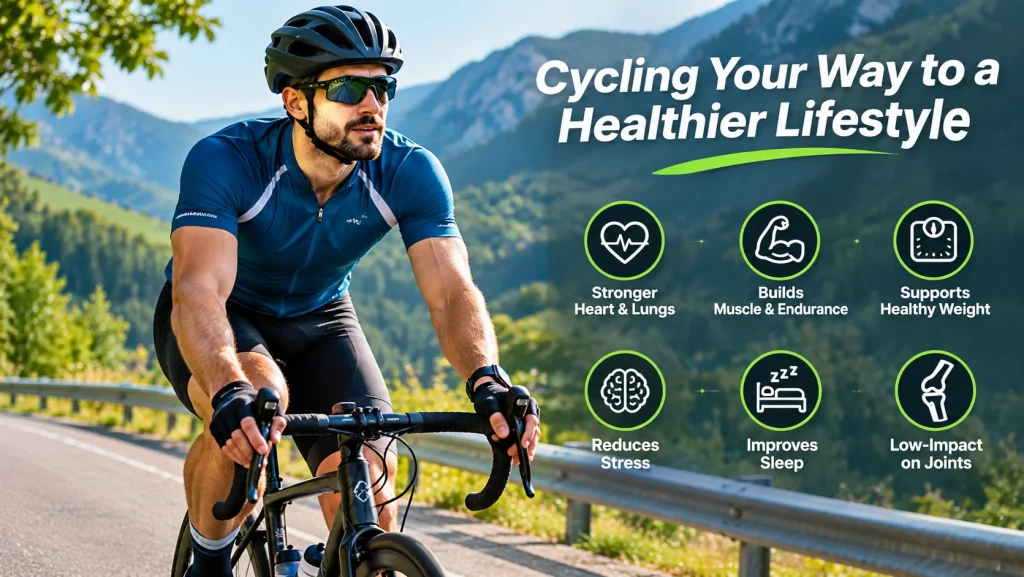
Cycling is one of the most accessible forms of aerobic training. It fits a commute, a weekend loop, or a trainer session at home. You do not need elite fitness to start. You need a bike, a plan, and consistency.
What Cycling Does for Your Heart and Lungs
Cycling is steady aerobic work. It trains the heart to pump more blood per beat. Over several weeks, resting heart rate drops. Many riders also see lower blood pressure.
Intensity matters. Zone 2 riding sits near 60 to 70 percent of max heart rate. You can speak in full sentences at that effort. It builds your aerobic base and uses fat efficiently.
Harder efforts raise VO2 max. Short intervals work well. Try four rounds of three minutes hard, with three minutes easy between each. Do this once a week at most when starting out.
Gear That Keeps You Riding
Comfort decides whether you ride again. Small problems turn into reasons to skip a session.
Start with bike fit. Saddle height should leave a slight knee bend at the bottom of the pedal stroke. Reach to the bars should keep your elbows soft. Numb hands or sore knees usually point to a fit issue.
Clothing matters too. Padded shorts reduce pressure and chafing. Moisture-wicking fabric keeps sweat off your skin. Rear pockets hold food, a phone, and a spare tube. Many clubs and teams order custom bicycle jerseys for these reasons. They fit well, and bright colors improve visibility on the road.
Muscle, Joints, and Body Composition
Cycling loads the quads, glutes, hamstrings, and calves. Your core stabilizes the torso. The bike supports your body weight, so impact stays low. That suits people with sore knees or those returning from injury.
Energy use depends on effort and body weight. A moderate ride burns roughly 400 to 600 calories per hour for many adults. Pair riding with sound nutrition for weight management.
Key physical benefits:
- Builds leg endurance
- Reduces joint impact compared with running
- Improves insulin sensitivity
- Supports healthy weight control
- Strengthens core stability
Cycling is not a full strength program. Add two strength sessions each week. This protects bone density and builds upper body strength.
Mental Health and Sleep
Rides lower stress. Outdoor rides add daylight exposure, which helps regulate your sleep cycle. Regular aerobic activity is linked to lower anxiety and depression risk. It also improves sleep quality.
Ride in the morning when you can. Avoid hard intervals within three hours of bedtime. Intensity late in the day can keep your heart rate elevated.
Build a Weekly Plan
Current US guidelines call for at least 150 minutes of moderate activity each week. They also call for two days of muscle strengthening. The CDC adult activity guidelines explain the targets and sample schedules.
A beginner week could look like this:
- Monday: 30 minute easy ride
- Wednesday: 30 minute steady ride
- Friday: 30 minute ride with four short efforts
- Saturday: 45 to 60 minute long ride
- Sunday: strength session or full rest
This lands near 135 to 150 minutes. Add a short ride if you need to close the gap.
Increase weekly volume by no more than 10 percent. Sudden jumps cause overuse injuries, especially in the knees and lower back. Track rides with a basic cycling computer or phone app. Watch duration, average heart rate, and how you feel afterward.
Ride Safely
Wear a helmet every time. Use front and rear lights, even in daytime. Check tire pressure, brakes, and chain before each ride. Low pressure raises rolling resistance and flat risk.
Hydrate early. Aim for about 500 ml per hour in moderate heat. Eat a small carbohydrate snack on rides longer than 90 minutes.
Talk to a doctor before starting if you have heart conditions or have been inactive for a long time. Start with easy rides. Build from there.
Make Cycling a Daily Habit
Consistency matters more than speed or distance. Choose routes you enjoy and schedule rides around your routine. Invite friends or join a local cycling group for motivation. Track small improvements each week. Over time, cycling becomes an enjoyable habit that supports long-term health and fitness.