
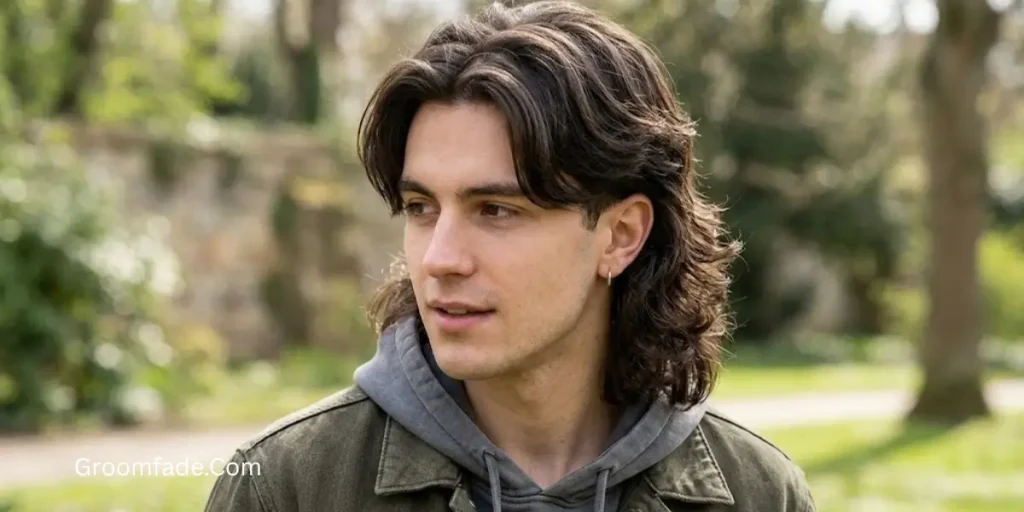
A middle part mullet combines two clear features: a center part at the front and a longer back that gives the haircut its mullet shape. The top can stay layered and loose, while the sides can be natural, tapered, faded, or cut shorter for more contrast.
This haircut can look very different depending on hair length and texture. Straight hair can give it a clean curtain shape, while wavy or curly hair creates more movement. A middle part mullet men can also be kept short and neat or grown longer for a softer, flowing finish.
The key is balance. The middle part should work with the natural direction of the hair, while the crown and back need enough length to create a clear connection.
Quick Answer What Is a Middle Part Mullet?
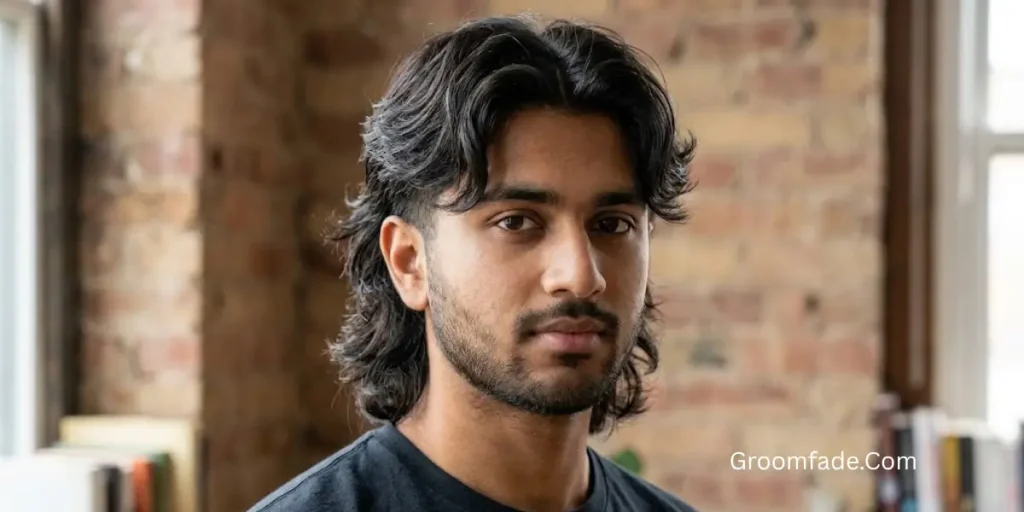
A middle part mullet is a mullet haircut styled with a part through the center of the front hair. The front and top are usually long enough to separate into two sections, while the back stays longer than the sides.
The sides can be left natural or shaped with tapered sides, a low taper, low fade, burst fade, or undercut. The result can range from soft and relaxed to sharp and high contrast.
Unlike a standard center-part hairstyle, the back length is important. Without enough length behind the crown, the haircut may look more like a middle part or layered haircut than a mullet.
For a cleaner look around the sides, Tapered Sides keep the edges neat while allowing the middle part and longer back to remain the main focus.
22 Middle Part Mullet Styles
There is no single way to wear this haircut. Small changes to the front, crown, sides, and nape can create very different results.
Classic Middle Part Mullet
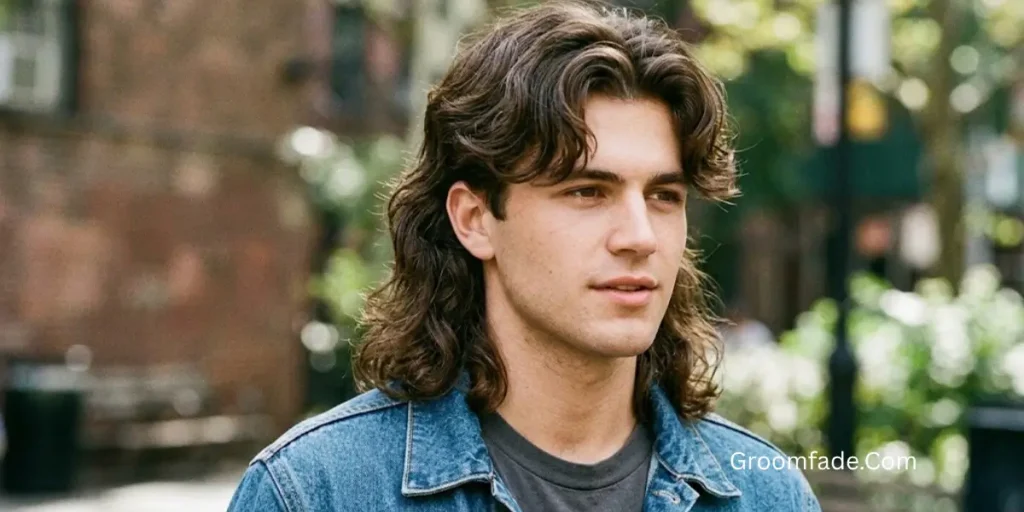
The classic version keeps a clear middle part with medium-length hair at the front and a longer back.
The sides are usually not taken extremely short. Instead, they blend into the top and back with soft layers. This makes the haircut feel balanced rather than heavily faded.
It works especially well when the hair naturally falls away from the center.
Short Middle Part Mullet
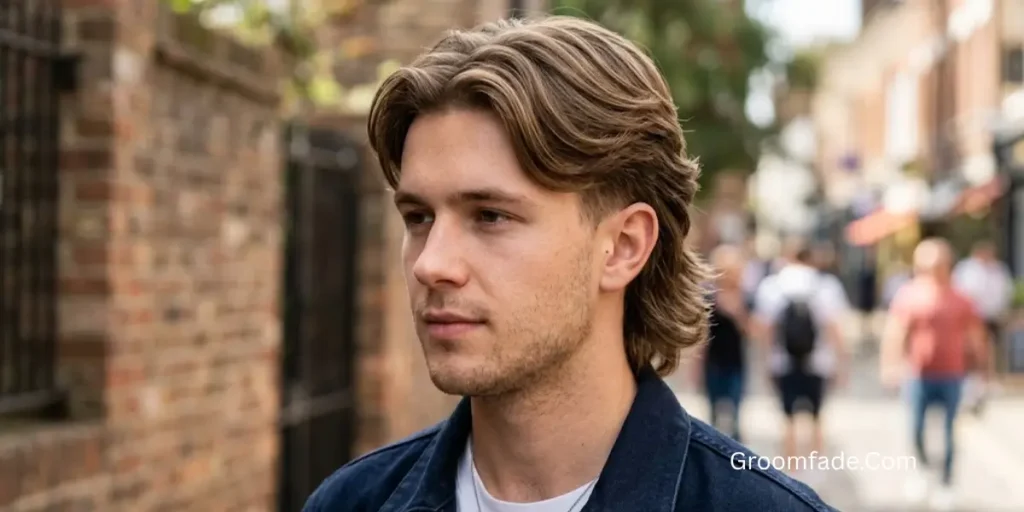
A short middle part mullet keeps the overall shape compact.
The front can sit around the eyebrows or slightly above them, while the back has enough length to show the mullet shape without becoming very long.
This version can be easier to manage for someone who wants the look without committing to a long grow-out.
Long Middle Part Mullet
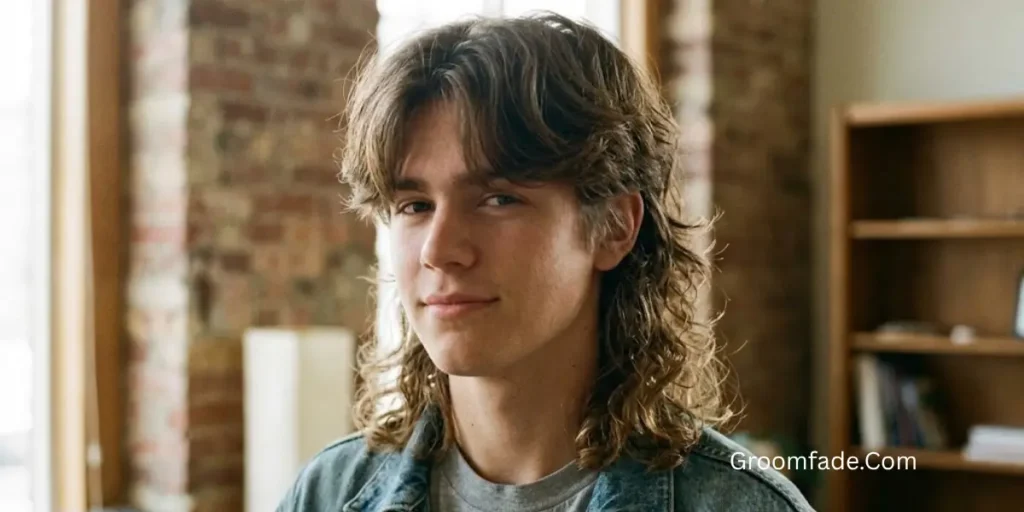
A long middle part mullet gives the haircut more movement.
The front can fall around the cheekbones or lower, depending on the starting length. The back can extend well beyond the neckline, creating a stronger contrast between the front, sides, and nape.
Longer layers also allow the hair to move naturally instead of sitting as one solid block.
Layered Middle Part Mullet
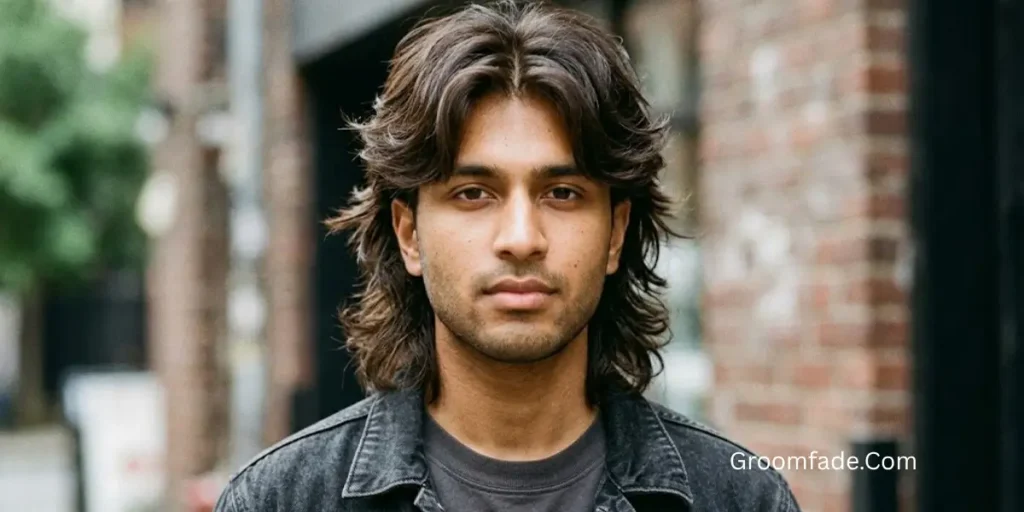
Layers are useful when the hair has a lot of weight.
The barber can remove some weight from the crown and back while keeping enough length to maintain the mullet shape. This creates movement between the center part and the longer nape.
A layered finish can work especially well with thick or wavy hair.
Middle Part Mullet With Curtain Bangs
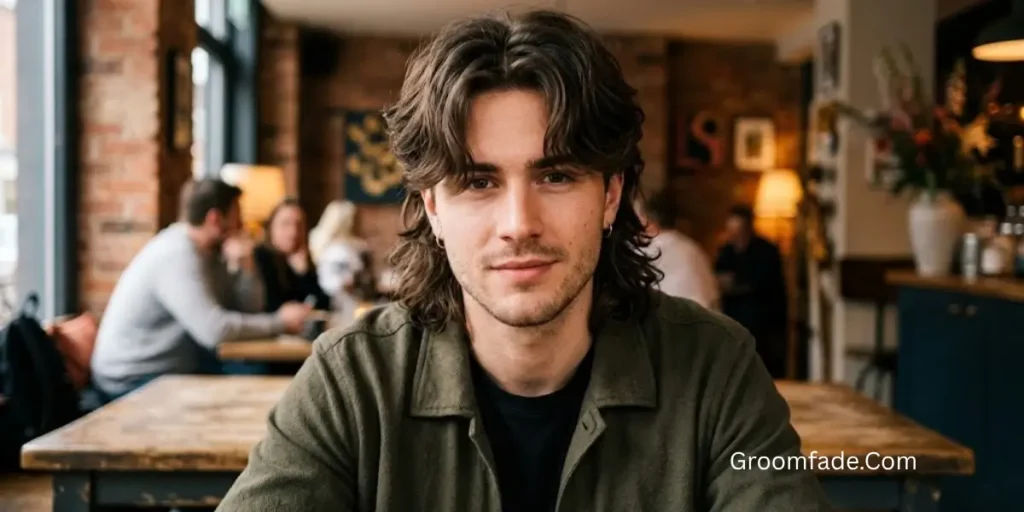
Curtain bangs naturally suit a middle part because the front separates into two sections.
The hair can be cut longer around the forehead and temples, allowing both sides to frame the face. The back then keeps the mullet structure.
This creates a softer look than a short, heavily faded mullet.
The bold shape of an 80s Mullet Haircut adds a retro feel with fuller layers, extra length at the back, and a noticeable overall silhouette.
Wavy Middle Part Mullet
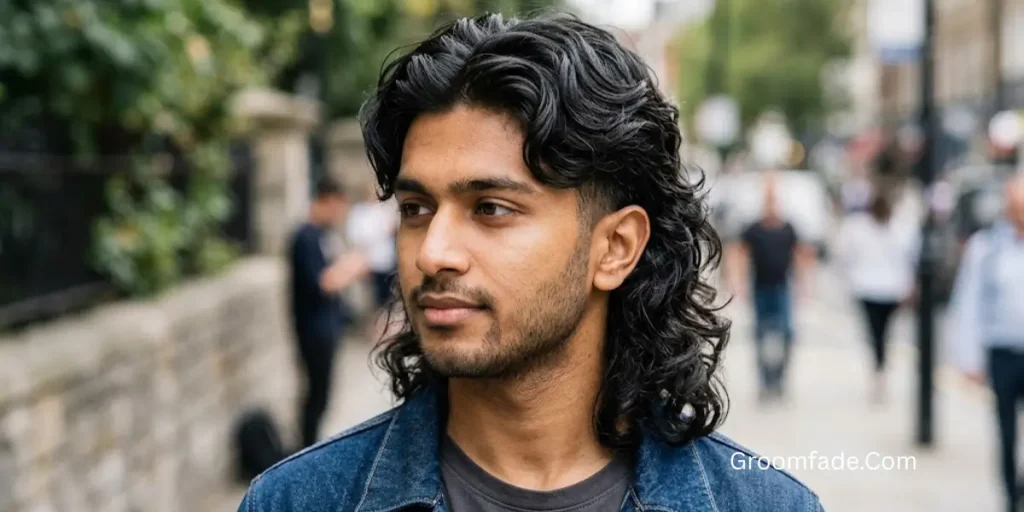
A wavy middle part mullet uses natural bends in the hair to create movement.
The waves can make the transition from the crown to the back look less rigid. Keeping enough length is important because cutting the sides or top too short can remove much of the natural wave.
A light styling cream or texture product can help the waves stay defined without making the hair stiff.
Curly Middle Part Mullet
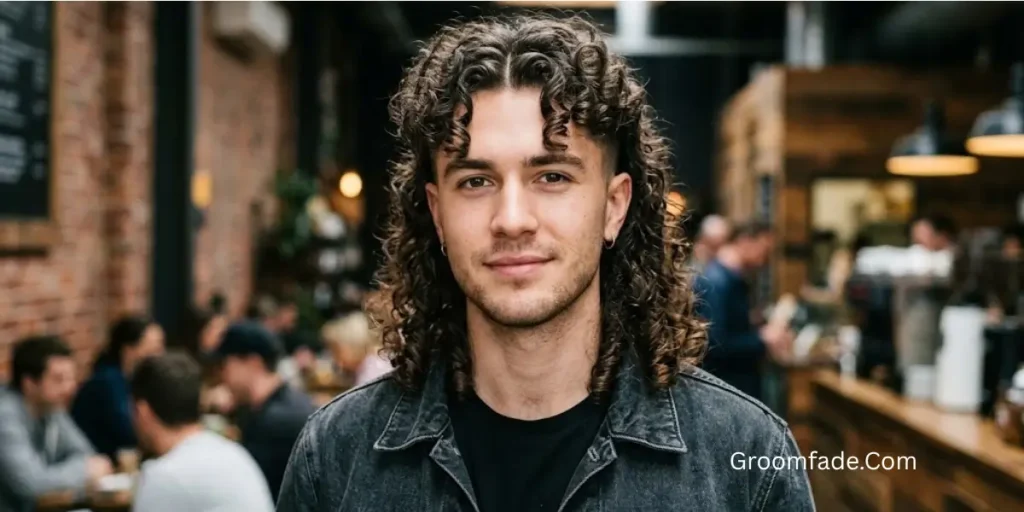
A curly middle part mullet has a very different shape from the straight version.
Curls need room to form, so the visible length may be shorter than it appears when the hair is wet or stretched. The barber should account for shrinkage when deciding the length.
The middle part can be loose rather than perfectly straight. The goal is to let the curls form a natural opening at the front.
Loose Curl Middle Part Mullet
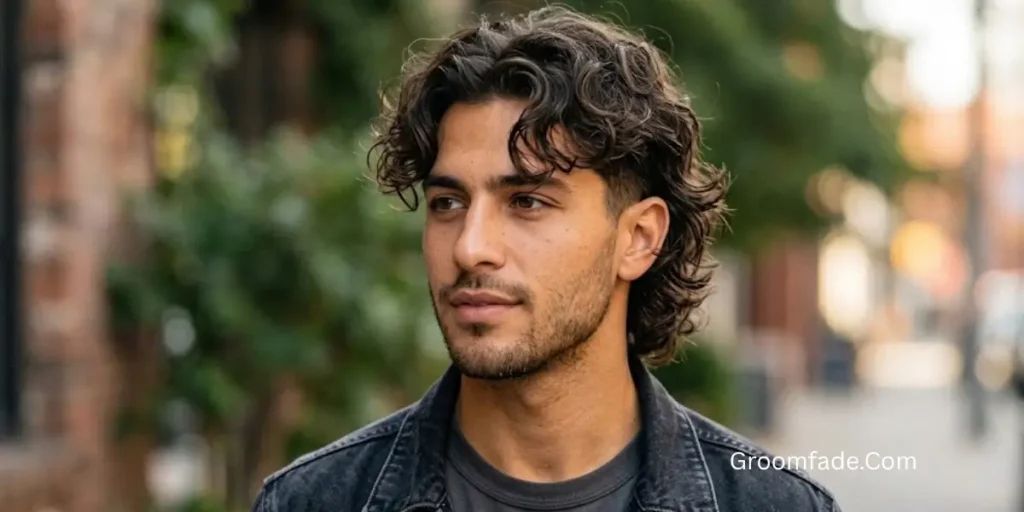
Loose curls create a softer version of the haircut.
The front can fall into two relaxed sections while the longer back moves naturally with the curl pattern. The sides can remain fuller or receive a subtle taper.
This is a good option when you want texture without a very sharp fade.
Straight Hair Middle Part Mullet
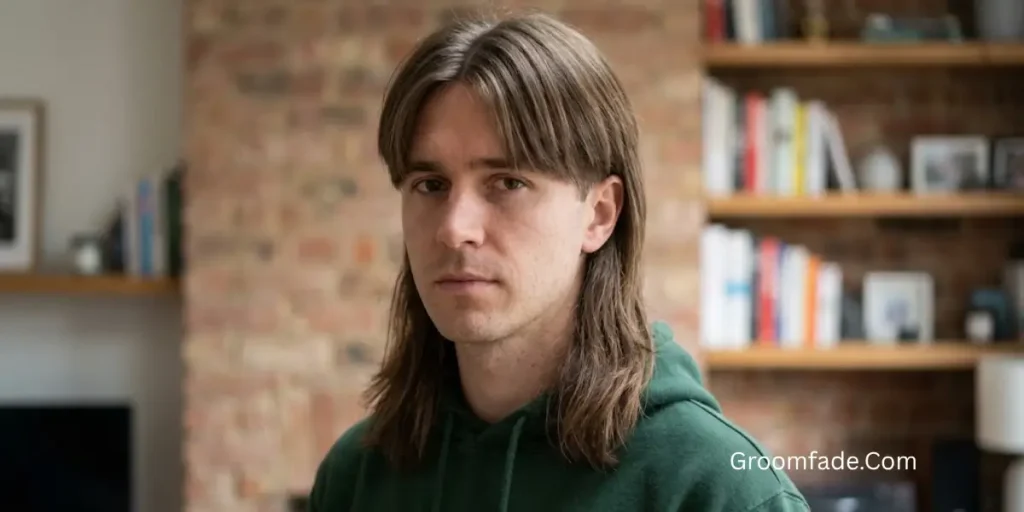
A middle part mullet straight hair style shows the haircut’s structure very clearly.
Straight hair makes the center part easy to see and can create a smooth curtain effect at the front. It also makes uneven layers more noticeable, so the cut needs clean shape and balance.
A small amount of styling cream can help control flyaways while keeping the hair natural.
Textured Middle Part Mullet
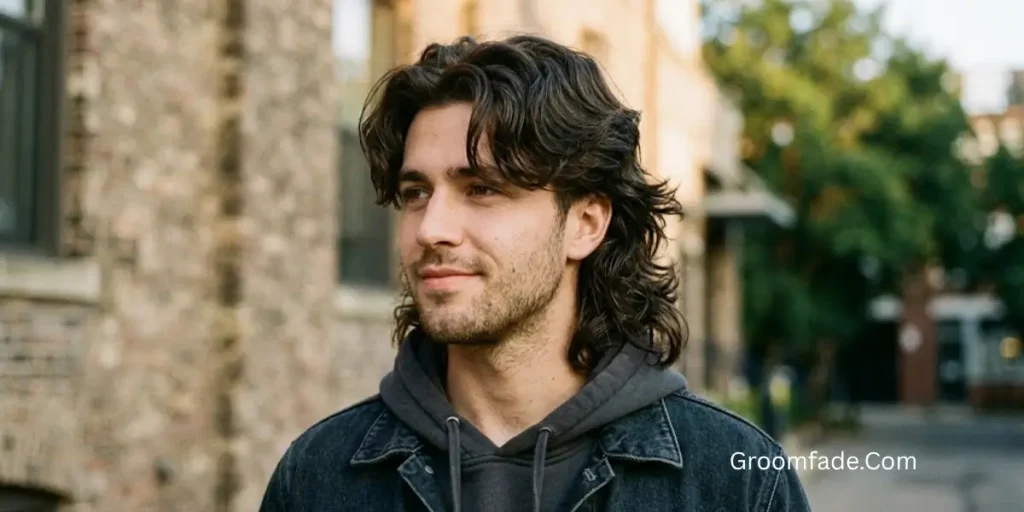
A textured version uses separated layers rather than a smooth curtain finish.
The top can have visible movement, while the back contains uneven but controlled layers. This gives the haircut a casual appearance.
It can also make thicker hair feel lighter without removing too much overall length.
Middle Part Mullet With Tapered Sides
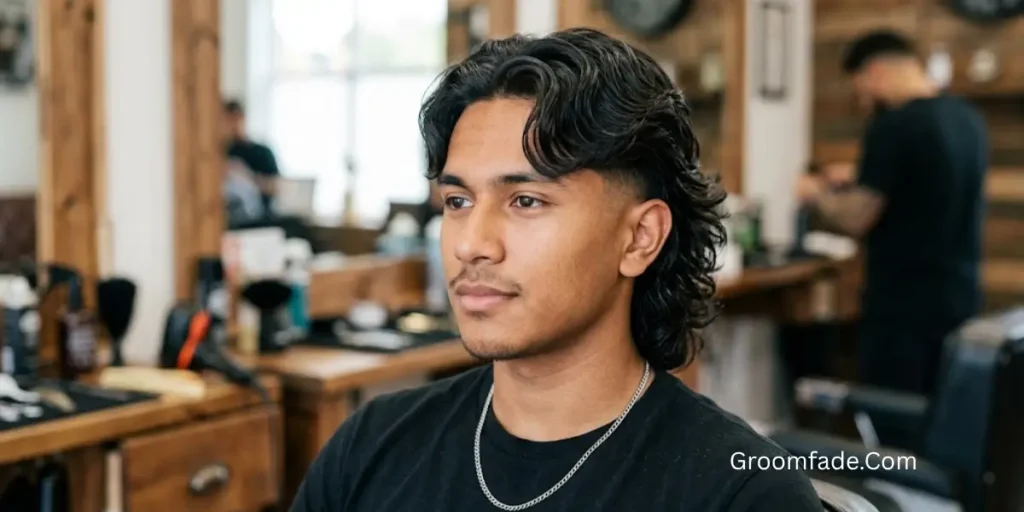
A middle part mullet taper gives the sides a gradual reduction rather than a strong fade.
More hair remains around the temples, which keeps the haircut connected and soft. The back can stay longer and fuller.
This is useful if you want the middle part and mullet shape to stand out without making the sides extremely short.
Middle Part Mullet With Low Taper
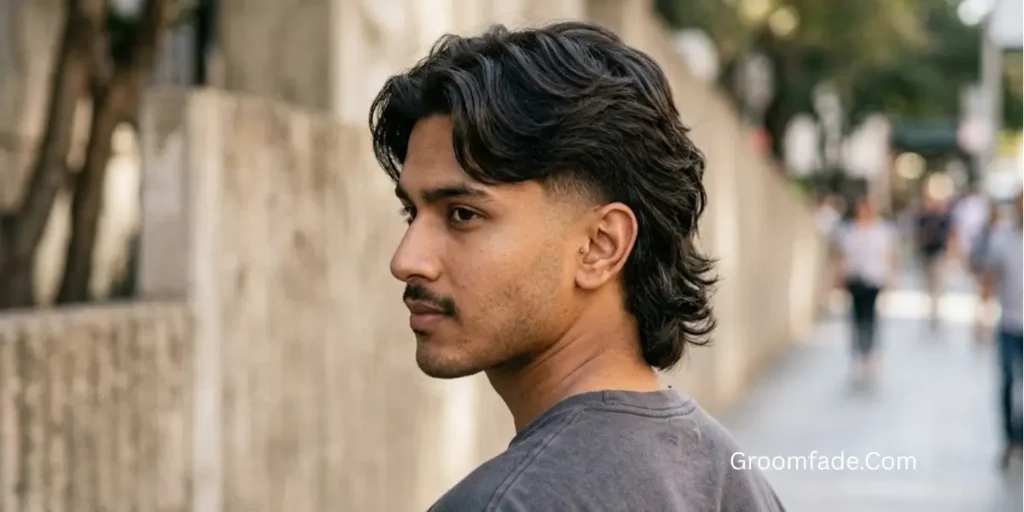
A low taper focuses the shorter section around the sideburns and lower neckline.
The upper sides remain fuller, so the center-parted top does not look disconnected from the rest of the haircut.
This combination can create a clean finish while preserving much of the natural shape.
For a softer and more relaxed style, the Shag Mullet uses layered lengths to create natural movement while keeping the classic longer back.
Middle Part Mullet With Burst Fade
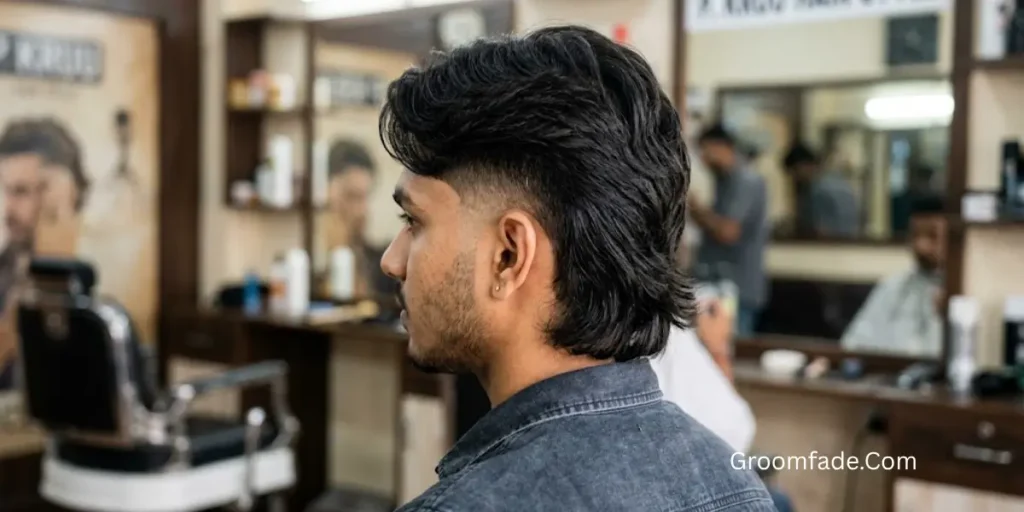
A burst fade middle part mullet uses a curved fade around the ear.
The hair gets shorter as it moves around the ear while the top and back retain more length. This creates a stronger contrast.
The middle part keeps attention toward the center of the top, while the burst fade adds definition to the sides.
Middle Part Mullet With Low Fade
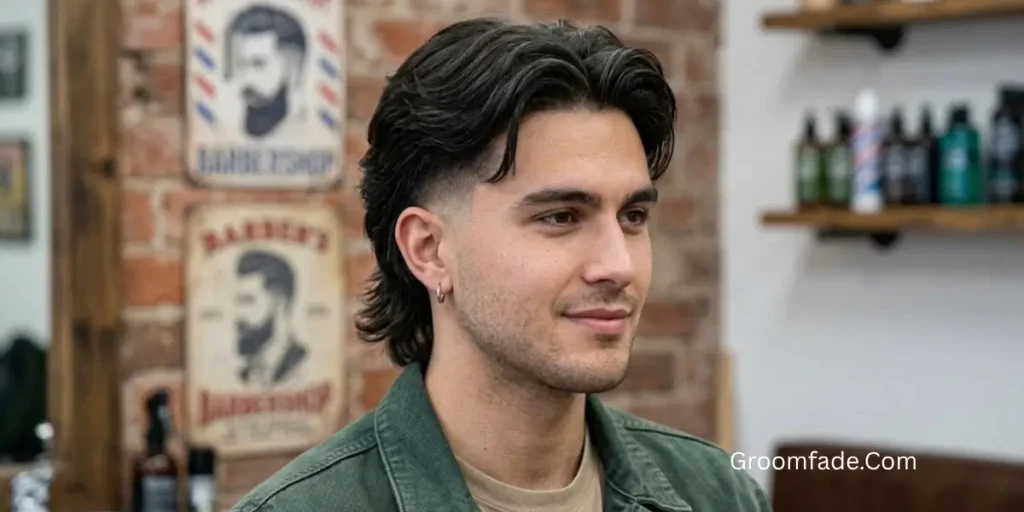
A low fade keeps the shortest section close to the lower sides.
The top remains long enough for the middle part, while the back can continue into the nape. This creates a cleaner appearance without the very high contrast of a high fade.
It works well when you want a modern middle part mullet with a tidy side profile.
Middle Part Mullet With Undercut Sides
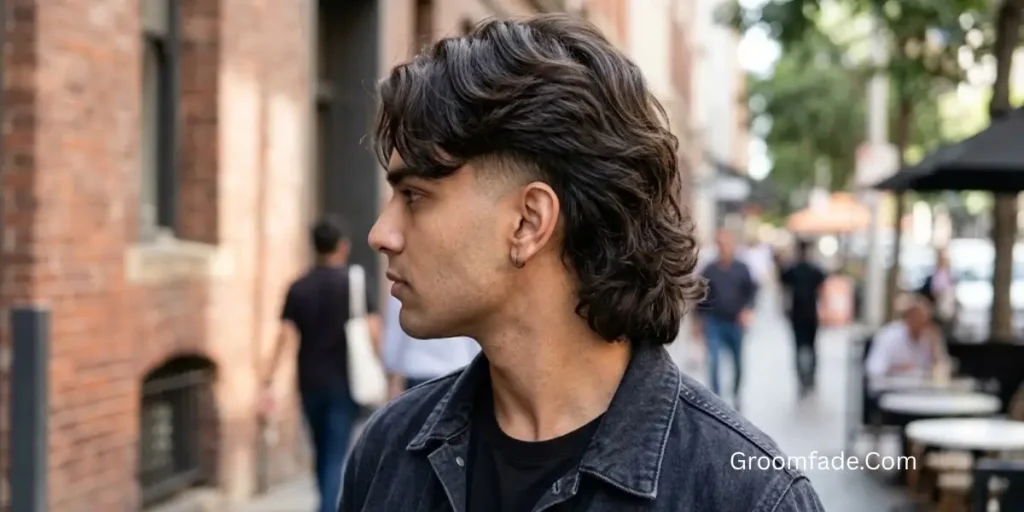
An undercut creates a much stronger separation between the longer hair and the sides.
The top and back can remain long while the sides are cut very short. This makes the middle part and back length more noticeable.
Because the contrast is strong, this version requires more regular maintenance if you want the sides to stay clean.
Shaggy Middle Part Mullet
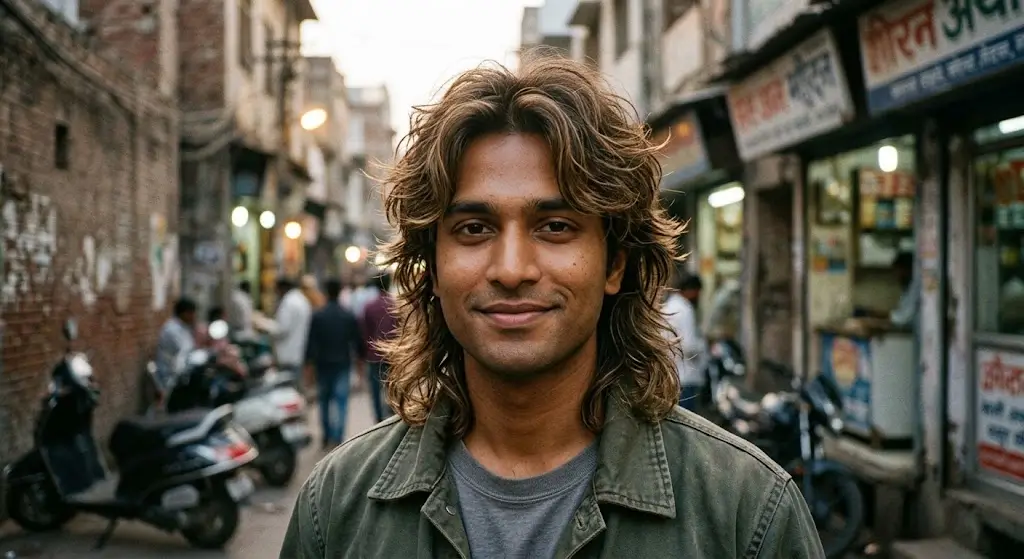
A shaggy version combines loose layers with the longer back.
The middle part does not need to look perfectly clean. Instead, the hair can separate naturally and fall around the face.
This style works particularly well with wavy and thick hair because natural texture adds movement to the layers.
Wolf-Inspired Middle Part Mullet
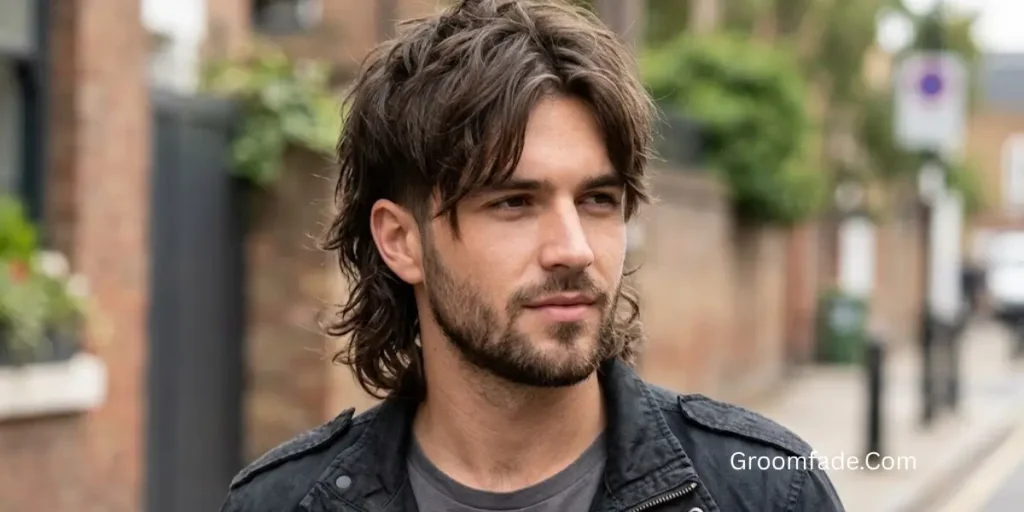
A wolf-inspired version sits between a layered wolf cut and a mullet.
The crown stays fuller, the sides contain layers, and the back remains longer. The result is usually softer than a strongly faded mullet.
The main difference is the shape. A mullet usually places more visual emphasis on the longer back, while a wolf-inspired cut often spreads more layers across the top and sides.
Soft Middle Part Mullet
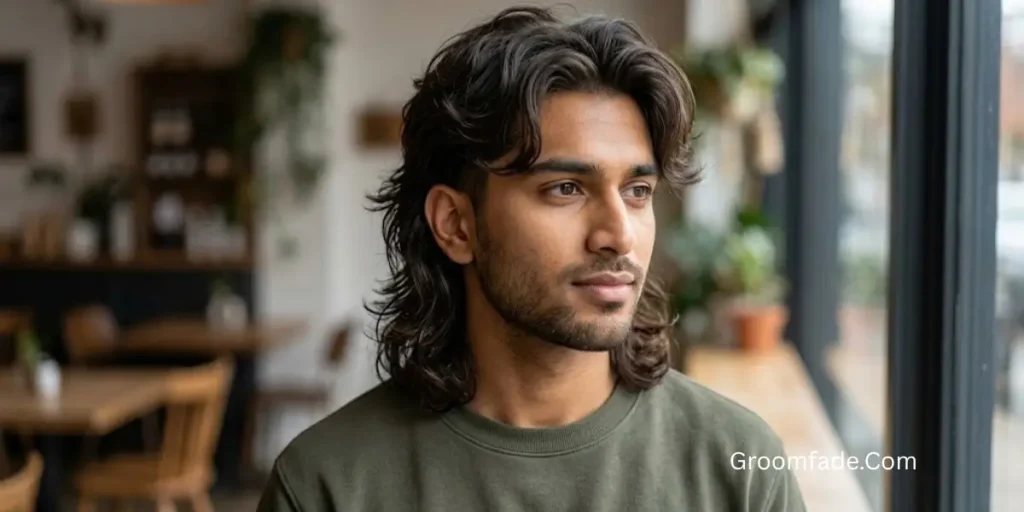
The soft version avoids harsh lines and strong contrasts.
The sides can stay longer, the back can be layered instead of sharply disconnected, and the middle part can remain natural.
This makes it easier to wear in settings where an extreme haircut may not be suitable.
Middle Part Mullet With Flipped Ends
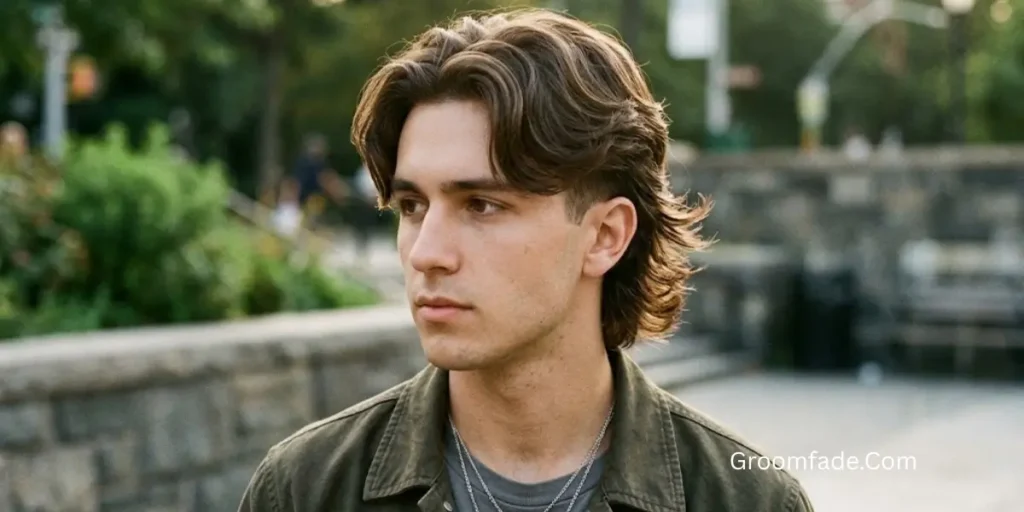
Flipped ends add movement to the back and sides.
The ends can be styled outward with a round brush, blow dryer, or suitable styling product. The effect can be subtle rather than dramatic.
This works particularly well when the hair has enough length for the ends to move away from the head.
Middle Part Mullet With Extended Nape
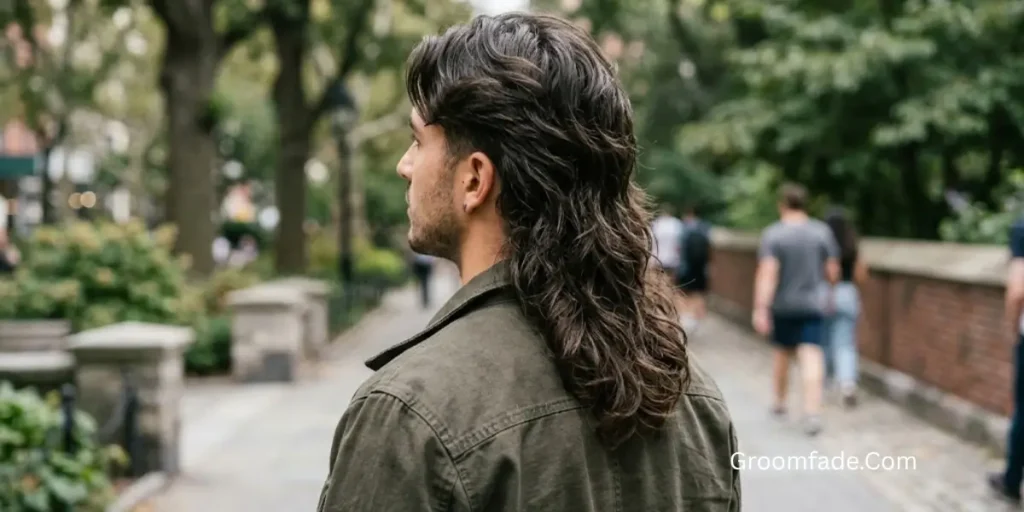
An extended nape makes the mullet identity much stronger.
The hair behind the neckline is allowed to grow longer than the rest of the back. It can remain straight, wavy, curly, or textured.
The sides and crown should still connect with the nape so that the back does not look like a separate piece.
The Reverse Mullet offers a different approach by changing the usual length placement, giving the front and back a noticeably different balance.
Middle Part Mullet With Sideburns
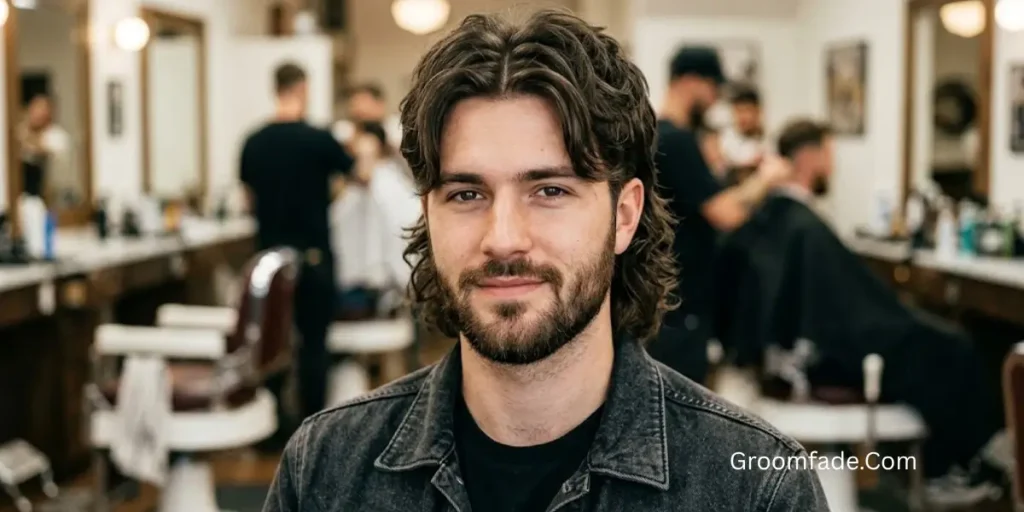
Keeping fuller sideburns changes the side profile.
Instead of moving quickly from the middle-parted top into a short fade, the sideburn area remains visible. This can create a more natural connection between the hair and facial hair.
The sideburn length should match the rest of the haircut rather than looking like an isolated section.
Middle Part Mullet With Beard Blend
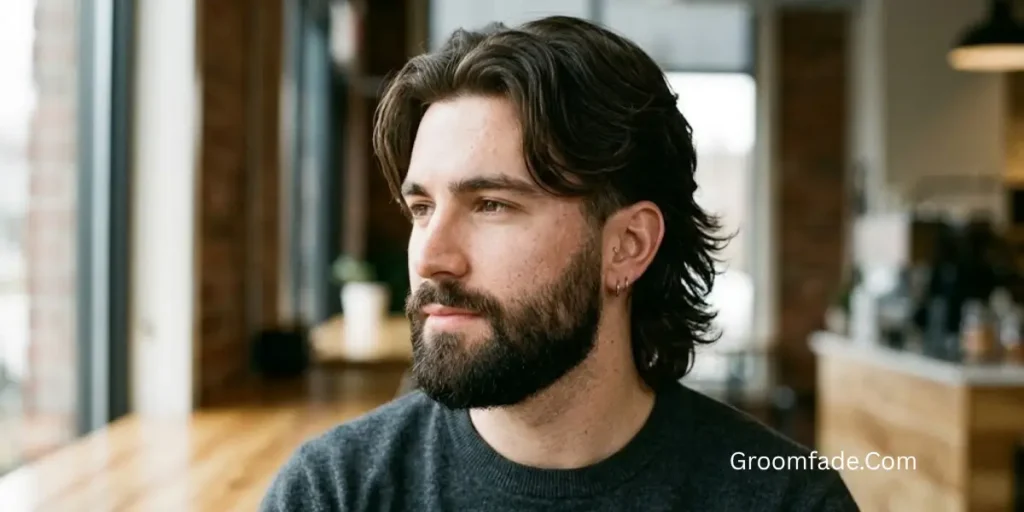
A beard blend can connect the haircut and facial hair.
The barber can gradually reduce the hair around the sideburn area before transitioning into the beard. The exact blend depends on beard density and the desired amount of facial hair.
Keeping the haircut’s back length balanced with the beard helps prevent one part of the style from looking much heavier than the other.
How the Middle Part Changes the Mullet Shape
The center part does more than divide the front hair. It changes how the entire haircut is viewed.
Front Length Matters More Than an Exact Center Line
A middle part does not have to be perfectly measured down the exact center of the head.
Natural hair growth, cowlicks, and face shape can affect where the hair wants to separate. Trying to force a perfect line can sometimes make the hair sit poorly.
The front length matters more. If the hair is long enough to fall naturally on both sides, the middle-part effect can remain clear even when the part is slightly off-center.
The Crown Controls the Transition
The crown connects the top to the back.
If the crown is too heavy, the haircut can look bulky. If too much weight is removed, the transition into the back may become weak.
For this reason, the crown should be shaped according to the person’s hair density and texture rather than following one fixed length.
The Back Determines How Obviously It Reads as a Mullet
The nape is one of the clearest features of a mullet.
A longer back creates a stronger mullet appearance. A shorter, softly layered back can make the haircut look closer to a shag or wolf-inspired style.
The right length depends on how noticeable you want the back to be.
Which Middle Part Mullet Should You Choose?
Start with your natural hair rather than choosing a style only from a photo.
For straight hair, a clean center part with layered ends can show the haircut’s shape clearly.
For wavy hair, a layered or shaggy version can work with the natural movement.
For curly hair, keeping enough length allows the curls to form around the middle part and through the back.
If you prefer shorter hair, the short version can give you the basic shape without a long nape.
If you like flowing hair, a longer version gives the front and back more movement.
You can also choose the side treatment based on how much contrast you want. Tapered sides create a softer result, while a fade or undercut creates a stronger difference.
How Hair Texture Changes the Result
Hair texture can change the appearance of the same haircut.
Straight Hair
Straight hair shows the center part and layer lines clearly. It may need some styling to keep the front sections from falling directly over the eyes.
Wavy Hair
Wavy hair naturally adds volume and movement. The layers should follow the wave pattern rather than fighting it.
Curly Hair
Curly hair needs enough room to form. Cutting it too short can change the shape because curls contract as they dry.
Thick Hair
Thick hair may need weight removed from the crown and sides. The goal is to create movement without making the haircut look thin.
Fine Hair
Fine hair can benefit from keeping enough length and avoiding excessive thinning. Too much weight removal can make the back appear less full.
For a softer finish with layered texture, the Asian Mullet Hairstyle combines a longer back with controlled layers that work well with straight, wavy, or textured hair.
Middle Part Mullet for Asian Hair
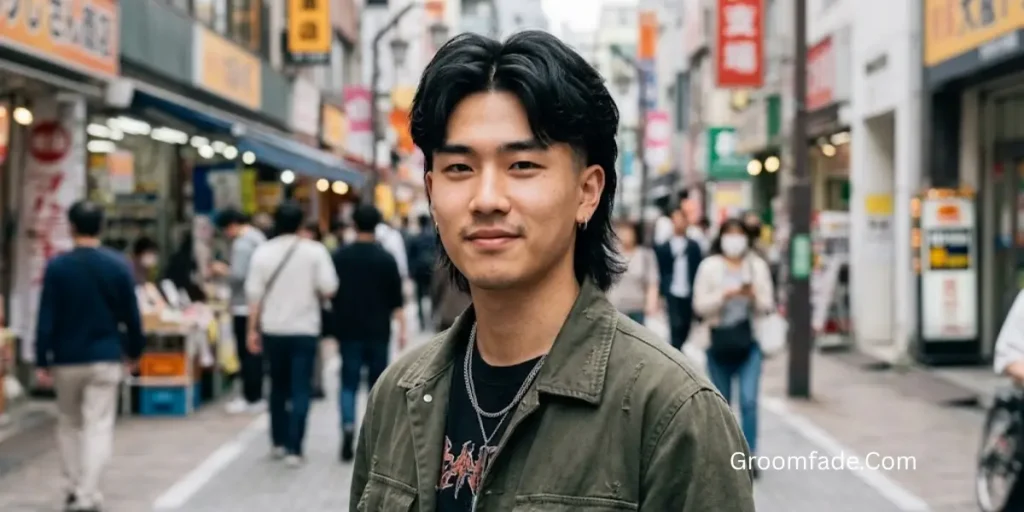
An Asian middle part mullet can take many forms because Asian hair types vary in thickness, texture, density, and natural growth pattern.
Straight, dense hair can create a strong curtain shape at the front. Longer layers can help the hair move instead of standing heavily around the crown.
A Korean middle part mullet may use softer layers and a flowing front, while another Asian middle part mullet may use a taper or fade for stronger contrast.
The useful approach is to show your barber the shape you want rather than relying only on the name of the style.
Front Length, Side Width, and Face Proportions
The front length affects how the haircut frames the face.
Shorter front pieces keep more of the forehead visible. Longer sections create a stronger curtain effect.
Side width also matters. Fuller sides create a broader silhouette, while tapered or faded sides make the top and back more noticeable.
The back length then adds another visual layer. A short nape creates a subtle mullet, while a long nape makes the haircut much more obvious.
These elements should work together rather than being chosen separately.
How to Ask Your Barber for a Middle Part Mullet
Instead of saying only, “Give me a middle part mullet,” explain the shape you want.
You can say:
“I want a middle part mullet with enough length at the front to split naturally. Keep the crown layered and leave the back longer. I want the sides [natural/tapered/low faded/burst faded]. Please keep enough length in the back so it still has a clear mullet shape.”
Then show your barber photos from the front, side, and back.
Also tell them:
- How short you want the sides
- How long you want the nape
- Whether you want layers
- Whether you want a natural or textured finish
- Whether you normally wear your hair straight, wavy, or curly
A reference photo is especially useful because “long” and “short” can mean different things to different people.
How a Barber Typically Builds the Shape
The exact cutting process varies by barber and hair type, but the overall shape usually starts with the desired lengths.
Establishing the Middle Part
The front is divided according to the hair’s natural growth and the desired center opening.
Setting the Top and Crown Length
The crown is kept long enough to connect the middle-parted front with the back.
Shaping the Sides
The sides may remain natural, receive a taper, or be faded.
Building the Back Length
The barber establishes how far the mullet extends through the nape.
Connecting the Layers
Layers help the top, sides, crown, and back work together.
Checking the Shape From All Angles
The haircut should be checked from the front, sides, and back because the mullet shape is visible from every direction.
A stronger and more dramatic shape comes from the Mohawk Mullet, which emphasizes the center of the haircut while keeping the longer back that defines the mullet.
How to Style a Middle Part Mullet
Start with damp hair and create the middle part.
Use your fingers or a comb to separate the front into two sections. If your hair does not naturally stay parted, use a small amount of lightweight styling product.
For a middle part mullet flow, use a blow dryer to direct each front section away from the center. Keep the airflow moving downward and slightly backward.
For a messy middle part mullet, use your fingers instead of creating a perfectly smooth finish. Add a small amount of texture product through the lengths.
For wavy or curly hair, allow the natural pattern to form rather than brushing the hair completely straight.
Useful Product Types for This Haircut
You do not need a large collection of products.
Light styling cream: Good for controlling loose strands while keeping movement.
Sea salt or texture spray: Adds a more textured finish and can help create separation.
Matte paste: Useful when you want more control without a shiny finish.
Light mousse: Can add body to fine or wavy hair.
Curl cream: Helps curly hair keep its natural pattern.
Heat protectant: Useful when regularly using a blow dryer, straightener, or other heated tool.
Start with a small amount. Adding more product is easier than trying to remove too much.
Middle Part Problems and How to Work Around Them
The Hair Keeps Falling Forward
This can happen when the front is not trained to separate.
After washing, create the middle part while the hair is damp. Blow-dry each section away from the center. Repeating the same direction can make styling easier over time.
The Part Refuses to Sit Exactly in the Center
Natural growth patterns can prevent a perfectly straight part.
Do not force the hair against its natural direction. A slightly adjusted part can often look more natural and sit better.
The Crown Looks Too Heavy
Too much weight around the crown can make the top appear bulky.
A barber can remove some weight through layering while keeping enough hair to connect the top with the back.
The Back Looks Like a Separate Tail
This usually comes from too much separation between the crown and nape.
The solution is usually better layering and connection rather than simply cutting the back shorter.
Common Middle Part Mullet Mistakes
One common mistake is cutting the front too short. A middle part needs enough length for the two sections to fall naturally.
Another is taking the sides too high without considering the top and back. A very short fade can create a strong contrast that may not match the softer middle-part style.
Removing too much weight can also weaken the shape, especially with fine hair.
Finally, copying a haircut photo without considering your own texture can lead to a different result. The same cut behaves differently on straight, wavy, and curly hair.
Maintenance and Grow-Out
Maintenance depends on how clean you want the sides and neckline to look.
A taper or fade usually needs more frequent clean-up than natural sides. The longer back can often be left alone for a longer period while it grows.
During grow-out, the crown may become heavier before the back reaches the desired length. Regular shaping can help maintain balance without removing the length you are trying to grow.
If your goal is a long middle part mullet, tell your barber that you are growing the back. They can clean the surrounding areas while protecting the length.
Middle Part Mullet vs Similar Haircuts
Middle Part Mullet vs Wolf Cut
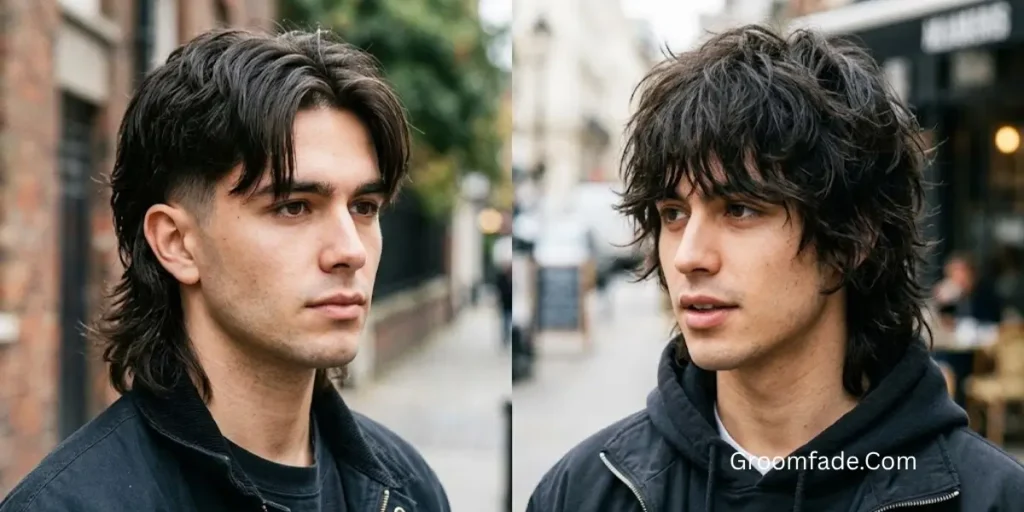
Both styles can have layers, texture, and a longer back.
A mullet usually has a clearer difference between the shorter sides and longer back. A wolf cut often spreads more layers and volume around the crown and sides.
There can be overlap, especially with a wolf-inspired middle part mullet.
Middle Part Mullet vs Curtain Haircut
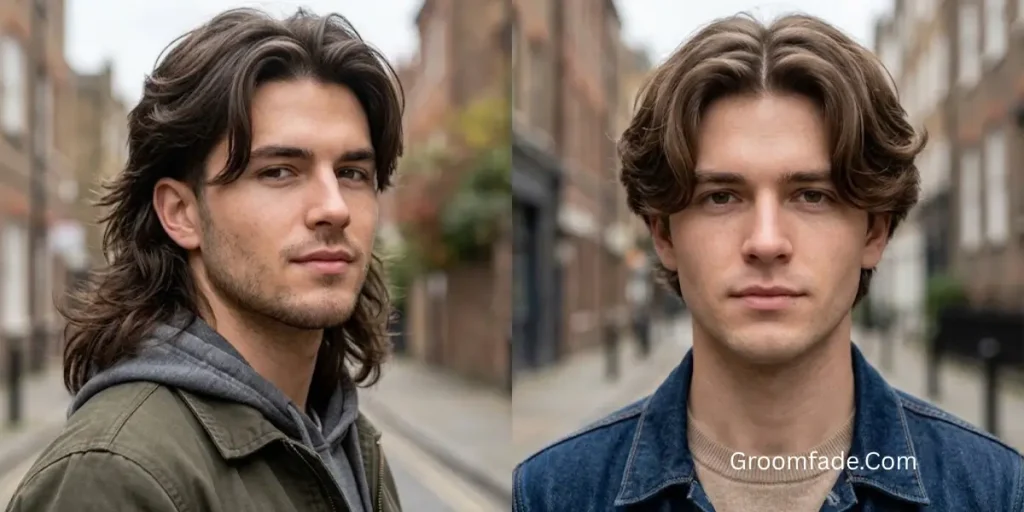
A curtain haircut focuses mainly on the middle-parted front and face-framing sides.
A middle part mullet adds a longer back and a stronger change in length toward the nape.
If the back is short and balanced with the sides, the style may look more like a curtain haircut.
Middle Part Mullet vs Burst Fade Mullet
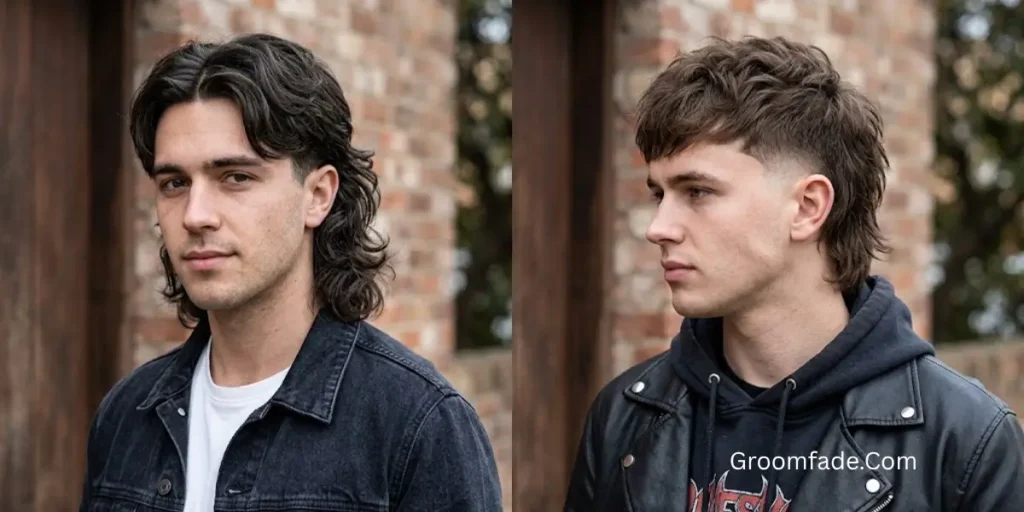
A burst fade mullet uses a curved fade around the ear and usually creates stronger side contrast.
A middle part mullet describes the front styling as well as the overall haircut shape. It can also include a burst fade, which is why these two styles can overlap.
What Is the 3:2:1 Rule for Haircuts?
The 3:2:1 rule is sometimes used online to describe haircut proportions, but it is not a universal barbering standard.
Haircuts are affected by hair density, texture, head shape, growth patterns, and the desired style. A middle part mullet should not be forced into one fixed numerical ratio.
For this haircut, the important relationship is between the front, crown, sides, and longer back. Your barber can adjust those areas according to how your hair actually grows.
Why Does Gen Z Like Middle Parts?
Middle parts have appeared in several waves of men’s hairstyle trends, including styles influenced by the 1990s and early 2000s.
Social media has also made it easier for people to see different versions of middle-part hairstyles, including curtain hair, layered cuts, and mullets.
The style is also flexible. A middle part can be worn with straight, wavy, or curly hair and can be combined with short sides, tapers, or fades.
Rather than one exact haircut, it works as a styling choice that can be adapted to different lengths and textures.
Frequently Asked Questions About Middle Part Mullet
Does a mullet work with a middle part?
Yes. A middle part can work with a mullet when the front and crown have enough length to separate naturally. The longer back keeps the haircut recognizable as a mullet, while the center part creates a curtain-like front.
How long does hair need to be for a Middle Part Mullet?
There is no single required length. The front needs enough hair to separate into two sections, while the back needs enough length to create a visible mullet shape. Your natural texture also affects how much length is needed.
Can straight hair work with a middle part mullet?
Yes. Straight hair can work very well because the center part is easy to see. Layering can add movement and prevent the hair from looking too heavy or flat.
Does a middle part mullet work with curly hair?
Yes. Curly hair can create a fuller and more textured result. It needs enough length for the curls to form, and the barber should account for shrinkage when cutting.
Can I get a middle part mullet without a fade?
Yes. A middle part mullet does not require a fade. The sides can be left natural, layered, tapered, or cut shorter depending on the desired shape.
Should a middle part be perfectly centered?
Not necessarily. A natural part may sit slightly away from the exact center because of hair growth patterns or a cowlick. What matters most is that the hair separates naturally and looks balanced.
How do I make the middle part look less flat?
Try blow-drying the front sections away from the center while lifting them slightly at the roots. A light mousse or texture spray can also add body without making the hair stiff.
How often should a middle part mullet be trimmed?
The timing depends on the haircut. Faded or tapered sides usually need more frequent clean-up, while a natural longer version can grow for longer between trims. Tell your barber if you are trying to preserve the back length.
Can you grow a Middle Part Mullet from a regular haircut?
Yes. A regular medium-length haircut can be grown into a middle part mullet. The front needs enough length to form the center part, while the back must be allowed to grow. Your barber can shape the sides and crown during the grow-out.
Is a middle part mullet the same as a wolf cut?
No, although the two can look similar. A mullet usually places stronger emphasis on the longer back and shorter sides. A wolf cut generally uses more widespread layering and volume around the crown and sides.
What should I show my barber when asking for this haircut?
Show photos from the front, side, and back. Choose examples with hair texture and length similar to yours. Also explain whether you want natural sides, a taper, low fade, burst fade, or another side treatment.