
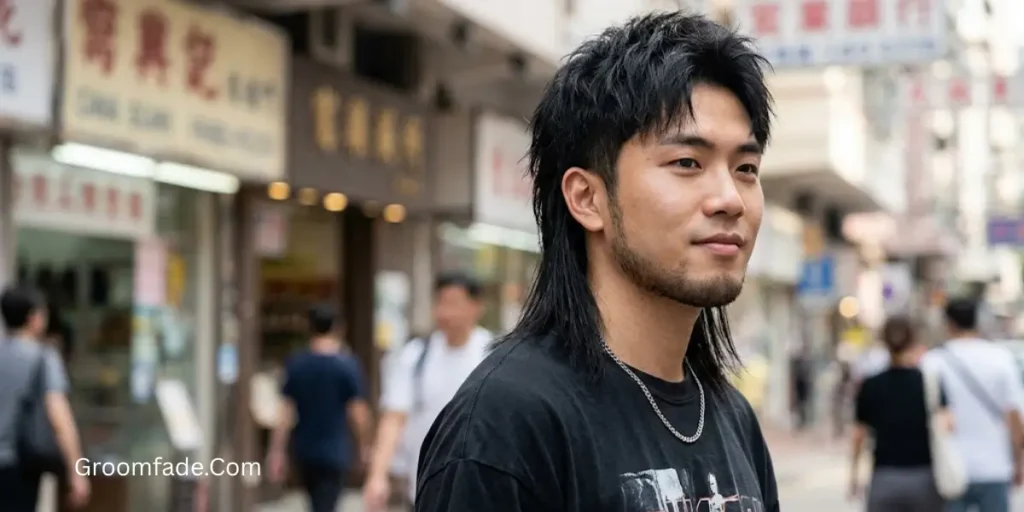
The Asian mullet hairstyle has become a flexible choice for men who want more shape and movement without giving up length at the back. Unlike the very sharp mullets of the past, modern versions can be soft, layered, textured, tapered, or paired with a fade.
Asian hair can also give this haircut a distinct look. Straight and thick hair often holds strong shapes, while wavy or permed hair can create more movement and volume. The final result depends on the hair’s natural texture, the length left on top and at the back, and how the sides are cut.
There is no single way to wear an Asian mullet. You can keep it short and clean, add a textured fringe, use a middle part, or combine the longer back with a taper or fade. This guide explains the main options and how to choose one that fits your hair and daily routine.
What Is an Asian Mullet Hairstyle?
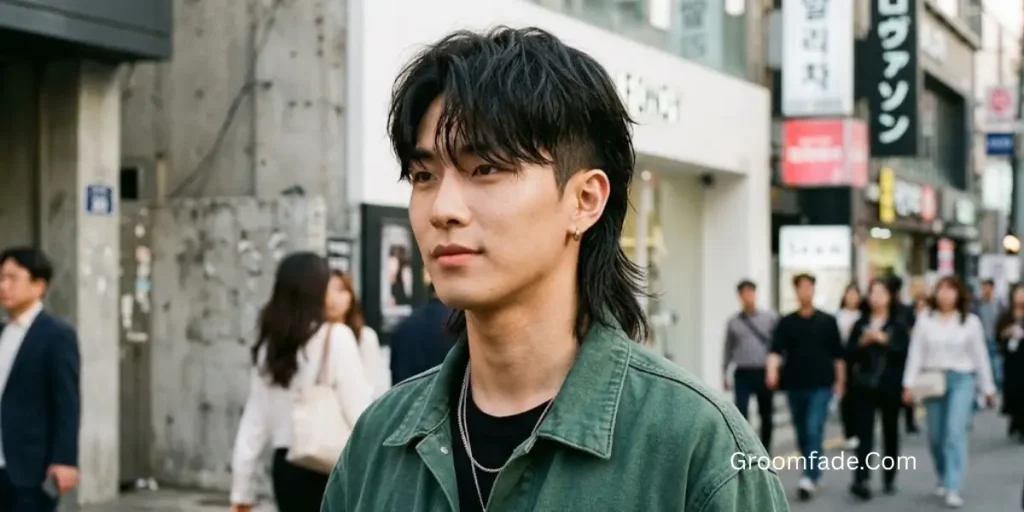
An Asian mullet hairstyle is a haircut that keeps the hair shorter around the sides and front while leaving more length at the back. The top can be layered, textured, fluffy, or styled with a fringe or middle part.
The key feature is the change in length between the shorter areas and the longer back. However, the difference does not have to be extreme. A modern Asian mullet can have a soft transition that looks natural instead of highly dramatic.
For men with straight or thick Asian hair, layers are often important because they help control weight and give the haircut more movement. A barber can also use a taper or fade around the temples and sides to make the longer back stand out.
A simple way to describe the haircut is:
An Asian mullet is a modern haircut with shorter sides and a longer back, often shaped with layers, texture, a fringe, taper, or fade.
The style can be adjusted for short, medium, or longer hair, so the word “mullet” does not always mean a very long back.
For a cleaner finish around the sides, the Brooklyn Fade creates a sharper transition while leaving the top and back ready for more length and texture.
Why Is the Asian Mullet Popular?
The modern mullet gives people more ways to personalize their haircut. It can look neat enough for everyday wear while still having a noticeable shape.
One reason it works well with many Asian hair types is that straight and thick hair can hold layered shapes clearly. Instead of leaving the hair as one heavy block, the barber can remove some weight and create separation between the layers.
Another benefit is the range of styling choices. You can wear an asian modern mullet with:
- A textured fringe
- A middle part
- A soft taper
- A low fade
- A temple fade
- A two-block shape
- Messy layers
- A fluffy top
- A perm for extra movement
The haircut can also change as it grows. A shorter version may look cleaner, while a longer version can have more texture and movement.
Korean and Japanese-inspired men’s hairstyles have also helped make layered, textured cuts more visible in modern fashion. That does not mean every Asian mullet is a Korean or Japanese style. The haircut can be adapted to many personal preferences and hair textures.
Best Asian Mullet Hairstyles for Men
There are many ways to shape an asian mullet haircut. The right option depends on your hair thickness, natural texture, preferred length, and how much styling you want to do each morning.
Modern Asian Mullet
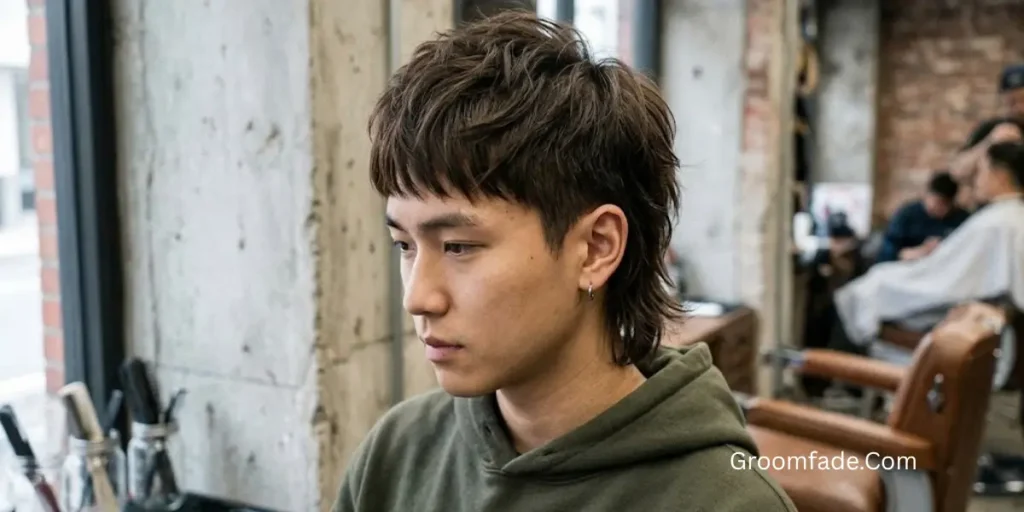
The modern Asian mullet is usually softer than a traditional mullet. The sides may be tapered or lightly faded, while the top and back are connected through layers.
The back does not need to be extremely long. A moderate length can create the mullet shape while keeping the haircut easy to wear.
This option works especially well if you want a noticeable haircut without an overly dramatic contrast.
For styling, use a light product to add texture rather than making the hair stiff. Straight hair can benefit from a small amount of texture spray or matte styling cream.
Asian Mullet With Textured Fringe
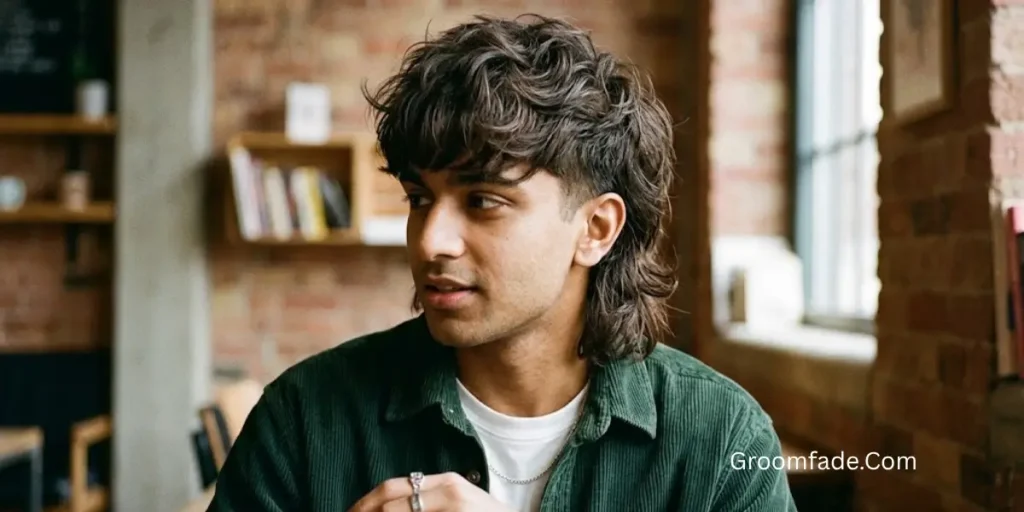
A textured fringe gives the front of the haircut more movement. Instead of cutting the fringe into one solid line, the barber can create uneven or separated pieces.
This works well with straight Asian hair because texture can stop the front from looking too flat or heavy.
You can wear the fringe forward for a younger, casual look or push some of it to the side when you want a more relaxed shape.
Tell your barber that you want a textured fringe with a layered mullet, then show a reference photo that matches the length you want.
Asian Middle Part Mullet

An asian middle part mullet combines a center part at the front with shorter sides and a longer back.
The front sections are usually kept long enough to fall on both sides of the face. The top and back are then layered so the haircut does not look like a simple middle-part hairstyle with extra length.
This option can work well for people who already have enough front length to create a natural part.
A middle part also gives you some styling flexibility. You can keep the part clearly separated or make it softer for a more relaxed finish.
Short Asian Mullet
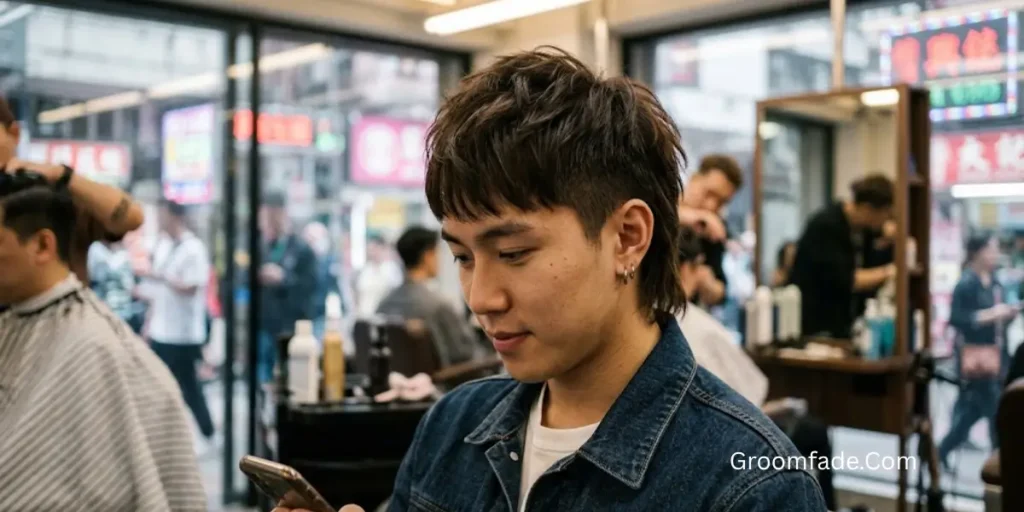
A short asian mullet is useful if you like the basic shape but do not want a long back.
The sides can be tapered or faded, while the top has enough length for texture. The back is left slightly longer than the sides, creating the mullet shape without a large length difference.
This can be a practical choice for someone trying a mullet for the first time.
A short version also tends to require less time to style than a longer, heavily layered cut.
Asian Mullet Fade
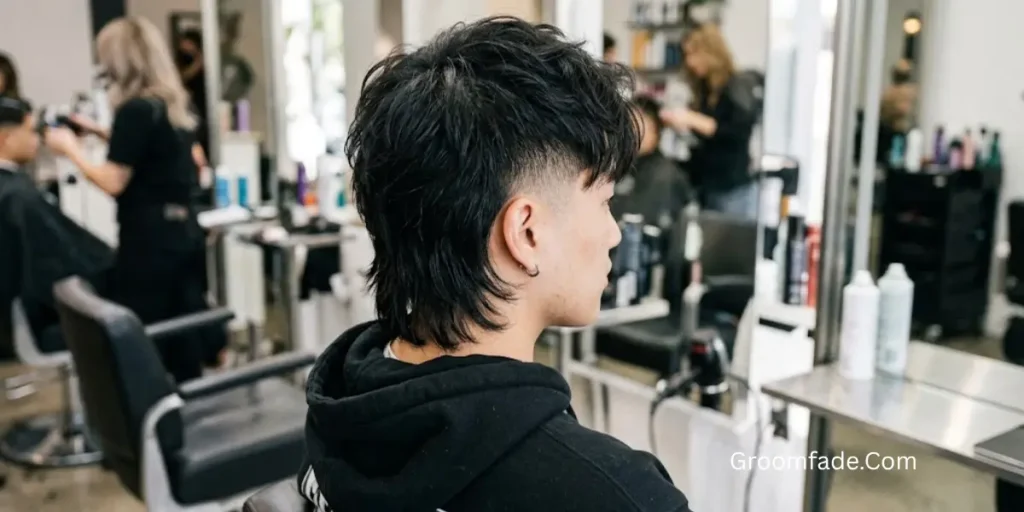
An asian mullet fade uses a fade on the sides while keeping extra length through the top and back.
The fade can be low, medium, or high. A low fade keeps more weight around the sides, while a higher fade creates a stronger contrast.
For thick hair, a fade can help remove some of the bulk around the sides. However, the barber should still consider the shape of the back. Taking too much hair away can make the transition look disconnected.
Asian Taper Mullet
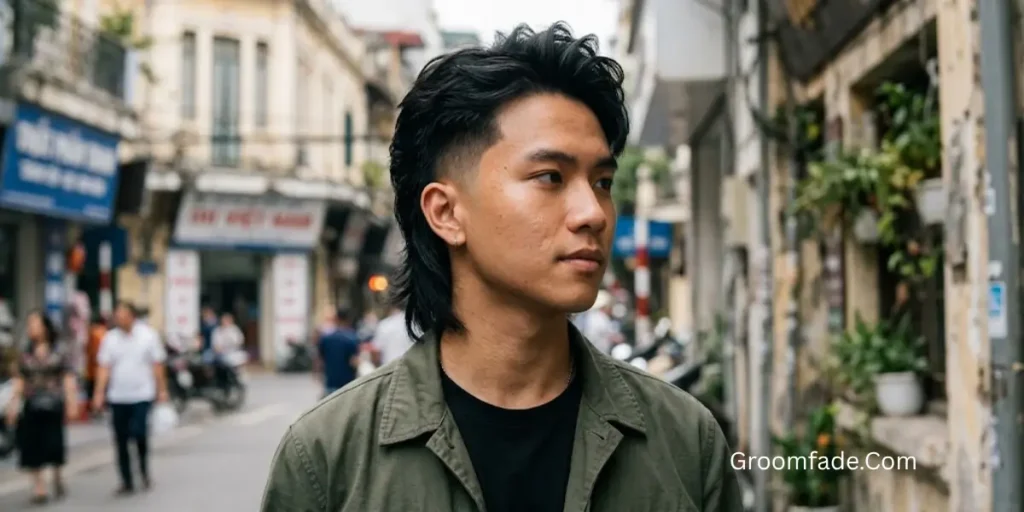
A taper gives a more gradual reduction in length around areas such as the temples and sideburns.
An asian taper mullet can therefore look softer than a skin fade mullet. It is a useful choice if you want the sides cleaned up without making them extremely short.
The taper also works well with medium-length hair because it keeps more of the natural shape around the sides.
Korean-Inspired Mullet
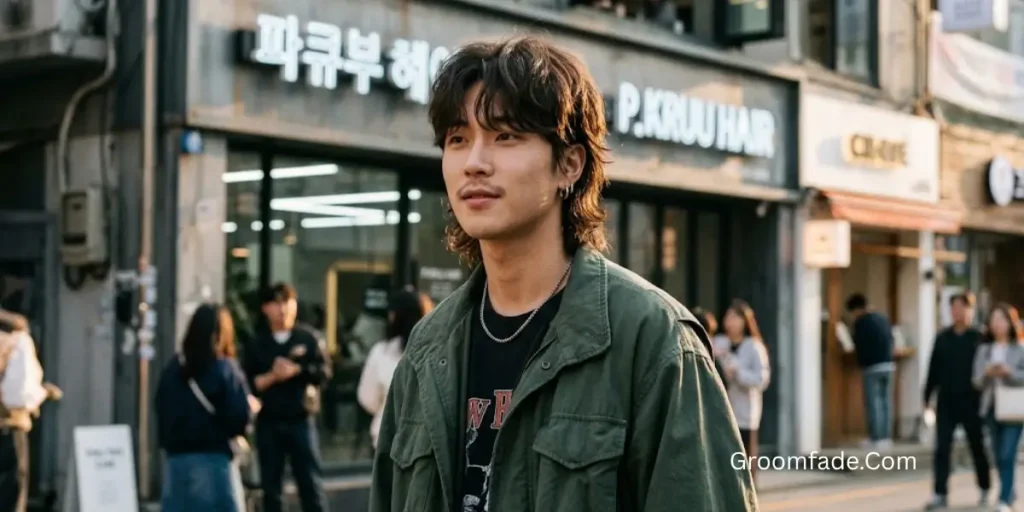
A Korean-inspired mullet often uses soft layers, movement around the front, and a less aggressive transition into the back.
The style may include a fringe, curtain-like front sections, or a loose middle part. The overall shape is usually more controlled than a heavily disconnected punk-style mullet.
Hair texture matters here. If your hair is very straight and heavy, layers and styling may be needed to create the softer shape shown in a reference photo.
Japanese Mullet Haircut
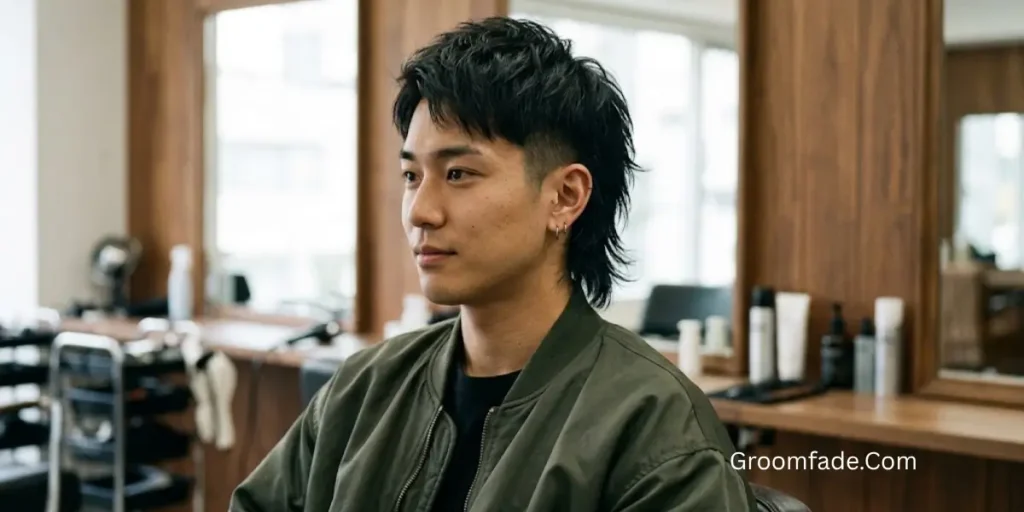
A japanese mullet haircut can range from a soft layered style to a more textured modern cut.
The important point is not to treat every Japanese-inspired haircut as one fixed design. Hair length, layers, fringe shape, and styling can all change the result.
If you like this type of haircut, bring a clear photo to your barber. Point out the front, sides, and back separately so the barber understands which parts you want to keep.
Asian Wolf Mullet
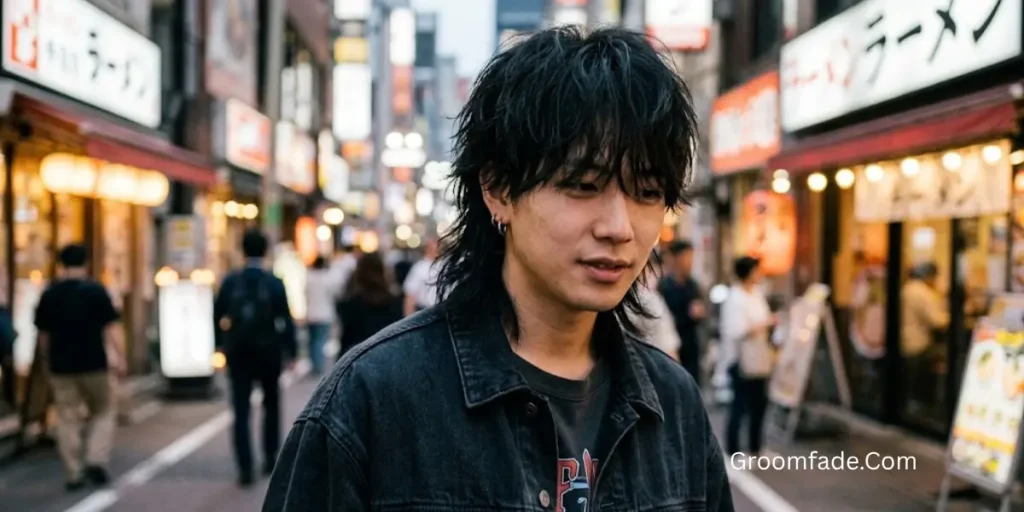
An Asian wolf mullet combines the layered feel of a wolf cut with the longer back of a mullet.
The top and sides usually have more layers than a simple mullet. This creates movement around the head and can work particularly well with wavy or permed hair.
With very straight hair, you may need styling products or a blow dryer to keep the layers from falling flat.
A more defined option is the Juice Box Fade, which combines clean faded sides with a structured top for a stronger shape.
Two-Block Mullet
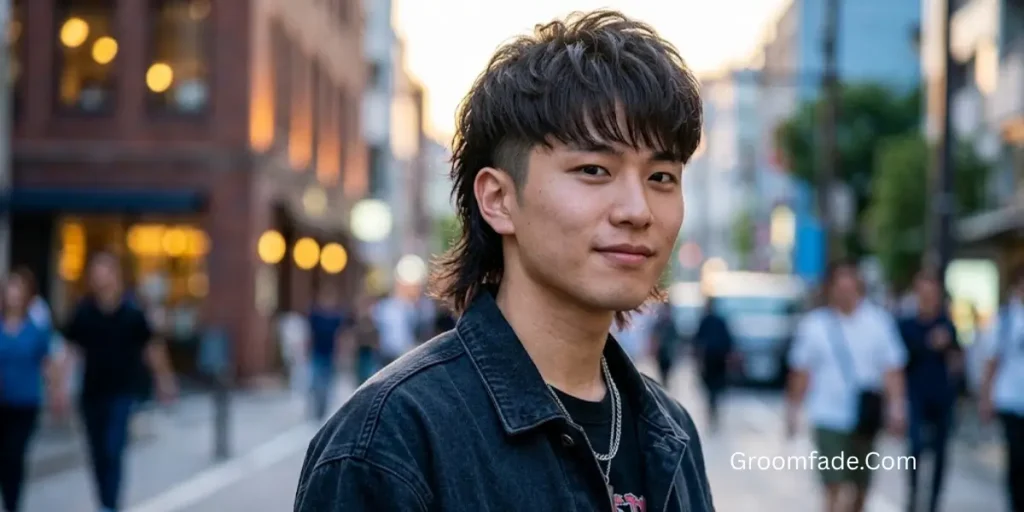
A two-block mullet brings together the separated side shape of a two-block haircut with the longer back of a mullet.
The upper section can retain more weight while the lower sides are cut shorter. The back then extends beyond the shorter lower section.
This can be a good option for thick hair because the barber can control the side weight while leaving enough length on top and at the back.
Asian Shaggy Mullet
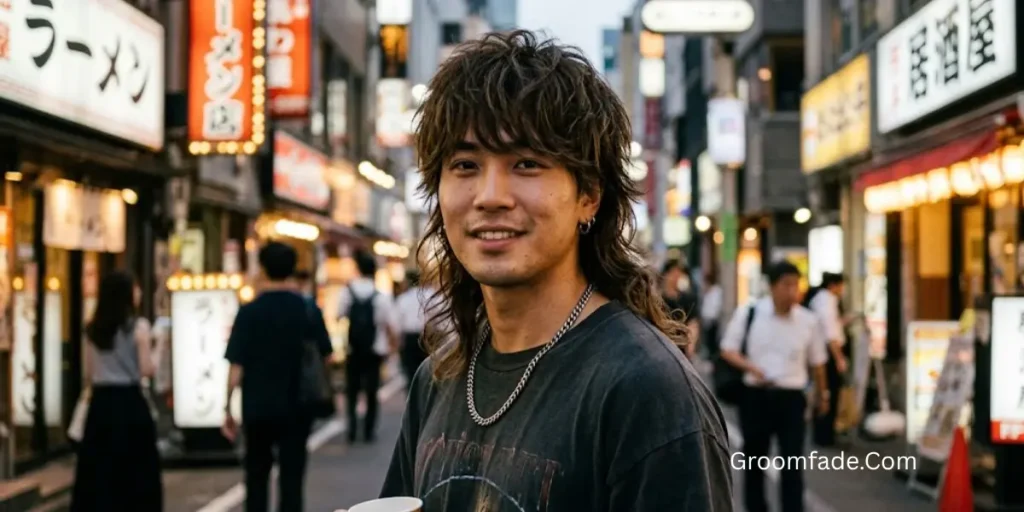
A shaggy mullet uses more visible layers and a less polished finish.
Instead of making every section look perfectly controlled, the cut allows the ends to move naturally. It can work particularly well with wavy or slightly messy hair.
For straight hair, a texturizing product can help create a more separated appearance.
Permed Asian Mullet
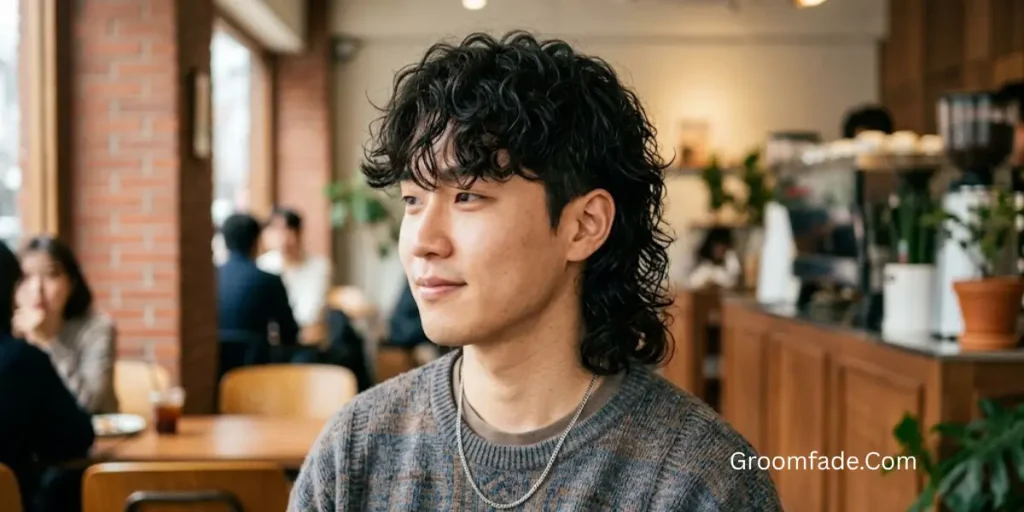
A perm can add waves or curls to an Asian mullet when the natural hair is very straight.
The result depends on the size and type of curl or wave created. A loose perm can give the haircut soft movement, while tighter curls produce a much stronger texture.
If you are considering a perm, talk to a qualified stylist about your hair’s condition first. Chemical services can affect hair that is already damaged or heavily processed.
Fluffy Asian Mullet
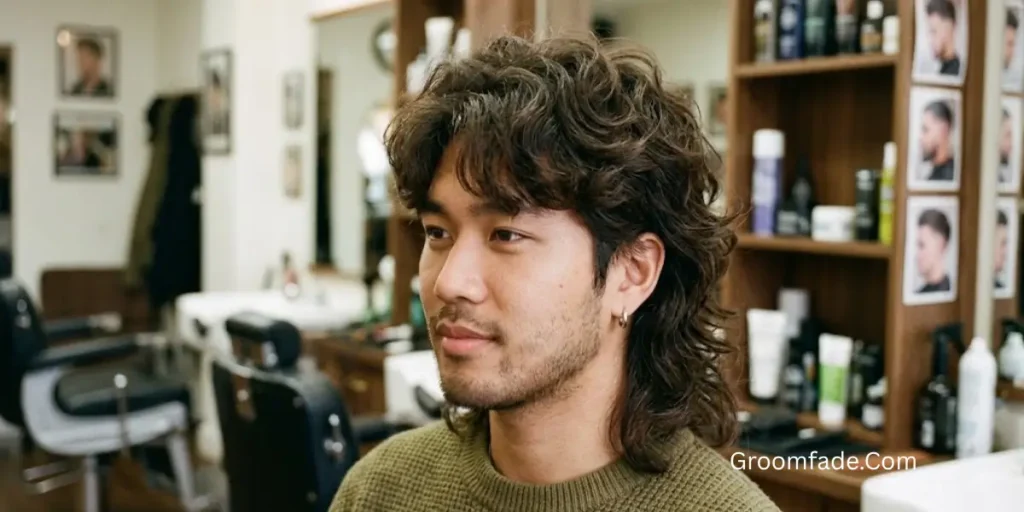
A fluffy mullet focuses on volume rather than sharp definition.
The top is usually kept long enough to lift away from the head, while the back retains enough length to show the mullet shape.
Blow-drying the roots can help create volume. A small amount of lightweight styling product can then control flyaways without flattening the hair.
Straight Asian Mullet
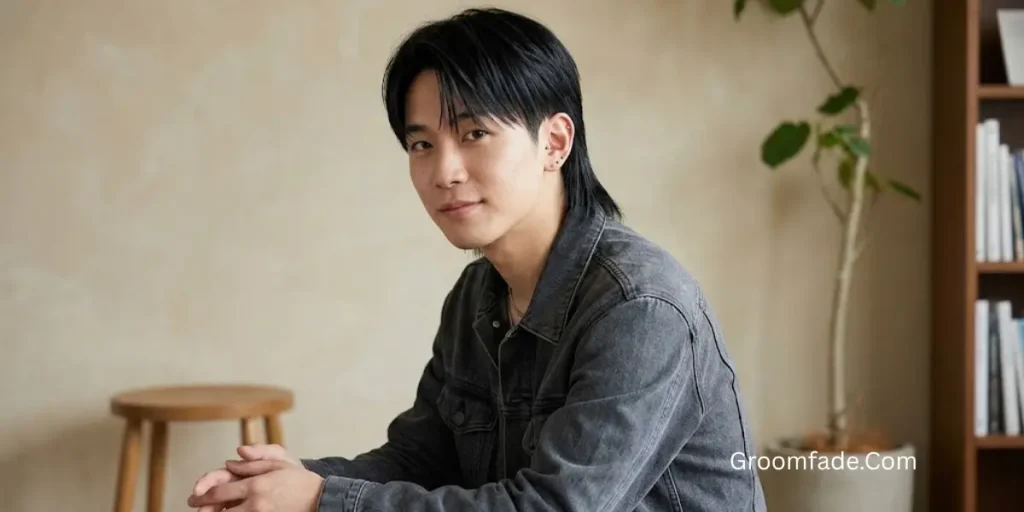
Straight Asian hair can make the lines and layers of a mullet very visible.
If the hair is thick, too much length without proper layering can make the haircut look heavy. A skilled barber can remove some internal weight while keeping the outside shape.
If your hair is fine and straight, ask for enough layering to create movement without removing too much density.
Curly or Wavy Asian Mullet
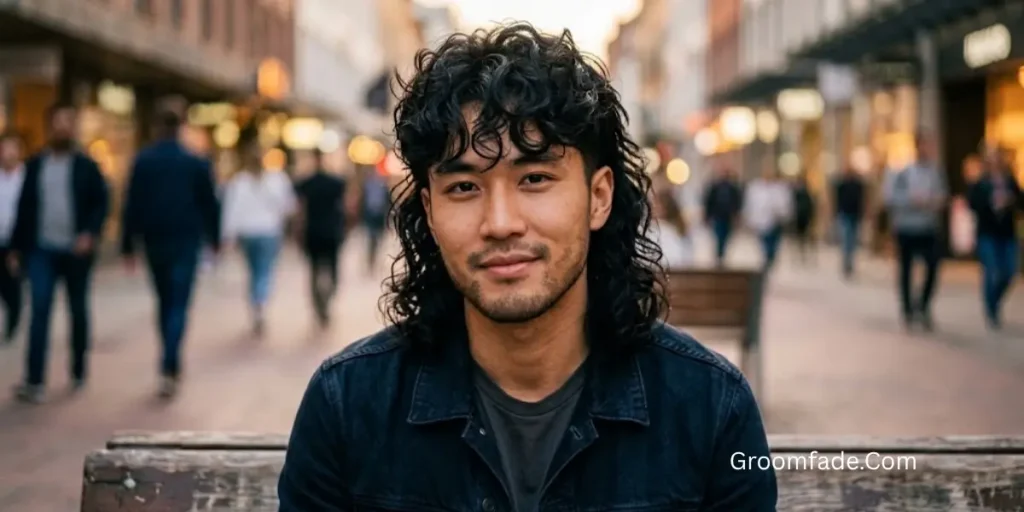
Curly and wavy hair can give a mullet a completely different shape.
The natural texture can make the back look fuller and give the top more movement. The barber should account for shrinkage when deciding the length.
Do not rely on a straight-hair reference photo if your hair is strongly curly. The same cut can look much shorter after the curls return to their natural shape.
Asian Mullet Haircuts by Hair Type
Hair texture should be one of the first things you consider before choosing an asian mullet haircut.
Two people can ask for the same haircut and get different results because their hair behaves differently.
Asian Mullet for Straight Hair
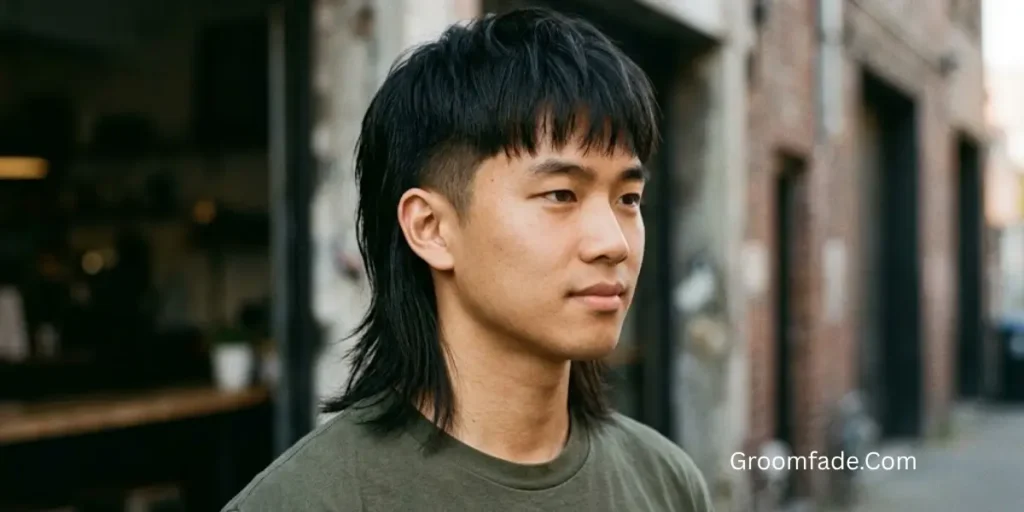
Straight hair shows the shape of the haircut clearly.
This can be useful for layered styles, but it can also make heavy sections more obvious. If your hair is thick and straight, ask your barber about removing excess weight while keeping the overall length.
For styling, a texture spray, light cream, or matte product can add separation without making the hair look greasy.
Asian Mullet for Thick Hair
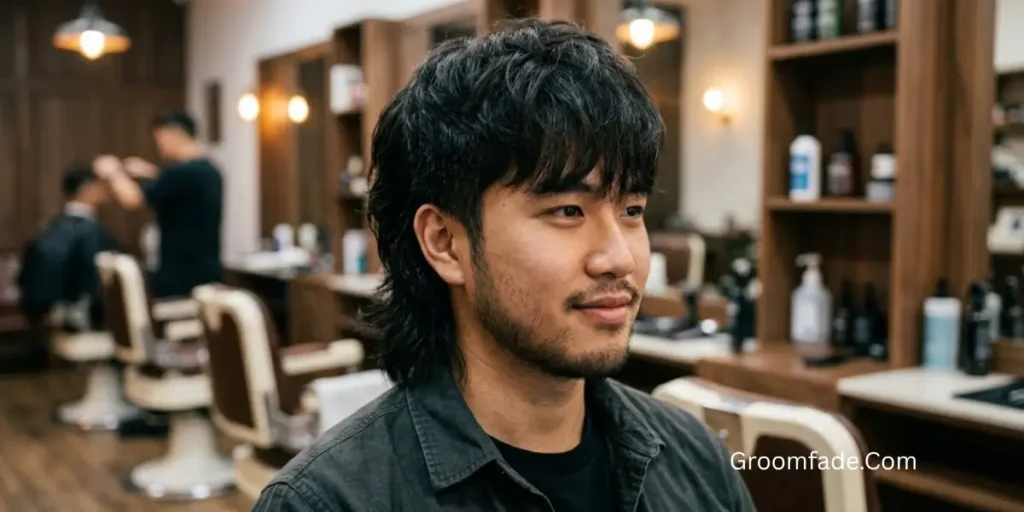
Thick Asian hair can create a strong mullet shape, but excess weight can also make the sides and back look bulky.
Layering can help distribute that weight.
Instead of asking your barber to simply thin everything, explain where the hair feels too heavy. Removing too much density can make some hair types look uneven as they grow.
Asian Mullet for Fine Hair
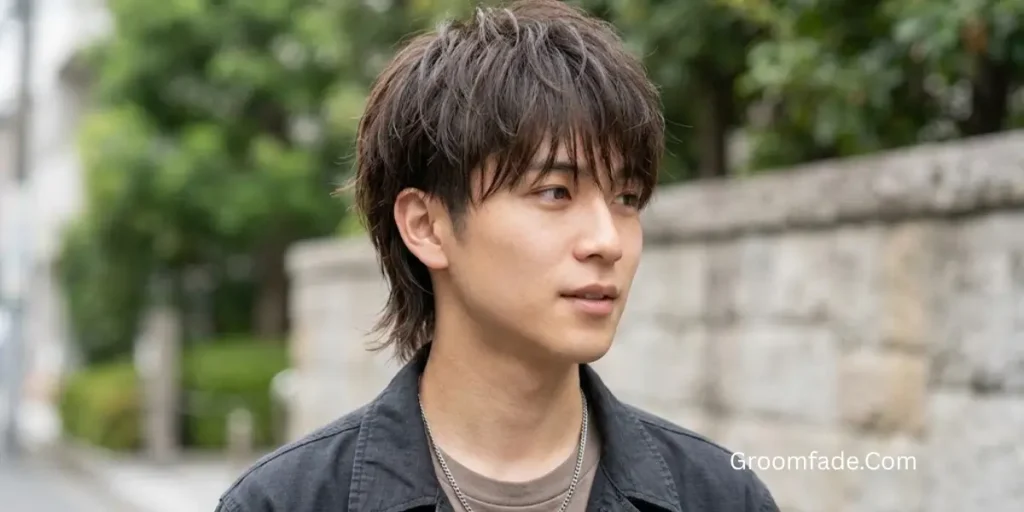
Fine hair can still work with a mullet, but the haircut should be designed to maintain fullness.
Very aggressive thinning may make fine hair appear even lighter. A shorter style with controlled layers can often create a fuller appearance.
Texture products can also help, but using too much product may weigh the hair down.
Asian Mullet for Wavy Hair
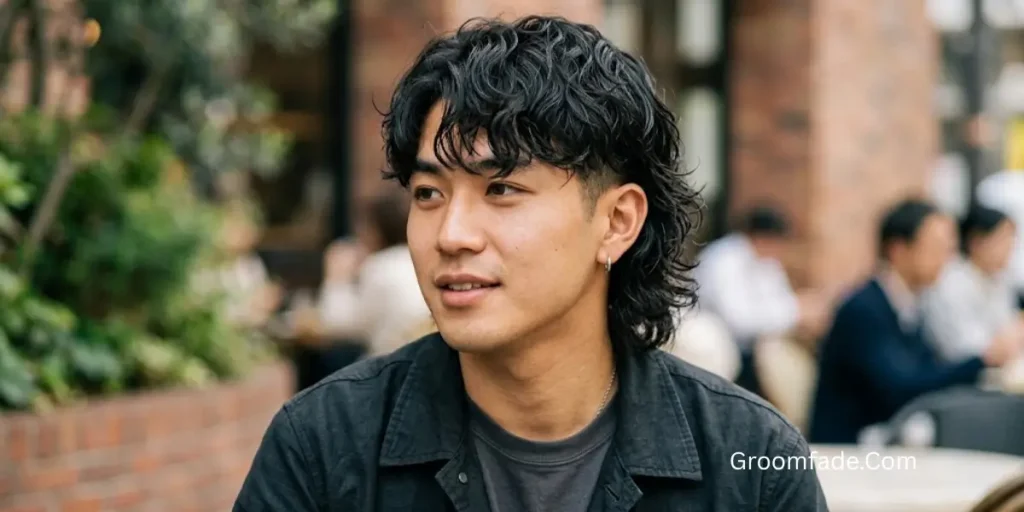
Wavy hair naturally adds movement to a mullet.
A layered cut can help the waves form around the top and back. You may not need as much styling as someone with straight hair.
Use a lightweight cream or styling product that supports the natural wave rather than making it stiff.
For a softer change around the sides, Tapered Sides keep the edges neat without taking away too much hair, making them suitable for longer styles.
Asian Mullet for Curly Hair
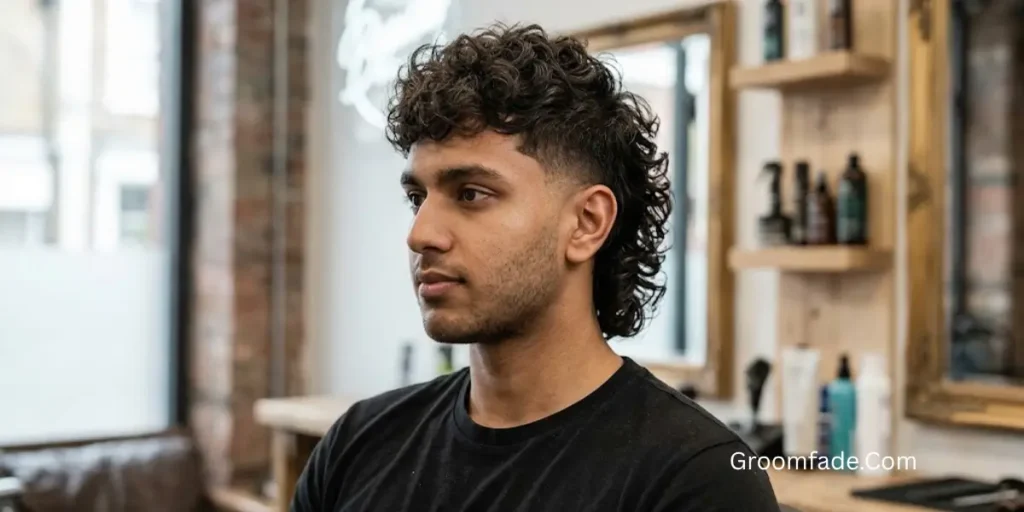
Curly hair needs a different approach because curls can shrink significantly when dry.
Your barber should understand how your curls behave before deciding how much length to remove.
Keeping enough length through the back can help maintain the mullet shape after the curls tighten.
Asian Mullet With a Perm
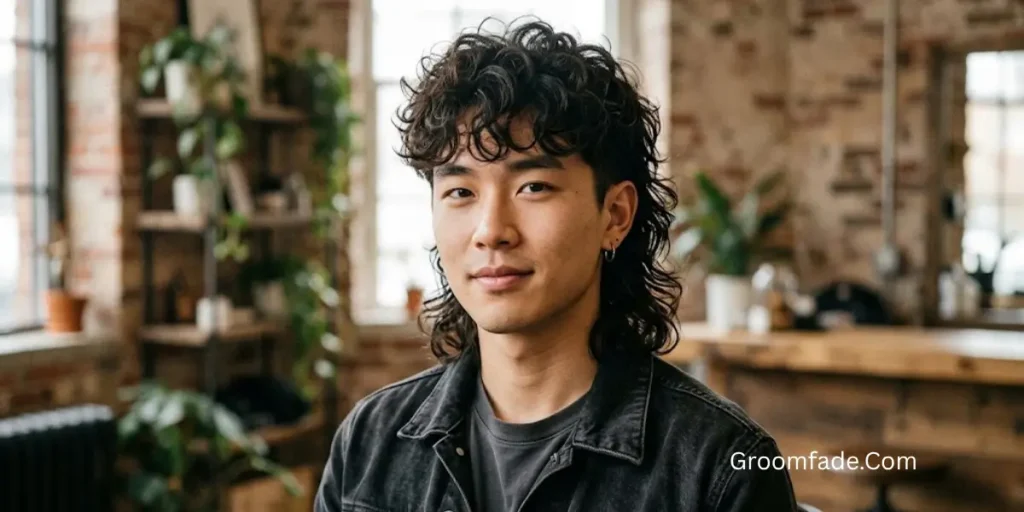
A perm can be useful when you want more movement than your natural hair provides.
Before getting one, consider your current hair condition, previous chemical treatments, and the amount of maintenance you are willing to do.
Asian Mullet Haircuts by Length
The length of an Asian mullet can change the entire feel of the haircut. A shorter version can look clean and easy to manage, while extra length at the back creates a stronger mullet shape.
Your natural hair texture should also guide the length. Straight hair may show a longer back clearly, while wavy or curly hair can appear shorter because of natural shrinkage.
Short Asian Mullet
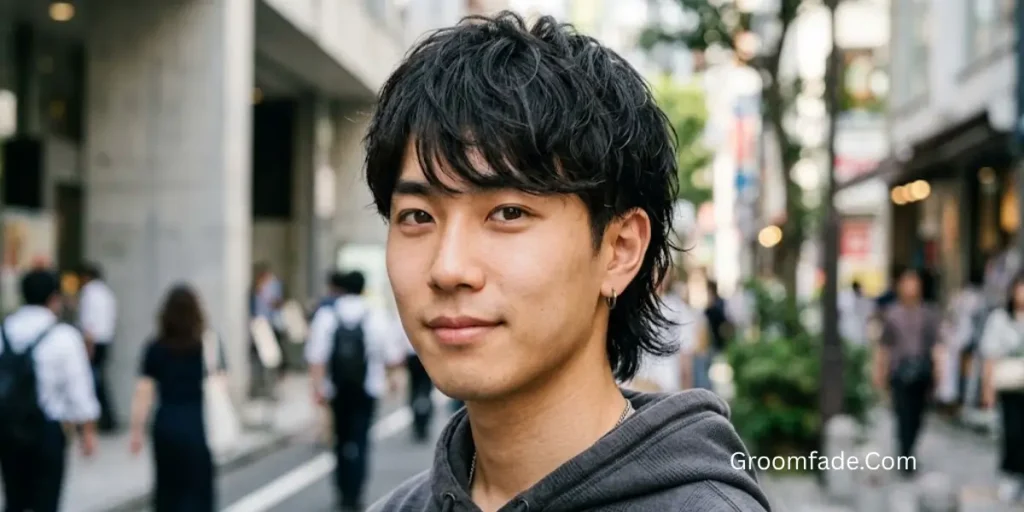
A short Asian mullet keeps the back noticeably longer than the sides without creating a very long tail.
The top can have light layers or texture, while the sides are tapered or faded. This makes the style easier to wear for school, work, or everyday activities.
A short mullet can also be a good starting point if you are unsure about committing to a longer style.
Medium Asian Mullet
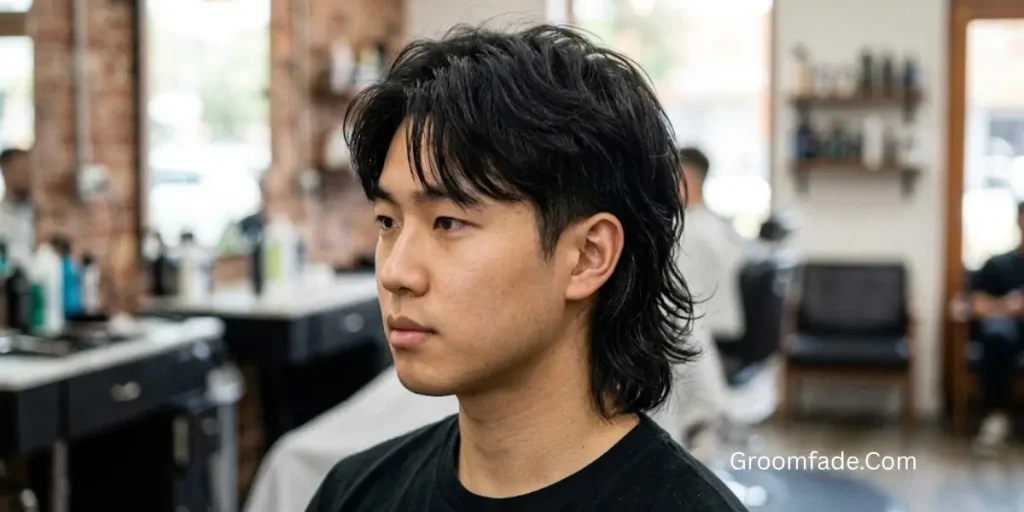
A medium-length mullet gives you more room to work with layers and texture.
The top can be styled forward, parted in the middle, or pushed back. The back has enough length to create a clear mullet shape without becoming difficult to manage.
This length works well for people who want more movement but still want a fairly practical haircut.
Long Asian Mullet
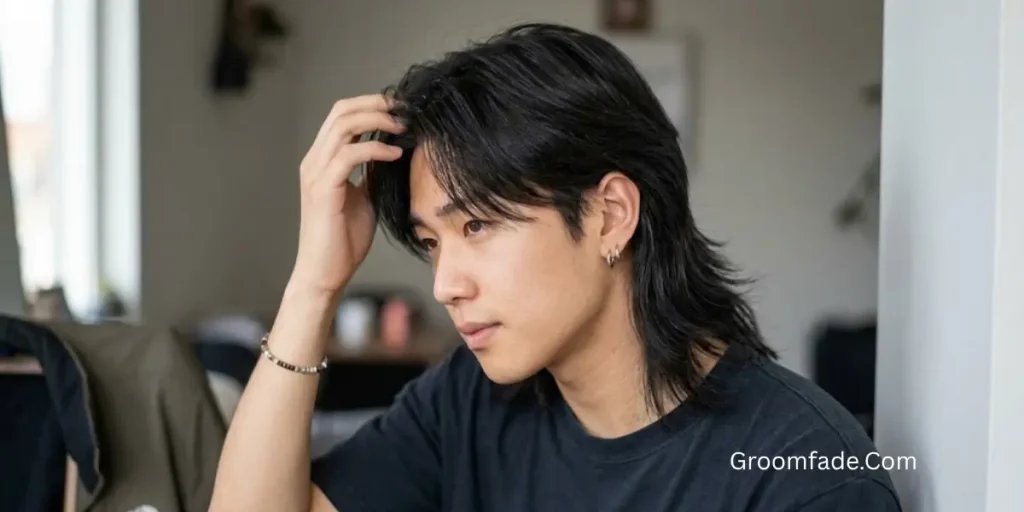
A long Asian mullet creates a stronger difference between the shorter sides and the longer back.
The extra length can be layered to prevent the hair from looking like one heavy section. Long versions also give you more options for messy, wavy, shaggy, or textured styling.
If you are growing one out, remember that the back may need shaping as it gets longer. Simply allowing every section to grow at the same rate can cause the haircut to lose its intended shape.
Asian Mullet With Fade or Taper
The sides play a major role in the final appearance of an Asian mullet. A fade creates a stronger change in length, while a taper keeps the transition more gradual.
Neither option is automatically right for everyone. The choice depends on how much contrast you want and how often you are willing to maintain the sides.
Asian Mullet With Low Fade
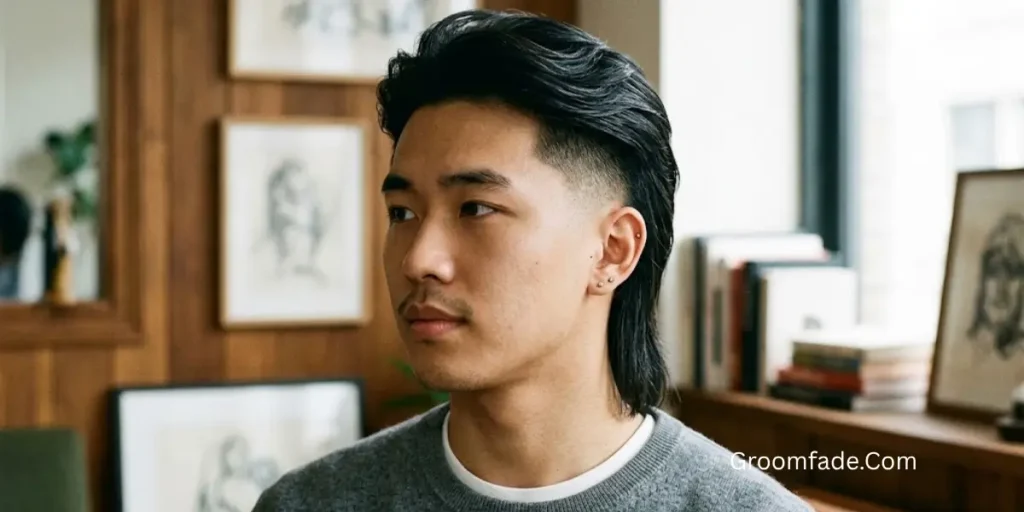
A low fade starts closer to the bottom of the sides and around the area near the ears.
It leaves more hair above the fade, so the overall haircut can still have a fuller appearance.
This can work well if you want a modern mullet without making the sides extremely short.
Asian Mullet With Mid Fade

A mid fade sits higher on the sides and creates more contrast.
It can make the top and back appear fuller by keeping the sides much shorter.
With thick Asian hair, this can help control side volume. The barber still needs to blend the fade carefully into the longer sections.
Asian Mullet With High Fade
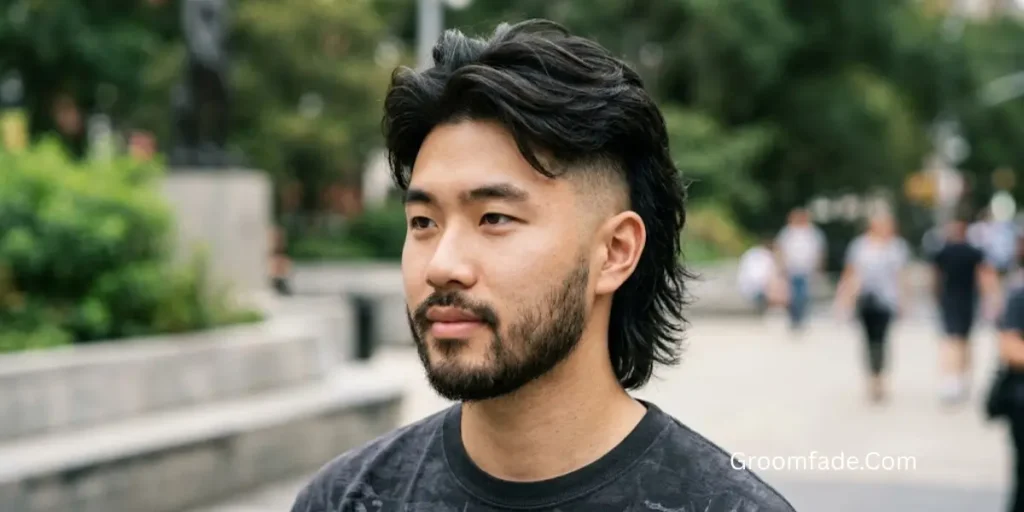
A high fade creates a strong difference between the short sides and the longer top and back.
This gives the haircut a sharper appearance and can make the mullet shape more obvious.
Because the sides are taken quite short, it is important to show your barber exactly how high you want the fade.
The bold layers of an 80s Mullet Haircut give the classic shape a stronger retro feel, with extra length at the back and noticeable volume.
Asian Mullet With Taper
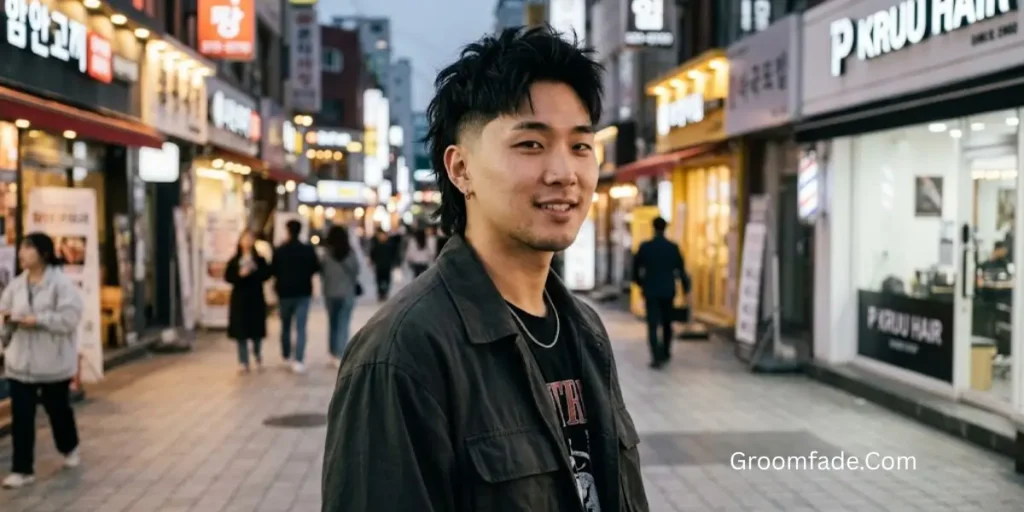
A taper is a softer choice.
Instead of fading a large area of the sides, the barber gradually shortens the hair around the temples and sideburns.
This allows more natural hair to remain around the sides and can make the mullet feel less dramatic.
Asian Mullet With Temple Fade
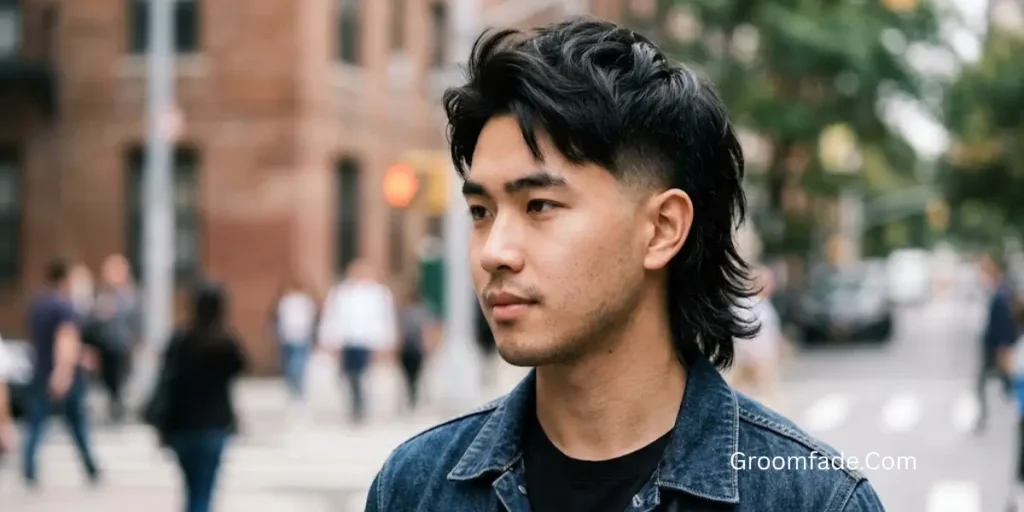
A temple fade focuses on the hair around the temples rather than fading the entire side.
It can clean up the front and sides while leaving more weight elsewhere.
This is useful if you want some contrast but do not want a full fade.
How to Choose the Right Asian Mullet
Choosing an asian mullet hairstyle is easier when you think about your actual hair and routine instead of choosing a style only because it looks good in a photo.
A reference picture shows one person’s hair, face, density, and styling. Your barber may need to adjust the same design to fit your own features.
Consider Your Hair Texture
Start with your natural texture.
Straight hair may need added texture or layers. Wavy hair already has movement. Curly hair needs extra attention to shrinkage and curl pattern.
If you use heat or styling products every day to recreate a reference photo, consider whether the haircut can work with your natural texture instead.
Think About Your Face Shape
The length and volume of a mullet can be adjusted to change the balance of the haircut.
For example, more volume on top can create a different visual balance from a style that keeps the top flat and the back longer.
You do not need to follow strict face-shape rules. The more useful approach is to consider where you want volume and where you want the hair to sit close to the head.
Choose the Right Back Length
The back is one of the most important parts of a mullet.
If you want a subtle style, keep the back moderately longer than the sides.
If you want a stronger mullet shape, more length can create greater contrast.
Tell your barber how much length you are comfortable keeping. If you are growing the back out, say so before the haircut begins.
Decide How Much Contrast You Want
A low taper and a longer back create a softer appearance.
A high fade with a long back creates much more contrast.
Think about where you want the haircut to stand out. You can have a noticeable mullet without shaving the sides down to the skin.
Consider Your Daily Styling Time
Some mullets look good with very little styling, while heavily textured versions may need more work.
If you usually spend only a few minutes on your hair, choose a shape that works with your natural texture.
If you enjoy blow-drying and styling, you can choose a more layered or voluminous cut.
How to Ask Your Barber for an Asian Mullet
A clear explanation can make your haircut much easier to get right.
Instead of only saying, “I want an Asian mullet,” explain the important parts of the cut.
You could say:
“I want a modern Asian mullet with shorter sides, layered texture on top, and more length at the back. Keep the back long enough to show the mullet shape, but make the transition look natural.”
Then explain the details you prefer.
Tell your barber:
- How short you want the sides
- Whether you want a taper or fade
- How much length you want at the back
- Whether you want a fringe or middle part
- How much texture you want
- Whether you want a soft or strong contrast
- How much time you spend styling your hair
A reference photo is also useful. Try to show a picture with a similar hair texture and length to yours.
What to Tell Your Barber About Thick Asian Hair
If your hair is thick, mention where it feels heavy.
You can say:
“My hair is thick, so please control the weight around the sides and top, but keep enough fullness for the mullet shape.”
This gives the barber more useful information than simply asking for “thinning.”
What to Tell Your Barber About Straight Asian Hair
For straight hair, explain whether you want a clean shape or a more textured finish.
For example:
“I want the top and back layered enough to create movement, but I do not want the hair to look too thin.”
The barber can then decide how much weight to remove based on your actual density.
How to Style an Asian Mullet
The styling method depends on your hair texture and the look you want.
You do not need several products to style a good mullet. Start with a small amount and add more only when necessary.
Start With Damp Hair
After washing, gently towel-dry your hair.
Do not rub the hair aggressively because this can increase frizz, especially if your hair is wavy or curly.
At this stage, decide where you want the fringe or middle part to sit.
For a more relaxed and layered appearance, the Shag Mullet adds texture and movement through the top, sides, and back.
Add Volume and Texture
If your hair is straight and flat, a small amount of sea salt spray can help create texture.
Apply it mainly where you want movement. Avoid soaking the hair with product.
For a fluffy style, use a blow dryer while lifting the roots with your fingers.
Shape the Fringe or Front
The front can completely change the appearance of the haircut.
For a textured fringe, separate a few sections with your fingers.
For a middle part, guide the front sections away from the center and let them fall naturally.
Do not force a part that your hair does not naturally support unless you are willing to style it each day.
Style the Back
The back should keep its natural length and movement.
Use your fingers to separate the layers instead of pressing everything flat.
For a messy mullet, allow some pieces to sit at different angles.
For a cleaner style, use a small amount of matte cream or clay to control the ends.
Finish With a Light-Hold Product
A matte styling cream, clay, or texture powder can help keep the shape.
Use a small amount first.
Too much product can make straight Asian hair heavy and reduce the volume you worked to create.
If your hair is curly or wavy, a lightweight curl product may be more suitable than a heavy clay.
How to Maintain an Asian Mullet
A mullet changes as it grows, so maintenance is mostly about keeping the shape balanced.
How Often Should You Get an Asian Mullet Trimmed?
There is no single schedule that works for everyone.
If you have a fade or sharp taper, the sides may need attention sooner because short areas show growth quickly.
A softer, longer mullet can usually go longer between shape-ups.
When you visit the barber, explain whether you are maintaining the current length or trying to grow the back.
Keep the Layers Looking Clean
Layers can lose their shape as the hair grows.
Ask your barber to maintain the basic structure rather than cutting the back shorter every time.
If you are growing the mullet, regular small adjustments can help the sides and top stay controlled while the back gains length.
Prevent Flatness
Straight Asian hair can sometimes fall flat because of its weight.
Try blow-drying the roots upward instead of applying a large amount of product.
A lightweight texture spray can also provide movement without making the hair greasy.
A less traditional variation is the Reverse Mullet, which changes the usual length pattern to create a noticeably different silhouette.
Avoid Excessive Heat
Frequent high-heat styling can make hair dry and brittle.
If you regularly use a blow dryer, straightener, or curling tool, use sensible heat settings and avoid keeping the tool in one place for too long.
Hair that is already damaged may not hold the same shape or texture as healthy hair.
Asian Mullet vs Other Modern Haircuts
Several current hairstyles can look similar to an Asian mullet. Understanding the differences can help you explain what you actually want.
Asian Mullet vs Wolf Cut
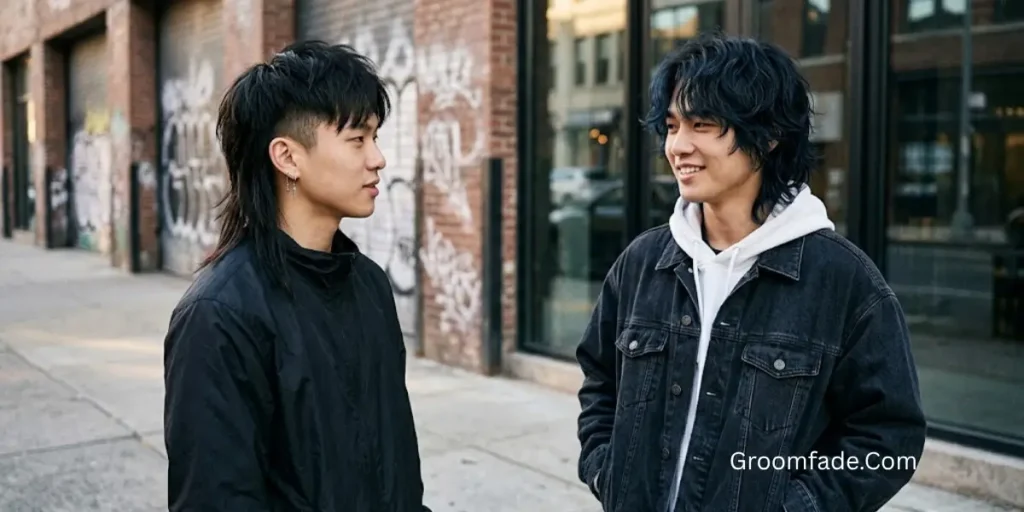
A wolf cut usually has more layers throughout the hair and can create a fuller, more uneven shape around the top and sides.
A mullet places more emphasis on the shorter sides and longer back.
There can be overlap between the two, which is why some hairstyles are described as wolf mullets.
Asian Mullet vs Two-Block Haircut
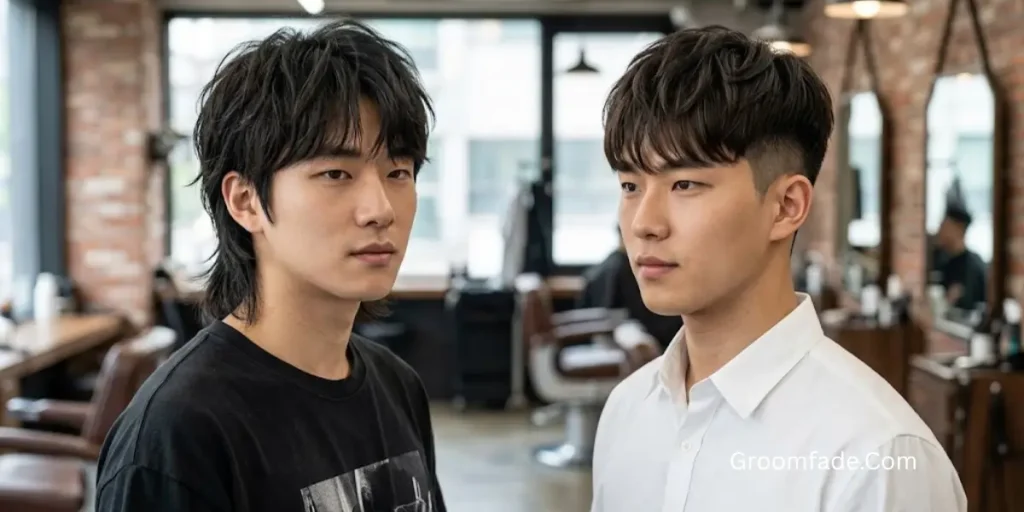
A two-block haircut usually separates the shorter lower section from the longer upper section.
An Asian mullet adds a longer back to that basic structure.
A two-block can therefore become part of a mullet design, but the two terms do not always describe the same haircut.
Asian Mullet vs Shag Mullet
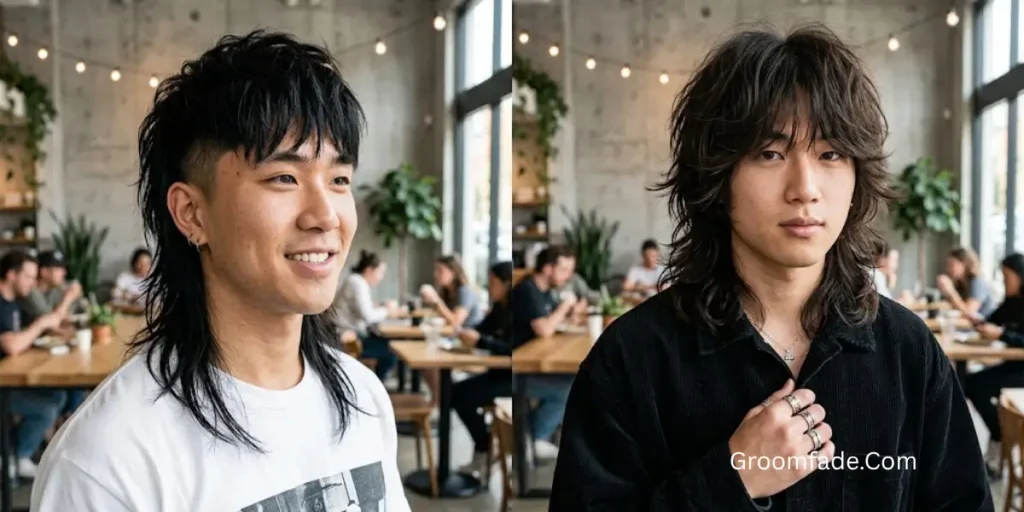
A shag mullet generally uses more visible layers and a loose, textured finish.
The haircut can have a softer transition between the top, sides, and back.
A standard modern mullet can be cleaner and more controlled, especially when paired with a taper or fade.
Asian Mullet vs Taper Mullet
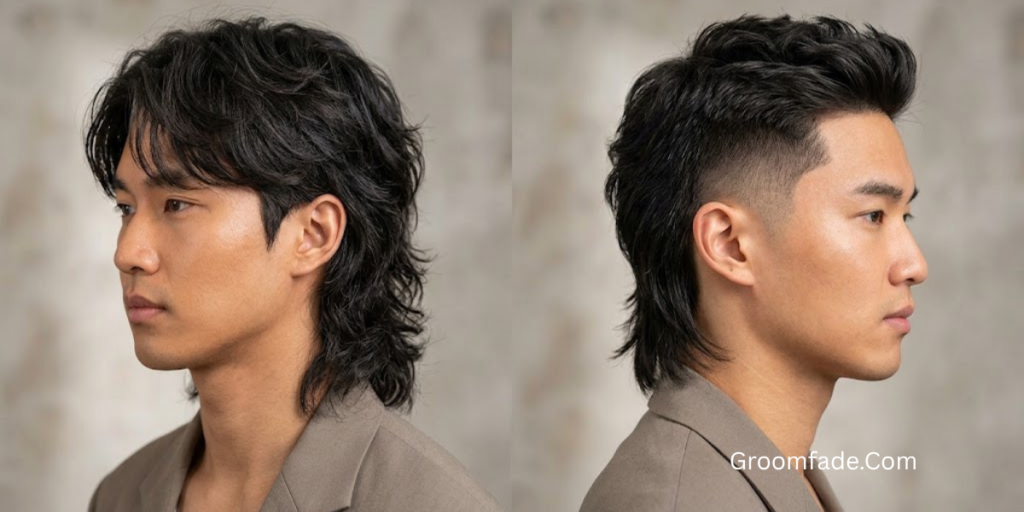
A taper mullet specifically uses a taper around areas such as the temples and sideburns.
An Asian mullet can use a taper, fade, or longer natural sides.
So a taper mullet is better understood as one variation of the broader mullet style.
Common Asian Mullet Mistakes
Even a good haircut can look different from the reference if the proportions are wrong.
Cutting the Back Too Short
If the back is cut too short, the mullet shape may disappear.
If you are trying to grow it, tell your barber before the haircut starts.
Making the Sides Too Heavy
Thick hair can make the sides look bulky.
A good haircut should control that weight without removing so much hair that the shape becomes thin.
Removing Too Much Top Length
The top provides much of the volume and texture.
Cutting it too short can make it difficult to create the layered look you wanted.
Ignoring Natural Hair Texture
A haircut designed for straight hair may behave differently on curly or wavy hair.
Your barber should consider how your hair looks when it is dry and in its natural state.
Using Too Much Styling Product
More product does not always mean better hold.
Heavy amounts can flatten fine or straight hair and make the hairstyle look greasy.
Start small and add more only if needed.
FAQs About Asian Mullet Hairstyles
Q1. What is an Asian mullet hairstyle?
An Asian mullet hairstyle is a haircut with shorter sides and a longer back, often combined with layers, texture, a fringe, taper, or fade. The length and shape can be adjusted for straight, thick, wavy, or curly hair.
Q2. Is a mullet good for Asian hair?
Yes. An Asian mullet can work well with many hair textures. Straight and thick hair can create a strong layered shape, while wavy or permed hair can add natural movement. The haircut should be adjusted to the person’s actual hair texture and density.
Q3. What is the best Asian mullet for straight hair?
A layered modern mullet, textured fringe mullet, middle part mullet, or short Asian mullet can work well with straight hair. The best choice depends on the hair’s thickness and how much styling you want to do.
Q4. Is a short Asian mullet easy to maintain?
A short Asian mullet can be easier to manage than a long version because there is less length at the back. However, a fade or sharp taper may require regular trims to keep the sides looking clean.
Q5. What is an Asian middle part mullet?
An Asian middle part mullet combines a center-parted front with shorter sides and a longer back. The top and back are usually layered so the middle part connects naturally with the mullet shape.
Q6. Can Asian hair have a curly or permed mullet?
Yes. A perm can add waves or curls to naturally straight hair, while naturally wavy or curly hair can create texture without chemical treatment. The final length should account for curl shrinkage.
Q7. What face shape suits an Asian mullet?
An Asian mullet can be adjusted for many face shapes. Instead of following one fixed rule, consider where you want volume, how long you want the back, and how the fringe or front sections frame your face.
Q8. How long should the back of an Asian mullet be?
There is no required length. A short back creates a subtle mullet, while a longer back creates more contrast. Your barber can adjust the length based on your hair texture and the style you want.
Q9. How do I ask my barber for an Asian mullet?
Explain the length you want on the back, the amount of hair you want removed from the sides, and whether you prefer a taper, fade, fringe, or middle part. Bring a reference photo whenever possible.
Q10. How often should an Asian mullet be trimmed?
The timing depends on the haircut. Fades and sharp tapers usually need more frequent maintenance, while longer and softer mullets can be allowed to grow for longer between trims.