
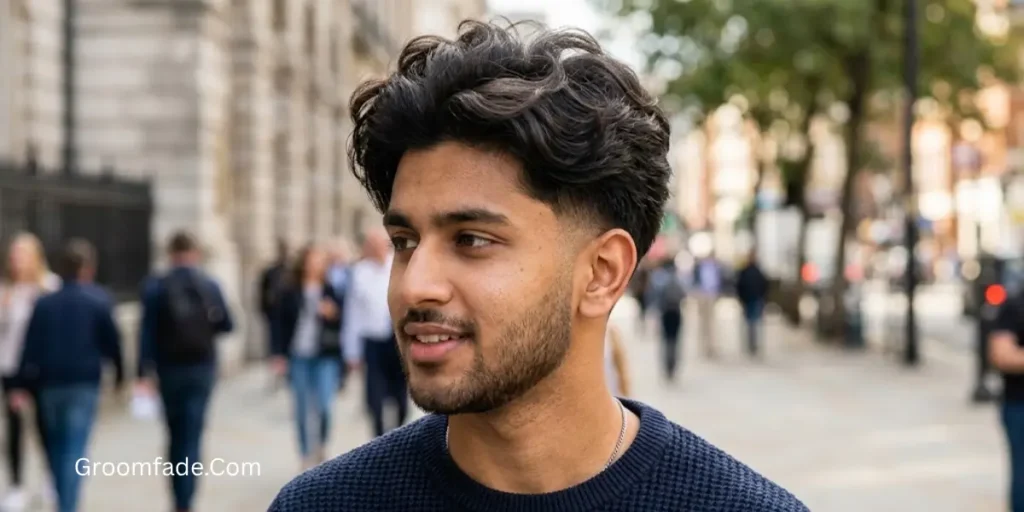
Low taper fluffy hair combines clean, tapered sides with a fuller, soft-looking top. The taper stays low around the temples and neckline, while the hair on top keeps enough length to create volume, texture, and movement.
This haircut works with straight, wavy, and curly hair. The final shape depends on your hair length, density, texture, and styling method. You can wear the top messy and relaxed or shape it into a fluffy fringe, textured top, blowout, or middle part.
The key is balance. The taper should clean up the lower sides without taking away too much of the natural fullness that makes fluffy hair look good.
What Is Low Taper Fluffy Hair?
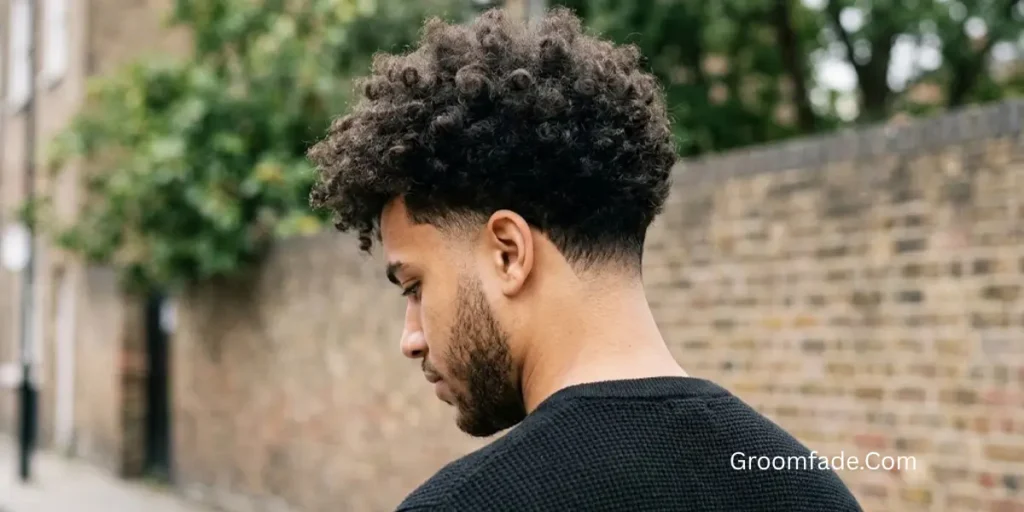
Low taper fluffy hair is a men’s haircut that pairs a low taper fade with longer, voluminous hair on top. Instead of fading the sides high toward the temples, the taper is kept close to the lower sides and neckline.
The top is left longer and styled to create a soft, lifted appearance. It can have natural texture, loose waves, curls, or a straight finish with added volume.
A low taper is different from a full high fade because most of the side hair remains intact. This gives the haircut a softer transition and makes it easier to keep a fluffy shape.
The fluffy effect usually comes from three things:
- Enough length on top
- Lift at the roots
- A lightweight styling product
Your natural hair type also matters. Thick hair often has natural fullness, while fine hair may need a blow dryer and a light texture product to create more body.
For a clean finish around the temples, Temple Fade Hairstyle options keep the sides neat while leaving enough length on top for different styles.
Why Is the Low Taper Fluffy Hair Style Popular?
The style gives you a clean haircut without making the whole head look very short. The low taper keeps the temples, sideburns, and neckline neat, while the top provides most of the personality.
It is also flexible. The same basic haircut can be shaped in several ways depending on your hair texture and personal style.
You can wear it with:
- A fluffy top
- A textured fringe
- A messy finish
- A blowout
- A middle part
- Natural waves
- Loose curls
- Straight hair with added volume
Another benefit is that the haircut does not depend on one exact styling method. You can make the top more structured for a neat look or leave it loose for a casual appearance.
Low Taper vs Low Taper Fade for Fluffy Hair
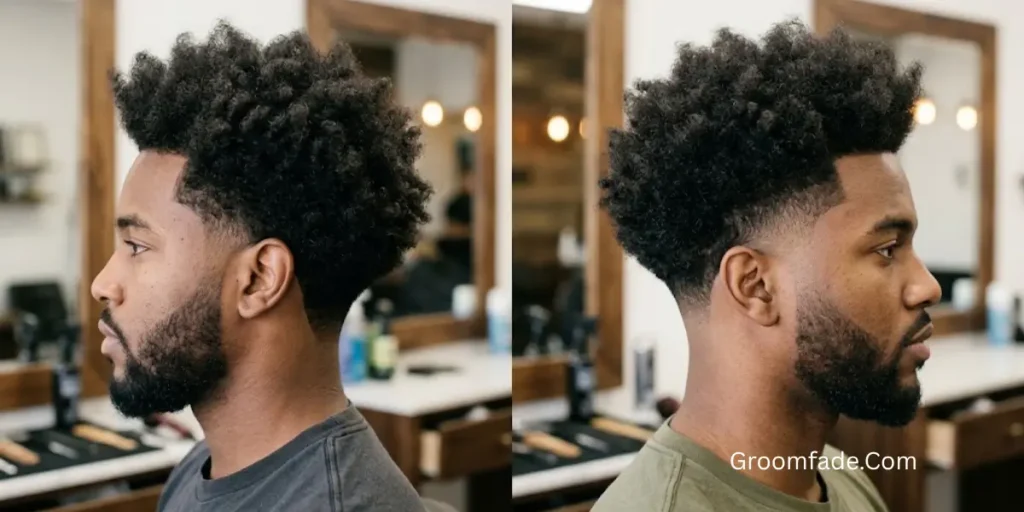
A taper gradually shortens the hair around specific areas, usually the temples and neckline. A low taper fade can create a more visible transition from shorter to longer hair.
Barbers and clients sometimes use these terms differently, so it helps to show a reference photo. The important part is explaining how low you want the taper and how much length you want to keep on top.
Low Taper Fluffy Top vs Fluffy Fringe
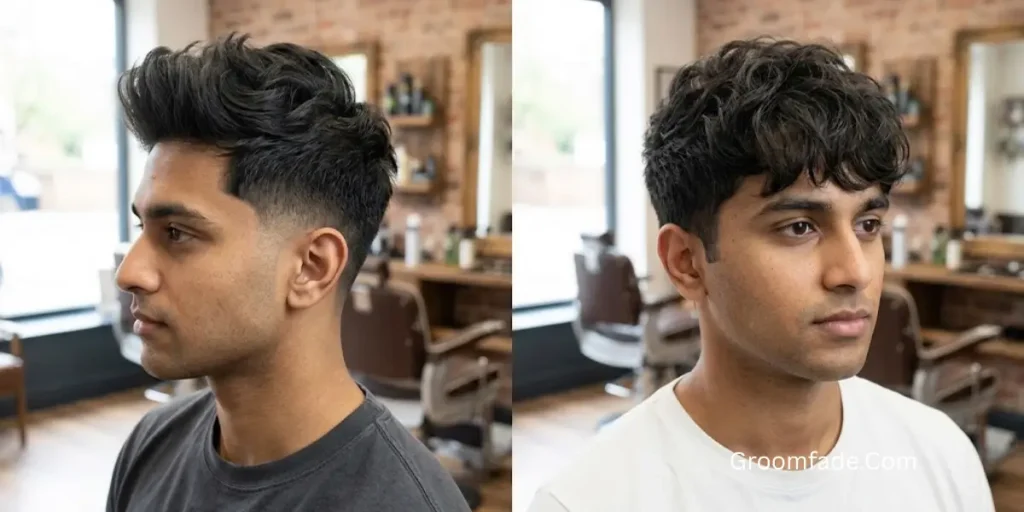
A fluffy top spreads volume across more of the upper head. A fluffy fringe puts more attention toward the front.
If you want your forehead partly covered, a fluffy fringe may suit your goal. If you want volume throughout the top, ask for a fuller textured top instead.
Best Low Taper Fluffy Hair Styles
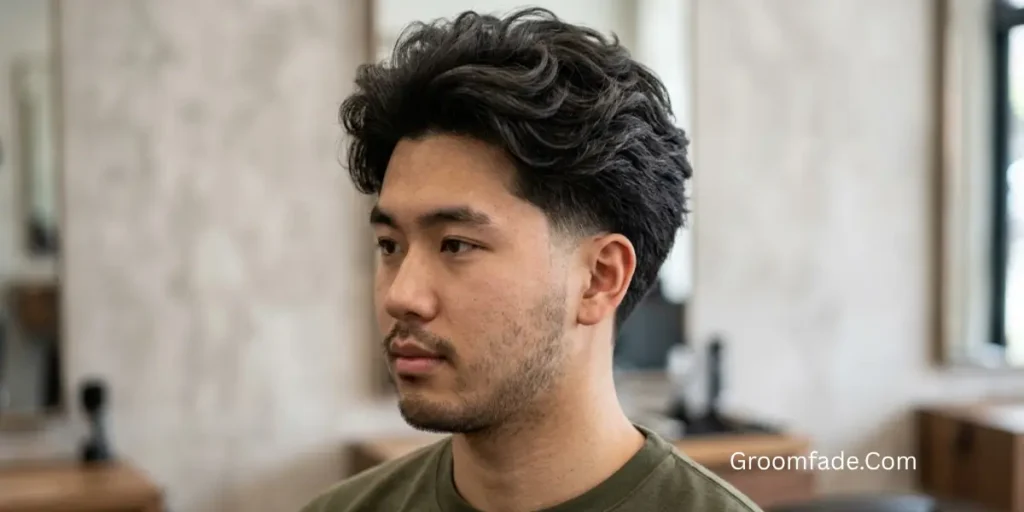
There are many ways to shape the top while keeping the same low taper foundation. Your hair length and natural texture will determine which version is easiest to maintain.
Best Low Taper Fluffy Hair Styles
The low taper gives you a clean foundation, but the top can be styled in many different ways. The right version depends on your hair texture, length, thickness, and how much time you want to spend styling it.
Classic Low Taper With Fluffy Hair
The classic low taper with fluffy hair keeps the sides and neckline clean while leaving the top full and natural. The taper stays low around the temples, so the haircut does not create a sharp change between the sides and the longer hair above them.
The top usually has enough length to create movement when blow-dried. You can wear it slightly forward, pushed back, or with a loose side direction. The goal is not to make every strand sit perfectly. A little natural movement helps create the soft fluffy appearance.
This style works especially well for men with medium to thick hair. If your hair is straight, use a blow dryer to lift the roots. For naturally wavy hair, a lightweight cream can help keep the texture soft without making it look greasy.
What to tell your barber: Ask for a low taper around the temples and neckline, keep good length on top, and add light texture if your hair is very thick.
Low Taper Fluffy Top
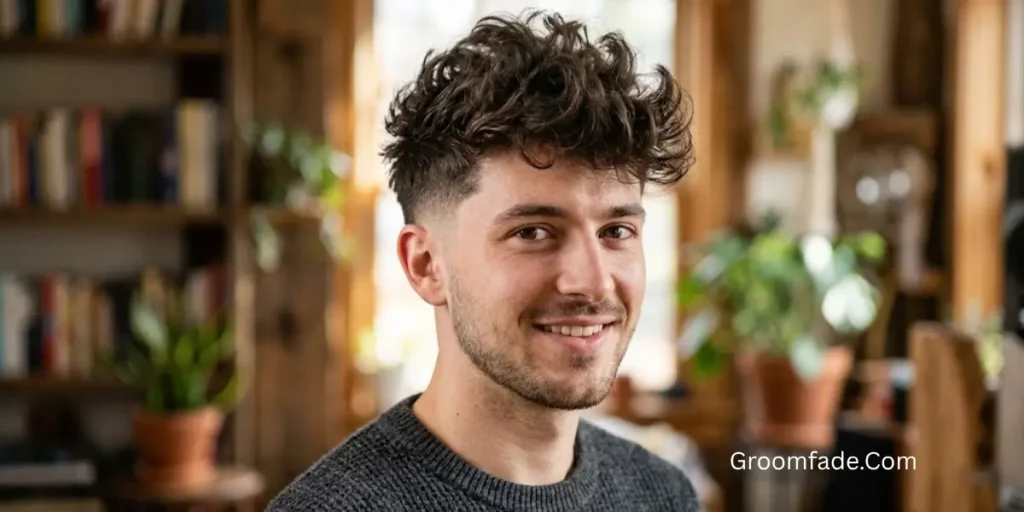
The low taper fluffy top puts most of the attention on volume across the upper part of the head. The front, middle, and crown can all have a soft lift rather than sitting flat against the scalp.
This version is useful if you want a modern haircut without a strong fade. The low taper keeps the lower sides tidy, while the fuller top creates contrast in a more relaxed way.
Hair length is important here. If the top is cut too short, there may not be enough hair to create the fluffy shape. Medium-length hair generally gives you more control over the amount of volume.
For styling, start with damp hair and blow-dry the roots upward. Once the hair is dry, use your fingers to separate the top. A small amount of matte paste can add definition without making the hair stiff.
Men who prefer a softer blend can consider the Shadow Fade Haircut. It keeps some length through the fade, creating a smoother transition on the sides.
Low Taper Fluffy Fringe
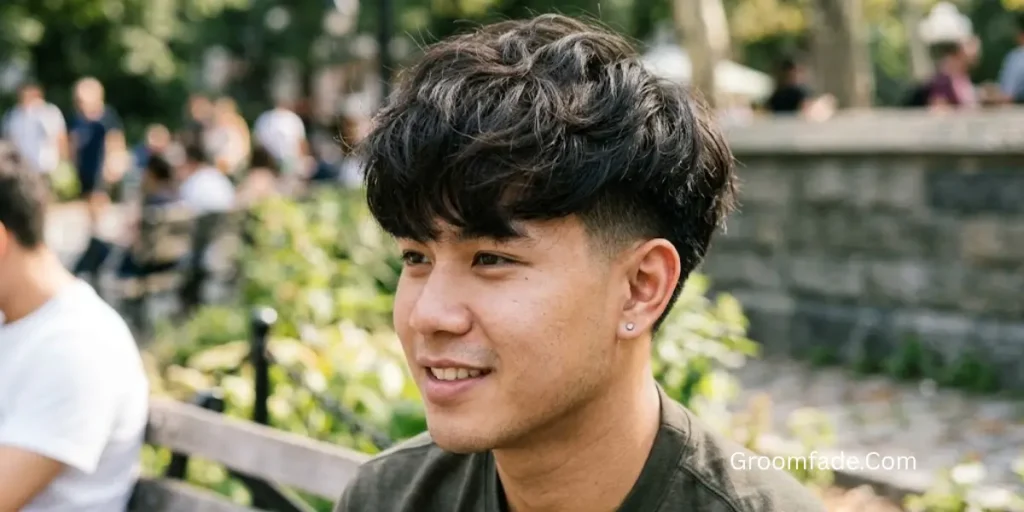
A fluffy fringe brings the front section forward instead of pushing all the hair away from the face. The fringe can sit loosely over the forehead while the roots remain lifted.
The style can be neat or slightly messy. A softer fringe works well when you want the haircut to look casual rather than heavily styled.
The length of the fringe should match your natural hair movement. Straight hair may need some blow-drying to create volume, while wavy hair can often be shaped with a small amount of styling cream.
If you have a strong natural cowlick at the front, tell your barber before the cut. The barber can adjust the length and direction of the fringe instead of forcing the hair into a shape it does not naturally follow.
Low Taper With Textured Fluffy Hair
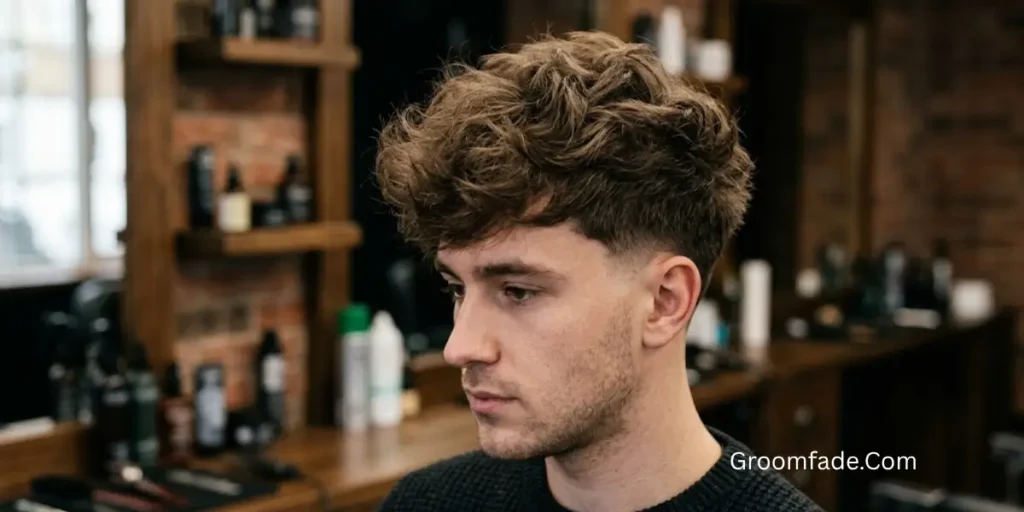
Textured fluffy hair has separation between sections rather than one large block of volume. The low taper keeps the lower sides clean while the top has a loose, broken-up texture.
This version is a good match for medium or thick hair because added texture can reduce some of the visual bulk. Your barber can use point cutting or another suitable cutting technique to create movement while keeping enough length for volume.
For styling, use a small amount of matte paste or texture cream. Work the product through the top with your fingers instead of coating the hair heavily.
The finished style should have movement. If the product makes the hair hard or shiny, reduce the amount you use.
Low Taper Fluffy Blowout
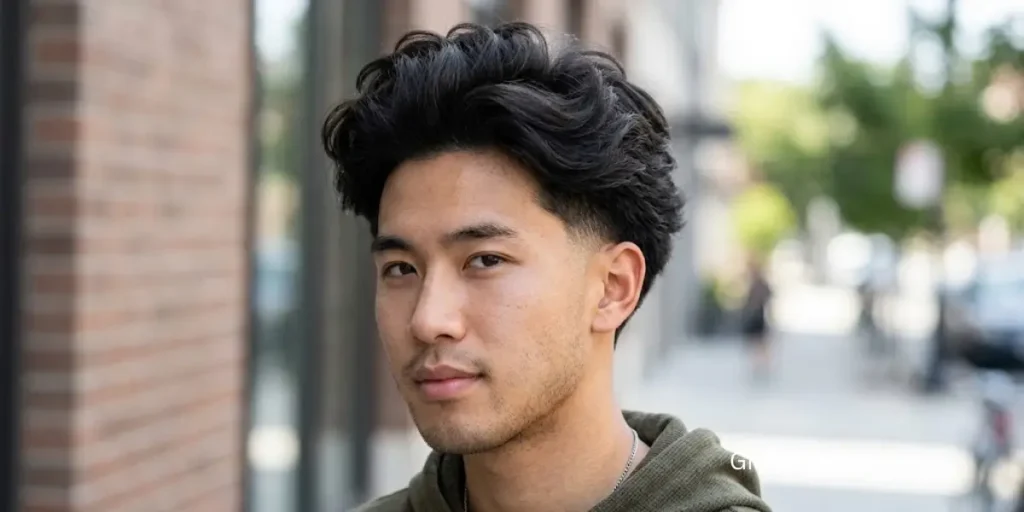
A low taper fluffy blowout puts more emphasis on height and movement. The top is blow-dried upward and slightly away from the head, creating a fuller shape around the front and crown.
Unlike a very dramatic blowout, this version can be kept moderate and easy to wear every day. You can control the height by changing the direction of the blow dryer.
Start with damp hair and use a vent brush or your fingers to lift the roots. Blow-dry from the roots toward the direction you want the hair to sit. Once dry, use a light styling product to hold the shape.
This style is especially useful for straight or slightly wavy hair that tends to sit flat. Thick hair can also work well, although some weight may need to be removed during the haircut.
Low Taper With Messy Fluffy Hair
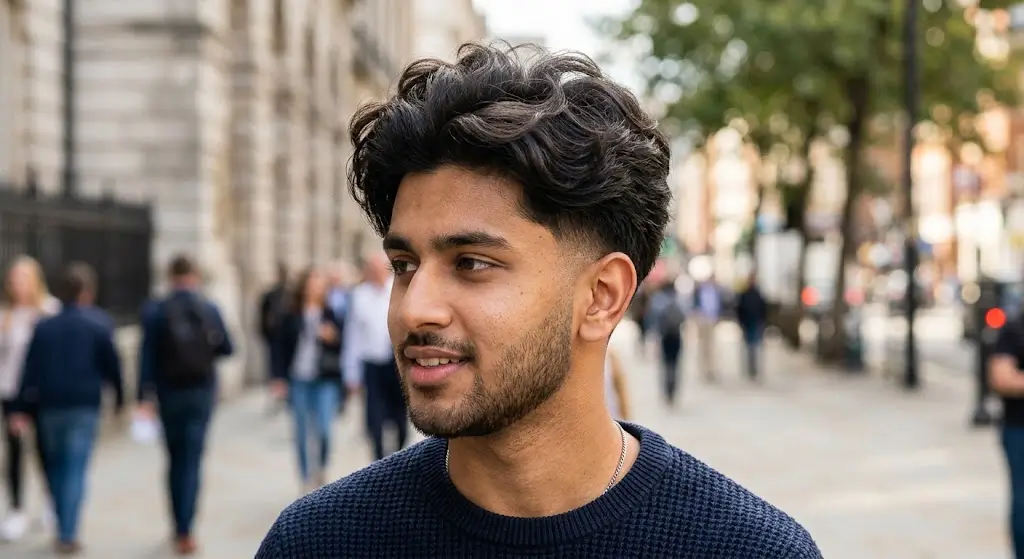
Messy fluffy hair is designed to look relaxed rather than perfectly arranged. The top has volume and texture, but the strands do not all point in the same direction.
The low taper gives the haircut a clean outline, which helps the messy top look intentional instead of unkempt.
This style works well for men who do not want to spend a long time styling their hair. After washing, towel-dry the hair and apply a small amount of lightweight product. Use your fingers to push the hair into place while it dries.
Avoid repeatedly brushing the top. Finger styling usually keeps more natural texture and gives the messy finish a softer appearance.
Low Taper Fluffy Middle Part

A fluffy middle part divides the top around the center and creates volume on both sides. The low taper keeps the temples and neckline tidy while the longer top provides enough length for the part.
This haircut generally needs more length than a short fluffy top. If the hair is too short, the center part may not stay in place.
To style it, create the part while the hair is damp. Blow-dry each side away from the center while lifting the roots. Once dry, use your fingers to soften the shape.
Straight and wavy hair can both work with this style. Wavy hair will usually create a more relaxed part, while straight hair can produce a cleaner separation.
For a more structured shape, the Box Fade gives the haircut sharper edges and a defined outline around the sides and top.
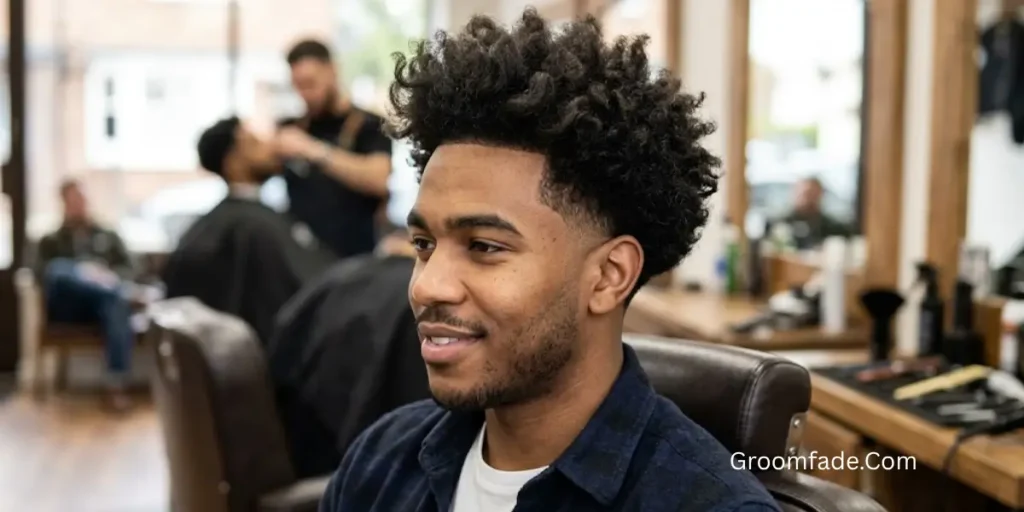
Low Taper With Curly Fluffy Hair

Curly hair can create natural volume, making it a strong option for a fluffy low taper. The taper cleans up the temples and neckline while the curls remain full on top.
The main concern is keeping enough length for the curls to form properly. Cutting the top too short can reduce the overall volume and change the curl pattern.
Tell your barber that you want to keep the natural curl shape. If your curls are dense, the barber can remove some weight while preserving enough length for the top to remain full.
At home, use a curl-friendly product such as a lightweight curl cream. Avoid aggressively brushing dry curls because this can separate the curl pattern and create unwanted frizz.
Low Taper With Wavy Fluffy Hair
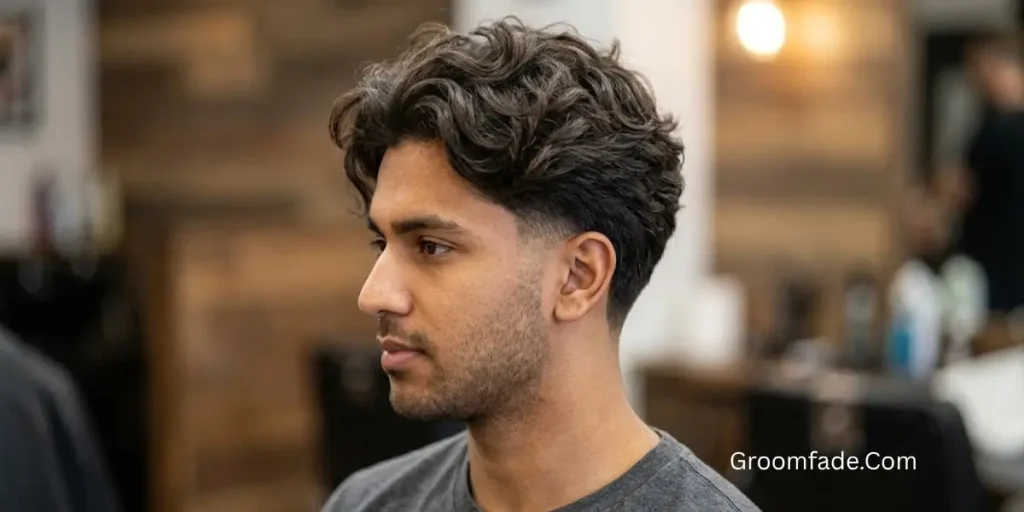
Wavy hair naturally gives a fluffy haircut texture and movement. The low taper keeps the lower sides neat while the waves provide volume across the top.
This combination can look good with a loose fringe, textured top, or slightly pushed-back style. The best option depends on where your waves naturally sit.
A lightweight styling cream or mousse can help shape the waves. If you use a blow dryer, moderate airflow can create extra lift without completely removing the natural pattern.
For a softer finish, allow the hair to dry naturally after applying product. For more volume, lift the roots while blow-drying.
Low Taper With Straight Fluffy Hair
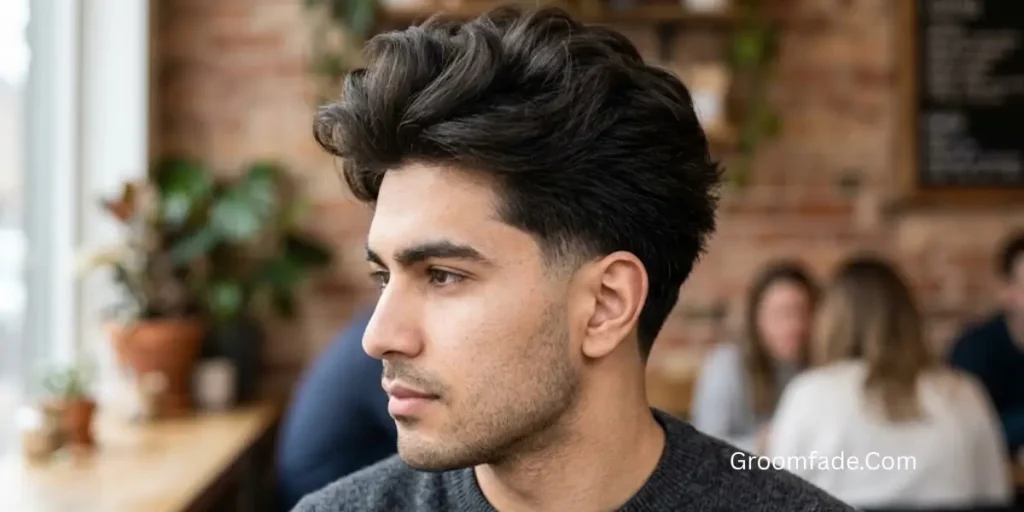
Straight hair can also create a fluffy look, but it often needs more help at the roots. Simply adding more product is not always the answer because heavy products can make straight hair fall flat.
The haircut should leave enough length on top for movement. During styling, focus the blow dryer at the roots and lift the hair with your fingers or a brush.
A small amount of sea salt spray can add grip before blow-drying. Texture powder can also help after the hair is dry, especially if the hair is fine.
Keep the amount of product low. The goal is volume and movement, not a stiff hairstyle.
Low Taper Fluffy Hair With Longer Top
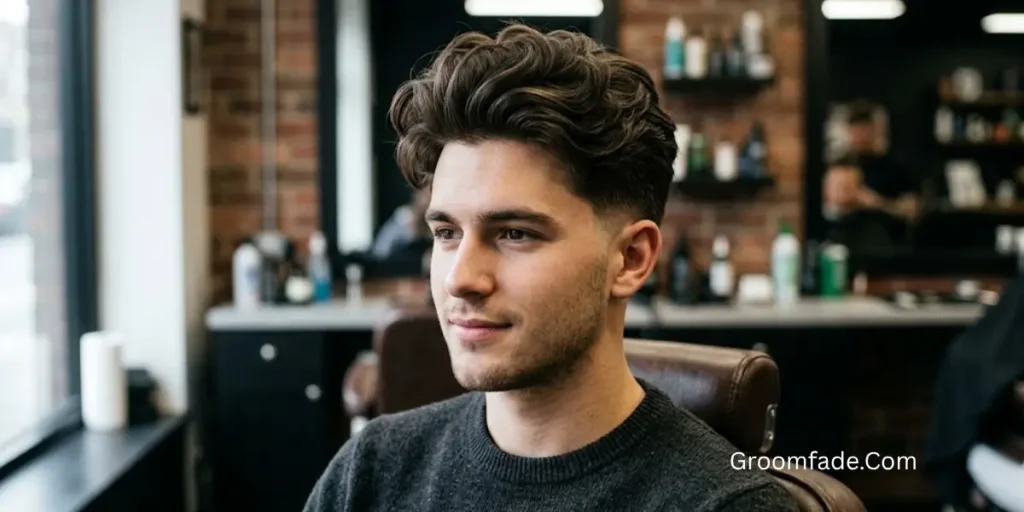
A longer top gives you more styling choices. You can switch between a fluffy fringe, middle part, textured top, loose side style, or casual pushed-back look.
This version suits men who enjoy changing their hairstyle instead of wearing the same shape every day. However, longer hair requires more styling and may need more time in the morning.
Ask your barber to preserve the length while cleaning up the sides. If the top is thick, controlled weight removal can make styling easier without sacrificing volume.
At home, use a blow dryer to guide the longer sections. A lightweight cream can provide control while keeping the hair flexible.
Low Taper Fluffy Hair With Short Top
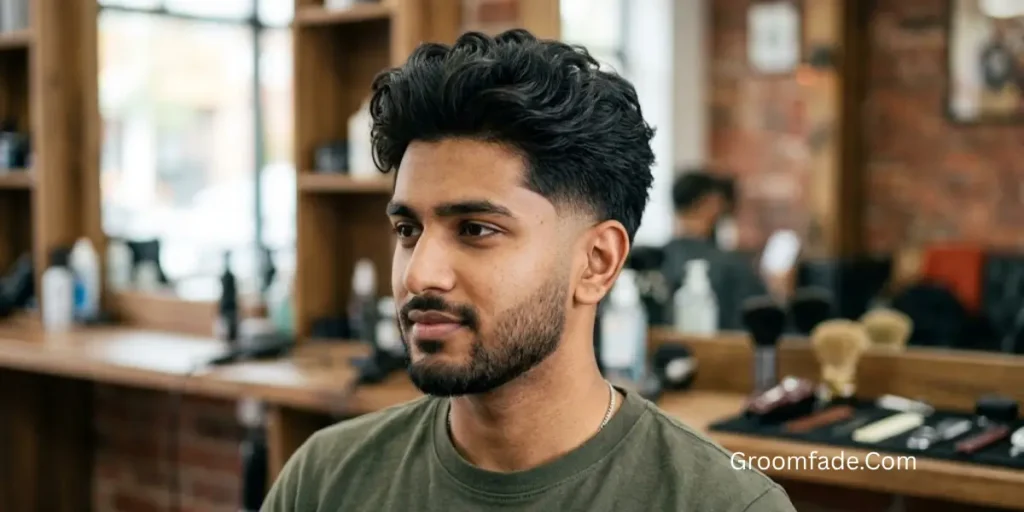
A short fluffy top is easier to maintain and takes less time to style. The key is leaving enough length for the hair to lift and move.
This version can work well for men who want the fluffy look without committing to medium or long hair. The low taper also keeps the haircut neat around the temples and neckline.
A small amount of matte paste can create texture. For fine hair, a volumizing mousse or texture powder may provide more lift without adding much weight.
If your hair naturally lies flat, ask your barber to keep enough length at the roots rather than cutting the top extremely short.
Low Taper Fluffy Hair by Hair Type
Your hair type has a major effect on how the haircut looks and how much styling it needs. The same low taper can produce very different results on straight, wavy, curly, thick, and fine hair.
Low Taper Fluffy Hair for Straight Hair
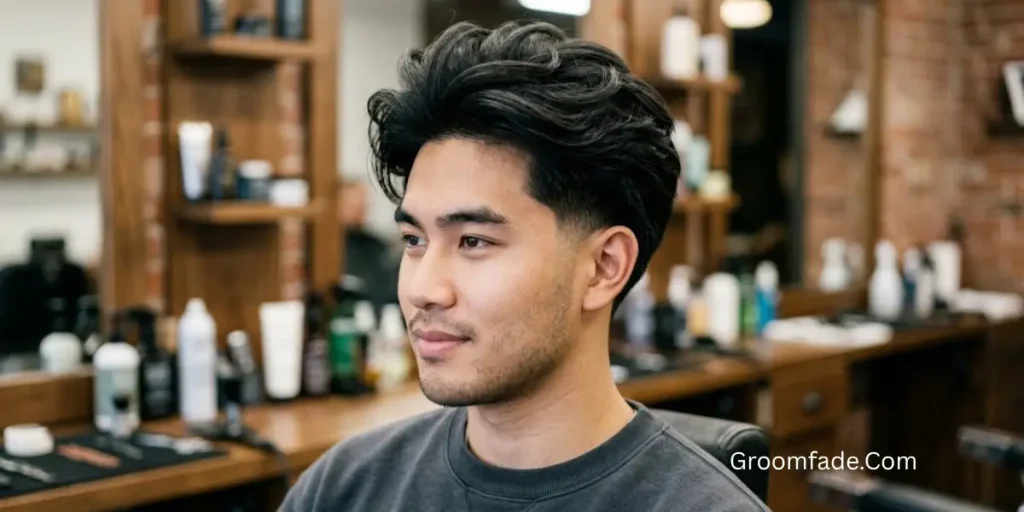
Straight hair usually needs the most help when creating a fluffy shape. Because the strands naturally fall in a similar direction, the top can lose volume if it is too long, too heavy, or coated with a heavy product.
Start with slightly damp hair and apply a small amount of lightweight mousse or sea salt spray. Blow-dry the roots upward while using your fingers or a brush to guide the top.
Pay attention to the front because it often determines the overall shape. Once the hair is dry, add a small amount of matte paste or texture powder if more separation is needed.
For very straight and fine hair, avoid heavy pomades and oily products. They can weigh the strands down and make the top appear flatter.
Low Taper Fluffy Hair for Wavy Hair
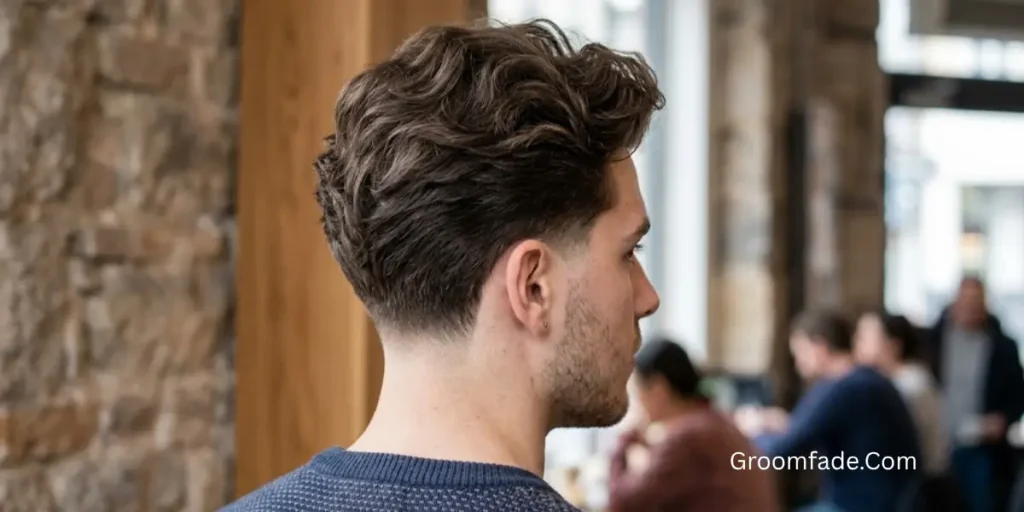
Wavy hair naturally provides movement, so you usually do not need to force a lot of volume into the style.
The main goal is to enhance the natural wave without making the hair heavy. A lightweight styling cream or mousse can help control frizz while keeping the wave pattern visible.
After washing, gently towel-dry the hair rather than rubbing it aggressively. Apply your styling product and shape the top with your fingers.
You can let it air-dry for a softer finish or use a diffuser when you want more volume. Avoid repeatedly brushing the hair after it dries because this can break up the wave pattern.
Low Taper Fluffy Hair for Curly Hair
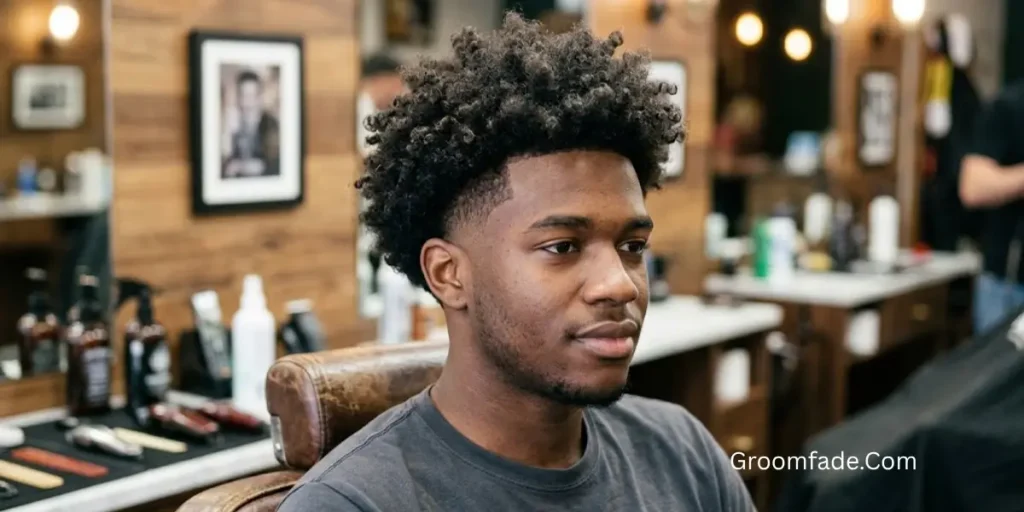
Curly hair can create a full and textured fluffy top with relatively little effort. The low taper provides contrast by keeping the temples and neckline cleaner while the curls remain longer above.
The top should have enough length for the curls to form. Your barber should also consider shrinkage because curly hair can look much shorter once it dries.
A curl cream or lightweight leave-in product can help with moisture and definition. Apply the product while the hair is damp, then allow the curls to dry naturally or use a diffuser.
Do not judge the required top length only by how the hair looks when wet. Your barber should consider how much the curls shrink after drying.
A longer shape toward the back creates a different take on tapered sides. The Ducktail Haircut uses that length to form a distinctive tapered point at the rear.
Low Taper Fluffy Hair for Thick Hair
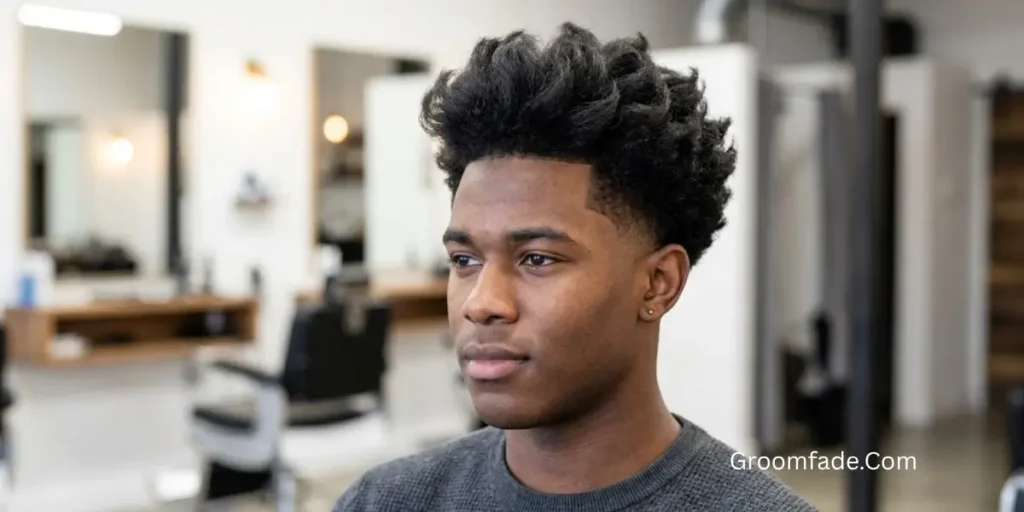
Thick hair already has strong natural volume, but too much density can make the haircut difficult to shape.
A good cut should control the bulk without removing so much hair that the top loses its fluffy appearance. Your barber may use texture or weight removal in selected areas based on the hair’s density.
At home, use a product that gives control without making the hair greasy. Matte paste, styling cream, or a light clay can work depending on how much hold you need.
If your hair becomes too wide at the sides, discuss the shape with your barber. The goal is to keep the top full while maintaining a balanced outline.
Low Taper Fluffy Hair for Fine or Thin Hair
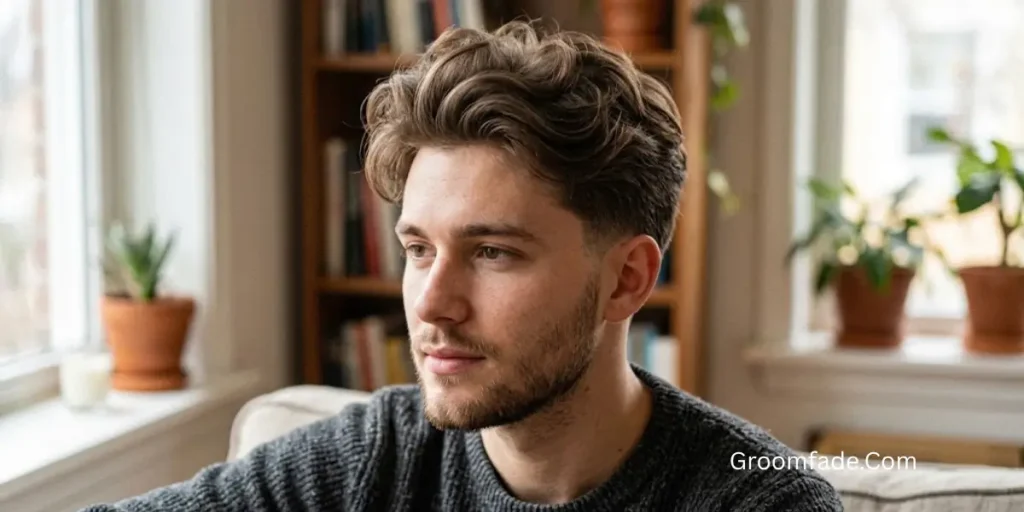
Fine hair has a smaller strand diameter, so too much product or excess length can make it look flat. The styling approach should focus on creating lift without adding heavy weight.
Start with a volumizing mousse or light sea salt spray. Blow-dry the roots while lifting the hair. Once dry, a small amount of texture powder can add grip and make the hair easier to shape.
The haircut also matters. Keeping moderate length on top can give you enough hair to create volume without allowing excessive weight to pull it down.
If your hair is thinning rather than naturally fine, avoid aggressive thinning techniques unless your barber has a specific reason for using them. A simple, well-shaped cut can often give a cleaner appearance.
Low Taper Fluffy Hair for Medium-Texture Hair
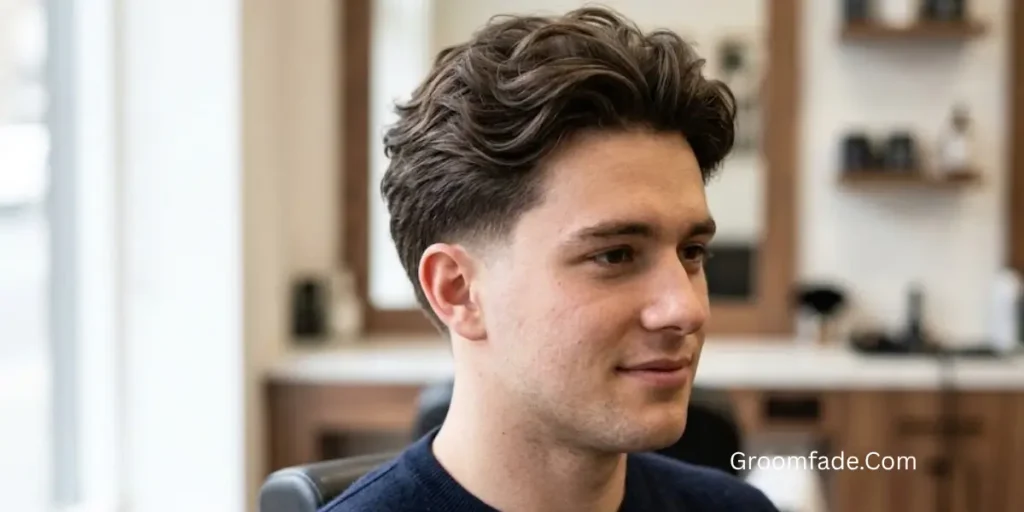
Medium-texture hair often gives you a good balance between volume and control. It can usually support a fluffy top without requiring a large amount of product.
You can choose between a textured top, fringe, middle part, or loose blowout depending on the length.
For everyday styling, a small amount of cream or matte paste is often enough. Blow-dry when you want extra volume and let the hair air-dry when you prefer a softer finish.
How to Get Fluffy Hair With a Low Taper
To get fluffy hair with a low taper, keep enough length on top, use a lightweight styling product, and create lift at the roots while blow-drying.
A simple routine is:
- Wash or lightly dampen your hair.
- Apply a small amount of lightweight styling product.
- Blow-dry the roots upward.
- Shape the front with your fingers or a brush.
- Add a small amount of texture product.
- Finish without flattening the hair.
The haircut provides the foundation, but the styling technique creates most of the fluffy appearance.
How to Style Low Taper Fluffy Hair at Home
You do not need a complicated routine. A few basic tools can make a noticeable difference.
What You Need
Useful options include:
- Blow dryer
- Vent brush or small round brush
- Sea salt spray
- Styling cream
- Hair mousse
- Texture powder
- Matte paste
You do not need every product. Start with one or two that suit your hair type.
Step-by-Step Styling Method
Start with slightly damp hair. If your hair is very wet, towel-dry it first.
Apply a small amount of product through the top. Focus on the roots if you need more lift.
Use the blow dryer while lifting the hair with your fingers. For straight hair, direct the airflow upward from the roots. For wavy or curly hair, use gentler airflow to avoid disturbing the natural pattern.
Once the hair is dry, shape it with your fingers. Add a small amount of matte paste or texture powder if more separation is needed.
The final style should still move naturally. If the hair feels hard or greasy, you have probably used too much product.
How to Keep Fluffy Hair From Looking Greasy
Use less product than you think you need. Add more only if necessary.
Choose lightweight formulas when your hair becomes oily or flat easily. Applying product mainly to the top and avoiding excessive amounts near the roots can also help.
For a sharper modern finish, the Brooklyn Fade creates a noticeable transition around the sides while keeping the upper section ready for different styling choices.
Best Products for Low Taper Fluffy Hair
Different products create different results.
Sea Salt Spray
Sea salt spray can add texture and grip. It is useful for straight or fine hair that needs more body.
Texture Powder
Texture powder can provide lift and a dry, matte finish. Use a small amount because too much can make the hair feel rough.
Styling Cream
Styling cream is useful when you want soft control rather than a stiff finish. It can work well for wavy or medium-textured hair.
Matte Clay
Matte clay gives stronger control and a dry finish. Use a small amount if you want the fluffy shape to stay in place.
Matte Paste
Paste usually provides flexible control and texture. It can be useful for messy or textured versions of the haircut.
Lightweight Hair Mousse
Mousse can help add body before blow-drying. It can be especially useful for fine or straight hair.
How to Ask Your Barber for a Low Taper Fluffy Haircut
A reference photo is often the easiest way to explain the desired shape.
Tell your barber that you want a low taper around the temples and neckline, while keeping enough length and volume on top for a fluffy style.
You can also explain:
- How much length you want on top
- Whether you want a fringe
- Whether you want a middle part
- How much texture you prefer
- How subtle or visible you want the taper
- Whether you want the neckline natural or sharper
Reference Photo vs Explaining the Haircut
A photo shows the shape, taper height, top length, and amount of volume more clearly than a haircut name alone.
Bring a picture that has a similar hair type to yours when possible. This gives your barber a better idea of how the finished haircut may look on your own hair.
Mistakes to Avoid When Getting the Cut
Avoid asking for a very high taper if your main goal is a fuller side profile.
Also, do not ask the barber to remove too much length from the top before discussing how you plan to style it.
If you have thick hair, explain whether you want the natural bulk reduced or kept.
Does a Low Taper Work With Fluffy Hair?
Yes. A low taper can work well with fluffy hair because it cleans up the temples and neckline while leaving most of the top length intact.
The important factor is the balance between the taper and the top. A taper that is taken too high can reduce the soft, full appearance you want.
Your hair texture also affects the final result. Straight hair may need blow-drying, while wavy and curly hair can often create volume with less styling.
What Face Shapes Suit Low Taper Fluffy Hair?
There is no single face shape that must have this haircut. The top length and amount of volume can be adjusted to change the overall proportions.
Oval Face
Most versions can work because the face is relatively balanced. You can choose between a fluffy fringe, textured top, or middle part based on preference.
Round Face
Keeping some height on top can add a more elongated appearance. Avoid creating excessive width at the sides if you want a slimmer visual shape.
Square Face
A textured fluffy top can work with the strong lines of a square face. The taper can stay subtle around the temples.
Oblong Face
A very tall top may add more visual length. A softer, fuller style with moderate height can create a more balanced appearance.
Heart-Shaped Face
A fuller top can be paired with a softer taper. The exact shape should depend on the width of the forehead and chin.
Another option with strong definition is the Juice Box Fade, which combines clean faded sides with a shaped top for a bold, structured appearance.
Low Taper Fluffy Hair vs Other Haircuts
Low Taper vs Mid Taper
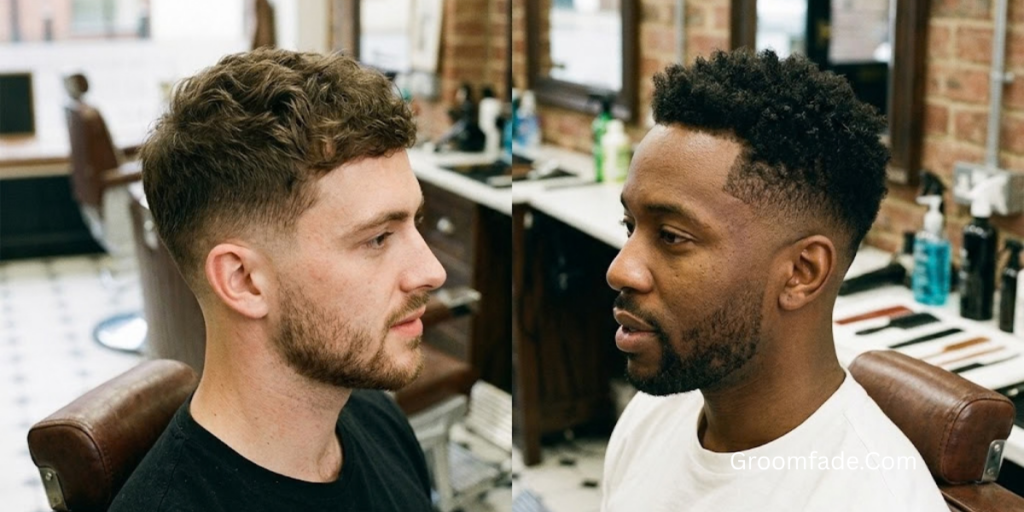
A low taper starts lower around the temples and neckline. A mid taper moves the transition higher on the sides.
For fluffy hair, the choice changes how much side volume remains.
Low Taper vs High Taper
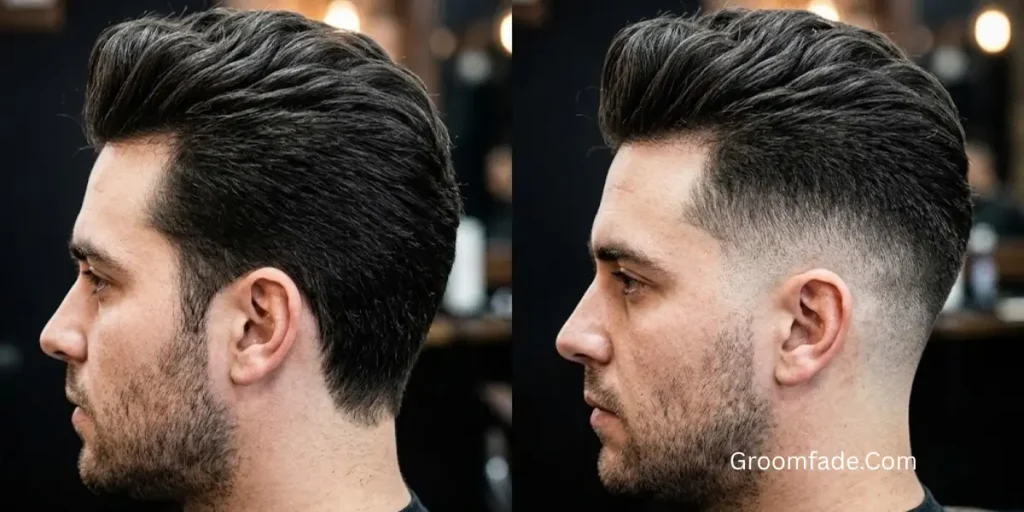
A high taper removes more hair higher on the sides. This creates a stronger contrast with the top.
A low taper keeps more of the side area intact.
Low Taper vs Low Fade
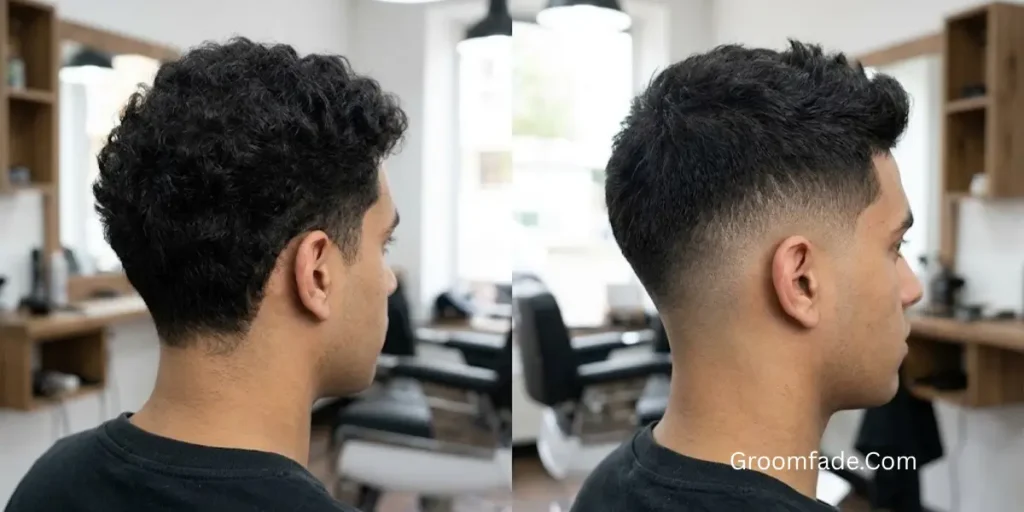
A low fade generally creates a more noticeable faded transition around the sides. A low taper focuses more specifically on the temple and neckline areas.
The exact result depends on how your barber executes the cut.
Low Taper vs Skin Fade
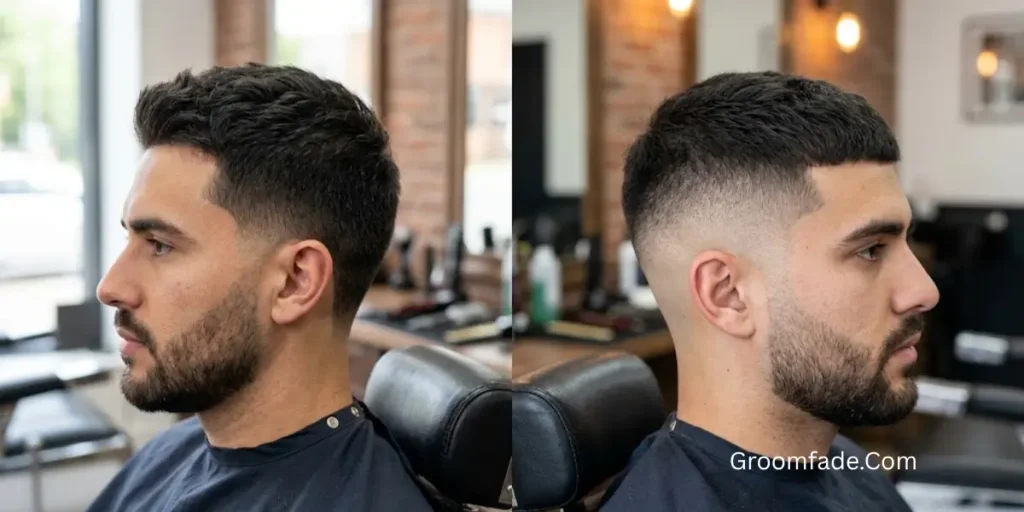
A skin fade takes the shortest section down to the skin. A low taper does not need to expose the skin.
If you want fluffy volume with a softer overall appearance, explain how much contrast you want before the haircut begins.
Low Taper vs Burst Fade
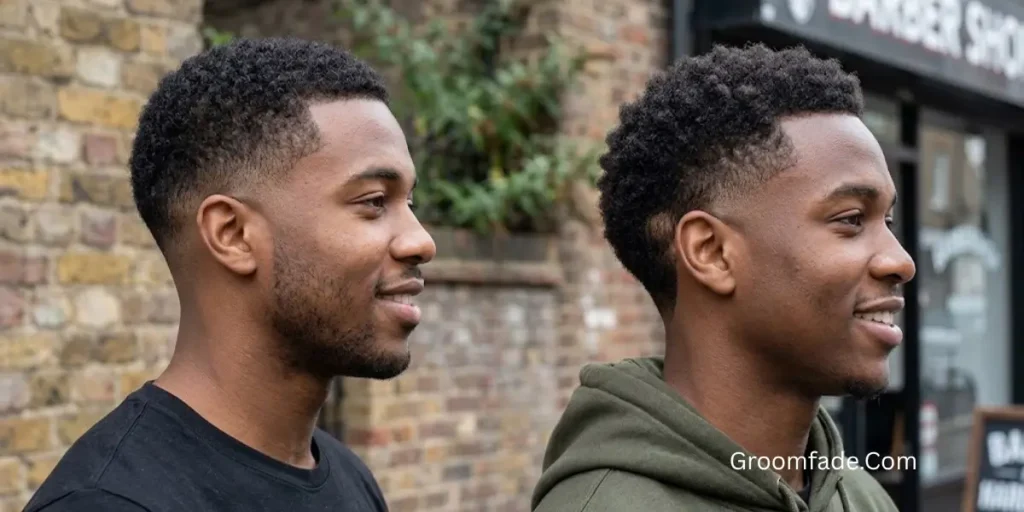
A burst fade curves around the ear and can create a distinct shape at the sides. A low taper has a more limited transition around the temples and neckline.
How Long Does Low Taper Fluffy Hair Last?
The top can keep its general shape for several weeks, but the taper becomes less defined as the hair grows.
Many people maintain the tapered areas more often than the top. The exact timing depends on how quickly your hair grows and how sharp you want the sides and neckline to look.
If you prefer a very clean taper, you may need more frequent barber visits. If you like a softer appearance, you can wait longer.
How to Maintain a Low Taper Fluffy Haircut
Keep the Taper Clean
The temples and neckline are the areas that usually show growth first. A quick cleanup can keep the haircut looking fresh.
Maintain the Top Length
Do not trim the top too frequently if you want a fluffy style. The right length gives you enough hair to create lift and texture.
Avoid Overwashing
Washing too often can make some hair types feel dry. Your ideal schedule depends on your scalp, hair texture, activity level, and products.
Use the Right Amount of Product
Start with a small amount. You can always add more, but removing excess product usually means washing the hair.
Refresh the Hair Between Washes
A little water and a quick blow-dry can often restore volume. For some hair types, a small amount of texture powder can also help.
Common Low Taper Fluffy Hair Mistakes
A few styling mistakes can change the entire look.
Using too much product: Heavy product can flatten the top.
Flattening the roots: Volume starts at the roots, so pressing the hair down during styling can work against the desired shape.
Getting the taper too high: This can remove more side volume than intended.
Removing too much top length: Short hair has less room for a fluffy finish.
Over-brushing: Excessive brushing can remove natural texture, especially in wavy and curly hair.
Ignoring natural texture: Straight, wavy, and curly hair need different styling methods.
Using strong hold when you want softness: A stiff finish can make fluffy hair look less natural.
FAQs About Low Taper Fluffy Hair
Q1. Are low taper fades attractive?
Attractiveness is subjective, but the haircut offers a combination of clean tapered areas and fuller hair on top. The final appearance depends on the haircut shape, styling, hair type, and personal preference.
Q2. What haircut is best for fluffy hair?
There is no single haircut for every person with fluffy hair. A low taper, textured top, fluffy fringe, or longer layered style can all work depending on the hair’s density and natural texture.
Q3. How do you get 100% fluffy hair?
There is no fixed method that guarantees a particular level of fluffiness. Keeping enough length, creating root lift, using lightweight products, and blow-drying correctly can increase volume.
Q4. What fade looks good with fluffy hair?
A low taper or low fade can preserve more hair around the sides. A mid or high fade creates more contrast by taking the shorter area higher.
Q5. Can straight hair be made fluffy?
Yes. Straight hair can gain volume through a volumizing product and root-focused blow-drying. Fine straight hair usually benefits from lighter products.
Q6. How do you make fluffy hair stay fluffy all day?
Start with clean or lightly damp hair, use a lightweight product, and create lift while blow-drying. Avoid applying too much heavy wax or pomade.
Q7. Is a low taper good for thick hair?
Yes, but thick hair may need careful shaping to control excess bulk. Tell your barber how much natural fullness you want to keep.
Q8. Is a low taper good for thin hair?
It can be. Keeping enough length on top and using lightweight styling products can help create the appearance of more volume.
Q9. How often should you maintain a low taper?
The timing depends on how quickly your hair grows and how sharp you want the taper to remain. Some people clean up the sides and neckline more often while leaving the top longer.
Q10. Can you get a low taper with curly hair?
Yes. Curly hair can pair well with a low taper. The barber should leave enough length on top for the curls to keep their natural shape.