
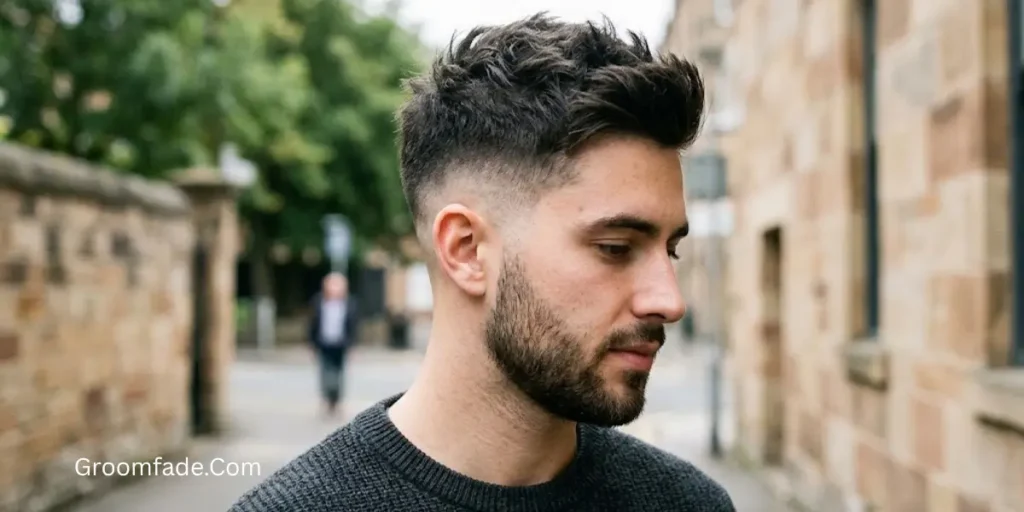
Tapered sides are one of the most flexible ways to keep a men’s haircut neat without taking too much length away from the sides. The hair gradually becomes shorter around areas such as the temples, sideburns, and neckline while the upper sides and top can stay fuller.
This makes a tapered sides haircut useful with many styles, from a textured crop and side part to a quiff, curly top, or longer hairstyle. It can also work with straight, wavy, and curly hair.
The main difference is how much hair you want to keep. A traditional taper leaves more length around the sides, while a fade usually creates a stronger transition into very short or even skin-level hair.
What Are Tapered Sides?
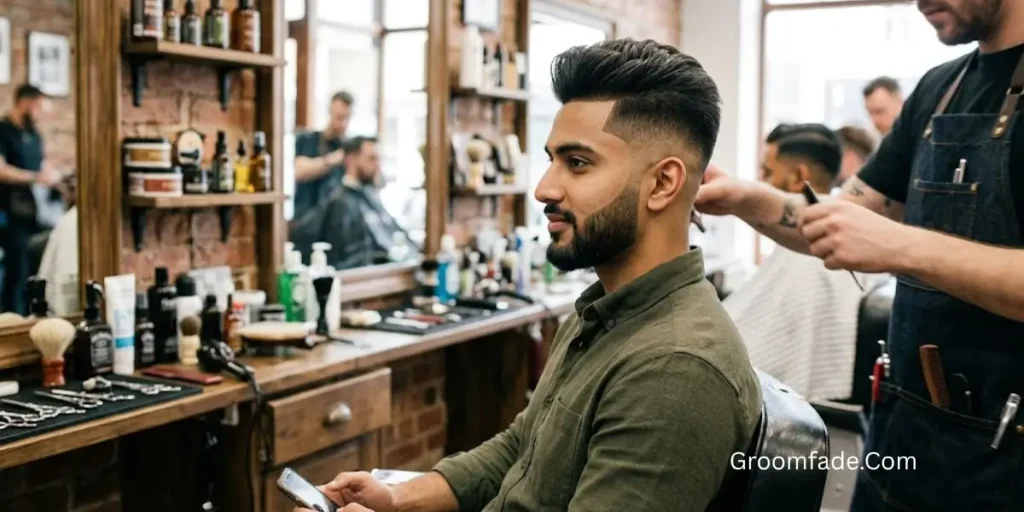
Tapered sides are a haircut technique where the hair gradually gets shorter toward the temples, sideburns, and lower areas of the head. The transition is smooth rather than cutting all of the sides to one short length.
The top can remain much longer than the sides. This gives the haircut a clean shape while keeping enough hair for styling.
A barber can create tapered sides at different heights. A low taper keeps most of the side length and focuses the shorter area around the lower temple and sideburn. A higher taper removes more length farther up the side.
The back can also be tapered. When both areas are included, you may hear terms such as tapered back and sides or tapered sides and back.
One useful point is that “taper” describes the transition, not one single hairstyle. You can combine tapered sides with a crop, quiff, fringe, side part, crew cut, or longer top.
For a clean finish around the temples, Temple Fade Hairstyle options keep the sides neat while leaving enough length on top for different styles.
How Tapered Sides Are Cut
The barber normally works from longer hair into progressively shorter sections. Clippers, guards, scissors, or a combination of tools may be used depending on the desired finish.
The transition needs to follow the shape of the head. Your barber may leave more weight above the taper if you want a fuller appearance.
The exact clipper guard numbers are not universal instructions because barbers may use different techniques and tools. It is usually better to explain the length and overall shape you want rather than asking for a guard number alone.
Tapered Sides vs Fade
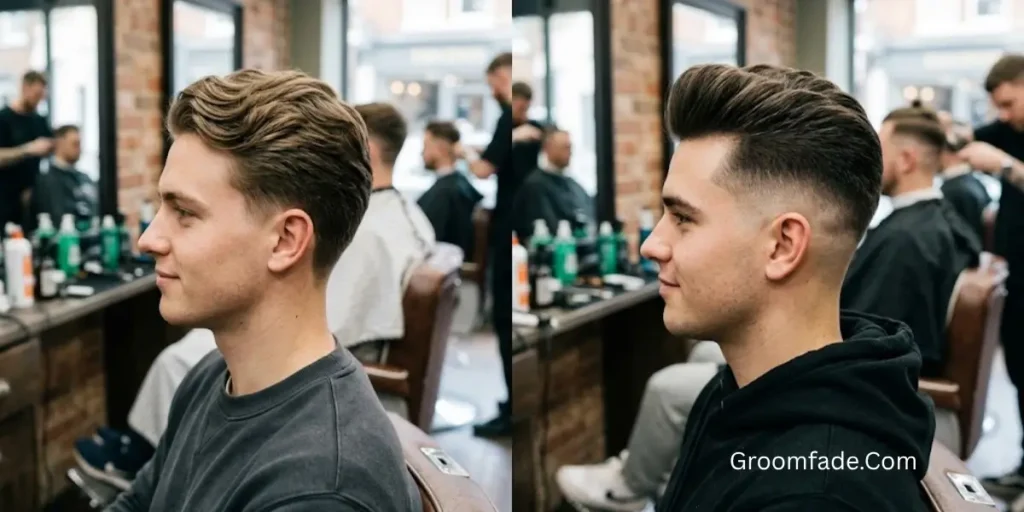
Tapered sides and fades are closely related, but they are not always the same haircut.
A taper usually keeps more hair on the sides and concentrates the shortening around specific areas. A fade generally creates a more visible transition across a larger section of the sides and can become extremely short near the bottom.
| Feature | Tapered Sides | Fade |
| Side length | More length is usually retained | Can be cut much shorter |
| Transition | Gradual and focused | Often extends farther up the sides |
| Temple area | Common taper location | Often blended into the fade |
| Neckline | Can be tapered | Can be faded |
| Overall appearance | Natural and versatile | Sharper, stronger contrast |
| Top | Can be short or long | Can also be short or long |
What Is a Taper?
A taper gradually reduces hair length in selected areas, often around the temples, sideburns, and neckline.
Because more hair can remain on the sides, the result can look relatively natural when compared with a very short fade.
What Is a Fade?
A fade creates a gradual transition from longer hair into much shorter hair. Depending on the type, the shortest point can be close to the skin.
Low, mid, and high fades describe where that transition begins.
Can Tapered Sides Include a Fade?
Yes, but the terms describe different approaches.
For example, a taper fade can combine the focused shape of a taper with a more blended, faded finish. This is why people sometimes use “taper” and “fade” interchangeably even though they can produce different results.
If you want the sides to remain fairly full, tell your barber that you want a taper rather than a strong fade.
Popular Tapered Sides Haircuts for Men
One reason tapered sides work so well is that they do not force you into one top style. The top can change while the side shape stays clean.
Men who prefer a softer blend can consider the Shadow Fade Haircut. It keeps some length through the fade, creating a smoother transition on the sides.
Tapered Sides With Textured Top
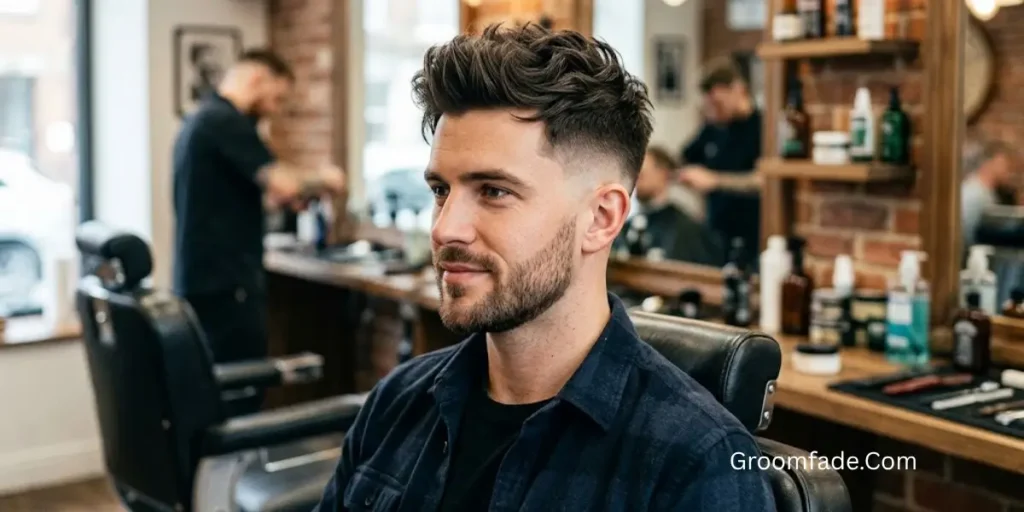
A textured top adds movement and breaks up a flat shape. The barber can keep the sides relatively short while leaving enough length on top for texture.
This works particularly well for straight and wavy hair.
A matte clay, paste, or styling cream can help create separation without making the hair look overly shiny.
Tapered Sides With Longer Top
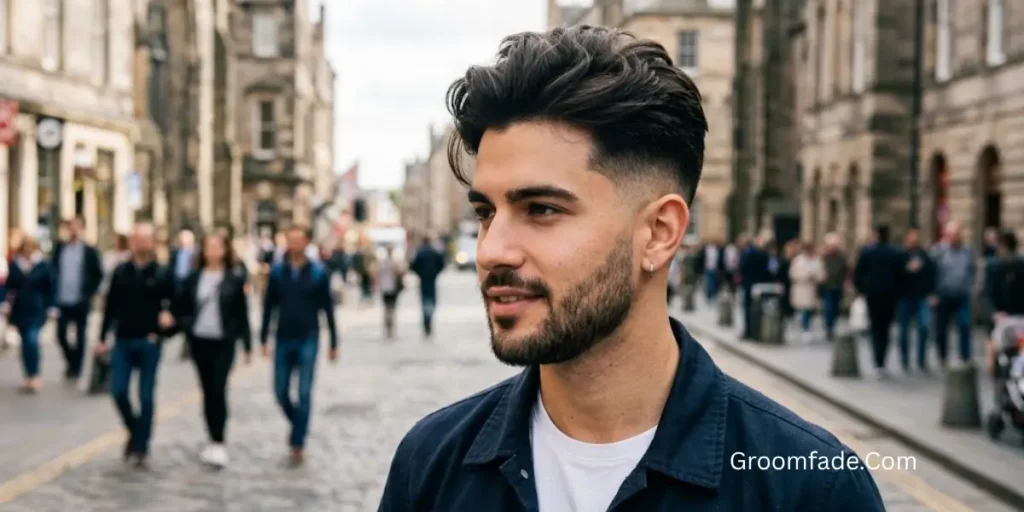
Keeping a longer top creates more contrast between the top and sides without requiring a skin fade.
This is a useful choice if you want to style your hair in several ways. The same haircut can often be worn loose, swept back, parted, or textured.
Tapered Sides With Volume on Top
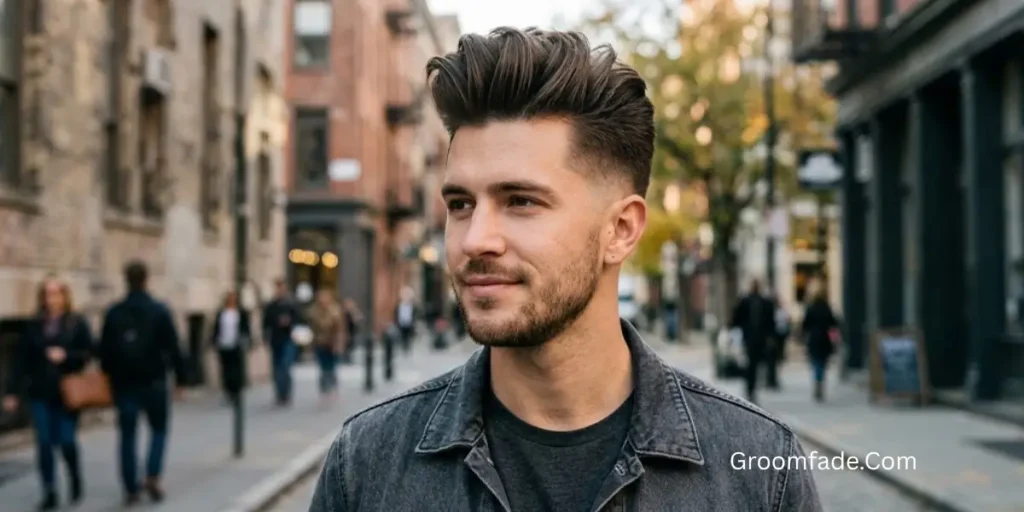
A fuller top with tapered sides creates a balanced shape. The taper controls the lower part of the haircut while the extra length gives you room to add height.
A blow dryer can help build volume before applying a small amount of styling product.
Tapered Sides With Curly Top
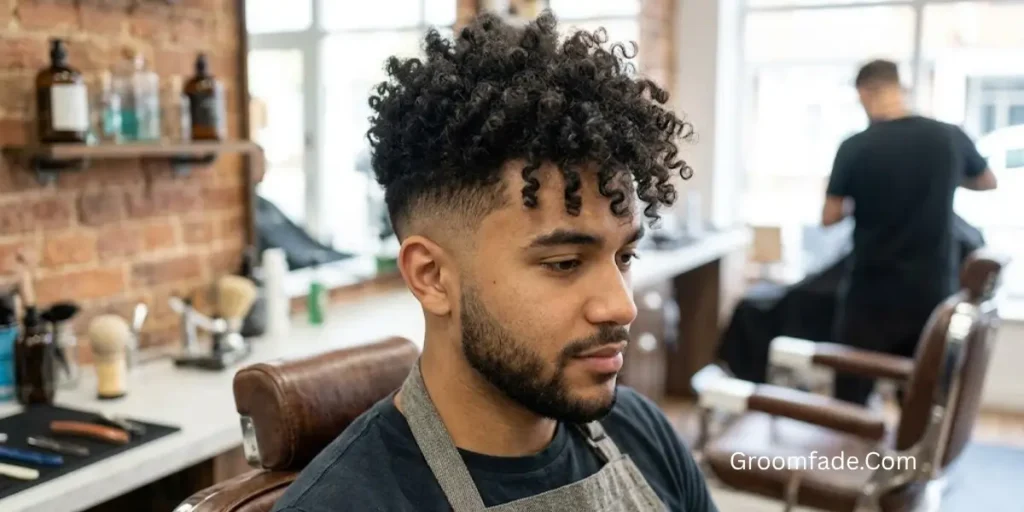
Curly hair can look especially good with tapered sides because the shorter sides frame the natural curls.
The key is to leave enough length for the curls to form properly. Cutting too much from the upper sides can change the overall shape.
Tapered Sides With Messy Top
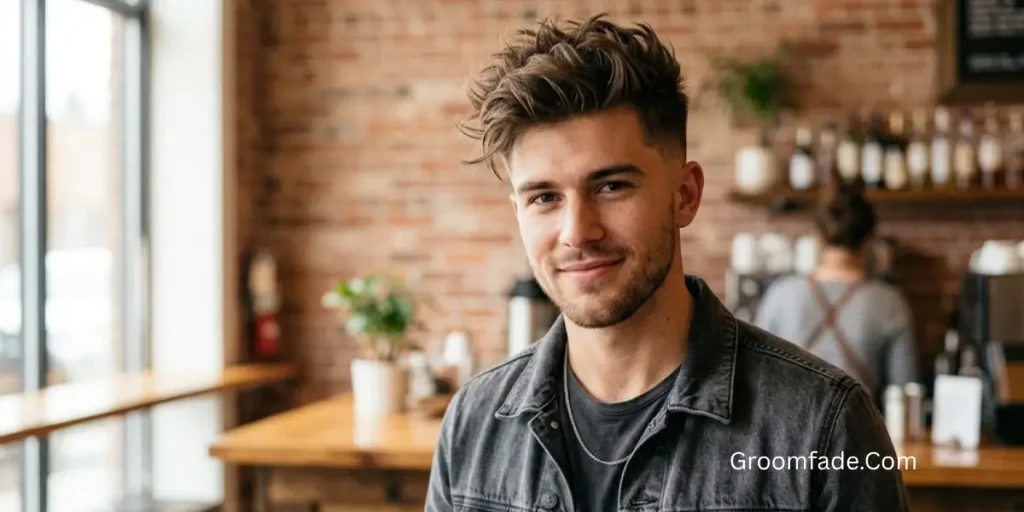
A messy top gives tapered short sides a more relaxed appearance. The hair does not need to be perfectly arranged.
This is a practical option for men who prefer a casual haircut that still looks neat around the ears and neckline.
Tapered Sides With Straight Hair
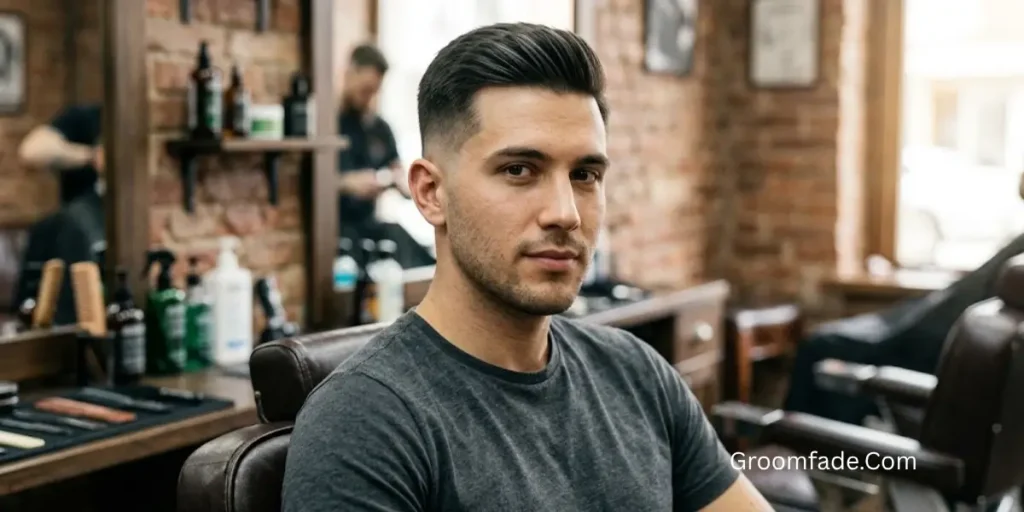
Straight hair makes the transition between the sides and top easy to see. A textured finish can add movement if the hair tends to sit flat.
You can pair tapered sides straight hair with a side part, fringe, quiff, crop, or longer top.
Tapered Sides With Different Hairstyles
The top hairstyle often determines the personality of the haircut. Tapered sides simply provide the clean foundation.
Textured Crop With Tapered Sides
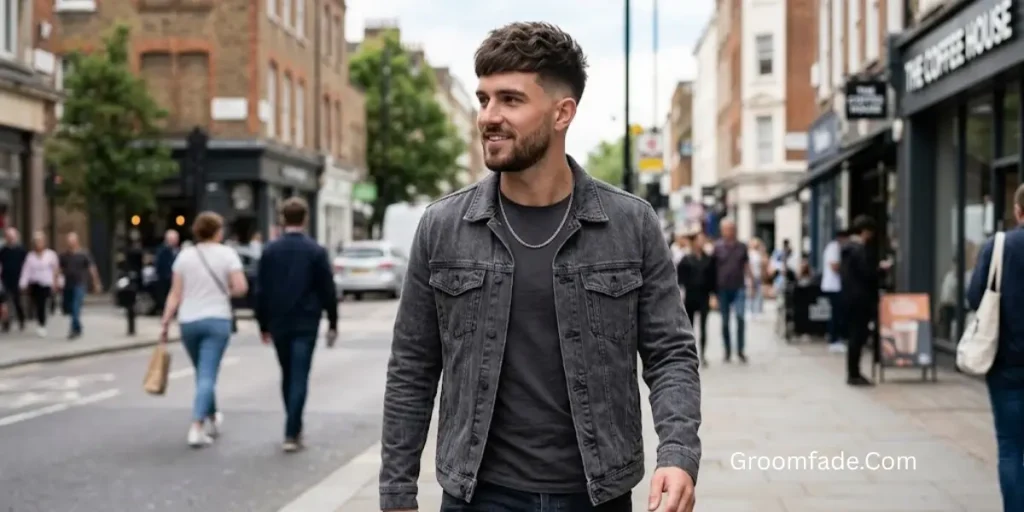
A textured crop keeps the top relatively short and adds separation through the hair.
The tapered sides make the haircut look clean around the ears while allowing the crop to remain the main feature.
For a more structured shape, the Box Fade gives the haircut sharper edges and a defined outline around the sides and top.
Textured Quiff With Tapered Sides
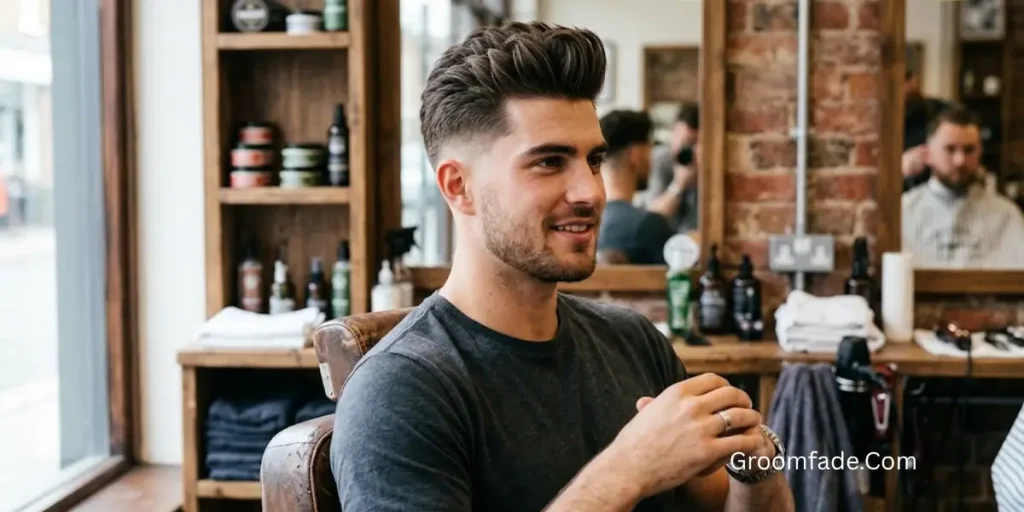
A quiff needs enough length at the front to create height. Tapered sides help keep the lower part of the haircut controlled.
For a softer result, keep some weight around the upper sides instead of taking them extremely short.
Fringe With Tapered Sides
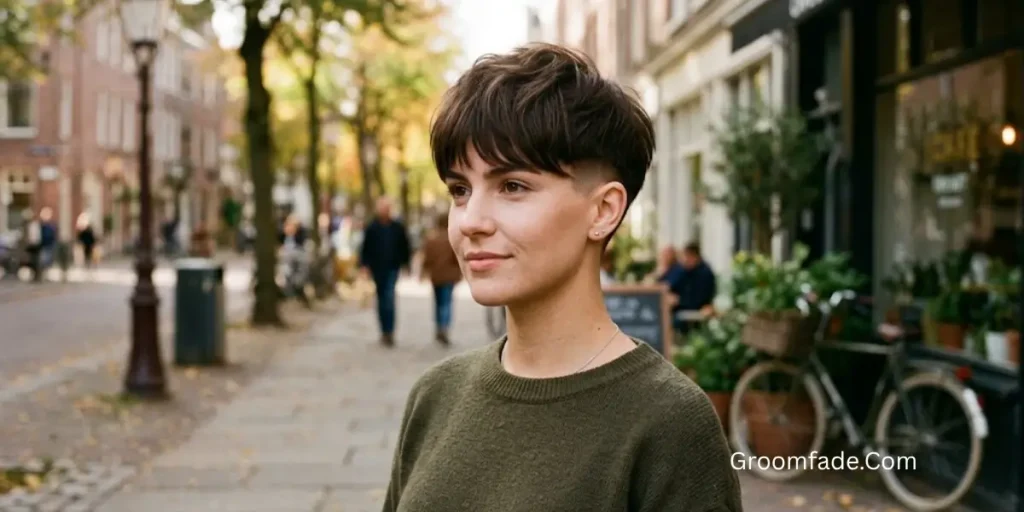
A fringe can be worn forward over the forehead while the sides gradually become shorter.
This works with both straight and textured hair. The length and shape of the fringe should match your natural hair movement.
Textured Fringe With Tapered Sides
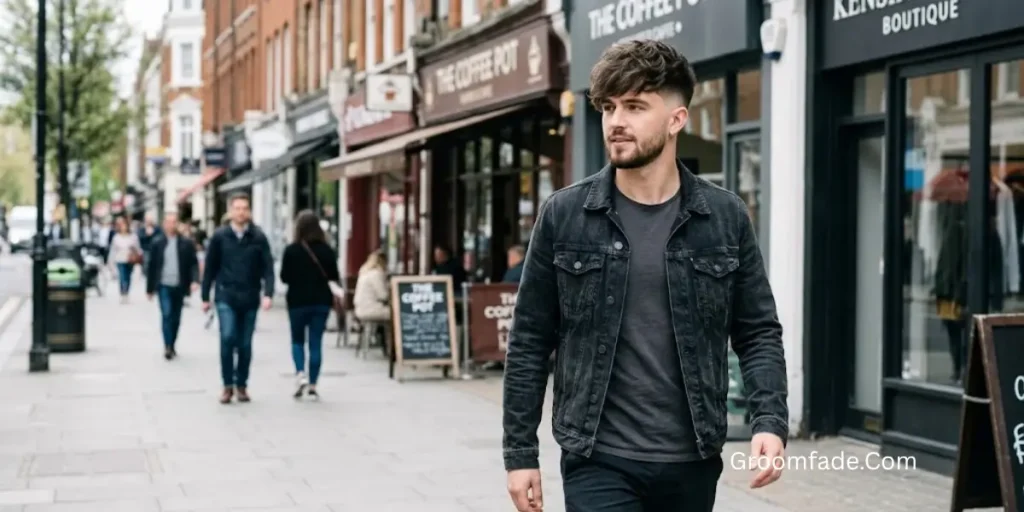
A textured fringe adds separation to the front instead of creating one solid block of hair.
The combination works well when you want a modern haircut without taking the sides down to skin level.
Side Part With Tapered Sides
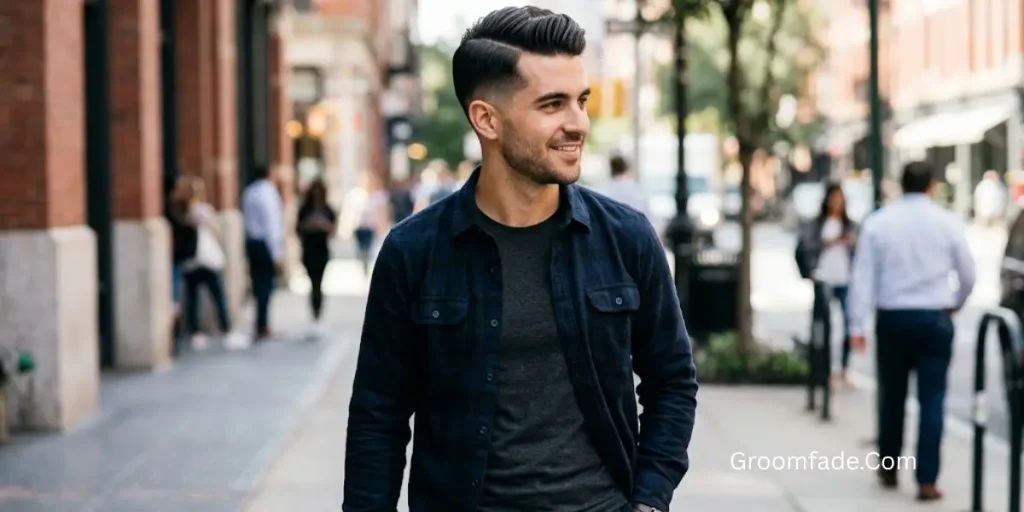
A side part is one of the more classic combinations.
The barber can leave enough length on top to create a clear part while tapering the sides and neckline. This gives you a neat shape without requiring a high fade.
Crew Cut With Tapered Sides
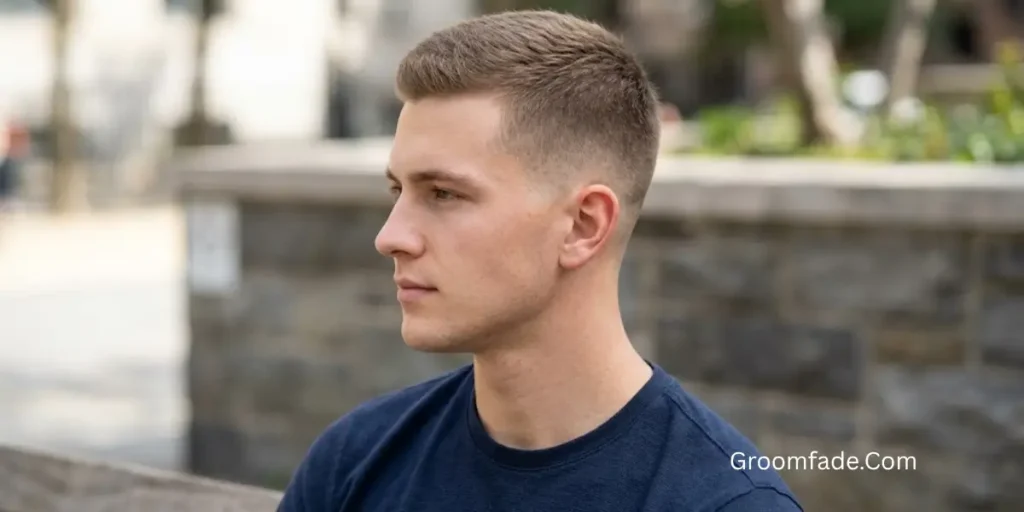
A crew cut keeps the top short and practical. Tapered sides can make the transition look less severe than a very short fade.
It is also easy to maintain because the top does not require much styling.
Short Quiff With Tapered Sides
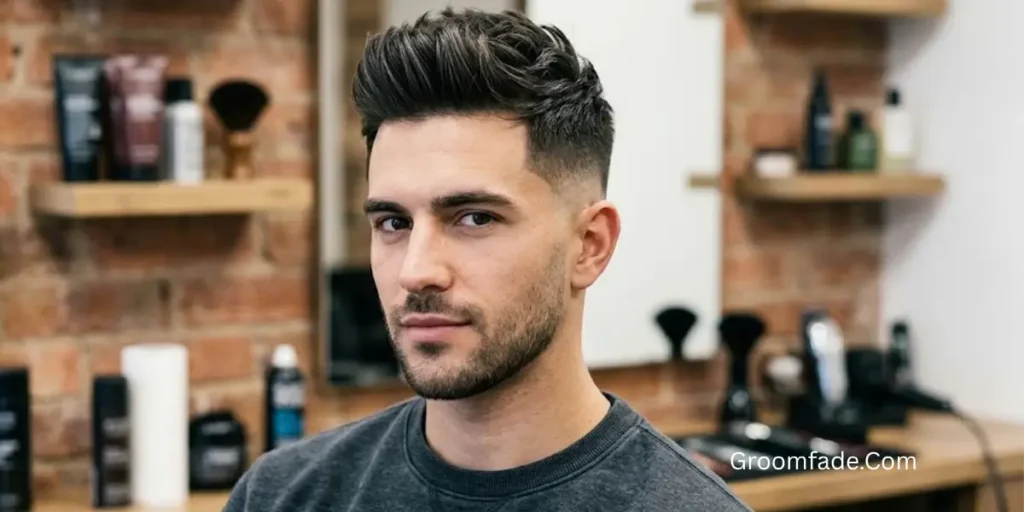
A short quiff gives you some height without the length required for a large, dramatic quiff.
Tapered short sides keep the haircut compact and clean.
Quiff With Tapered Sides
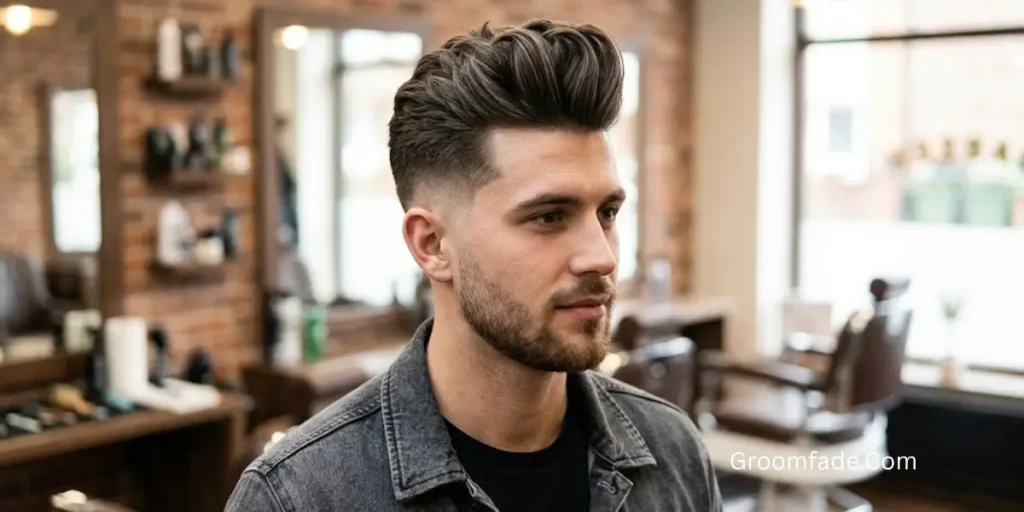
A longer quiff provides more styling freedom. You can brush it upward, backward, or slightly to the side.
The sides should be balanced with the amount of length on top so the haircut does not appear too heavy.
Long Comb Over With Tapered Sides
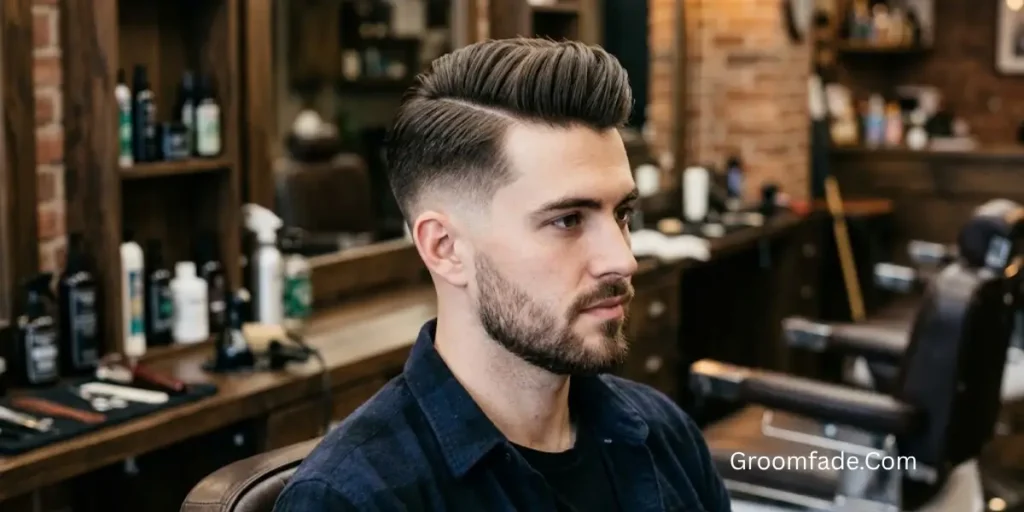
A longer comb over needs enough top length to sweep across the head.
Tapered sides give the haircut structure while leaving the top long enough to move naturally.
Curly Top With Tapered Sides
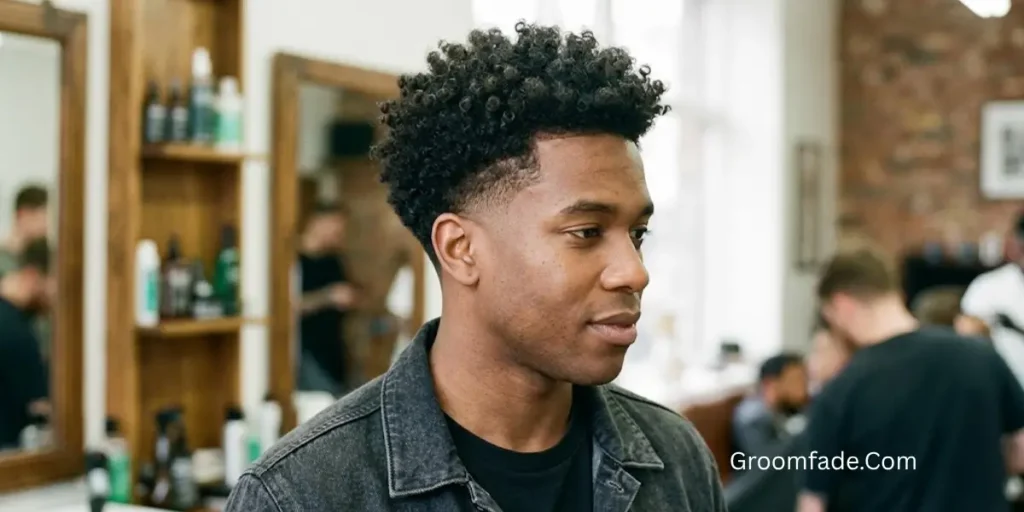
A curly top can range from short curls to a longer, fuller shape.
The taper keeps the area around the temples and sideburns controlled without removing the curl pattern from the top.
Tapered Sides Mullet
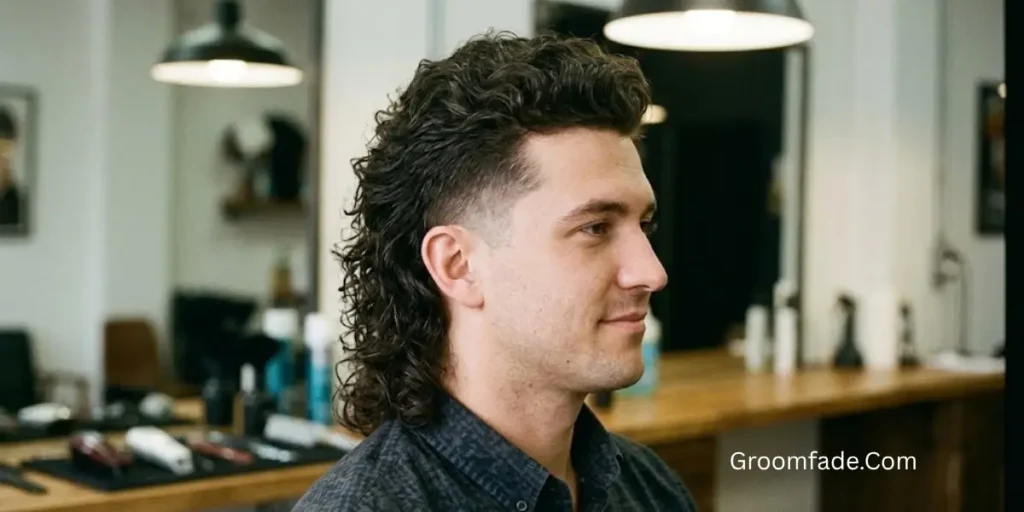
A mullet already relies on different lengths between the front, sides, and back.
Tapered sides can make the sides cleaner while allowing the back to remain longer. The barber should know that you want to preserve the mullet shape rather than simply shortening the back.
Tapered Sides for Different Hair Types
Tapered Sides for Straight Hair
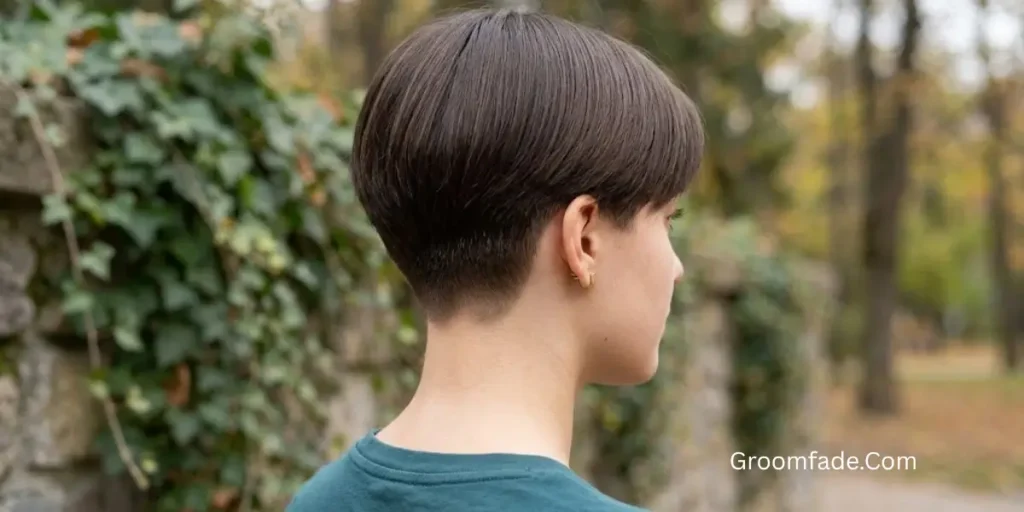
Straight hair shows the side transition clearly. It can also become flat if the top is cut too evenly.
Adding texture or keeping extra length near the front can create more movement.
A tapered sides straight hair haircut can work with a side part, textured crop, quiff, fringe, or slicked-back top.
A longer shape toward the back creates a different take on tapered sides. The Ducktail Haircut uses that length to form a distinctive tapered point at the rear.
Tapered Sides for Curly Hair
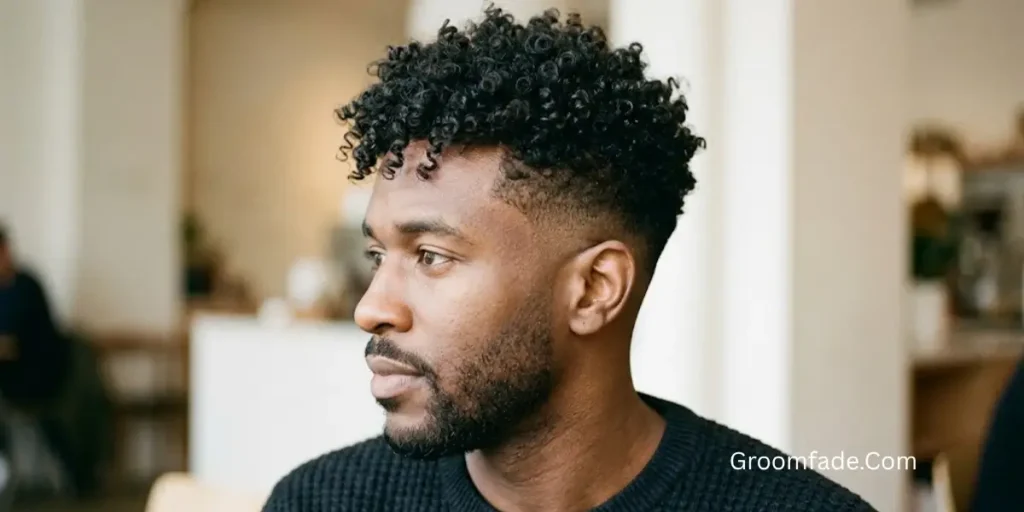
Curly hair needs enough length to form its natural pattern.
A barber can taper the sides around the temples and sideburns while preserving the curls above. This creates a clean frame without making the top look disconnected.
Tapered Sides for Wavy Hair
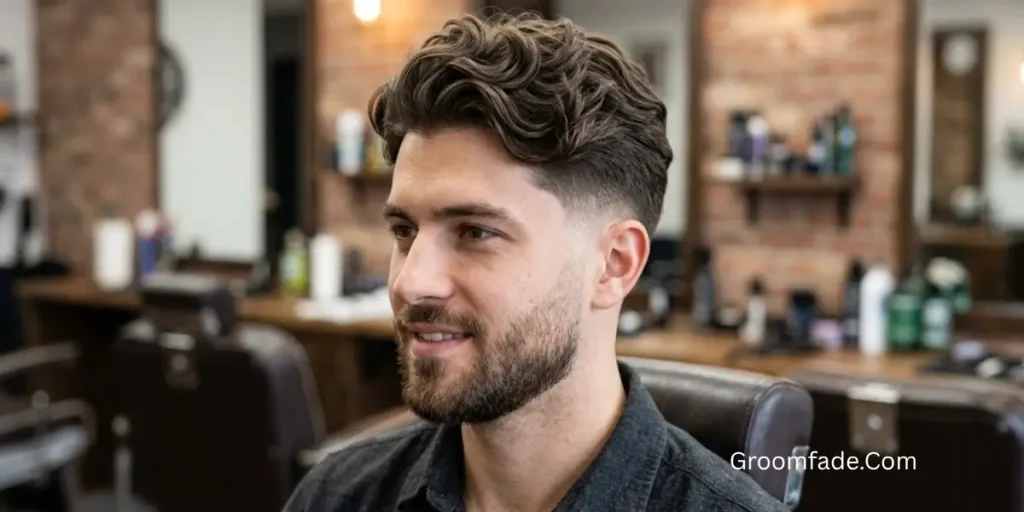
Wavy hair naturally creates movement, so a taper can give it a cleaner outline.
A messy top, textured quiff, or loose fringe can work particularly well with this texture.
Tapered Sides for Thick Hair
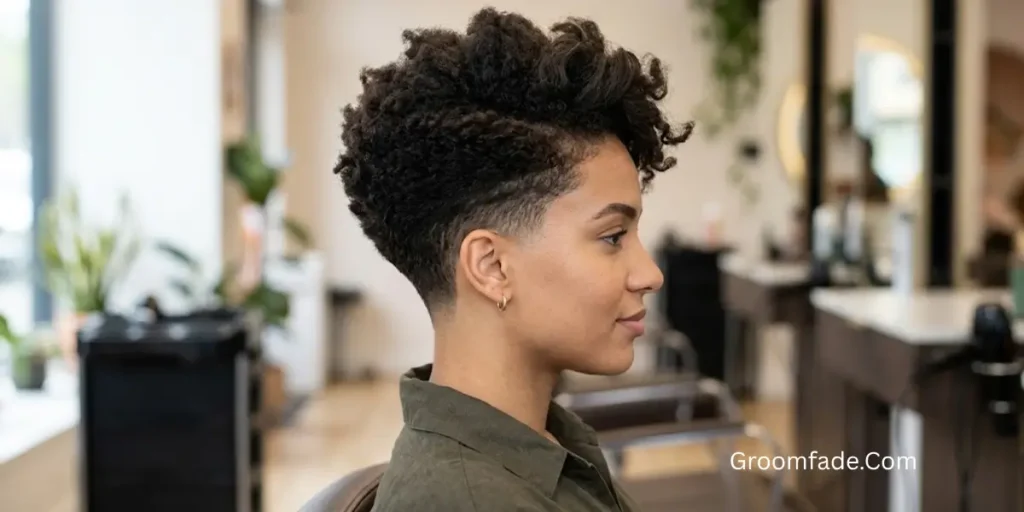
Thick hair can build up weight around the sides. Tapering removes some of that bulk while keeping the overall haircut fuller than a very short fade.
Tell your barber whether you want the sides simply cleaned up or noticeably reduced.
Tapered Sides for Fine or Thin Hair
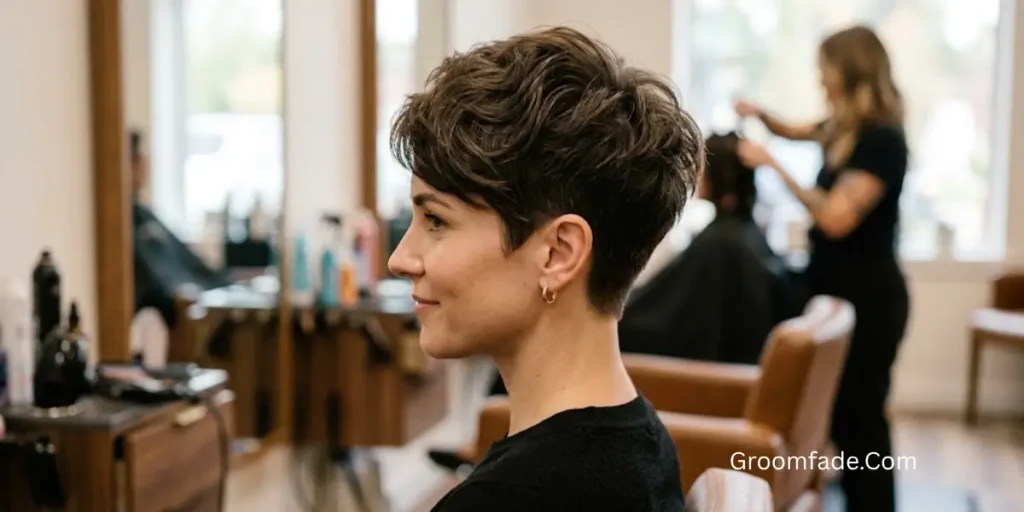
Fine hair can benefit from keeping some fullness on top and around the upper sides.
Going extremely short everywhere may make the top appear less dense by comparison. A textured finish can also help create the appearance of movement.
Low Taper With Tapered Sides
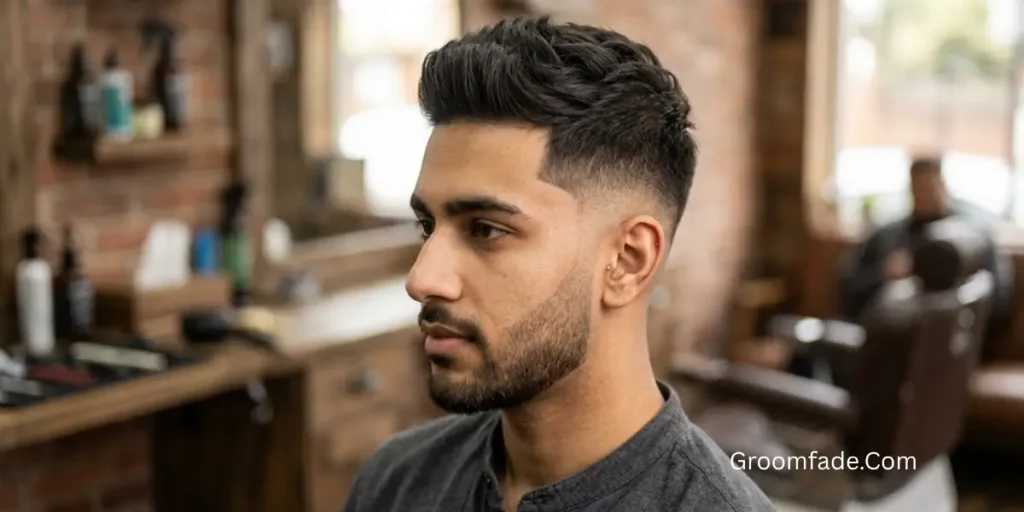
A low taper keeps the transition close to the lower part of the sides.
This approach leaves more of the natural side shape intact, making it useful if you want a subtle change.
A low taper can be paired with:
- A textured top
- Straight hair
- Curly hair
- A side part
- A longer top
- A fringe
- A messy hairstyle
If you want a haircut that keeps noticeable side length, tell your barber to keep the taper low and avoid taking the blend too high.
High Taper With Tapered Sides
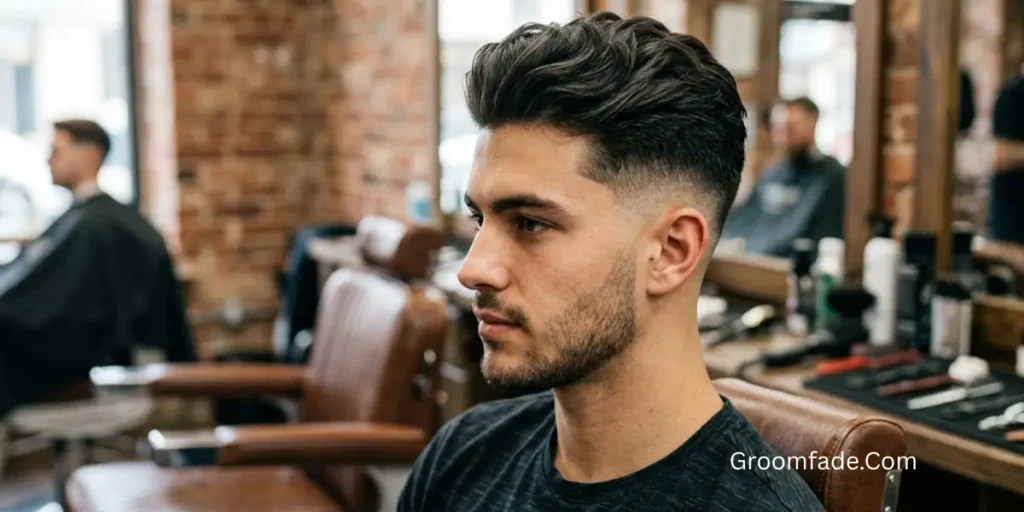
A high taper starts the shortening higher on the sides. This creates more visible contrast between the upper hair and the shorter area.
It can work well with textured tops, curls, quiffs, and other styles where you want the sides to have a cleaner, tighter appearance.
The main thing to consider is how much side length you want to retain. A high taper removes more of the side area than a low taper.
What Is a Blowout With Tapered Sides?
A blowout with tapered sides combines a fuller, lifted hairstyle on top with shorter, gradually tapered areas around the sides and often the neckline.
The top is normally styled outward or upward to create volume and movement.
This combination can work particularly well with thick, wavy, or curly hair because natural texture can help create the fuller blowout shape.
If you want the blowout to remain large and noticeable, tell your barber to preserve enough length and weight on top.
For a sharper modern finish, the Brooklyn Fade creates a noticeable transition around the sides while keeping the upper section ready for different styling choices.
How to Ask Your Barber for Tapered Sides
A clear request is more useful than simply saying, “Give me a taper.”
Tell your barber:
- Where you want the taper: low, mid, or high.
- How much side length you want to keep.
- Whether you want the back tapered too.
- How long you want the top.
- How you normally style the top.
- Whether you want a natural taper or a sharper finish.
A simple request could be:
“I want tapered sides with a longer textured top. Keep the taper fairly low around the temples and sideburns, keep some weight on the upper sides, and taper the back to match.”
A reference photo is also helpful because words such as “short,” “long,” and “high” can mean different things to different people.
Should You Ask for a Guard Number?
You can mention a guard number if you know exactly what you want, but it should not be your only instruction.
Two barbers can use similar guard numbers and create different results because of blending technique, hair density, and the shape of the head.
Explain the finished look first.
How to Style Tapered Sides
The tapered sides themselves need little styling. Most of your effort goes into the top.
Styling Tapered Sides With a Textured Top
Start with slightly damp hair. Apply a small amount of matte clay or paste and work it through the top.
Use your fingers to separate sections rather than combing everything into one smooth shape.
Styling a Quiff
Apply a lightweight styling product before blow-drying the hair upward and slightly backward.
Once the hair has the desired shape, use a small amount of product to control loose sections.
Styling Curly Hair
Apply a curl-friendly cream or lightweight styling product to damp hair.
Avoid repeatedly brushing dry curls because this can create unwanted frizz and reduce the natural curl pattern.
Styling a Side Part
Create the part while the hair is damp. Comb the longer section into place and use a small amount of product to hold the shape.
A natural finish usually looks better than applying too much product.
How to Maintain Tapered Sides
Tapered sides look cleanest when the transition around the temples, sideburns, and neckline is maintained.
How Often Should You Get Tapered Sides Cut?
Many men refresh their taper every few weeks, but there is no single schedule that works for everyone.
Hair growth rate, haircut length, and personal preference all matter.
If you like a very sharp outline, you may want more frequent barber visits. If you prefer a natural appearance, you can let the haircut grow longer between appointments.
Keeping the Taper Clean
The neckline and sideburns are usually the first areas to lose their fresh appearance.
A barber can clean these areas without necessarily changing the length of the entire haircut.
Avoid trying to recreate the taper yourself unless you have the tools and experience to do it safely. A small mistake around the hairline can change the shape noticeably.
Another option with strong definition is the Juice Box Fade, which combines clean faded sides with a shaped top for a bold, structured appearance.
Is a Tapered Sides Haircut Right for You?
There are several practical factors to consider.
Consider Your Hair Length
Short hair creates a compact haircut, while a longer top gives you more styling options.
If you want to keep long hair, tell your barber how much length you want preserved before the sides are cut.
Consider Your Hair Texture
Straight, wavy, curly, and thick hair all behave differently.
Your barber can adjust the amount of weight removed from the sides based on how your hair naturally sits.
Consider Your Styling Routine
If you rarely use styling products, a shorter top such as a crew cut or textured crop may be easier.
If you enjoy styling your hair, a quiff, longer comb over, fringe, or voluminous top gives you more options.
Consider Maintenance
A subtle taper can grow out naturally. A very sharp taper requires more frequent cleanup to maintain the same appearance.
Think about how often you realistically want to visit the barber.
Tapered Sides Haircut FAQs
Q1. What are tapered sides?
Tapered sides are sides that gradually become shorter toward the temples, sideburns, or lower areas of the head. The upper sides and top can remain longer, creating a smooth transition.
Q2. What is side taper cutting?
Side taper cutting is the process of gradually reducing the hair length around the sides, usually near the temples and sideburns. The barber blends the shorter section into the longer hair above it.
Q3. Are tapered sides the same as a fade?
No. A taper normally focuses on specific areas and can leave more side length. A fade usually creates a broader transition and can become much shorter near the bottom.
Q4. What is the difference between tapered sides and a taper fade?
Tapered sides describe the gradual reduction of length around the sides. A taper fade generally uses a more pronounced faded transition. The exact result depends on the barber’s technique and the requested length.
Q5. Are tapered sides good for straight hair?
Yes. Straight hair works well with tapered sides and can be paired with a textured crop, side part, quiff, fringe, or longer top.
Q6. Can you get tapered sides with curly hair?
Yes. Curly hair can be left longer on top while the sides are gradually shortened around the temples and sideburns.
Q7. Can tapered sides work with long hair?
Yes. Tapered sides can be combined with a longer top or longer overall hairstyle. The barber should know how much length you want to preserve.
Q8. What is a low taper?
A low taper keeps the shorter transition close to the lower temple, sideburn, and neckline areas. More of the natural side length remains above it.
Q9. What is a high taper?
A high taper begins the shorter transition higher on the sides. It creates more contrast and removes more side length than a low taper.
Q10. What is a blowout with tapered sides?
It is a hairstyle with fuller, lifted, or outward-styled hair on top combined with gradually shorter sides. It is often worn with textured, wavy, or curly hair.