
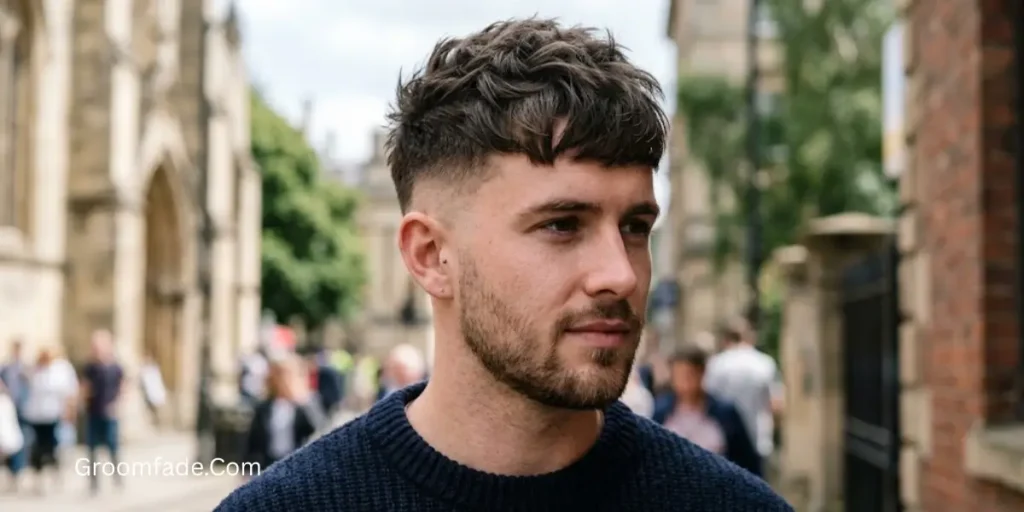
A textured crop haircut is a short, modern style built around a textured top, a short fringe, and clean sides. The top can be choppy, messy, wavy, or neatly shaped, while the sides can be paired with a low fade, mid fade, high fade, or taper.
The style works well because it is easy to adjust. Your barber can change the top length, fringe, fade height, and amount of texture to suit your hair type and face shape.
This Groom Fade guide covers 25 textured crop hairstyles, including short crops, fades, tapers, French crops, curly styles, straight hair options, and cuts for thinning or receding hairlines. It also explains what to ask your barber, how to style the cut, and how to keep it looking clean.
What Is a Textured Crop Haircut?
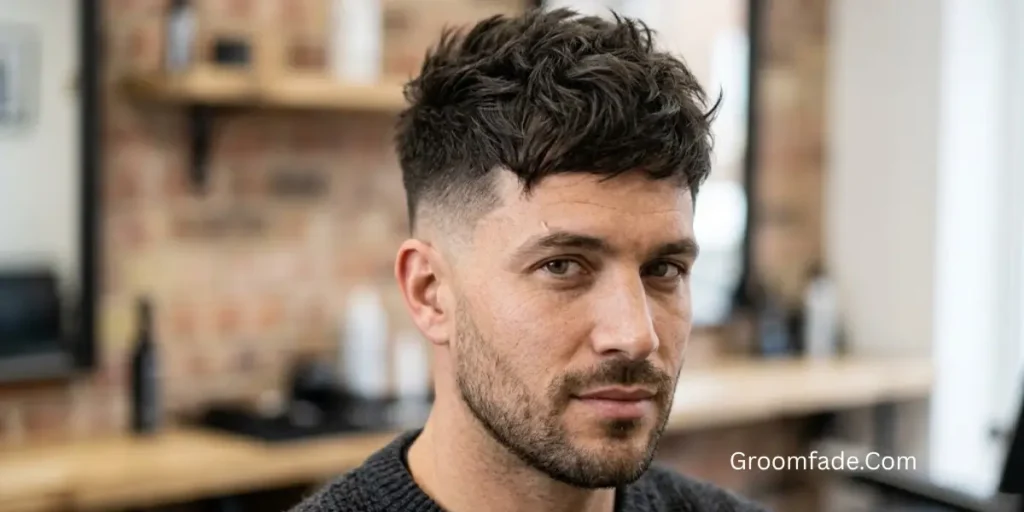
A textured crop is a short haircut where the hair on top is cut to create visible texture and movement. The front usually has a short fringe that sits forward instead of being pushed back.
The sides and back are often shorter than the top. They may use a fade haircut, taper fade, skin fade, or low taper.
The key part is the top. Instead of one smooth, even layer, the barber uses techniques such as point cutting or texturizing to create separation between sections of hair.
A good textured crop should still look natural when you are not using much product.
A close-cut style can look even sharper when the sides are finished with a clean taper. The Skin Taper Fade creates a crisp finish around the temples and neckline while keeping the top easy to style.
25 Textured Crop Haircuts for Men
Classic Textured Crop
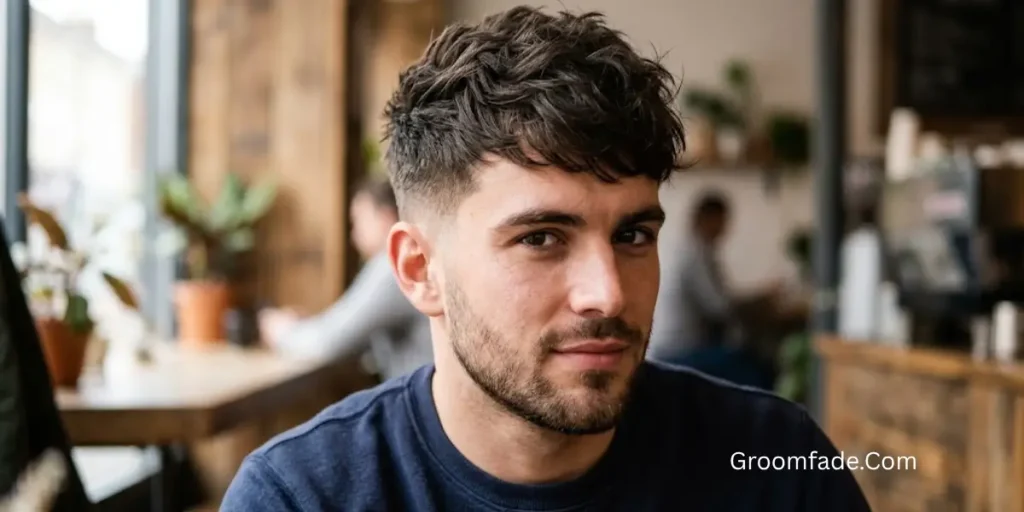
The classic textured crop keeps the top short to medium with a natural, broken-up finish. The fringe sits close to the forehead, while the sides are kept neat.
This is a good starting point if you want a simple textured crop hairstyle that does not require much styling.
Ask your barber for a short textured top with light point cutting and a clean finish around the sides.
Short Textured Crop
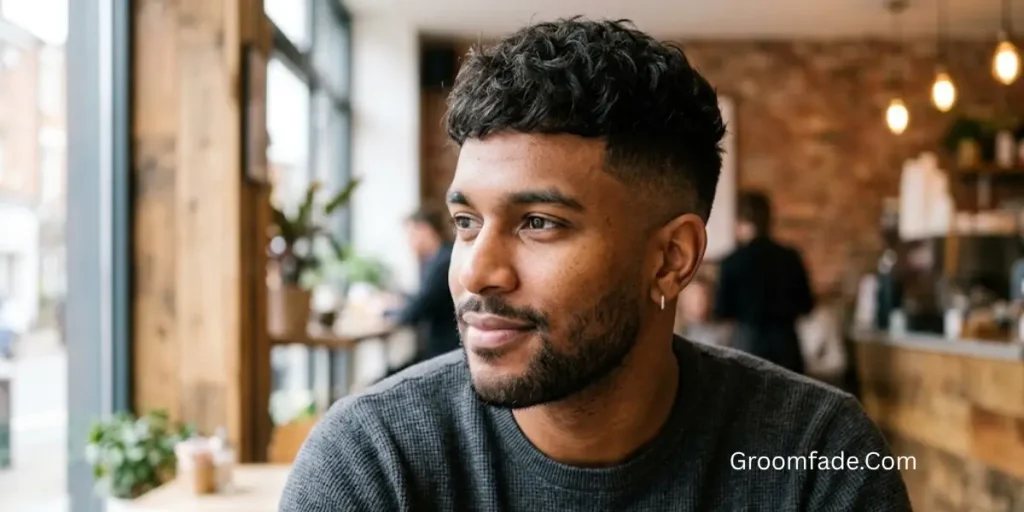
A short textured crop keeps both the top and fringe fairly close to the head. It is practical, easy to wash, and quick to style.
The top can be cut with enough variation to prevent the hair from looking flat. A small amount of matte clay or texture powder can bring out the separation.
This option is especially useful for men who prefer low-maintenance hair.
Textured Crop Mid Fade
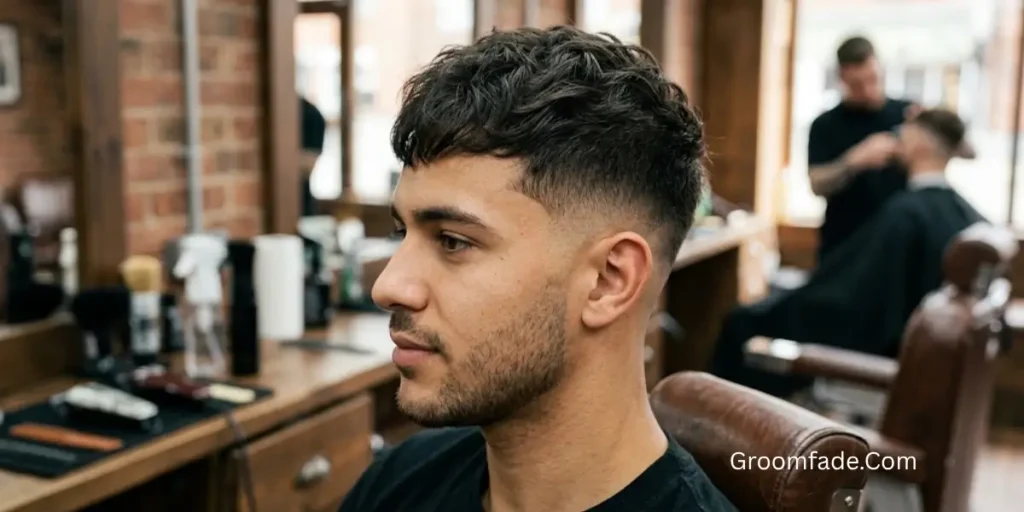
The textured crop mid fade combines a textured top with a fade that starts around the middle of the sides.
It creates a clear contrast between the top and sides without making the fade as high as some high-fade styles.
The mid fade works well with straight, wavy, and thick hair. Your barber can adjust the fade level based on how much contrast you want.
Textured Crop Low Fade
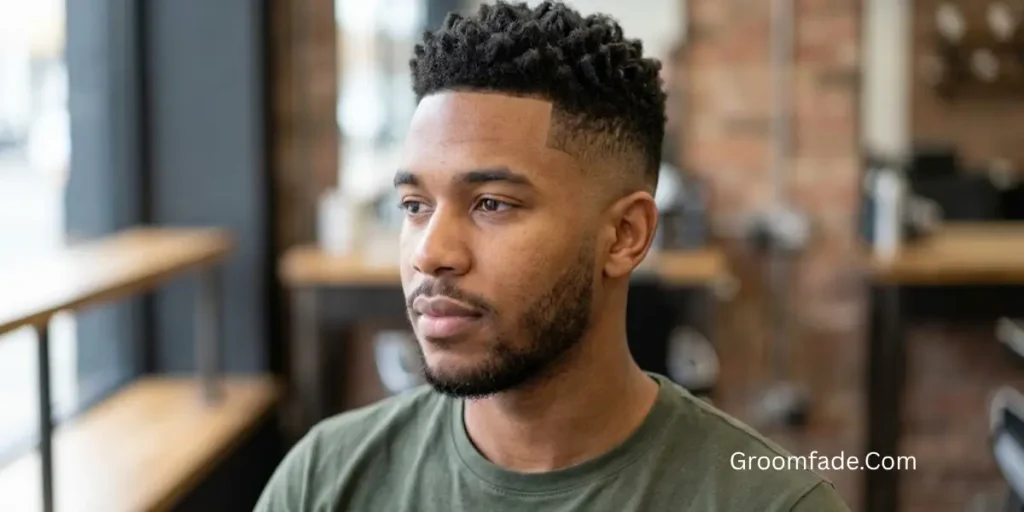
A textured crop low fade keeps the fade closer to the lower part of the sides and around the ears.
This gives the haircut a softer transition while keeping the textured top as the main feature.
It is a good choice if you want a clean haircut without making the sides look extremely short.
The shape of a fade can change how a short crop looks from the side and back. With a Drop Fade Haircut, the fade curves downward behind the ears, adding a distinct outline to the haircut.
Textured Crop High Fade
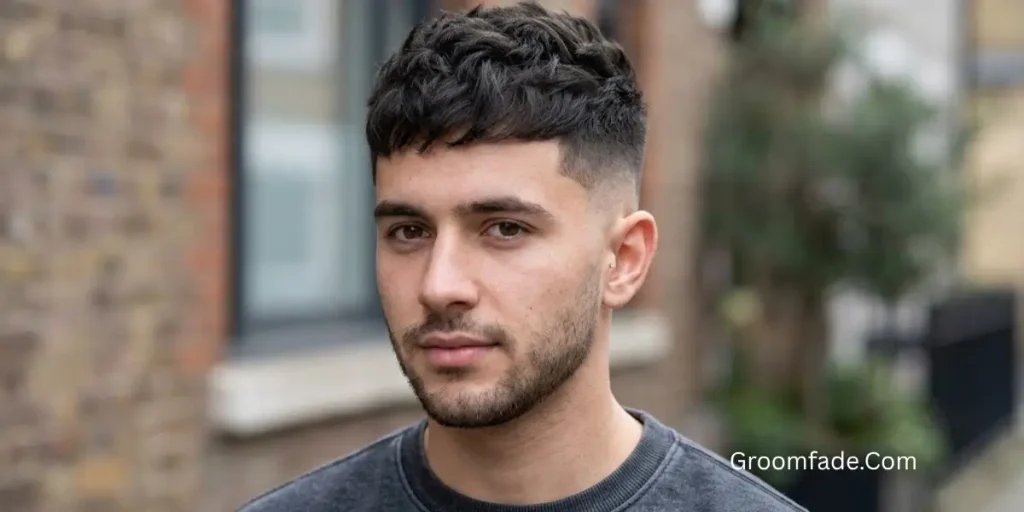
The textured crop high fade creates more contrast by taking the shorter section higher on the sides.
The top becomes the main focus, especially when it has strong separation and a forward fringe.
This style suits men who prefer a sharper, more noticeable fade. It can also make thick hair easier to manage.
Textured Crop Taper Fade
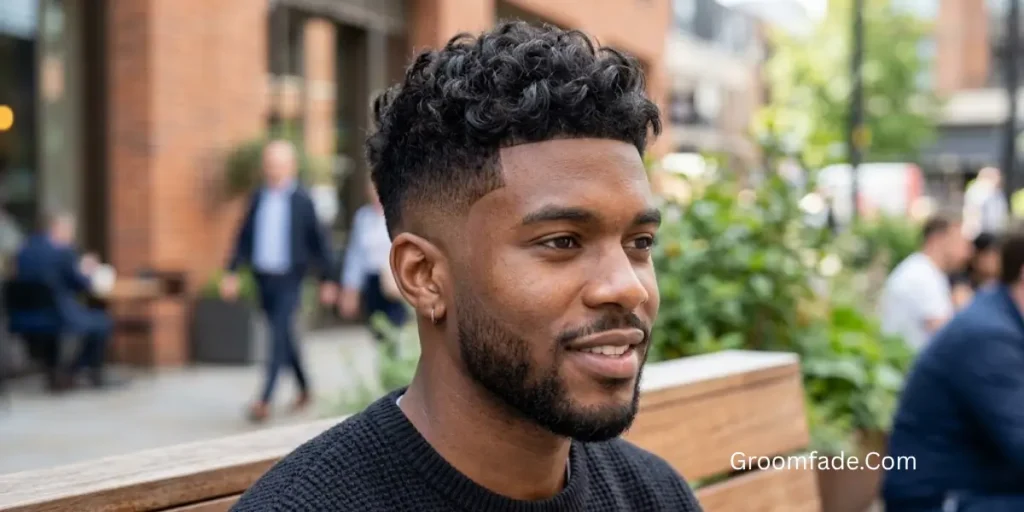
A textured crop taper fade keeps the haircut neat around the sideburns and neckline while allowing more hair to remain on the sides than a strong skin fade.
The result is clean but less aggressive.
It is a useful option for men who want a modern crop that can still look appropriate in work or formal settings.
Textured Crop Low Taper
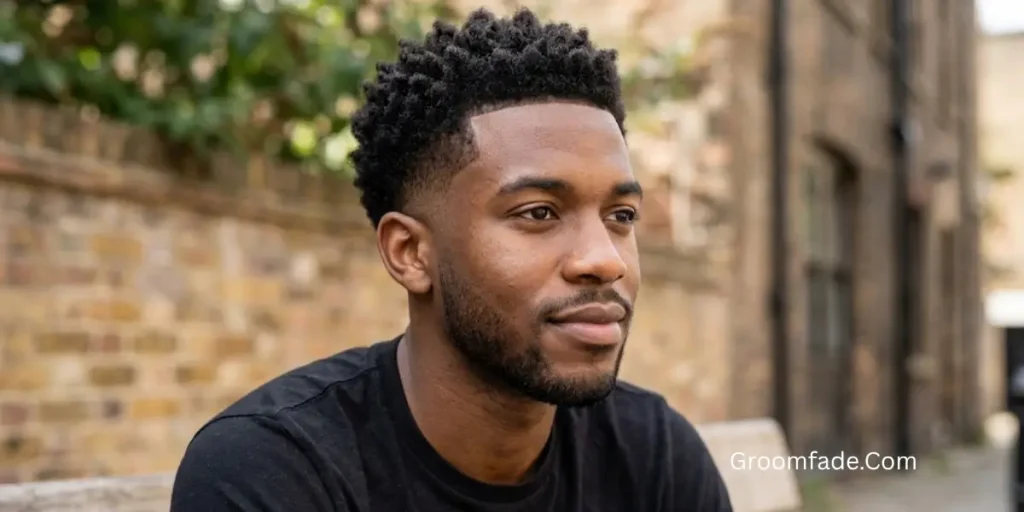
A textured crop low taper has a gradual reduction around the sideburns and neckline.
Most of the sides remain fuller, which gives the haircut a natural shape.
Pairing a low taper with a textured top is also useful if you do not want a very short fade.
Textured Crop Skin Fade
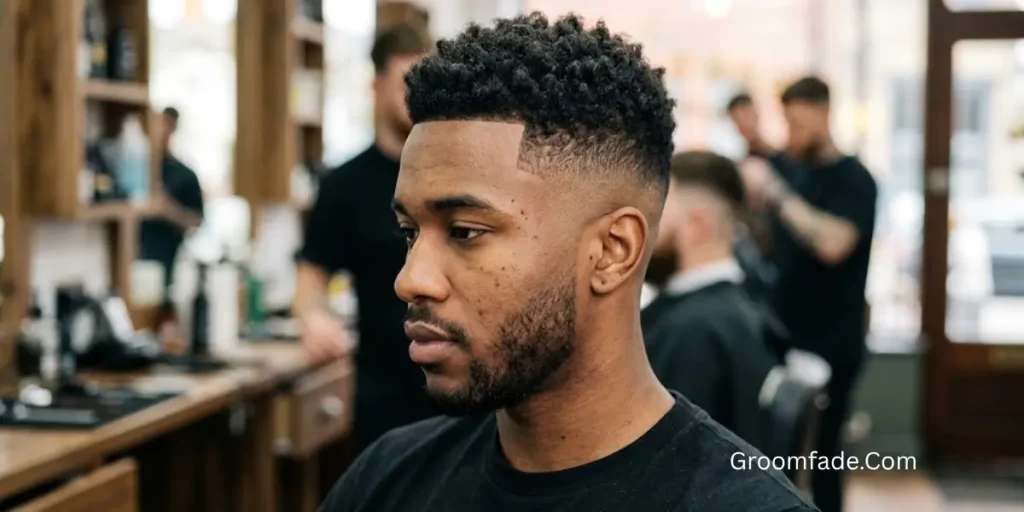
A skin fade takes the shortest part of the sides down close to the skin.
When paired with a textured crop, the difference between the top and sides becomes very clear.
This works particularly well when the top has a strong fringe and plenty of visible texture.
Textured Crop Drop Fade
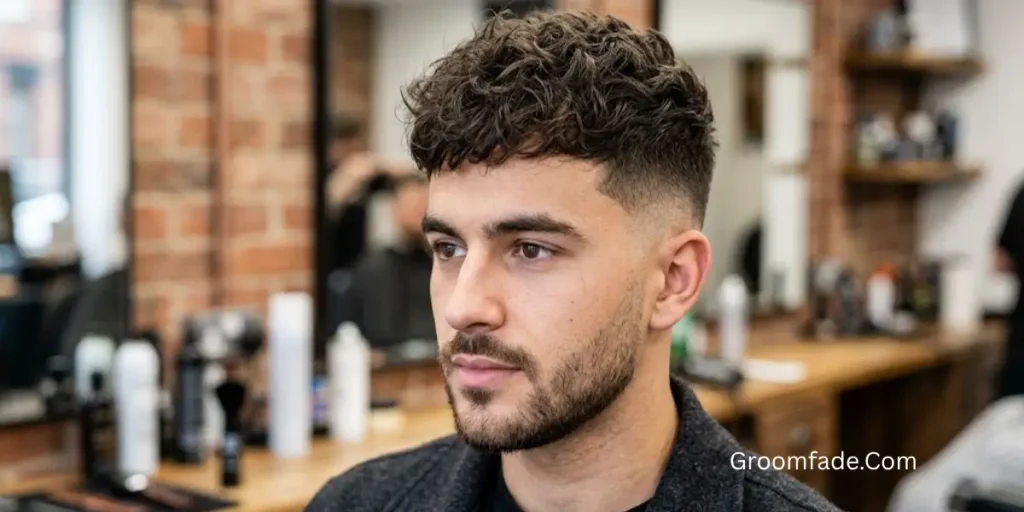
A drop fade follows the shape of the head and drops lower toward the back.
With a textured crop, it creates a curved fade line while leaving the textured top as the main focus.
It is a good choice when you want something different from a standard low, mid, or high fade.
Messy Textured Crop
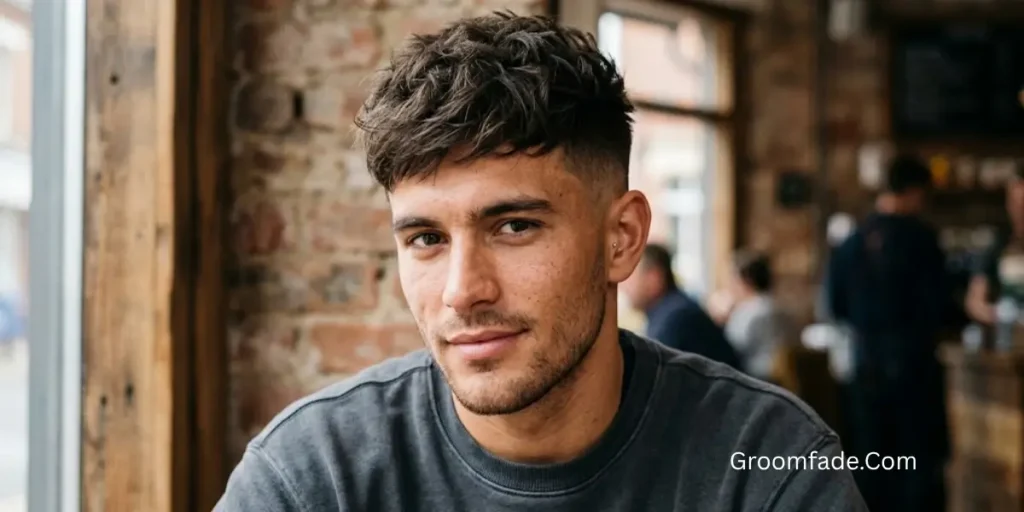
A messy textured crop haircut uses uneven texture and a relaxed fringe to create a casual finish.
The top should not look overly styled. Use your fingers to separate the hair instead of making every section sit perfectly.
A matte clay or paste usually works better than a shiny pomade for this look.
Textured French Crop
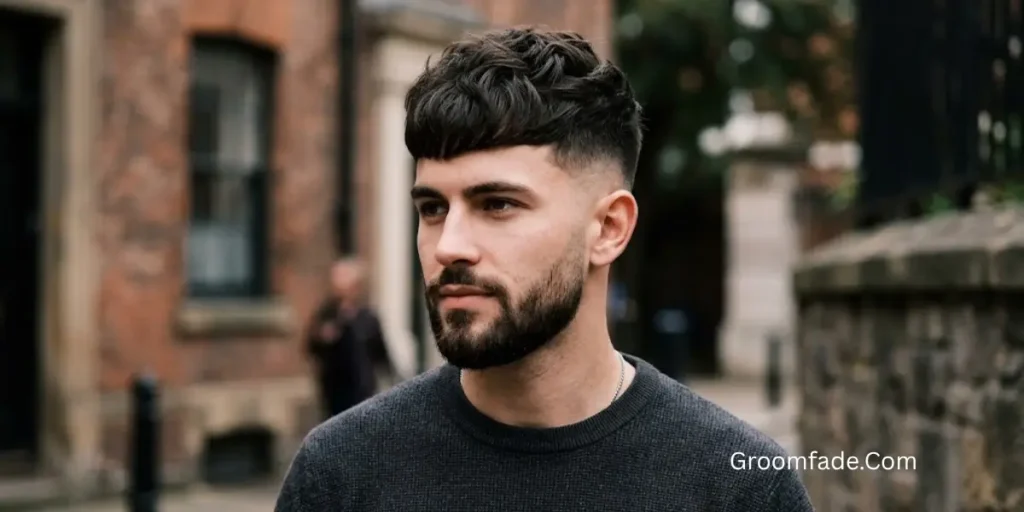
A textured French crop haircut is closely related to the textured crop but usually has a more defined forward fringe.
The top can still have choppy texture, but the front often has a clearer shape.
If you like the short fringe of a French crop but want more movement on top, this is a strong option.
Textured Fringe Crop
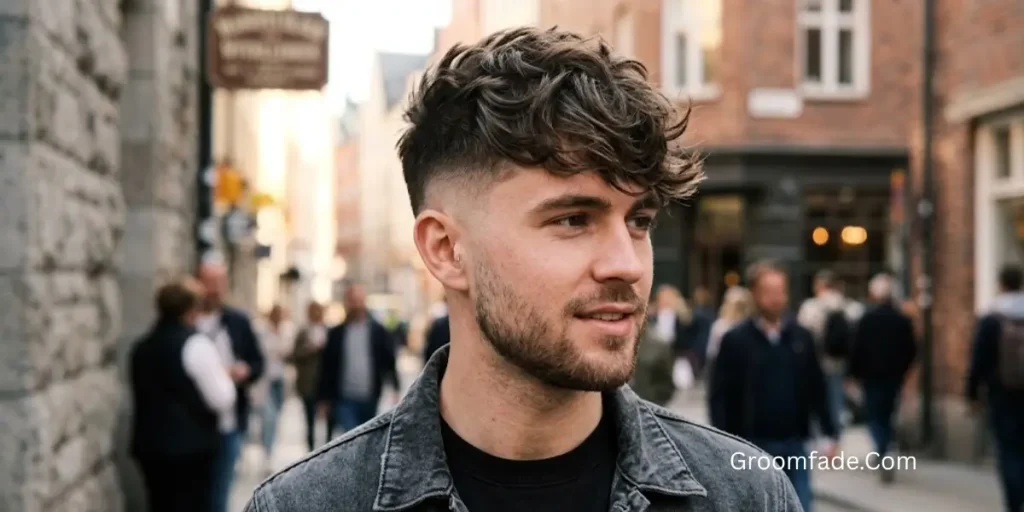
A textured fringe crop puts extra attention on the front of the haircut.
The fringe can be straight, slightly uneven, or broken into small sections. The right shape depends on your natural hairline and forehead.
Avoid making the fringe too heavy if your hair is fine, as excess weight can make the top look flat.
Medium Length Textured Crop
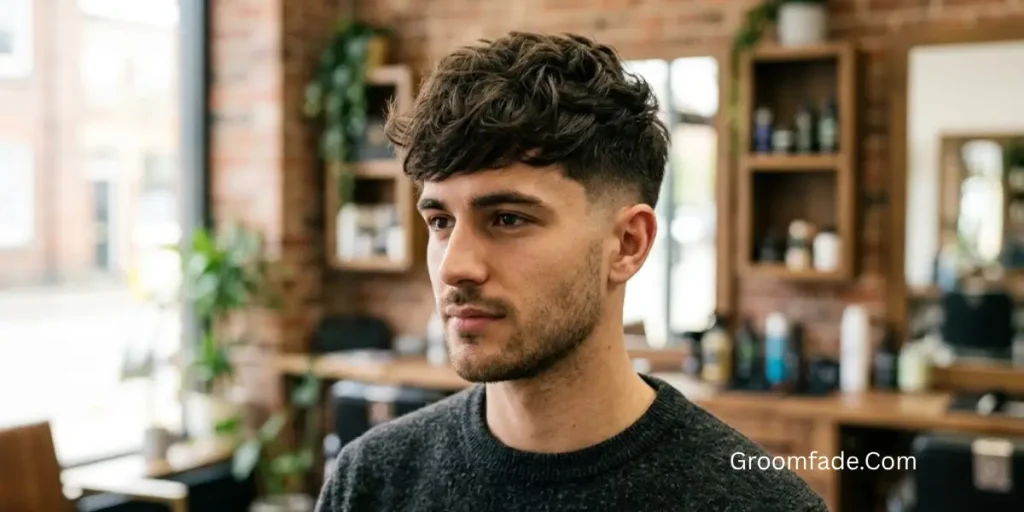
A medium-length textured crop leaves more hair on top than a traditional short crop.
The extra length gives you more styling options. You can push the fringe forward, slightly to the side, or create a loose messy finish.
This version is useful for men who want texture without going extremely short.
A crop with a medium fade gives you a little more weight around the lower sides. The Mid Drop Fade is a suitable choice when you want that curved fade pattern without taking the transition too high.
Long Textured Crop
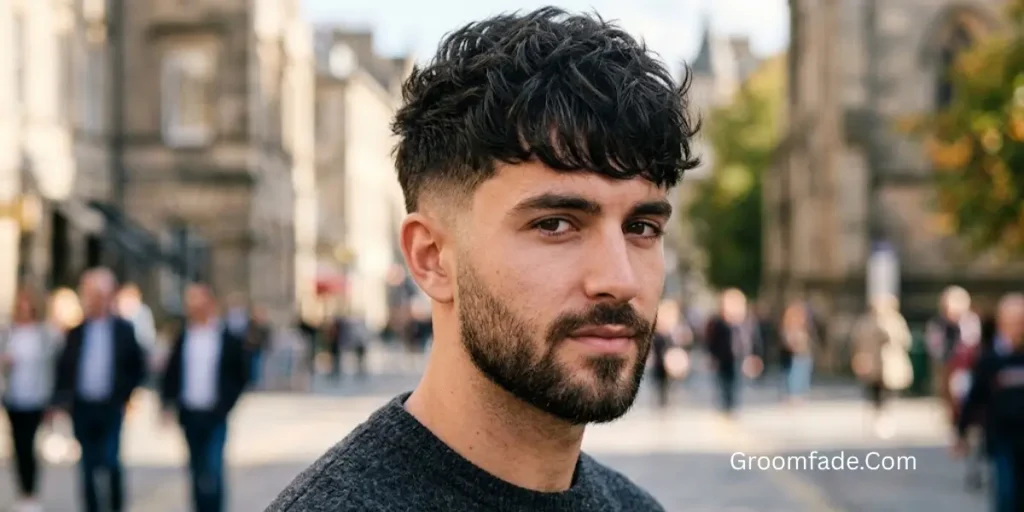
A long textured crop keeps additional length through the top and fringe.
It gives the haircut a softer appearance and allows more movement. The sides can still have a low or mid fade to create contrast.
This style needs slightly more styling than a short crop because the extra hair has more weight.
Textured Crop With Beard
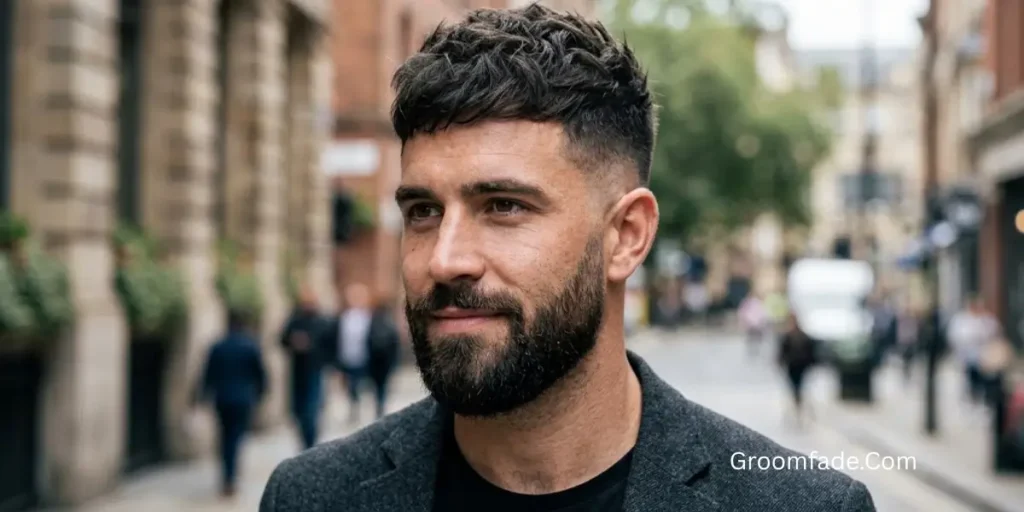
Adding a beard can make a textured crop look more balanced, especially when the sides of the haircut and beard are blended cleanly.
A short beard works well with a low or mid fade. A fuller beard can be paired with more length on the sides.
The goal is to keep the transition between hair, sideburns, and beard smooth.
Textured Crop for Straight Hair
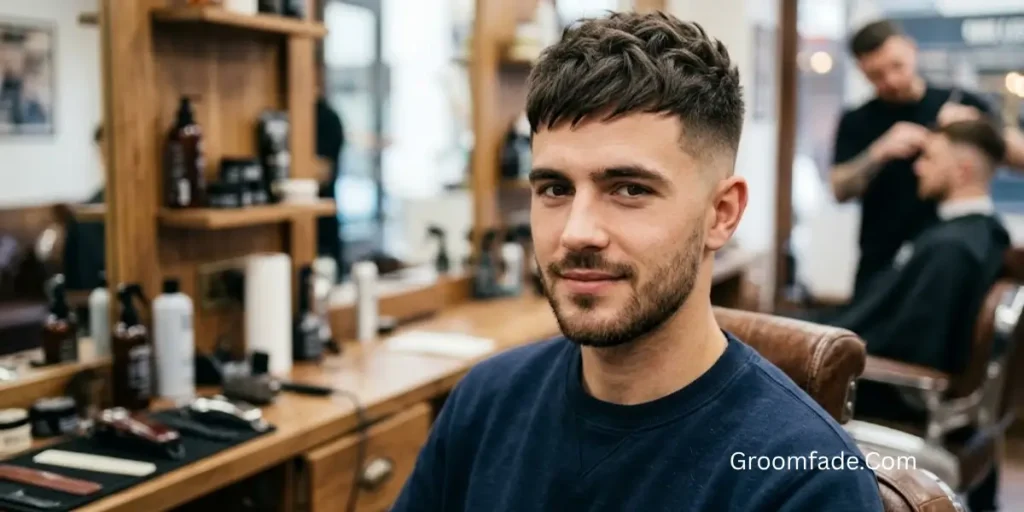
A textured crop haircut for straight hair can look very clean because the texture stands out clearly.
Straight hair can sometimes fall flat, so your barber should create enough separation on top without removing too much weight.
A matte styling product can add definition without making straight hair look greasy.
Textured Crop for Wavy Hair
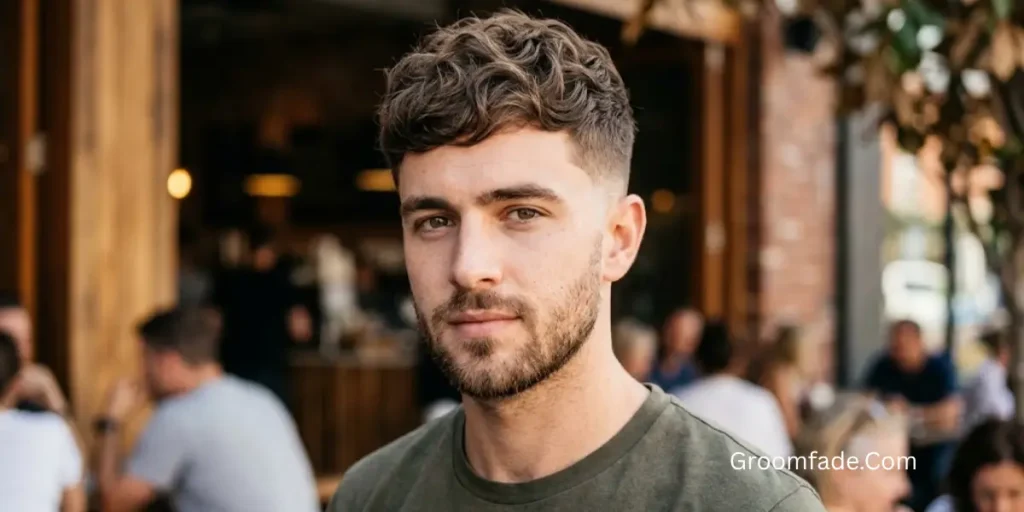
Wavy hair naturally adds movement to a textured crop.
Instead of fighting the natural wave, ask your barber to work with it. The top can be left slightly longer so the waves have room to form.
Use a light styling cream or matte paste when you want definition without making the waves stiff.
Textured Crop for Curly Hair
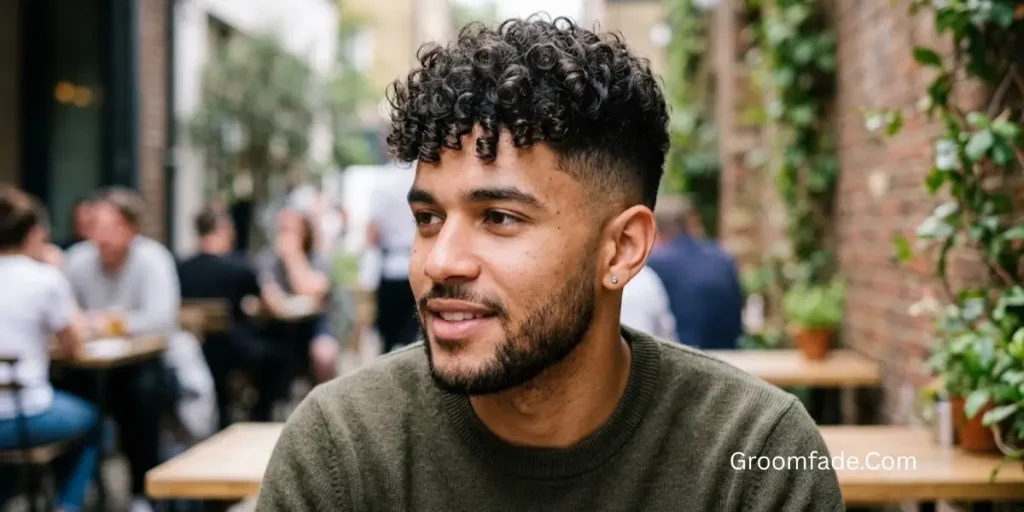
A textured crop haircut for curly hair can have a fuller and more natural appearance.
The curls provide texture without needing heavy styling. Your barber should consider how much the hair shrinks when it dries before deciding on the top length.
A low fade or taper can create a clean outline while keeping the curls as the main feature.
Textured Crop for Thick Hair
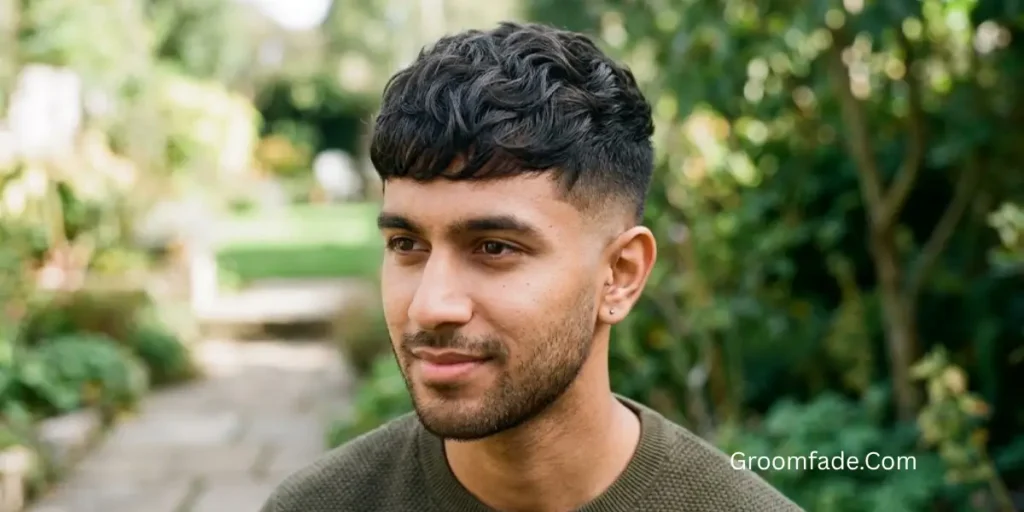
Thick hair can give a textured crop excellent volume, but too much weight can make the top look bulky.
Your barber can remove some internal weight and add texture while keeping enough length for the fringe.
A matte clay can help control thick hair without creating a wet finish.
Textured Crop for Thin or Fine Hair
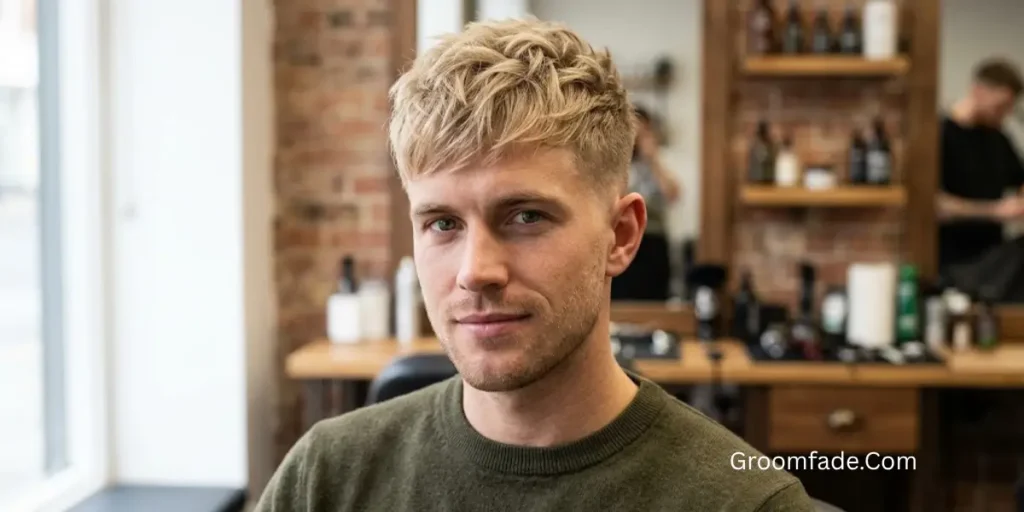
A textured crop can work with thin or fine hair when the cut is kept controlled.
Too much length can make fine hair look flat. A shorter textured top can create the appearance of more separation.
Use a small amount of lightweight styling product. Heavy wax or oily products may make fine hair look thinner.
For a more understated finish, a Low Drop Fade keeps the blend closer to the ears and neckline. This leaves more fullness around the sides and works naturally with textured crop styles.
Textured Crop for a Receding Hairline
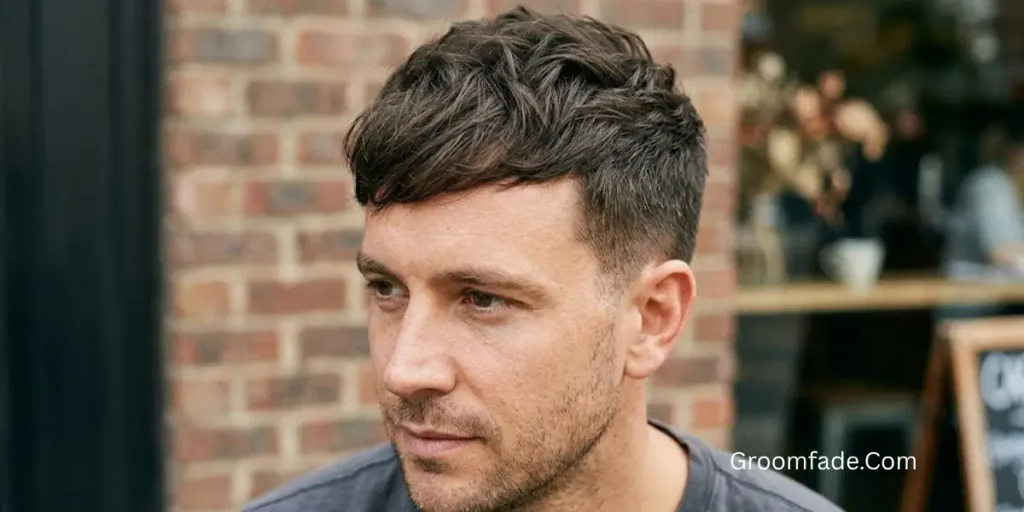
A textured crop haircut for a receding hairline can work because the forward fringe brings some visual coverage toward the front.
The fringe should follow your natural hairline rather than being forced into an unnatural position.
Texture also helps break up the front of the hairstyle, which can make the hairline less noticeable.
Textured Crop for Asian Hair
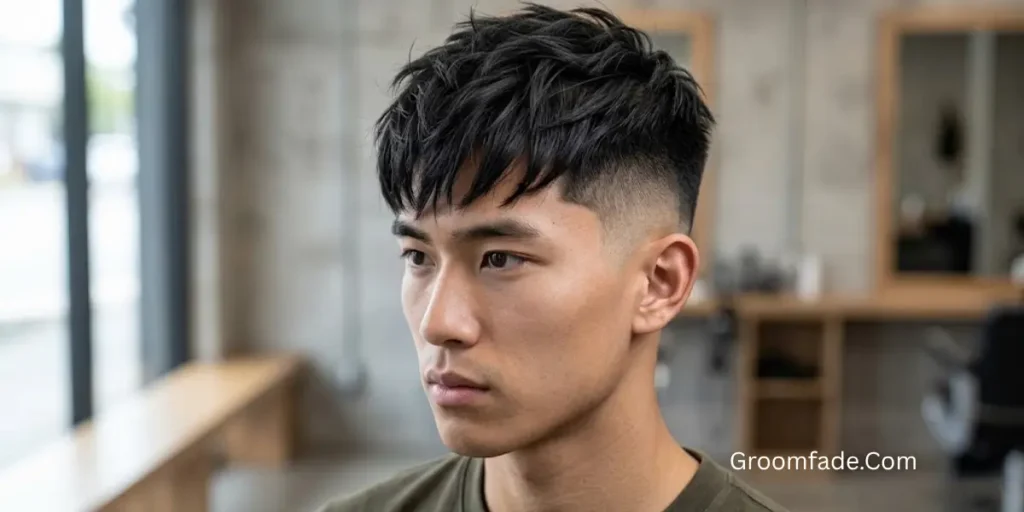
A textured crop haircut for Asian hair often works well with straight, thick hair.
The main challenge can be controlling the natural weight and stiffness of the hair. A barber may need to add texture carefully so the top does not stand up too heavily.
A low taper, mid fade, or clean fade can provide a sharp finish.
Textured Edgar Crop
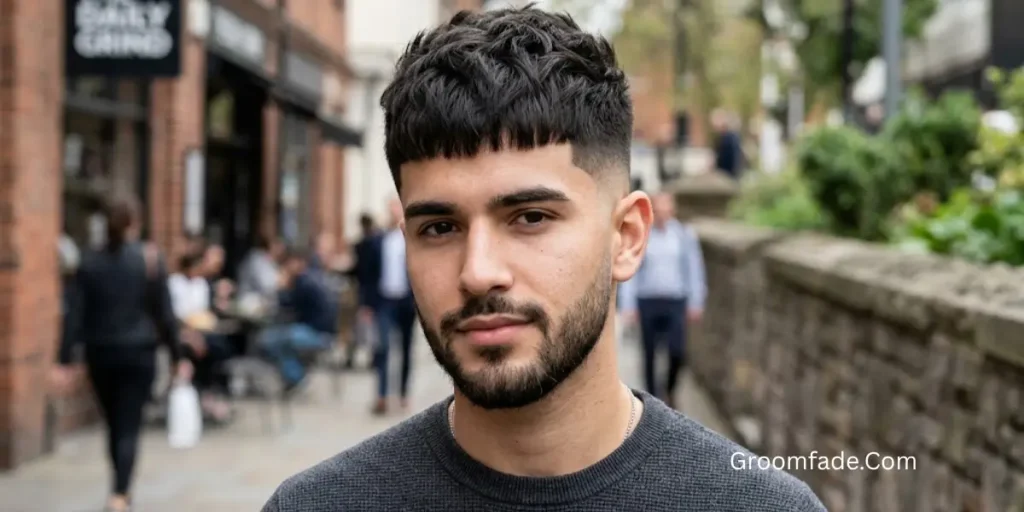
The textured Edgar crop combines the short forward fringe of an Edgar-inspired cut with a more broken-up textured top.
The front can be more defined, while the top has separation and movement.
It is a stronger choice for men who want a sharper, more noticeable version of the traditional crop.
Textured Crop Undercut
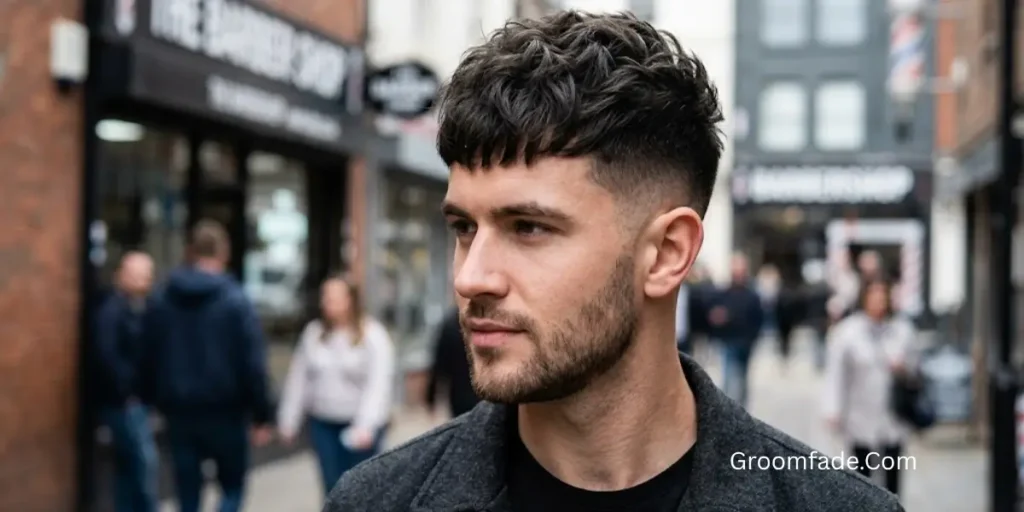
A textured crop undercut creates a stronger separation between the longer top and shorter sides.
Unlike a fade, the sides can have less of a gradual transition.
The result is bold and easy to recognize. It works best when you want the textured top to stand out clearly.
Modern Textured Crop
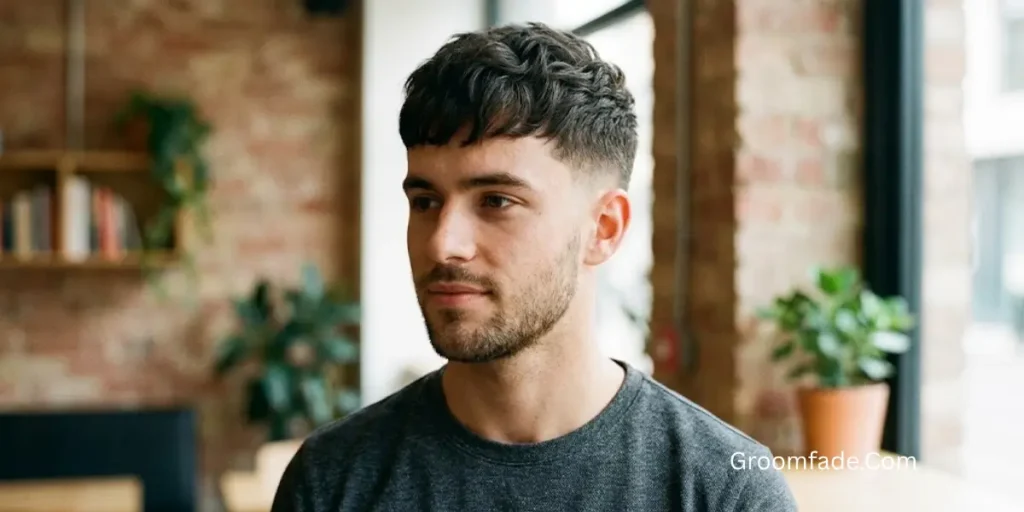
The modern textured crop gives you more freedom with the top, fringe, and sides.
You can combine a textured top with a low taper, mid fade, high fade, or even a softer scissor cut.
The best version is based on your natural hair rather than copying one exact photo. Your barber can adjust the length and texture to suit your hair density and face shape.
How to Choose the Right Textured Crop
The best textured crop is not always the one that looks best in a photo. Hair thickness, natural movement, face shape, and hairline all affect the final result.
Choose Your Fade or Taper
A low fade gives a softer appearance. A mid fade creates more contrast, while a high fade gives the haircut a stronger and sharper finish.
A taper keeps more hair around the sides and is often easier to wear in different settings.
Choose Your Top Length
Shorter hair is easier to maintain, while medium or longer hair gives you more styling options.
If your hair is fine, keeping too much length may make it look flat. Thick or curly hair may need extra length to control the shape.
A bolder crop can benefit from a higher fade that creates more separation between the top and sides. The High Drop Fade brings the transition higher while following the curved shape toward the back of the head.
Consider Your Face Shape
Oval faces usually work with many crop variations.
Round faces can benefit from a little more height and controlled texture on top.
Long faces may look better with less height and a stronger fringe.
Square faces can handle sharper fades and structured crop styles.
Your barber can adjust the top and sides instead of following one fixed formula.
Textured Crop vs French Crop
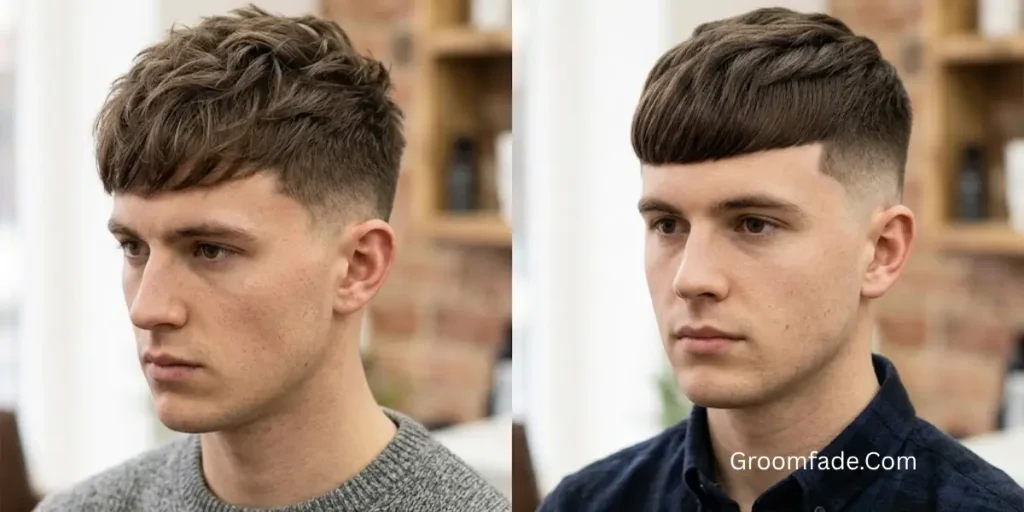
A textured crop and French crop are similar, but they are not exactly the same.
A French crop haircut usually has a more defined forward fringe. A textured crop places greater attention on separation and movement through the top.
If you want a neat, controlled front, a French crop may suit you. If you prefer a more broken-up and natural finish, a textured crop may be a better fit.
Textured Crop vs Caesar Cut
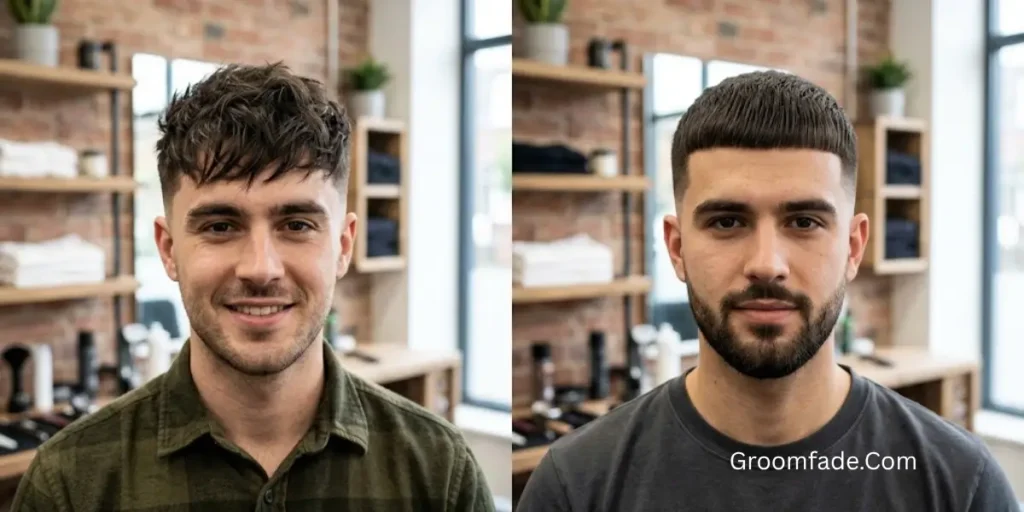
The Caesar cut normally has a very short, even fringe and a more uniform shape.
A textured crop gives the barber more freedom to create uneven texture and movement.
Both can use fades or tapers, but the textured crop generally has a more flexible top.
For men comparing different versions of this short, textured style, the Crop Haircuts for Men guide covers the main crop variations, top lengths, textures, and fade combinations.
How to Ask Your Barber for a Textured Crop
A clear request is better than simply saying, “Give me a textured crop.”
Tell your barber:
- How much length you want on top
- How short you want the fringe
- Whether you want a low, mid, or high fade
- Whether you prefer a taper
- How much texture you want
- Whether you want a natural or sharp finish
Example Barber Request
“I want a short textured crop with a forward fringe. Keep enough length on top for visible texture, and give me a mid fade on the sides. I want the finish natural and matte, not slick.”
Showing a reference photo can also help your barber understand the shape you want.
A GroomFade expert approach is to consider your actual hair type and hairline rather than choosing a style only because it looks good on someone else.
How to Style a Textured Crop Haircut
Start With Damp Hair
Wash or lightly wet your hair, then towel-dry it until it is damp rather than soaking wet.
Add a Light Styling Product
Use a small amount of matte clay, styling paste, or texture cream.
Start with less product. You can always add more.
Blow-Dry Forward
Use your fingers or a brush to guide the top toward the forehead.
For extra texture, move your fingers through different sections while drying.
Shape the Fringe
Keep the fringe slightly broken up instead of making it perfectly flat.
Finish With Your Fingers
Use your fingertips to separate the top and create the amount of texture you want.
Avoid making every strand look identical. A natural finish usually suits this haircut better.
Best Products for a Textured Crop
Matte clay: Best for thick hair and strong texture.
Styling paste: Good for medium hold with a softer finish.
Sea salt spray: Useful for adding light texture and movement before styling.
Texture powder: Helpful for fine hair when you want extra lift without a heavy finish.
Hair cream: Better for wavy or curly hair when you want softer control.
The right product depends on your hair density and the finish you want. More product does not always mean better texture.
How Often Should You Trim a Textured Crop?
Most textured crops look their best when trimmed every 3 to 5 weeks.
A fade or taper may need attention sooner if you want the sides to stay very sharp.
The top can usually grow a little longer without losing the overall shape, but the fringe may need trimming when it starts covering the eyes.
Frequently Asked Questions
Q1. What is a textured crop haircut?
A textured crop is a short hairstyle with a textured top, forward fringe, and shorter sides. The sides can use a fade, taper, or scissor cut.
Q2. How do I ask my barber for a textured crop?
Tell your barber your preferred top length, fringe length, fade or taper, and how much texture you want. A reference photo can make the desired shape clearer.
Q3. Which fade works best with a textured crop?
Low, mid, and high fades can all work. A low fade gives a softer look, a mid fade adds balanced contrast, and a high fade creates a stronger contrast.
Q4. Is a textured crop the same as a French crop?
No. They are related styles, but a French crop usually has a more defined fringe, while a textured crop focuses more on separation and movement through the top.
Q5. Is a textured crop good for thick hair?
Yes. Thick hair can provide strong natural volume and texture. Your barber may remove some weight so the top does not become too bulky.
Q6. Can I get a textured crop with curly hair?
Yes. Curly hair can create natural texture. The top length should be chosen with curl shrinkage in mind.
Q7. Is a textured crop good for thin hair?
It can work well when the top is not too long and the texture is controlled. Lightweight products can help avoid making fine hair look flat.
Q8. Is a textured crop good for a receding hairline?
A forward textured fringe can provide some visual coverage at the front. The haircut should follow your natural hairline rather than trying to force it into a different shape.
Q9. How often should I trim a textured crop?
A trim every 3 to 5 weeks usually keeps the haircut in shape. Fades may need more frequent maintenance if you want a very sharp finish.
Q10. What products are best for a textured crop?
Matte clay, styling paste, texture powder, sea salt spray, and lightweight hair cream can all work. Choose based on your hair type and desired hold.