
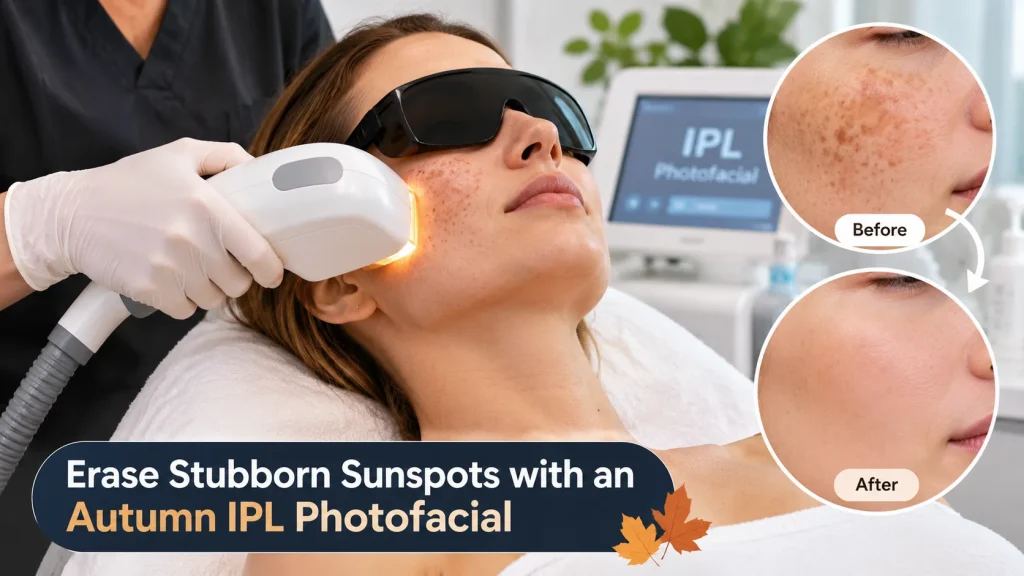
Summer leaves behind more than warm memories. Once your tan starts to fade in September and October, those stubborn brown patches, scattered freckles, and uneven spots on your cheeks, chest, and hands suddenly stand out. Topical brightening serums can only fade surface pigment so far. If you want to erase stubborn sunspots with an autumn IPL photofacial, the cooler months give your skin the exact conditions it needs for safe, visible clearing.
Understanding how light-based therapy works, why fall timing makes a measurable difference, and what recovery looks like will help you plan your sessions with confidence.
How an Autumn IPL Photofacial Clears Sun Damage Below the Surface
Intense Pulsed Light (IPL) is not a traditional single-wavelength laser. Instead, it delivers filtered pulses of broad-spectrum light through the outer layer of your skin without ablating or wounding the surface. That light energy seeks out two specific chromophores (color targets) beneath the skin: melanin, which creates brown sunspots and freckles, and hemoglobin, which causes visible redness and tiny broken capillaries.
When excess melanin absorbs those light pulses, the pigment heats up and shatters into microscopic particles. Over the following one to two weeks, your body naturally clears away the fragmented pigment through cellular turnover. Clinics in London, Ontario that use customizable platforms like the Lumenis M22 IPL can adjust wavelength filters and energy levels to match your specific skin tone and pigment depth. Because the outer skin barrier stays intact, you get targeted color correction without the extended downtime of aggressive resurfacing lasers.
Why Fall Beats Summer for Photorejuvenation
Timing matters more with light-based treatments than almost any other skincare procedure. Tanned skin holds extra active melanin at the surface, which competes for the IPL light energy and increases the risk of irritation or uneven results. Waiting until autumn gives your summer tan time to fade so your provider can safely target the deeper sunspots underneath.
Shorter days and a lower UV index across Southwestern Ontario also make post-treatment sun avoidance much easier to manage. Starting your autumn IPL photofacial series in the fall gives you plenty of runway to complete multiple sessions before winter holiday gatherings or next spring’s sunshine arrive.
What Skin Concerns Respond Best to IPL
An IPL photofacial works best as a tone-and-color treatment rather than a texture overhaul. You are most likely to see strong results if you want to address:
- Sunspots and age spots (solar lentigines) on your face, neck, chest, and the backs of your hands.
- UV-triggered freckling and blotchy hyperpigmentation that topical products have not budged.
- Persistent facial flushing, diffuse redness, and small visible surface capillaries.
- Post-acne red or brown marks that linger long after a breakout heals.
If your primary goals involve deep wrinkles, acne scarring, or skin laxity, your provider may suggest pairing IPL with microneedling or laser resurfacing in a separate phase. Matching the device to the actual concern is what delivers results worth your time.
What Happens During Your Appointment and Recovery Timeline
Every safe IPL session starts with an in-person skin evaluation, not the handpiece. Your clinician will examine your skin tone, assess the depth of your pigmentation, ask about recent sun exposure or self-tanners, and review any photosensitizing medications. People with fair to medium skin tones generally respond most predictably to IPL, while deeper skin tones or melasma-prone skin often require alternative treatments to avoid triggering rebound pigment.
Once you are cleared for treatment, the appointment itself is straightforward. Your provider cleanses your skin, places protective shields over your eyes, and applies a cool conductive gel. As the handpiece glides across the treatment area, each pulse feels like a quick, warm snap against the skin. Most sessions take 20 to 45 minutes depending on whether you are treating just your face or adding your neck, chest, and hands.
Your Post-Treatment Healing Timeline
Knowing what happens to your spots after you leave the clinic keeps you from worrying during the healing phase. Expect a predictable progression over the next few weeks:
- First few hours: Your skin may look mildly flushed and feel lightly sunburned. Most people return to work or normal errands the same afternoon.
- Days 1 to 3: Treated sunspots visibly darken and take on a speckled, pepper-like appearance. This darkening is a positive sign that the melanin absorbed the light energy.
- Days 7 to 14: The darkened pigment rises to the surface and gently flakes or sheds away on its own, revealing clearer, more even-toned skin underneath.
- Weeks 2 to 4 and beyond: Overall clarity continues to brighten. Most patients achieve their best clearing after a series of 3 to 5 sessions spaced 3 to 4 weeks apart.
Simple Steps to Protect Your Results All Season Long
What you do between appointments directly shapes how well your skin clears and how long those results last. Before each session, keep your skin completely free of direct sun exposure, tanning beds, and self-tanning lotions for at least two weeks. Pause prescription retinoids and strong exfoliating acids a few days before your visit so your skin barrier stays calm.
After your appointment, treat your skin gently while the pigment sheds. Follow these core aftercare habits:
- Skip retinoids, glycolic or salicylic acids, physical scrubs, and harsh cleansers for about one week.
- Avoid intense heat sources like saunas, steam rooms, hot yoga, and scalding showers for 48 to 72 hours.
- Never pick, scratch, or force darkened spots to peel, as doing so can irritate healing skin and leave marks.
- Apply daily mineral broad-spectrum sunscreen (SPF 30 or higher) every single morning, even on cloudy autumn days.
Unprotected UV exposure can quickly reactivate pigment cells and undo months of progress, so consistent sun protection stays part of your routine year-round. Once you finish your initial autumn series, many people maintain their clarity with a single touch-up session each fall.
Clearing years of accumulated sun damage takes a realistic plan rather than a quick fix. If you are ready to see whether light-based photorejuvenation fits your skin type and goals, take the next step to book a personalized skin assessment with a qualified medical aesthetics provider this season.