
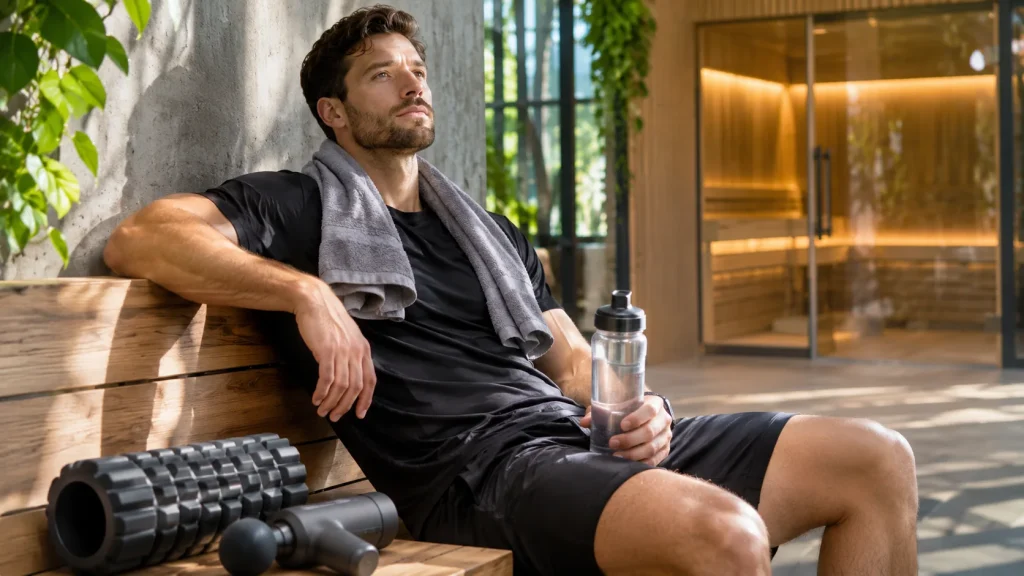
Walk into a well-equipped gym on a Sunday morning and you might find more people in the sauna than on the squat rack. Ice baths have moved from elite sports clubs into back gardens. Sleep trackers sit on wrists that once wore nothing more technical than a basic digital watch, and massage guns have become a standard birthday present for any man who owns a pair of trainers.
Recovery, once the dull bit between workouts, has become a culture in its own right. Men who would once have boasted about training seven days a week now talk about rest days, heart rate variability and “deloads” with the same enthusiasm they used to reserve for personal records. That curiosity has also spilled into the science of how tissues repair, and peptide research has become part of the online conversation. Suppliers such as Bluum Peptides state clearly on their sites that their products are supplied for research use only, which is a useful reminder that laboratory interest and everyday recovery are two very different things.
Even the most basic laboratory supplies now have dedicated online retailers. Bac Water Outlet, for example, focuses on bacteriostatic water, a sterile laboratory consumable containing a preservative, rather than on the research compounds themselves. Its existence says less about any breakthrough and more about how specialised the research supply market has become, with separate businesses for the unglamorous essentials that labs order in bulk.
For the average man trying to feel less battered after leg day, though, the more pressing question is simpler. Which parts of the recovery boom rest on solid evidence, which are promising but unproven, and which are mostly ritual? The answers are not always what the marketing suggests.
Why Recovery Became Cool
The burnout backlash
The “no days off” era of fitness left a lot of people injured, exhausted or simply bored. As training culture matured, more men came to accept a point that coaches had been making for decades: adaptation happens during rest, not during the session itself. Training provides the stimulus. Recovery is where the body responds to it.
Data made rest measurable
Wearable devices turned recovery into something you could see. Sleep scores, resting heart rate and readiness ratings gave men a number to chase, and men generally like a number to chase. The accuracy of consumer wearables varies, and their scores should be taken as rough guides rather than medical measurements, but they have made rest feel like an active part of training rather than an absence of it.
Wellness went masculine
For a long time, spas, massages and self-care rituals were marketed almost entirely to women. That has changed. Grooming brands, gyms and wellness studios now pitch recovery directly at men, often wrapped in the language of performance. A sauna session is no longer an indulgence; it is “part of the programme”. Whatever you make of that framing, it has opened the door for many men to look after themselves without feeling self-conscious about it.
The Evidence Behind Popular Recovery Habits
Sleep: the unglamorous champion
If there is one recovery tool with overwhelming support, it is sleep. Decades of research link adequate sleep to physical performance, mood, appetite regulation and general health. It costs nothing, needs no equipment and is usually the first thing people sacrifice when life gets busy. Any honest recovery plan starts here.
Practical habits help: a consistent bedtime, a dark and cool bedroom, less caffeine late in the day and a break from screens before bed. None of this will trend on social media, but it does more for most people than any gadget.
Nutrition and hydration
Eating enough overall, getting adequate protein and staying hydrated are well-established foundations of recovery from training. Again, there is nothing secret here. The challenge is consistency rather than knowledge.
Planned rest and deloads
Structured programmes often include lighter weeks, known as deloads, where training volume or intensity drops for a short period. The idea is to let accumulated fatigue settle before the next block of harder work. Coaches have used this approach for a long time, and it remains one of the most practical recovery strategies available.
Saunas and cold water
Heat and cold sit in more contested territory. Many people find saunas relaxing and enjoy the ritual, and there is a growing body of research into heat exposure. Cold-water immersion is popular for the way it makes people feel afterwards, though researchers continue to debate its effects on longer-term training adaptations. Both are perfectly reasonable things to enjoy, but the evidence is more nuanced than the enthusiastic videos imply.
Massage tools and mobility work
Foam rollers and massage guns often make muscles feel looser, at least for a while. Mobility work can help with range of movement. These tools are generally sensible additions to a routine, provided they are seen as comfort and maintenance rather than miracle fixes.
Where Peptide Research Fits in the Conversation
Why peptides attract attention
Peptides are short chains of amino acids, and the body uses many of them as signalling molecules. That makes them a natural subject for scientists studying inflammation, tissue repair and healing. It also makes them a magnet for online speculation, because anything linked to repair and recovery is going to catch the eye of people who spend their weekends sore.
Preclinical means preclinical
Take KPV, a short peptide fragment that comes up in discussions about inflammation. The research on KPV is preclinical. In plain terms, it has been studied in laboratory and animal models, not established through clinical trials in people. Preclinical findings can be scientifically interesting and worth following, but they are not evidence that something works or is safe in humans. Many compounds that look promising at this stage never progress further.
That distinction is often lost online. A promising mouse study becomes a “recovery hack” within a few reposts. The responsible way to talk about such research is to describe it accurately: interesting, early, unproven.
The research-use-only boundary
Research peptides are supplied for laboratory work and carry a research-use-only designation. They are not approved medicines and they are not intended for personal use. Reputable suppliers repeat this point clearly, and it should be taken at face value rather than treated as a formality. Anyone with questions about their own recovery, pain or injury should speak to a GP or physiotherapist, not a product page.
Recovery Starts to Look Like Grooming
The post-training routine
One quiet consequence of the recovery trend is that it has blurred the line between fitness and grooming. The ten minutes after a session, once spent grabbing a bag and leaving, now often include a proper shower, a skincare step and a change into clothes that feel good to wear. For many men, that routine is as much about switching off mentally as it is about looking presentable.
Skin, sweat and heat
Regular training, saunas and hot showers can all leave skin feeling dry or irritated, particularly in winter. A gentle cleanser and a simple moisturiser go a long way, and men with beards often find that a little beard oil stops the itch that follows a hot session. None of this is clinical advice. It is ordinary grooming common sense, applied to a lifestyle that involves a lot more sweat than it used to.
Dressing for rest
Even clothing has joined in. Soft, well-cut loungewear and decent sliders have become part of the recovery look, and there is something to be said for clothes that signal to your brain that the hard work is done for the day. Rest is easier when it feels deliberate.
Building a Recovery Routine That Respects the Evidence
Start with the foundations
Before buying anything, look at the basics. Are you sleeping enough? Eating enough? Taking rest days? Following a programme with sensible progression? For most men, fixing one of these will make a bigger difference than any new device.
Add what you enjoy
If you love the sauna, go. If a cold shower makes you feel alive, carry on. If ten minutes with a foam roller helps you unwind in the evening, that is time well spent. Recovery habits that you enjoy are habits you will keep, and enjoyment has value in its own right.
Be honest about what is ritual
There is nothing wrong with ritual. Lighting a candle, running a bath or sitting quietly after a hard session can all help you switch off. Just be clear-eyed about the difference between a ritual that makes you feel good and a treatment with proven physical effects. Both have a place, but they are not the same thing.
Know when to get help
Persistent pain, an injury that will not settle, or fatigue that does not lift with rest are all signs to speak to a professional. A physiotherapist, sports medicine specialist or GP can assess what is going on. No amount of online reading replaces that.
The Real Recovery Revolution
The most important change in men’s fitness over the last decade may not be any gadget or compound. It is the simple acceptance that rest matters. For men raised on the idea that pain equals progress, that is a genuine shift in attitude, and a healthy one.
The recovery boom has its excesses, of course. Some products are overpriced, some claims are overblown and some research is discussed far more confidently than it deserves. Peptide research, in particular, is an area where early laboratory findings are easily mistaken for established fact. Keeping that distinction clear is part of being a well-informed reader.
There is also a commercial reality worth acknowledging. Recovery has become a lucrative category, and anything that can be sold as an edge will be marketed hard. That is not a reason for cynicism about every product or habit, only a reason to ask the same questions you would ask of any purchase. What does it claim to do? What is that claim based on? And would you still want it if the answer turned out to be “we’re not sure yet”?
But the core message is sound. Sleep well. Eat properly. Train with a plan that includes rest. Enjoy the rituals that help you relax, and stay curious about the science without getting ahead of it. Rest, it turns out, really is the new rep, and it may be the one that most men have been skipping for years.