
A memorable Halloween costume does more than make someone look different for a night. It tells a story, creates a mood, and gives people a chance to step into a character they would never normally play. Whether the goal is to look genuinely frightening, channel a mysterious fantasy figure, or create a clever costume inspired by a favourite film, the best results come from combining a strong idea with thoughtful details.
Yet putting together a great Halloween look can be harder than it seems. There are countless costume themes, accessories, makeup styles, and finishing touches to consider. A costume may look impressive in an inspiration photo but feel uncomfortable after an hour at a party. Another may have a great outfit but lack the one defining detail that makes the character recognisable.
The secret is to plan the look as a complete concept. Start with a theme, choose a focal point, coordinate the outfit and accessories, and make sure everything is practical enough to wear throughout the event.
1. Start With a Halloween Costume Theme
Before shopping for clothing or accessories, decide what kind of character or atmosphere you want to create. A clear theme makes the rest of the process easier because every styling decision can support the same idea.
Classic horror characters
Traditional horror themes remain popular because they are instantly recognisable. Vampires, witches, skeletons, ghosts, zombies, and sinister clowns all offer plenty of room for interpretation. You can recreate a familiar look or give it a modern twist with unusual colours, dramatic makeup, and distinctive accessories.
For example, a vampire costume does not have to rely entirely on a black cape and fake fangs. Rich fabrics, dark eye makeup, a dramatic collar, and carefully chosen jewellery can make the character feel more sophisticated and theatrical.
Fantasy and mythical characters
Fantasy costumes are ideal for anyone who wants something imaginative rather than traditionally frightening. Think woodland creatures, dark fairies, Medusa-inspired characters, mythical beasts, or mysterious forest spirits.
These looks often depend on visual details such as horns, feathers, sculptural headpieces, metallic finishes, and unusual textures. A well-chosen accessory can make a relatively simple outfit feel like a complete character.
Gothic and masquerade-inspired looks
Not every Halloween costume needs to be covered in fake blood or designed to frighten people. Gothic and masquerade-inspired outfits offer a more elegant approach, combining mystery with theatrical styling.
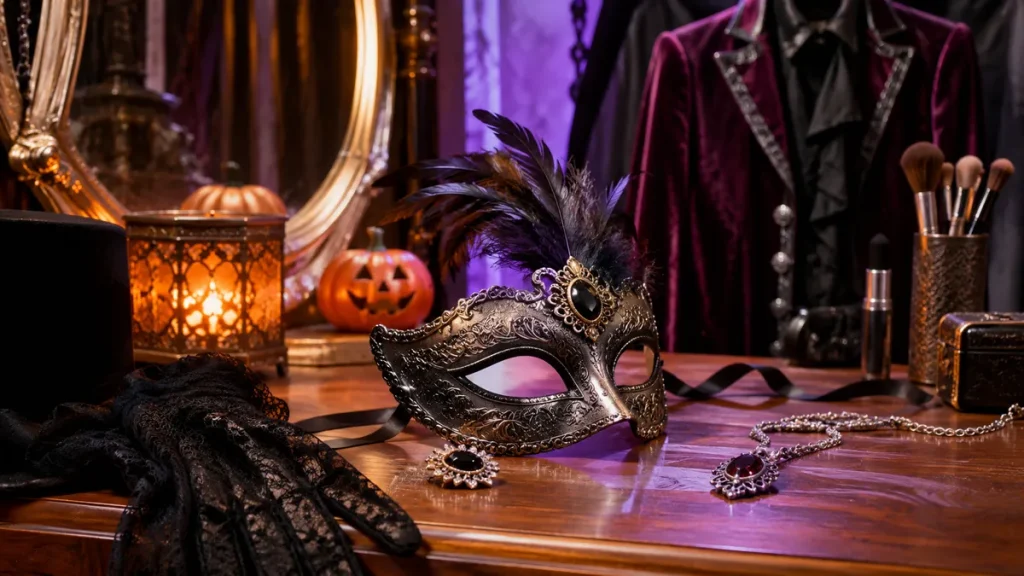
Dark lace, velvet, dramatic silhouettes, ornate jewellery, and decorative face coverings can create a striking appearance. This theme is particularly effective for formal Halloween parties where guests want costumes that feel polished as well as imaginative.
2. Make One Accessory the Centrepiece
A common costume mistake is trying to make every part of the outfit equally elaborate. Too many competing details can make a look feel confusing rather than impressive. A better strategy is to choose one focal point and build the rest of the costume around it.
For some characters, that focal point might be a dramatic hat or headpiece. For others, it could be a distinctive wig, a pair of statement boots, unusual jewellery, or a carefully designed mask.
Why masks can transform a costume
A mask changes the appearance of the face, which is often the first detail people notice. It can make a simple outfit feel mysterious, turn an ordinary look into a supernatural character, or give a costume a more theatrical identity.
The right halloween masks can also help establish a theme without requiring an elaborate outfit from head to toe. A skull design may suit a gothic character, an animal-inspired mask can support a fantasy look, and a plague-doctor style can create an instantly recognisable historical horror aesthetic.
When choosing a mask, consider its visual impact alongside practical factors such as fit, visibility, breathing comfort, and how securely it stays in place. A striking accessory is only useful if you can wear it comfortably throughout the event.
3. Coordinate the Costume From Head to Toe
Once the main theme and focal accessory are decided, bring the rest of the outfit together. Consistency is more important than the number of items involved.
Choose a focused colour palette
Colour helps communicate a character quickly. Black, silver, and deep purple can create a gothic atmosphere, while red and black often suggest a dramatic horror theme. Gold, bronze, and jewel tones can work well for mythical or regal characters.
Choose two or three main colours and repeat them across the outfit. For example, a metallic mask can be coordinated with jewellery, belt details, or decorative trim. This creates a more intentional appearance than mixing unrelated accessories.
Mix textures for visual depth
Different materials can make a costume more interesting even when the colour palette is simple. Velvet, lace, leather-look fabrics, feathers, mesh, satin, and metallic details each contribute a different visual quality.
A gothic costume might combine a velvet jacket with lace gloves and a metallic accessory. A fantasy character could use flowing fabric alongside structured headwear and feather details. The contrast between textures helps the outfit look layered and considered.
Pay attention to footwear
Shoes are easy to overlook when planning a costume, but they affect both the final appearance and comfort. Choose footwear that suits the character while allowing you to stand, walk, and dance safely.
If the costume calls for dramatic boots or heels, test them before the event. A practical alternative can preserve the overall look without making the evening uncomfortable.
4. Use Makeup to Strengthen the Character
Makeup can help connect the costume’s different elements. It can create a dramatic expression, add texture, or make a character look more supernatural.
For a skull-inspired costume, darker shading around the eyes and carefully placed contouring can create a skeletal effect. A vampire look might use pale foundation, deep lip colour, and defined eyes. Fantasy characters can incorporate metallic accents, graphic lines, or decorative patterns.
However, makeup should complement the main accessory rather than compete with it. If the mask already has intricate decoration, a simpler makeup style may create a more balanced result. If the face is mostly uncovered, makeup can become the main visual feature.
Use products intended for cosmetic application, follow their instructions, and avoid applying makeup or adhesives too close to the eyes. Test unfamiliar products before the event, especially if your skin is sensitive.
5. Find the Right Balance Between Scary and Stylish
Halloween costumes can take many directions, from genuinely frightening to playful, glamorous, or surreal. The most successful approach depends on the event and the atmosphere you want to create.
For a genuinely frightening look
Focus on silhouette, contrast, and recognisable horror details. A distressed costume, dramatic mask, and controlled makeup can create a disturbing effect without requiring expensive materials.
For a glamorous Halloween party
Choose a more polished outfit with a strong accessory. A fitted dark outfit, elegant fabrics, and an ornate mask can create a mysterious appearance that feels appropriate for an evening event.
For a creative fantasy costume
Combine unexpected elements while maintaining a consistent story. A mythical character might use an animal-inspired mask, sculptural headwear, flowing clothing, and a limited colour palette. The result can be imaginative without looking like a collection of unrelated accessories.
6. Plan Group and Couples Costumes
Group costumes can be especially memorable because they create a shared visual theme. However, coordinating several outfits requires a little more planning than creating a solo costume.
Start by choosing a concept that allows each person to have an individual identity. A group might represent different horror characters, mythical creatures, members of a supernatural court, or variations of the same theme.
For couples, complementary looks often work better than identical outfits. A wolf and moon-inspired character, a vampire pair, or two contrasting masquerade figures can look coordinated while allowing each person to express their own style.
A few practical tips can make group planning easier:
- Agree on the theme before buying individual pieces.
- Choose a shared colour palette or recurring accessory.
- Decide which elements need to match and which can be different.
- Check that everyone can move comfortably in their outfit.
- Order important accessories early enough to allow for adjustments.
The goal is to create a recognisable connection between the costumes without making every person look exactly the same.
7. Make Sure the Costume Is Comfortable and Practical
An impressive costume should work in real conditions, not just in a photograph. Halloween events can involve crowded rooms, outdoor walking, dancing, and several hours of continuous wear.
Consider the following before the event:
Visibility: Masks and headpieces should not block your ability to see where you are walking. If visibility is limited, choose a safer design or remove the accessory when moving through crowded areas.
Breathing and fit: Check that a mask fits securely without putting uncomfortable pressure on the face. Avoid wearing anything that restricts breathing.
Movement: Long capes, trailing fabric, oversized accessories, and elaborate footwear can become difficult to manage in crowded spaces. Test the full outfit before leaving home.
Weather: Outdoor events may require an extra layer or a costume that can handle changing temperatures. Consider how the material will feel if it becomes cold, warm, or damp.
Transport: If the costume includes delicate headwear or decorative accessories, plan how to carry and store them safely.
A short dress rehearsal can reveal problems that would otherwise appear at the worst possible moment.
8. Create a Halloween Costume on a Budget
A great costume does not need to be expensive. In fact, some of the most creative looks come from combining clothing and accessories that are already available.
Start by checking your wardrobe for pieces that fit the chosen theme. A black shirt, dark trousers, an old jacket, or a simple dress can provide the foundation for many characters. Then identify the one or two accessories that will make the outfit recognisable.
DIY details can also add personality. Fabric scraps, safe decorative materials, temporary makeup, and carefully selected jewellery can help personalise a basic costume. The important thing is to avoid making the outfit unnecessarily complicated.
A useful budget strategy is to spend on the most visible or defining element and keep the remaining pieces simple. If the mask or headpiece is the centrepiece, there may be no need for an elaborate costume as well.
9. Prepare Your Costume Before Halloween Night
Leaving everything until the last minute can lead to missing accessories, uncomfortable clothing, or a look that does not come together as expected. Preparing early gives you time to make adjustments.
A few days before the event, lay out the entire costume and try it on from head to toe. Check that the colours work together, accessories stay in place, and footwear is comfortable. Test makeup and any special effects products in advance.
Keep smaller items together in one place so that they are easy to find when getting ready. If the costume includes a mask, store it in a protective container to avoid damage or unwanted changes to its shape.
Finally, take a photograph of the complete outfit. Looking at the costume from a distance can make it easier to spot details that need adjusting.
Frequently Asked Questions
What makes a Halloween costume stand out?
A clear theme, a recognisable focal point, and coordinated details usually make a costume memorable. Rather than adding as many accessories as possible, choose a few elements that support the same character or story.
Are masks a good choice for Halloween costumes?
Yes. Masks can quickly establish a character and make a simple outfit more distinctive. Choose a design that suits the theme while allowing comfortable breathing, adequate visibility, and a secure fit.
How can I make a Halloween costume look more expensive?
Focus on fit, colour coordination, and texture. A simple outfit with well-chosen accessories and neat finishing details can look more polished than an elaborate costume with mismatched elements.
What are some easy Halloween costume ideas?
Classic options include witches, vampires, skeletons, ghosts, and gothic characters. These themes can be created with basic clothing, makeup, and one distinctive accessory.
How early should I plan a Halloween costume?
Starting several weeks ahead gives you time to compare ideas, find the right accessories, test the outfit, and make adjustments. This is particularly helpful when ordering items or coordinating a group costume.
How do I make a group Halloween costume look coordinated?
Choose a shared theme, colour palette, or recurring accessory. Give each person a distinct character while keeping enough visual elements consistent to make the group look connected.
A memorable Halloween look is also an opportunity to express your personal style. Beyond costumes, exploring different fashion and grooming ideas can help you discover clothing combinations, accessories, and styling choices that suit your personality throughout the year.
Final Thoughts
Creating a Halloween costume that people remember is about more than buying an outfit. It involves choosing a character, understanding the visual details that define it, and bringing clothing, accessories, makeup, and practical considerations together.
Start with a strong concept, select one standout feature, and build the rest of the look around it. Whether the result is frightening, glamorous, gothic, or fantastical, thoughtful styling can turn even a simple costume into something distinctive. Most importantly, make sure the finished outfit is comfortable and practical enough to enjoy the entire celebration.