
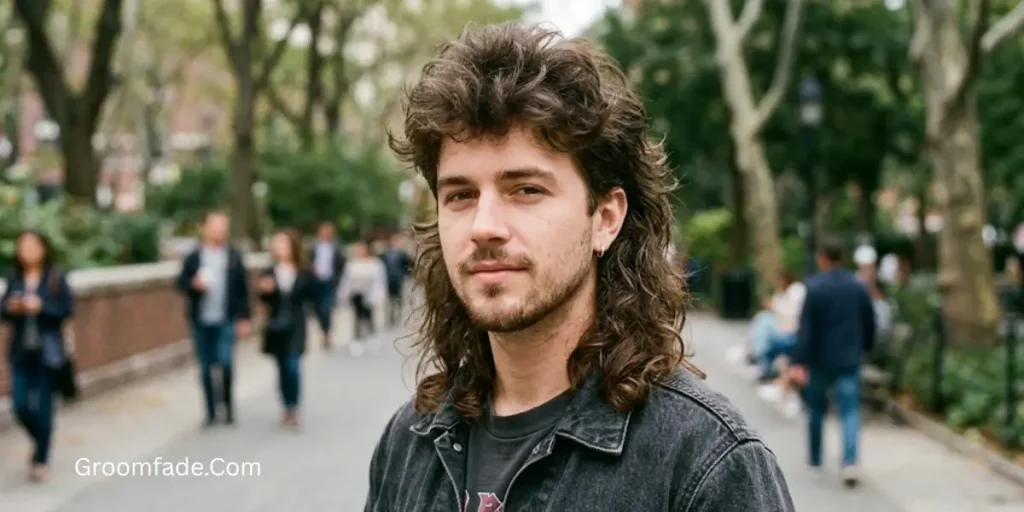
The 80s Mullet is one of the most recognizable hairstyles from the 1980s. It is known for shorter hair around the front and sides, with more length left at the back. During the decade, the cut appeared in many forms, from curly and shaggy styles to big rock-inspired looks.
The classic shape was not always neat or highly polished. Many 1980s versions had layers, volume, curls, waves, and a longer back. Music, sports, movies, and television helped make the style easy to recognize.
Today, the mullet 80s look is still used as a source of inspiration. Some people want the full retro style, while others take the old-school shape and add a cleaner taper, shorter sides, or more controlled layers.
This guide explains what made the 1980s mullet different, how the style changed during the decade, famous examples, popular variations, hair types, barber instructions, styling tips, and ways to wear the look today.
What Is an 80s Mullet?
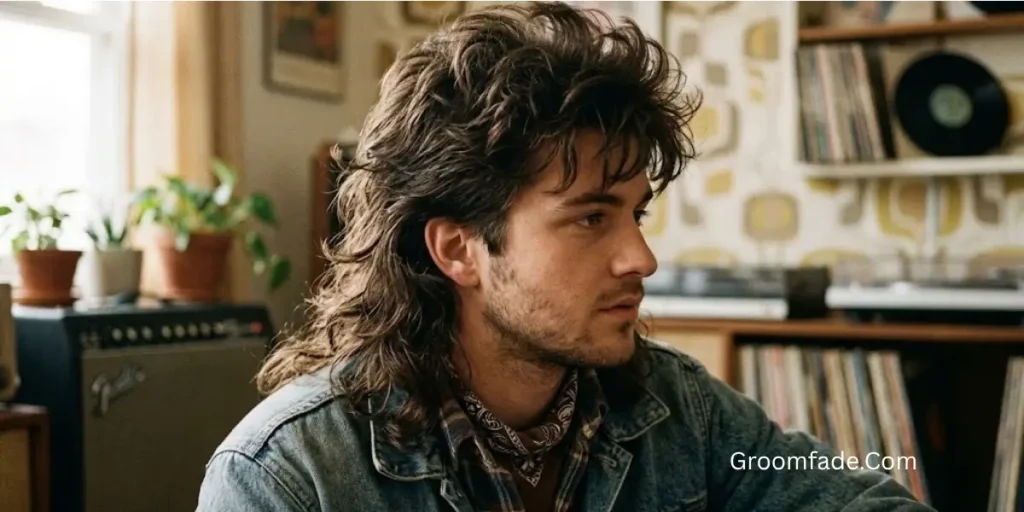
An 80s Mullet is a haircut with shorter hair at the front and sides and longer hair at the back. The top can range from fairly short to long and heavily layered.
The most important part is the contrast between the front and back. The back keeps noticeably more length, while the sides and front are usually shorter.
A classic version may include:
- Short or medium-length hair at the front
- Shorter sides
- Longer hair at the back
- Layers through the top and back
- Extra volume
- A natural or textured finish
- Straight, wavy, or curly hair
There was never just one official 1980s mullet. Hair length, texture, and styling changed from person to person.
Some men wore a fairly simple classic 80s mullet, while others had large, curly, spiky, or heavily layered hair.
What Made the 1980s Mullet Different?
The biggest difference was often the amount of volume and texture.
Many modern mullets use cleaner transitions and more controlled shapes. An old school mullet from the 1980s could look much fuller. The top and back were often layered to create movement.
Hair could also be styled with mousse, spray, blow-drying, curling, or teasing. This helped create the larger shapes that were common in many 1980s hairstyles.
The back was also an important part of the look. Instead of simply leaving a small amount of extra length, some versions had a long, noticeable tail that reached the neck or beyond.
The longer back of an Ducktail Haircut creates a defined shape that shares some of the classic structure seen in an 80s mullet.
Why Was the Mullet Popular in the 1980s?
The mullet became closely linked with 1980s popular culture. Music, sports, entertainment, and youth fashion all helped spread the hairstyle.
Rock musicians were especially important to the image of the decade. Long hair was already connected with rock culture, but the mullet offered a different shape. It kept the front and sides shorter while allowing plenty of length in the back.
Sports also played a role. Some athletes wore versions of the haircut, helping it move beyond music and into everyday fashion.
Movies and television added to its visibility. Once a hairstyle appears regularly on well-known public figures, people become more familiar with it and may take parts of the look for themselves.
The result was a haircut that could mean different things to different people. For some, it was a rock-inspired hairstyle. For others, it was simply a practical way to keep shorter hair around the face while growing out the back.
80s Mullet Hairstyles for Men
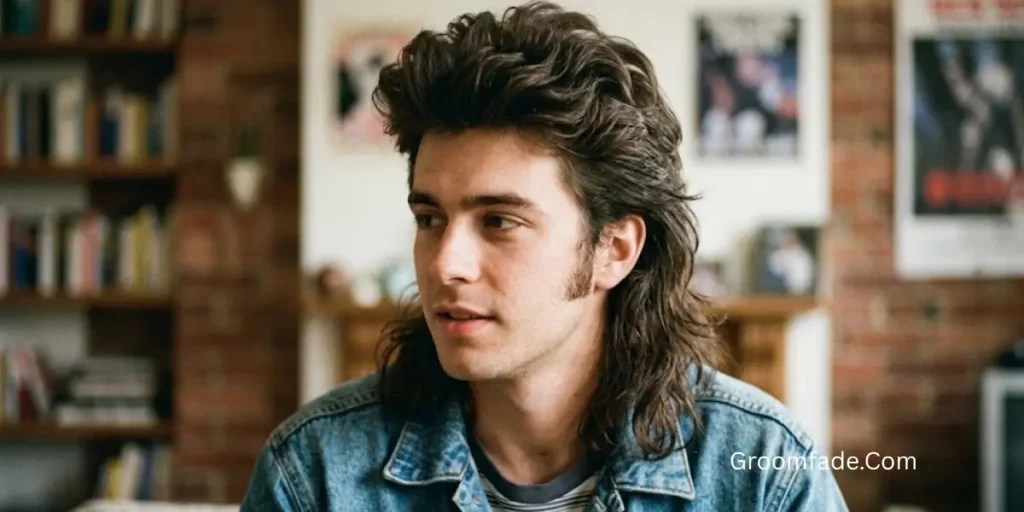
There were many versions of the 80s mullet men wore during the decade. Hair type, personal style, and how much length someone wanted all changed the final result.
Here are some of the most useful variations to understand.
Classic 80s Mullet
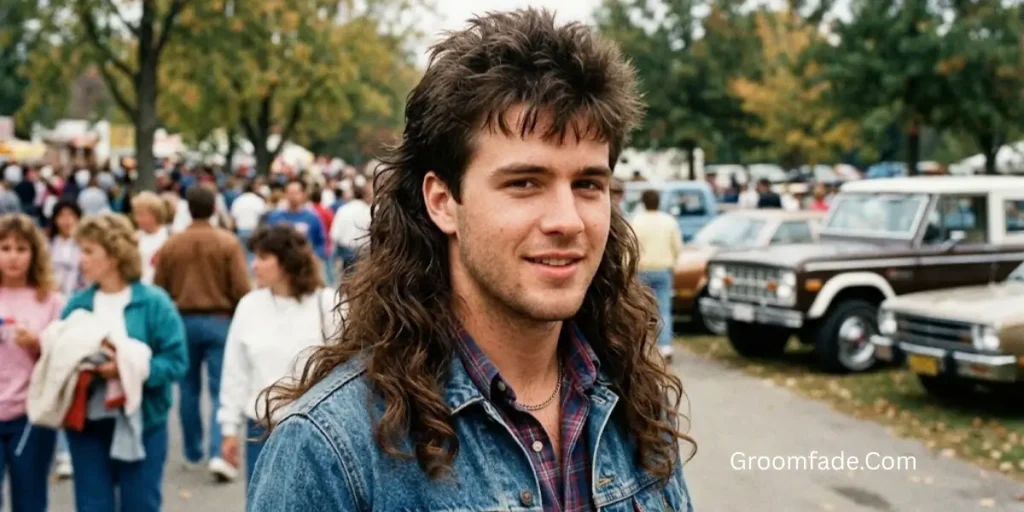
The classic version has the basic mullet shape without relying on a strong modern fade.
The sides are shorter than the back, while the top has enough length for layering and volume. The back remains longer and often reaches the neckline.
This is a good choice for someone who wants the old-school shape to remain easy to recognize.
For a more traditional result, avoid making the sides extremely short. A very tight fade can make the haircut look much more modern than an original-style 1980s cut.
80s Curly Mullet
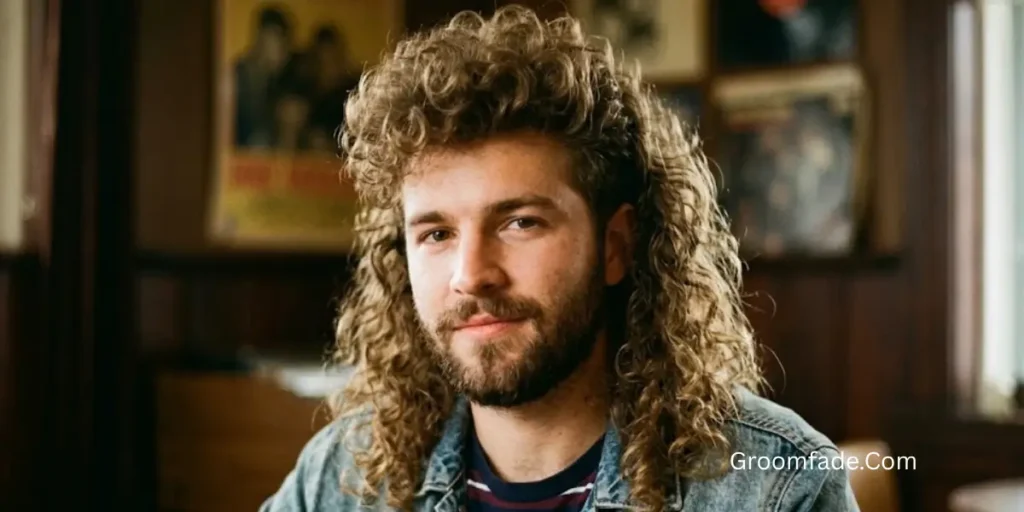
An 80s curly mullet can have a lot of character because natural curls add width and movement.
Curly hair can make the top and back look fuller without requiring as much styling. The barber needs to account for shrinkage, since curly hair often looks shorter when dry.
A curly 80s mullet usually works best when the back has enough length for the curls to form their natural shape.
The goal is not to force every curl into the same direction. Leaving some natural movement can help the haircut feel more authentic.
Shaggy 80s Mullet
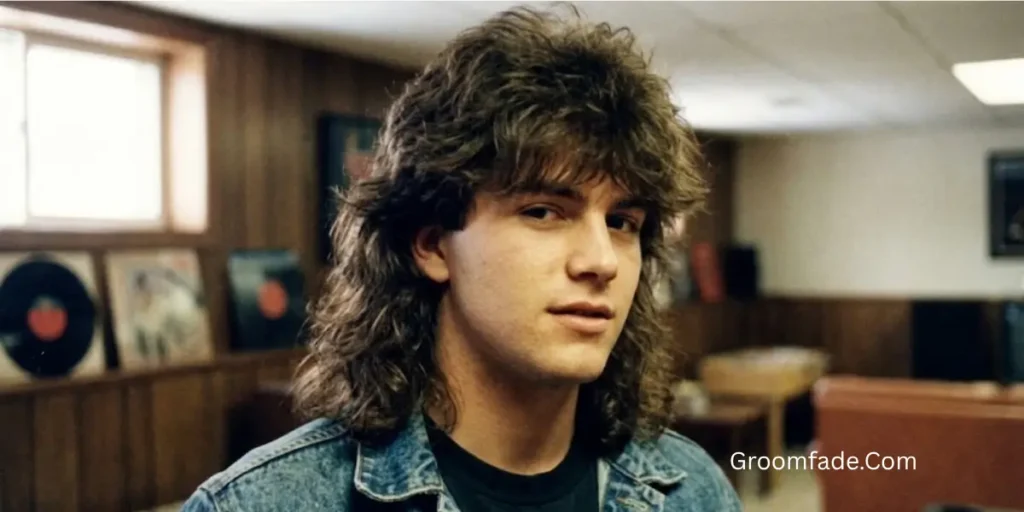
A shaggy version uses loose layers and a less structured finish.
Instead of sharp lines, the hair has movement around the top and back. The sides can still be shorter, but the overall shape is softer.
This style works well for people who like a relaxed old school mullet rather than a highly styled rock look.
It can also be easier to wear between trims because the layers can grow out without changing the shape too quickly.
Slicked-Back 80s Mullet
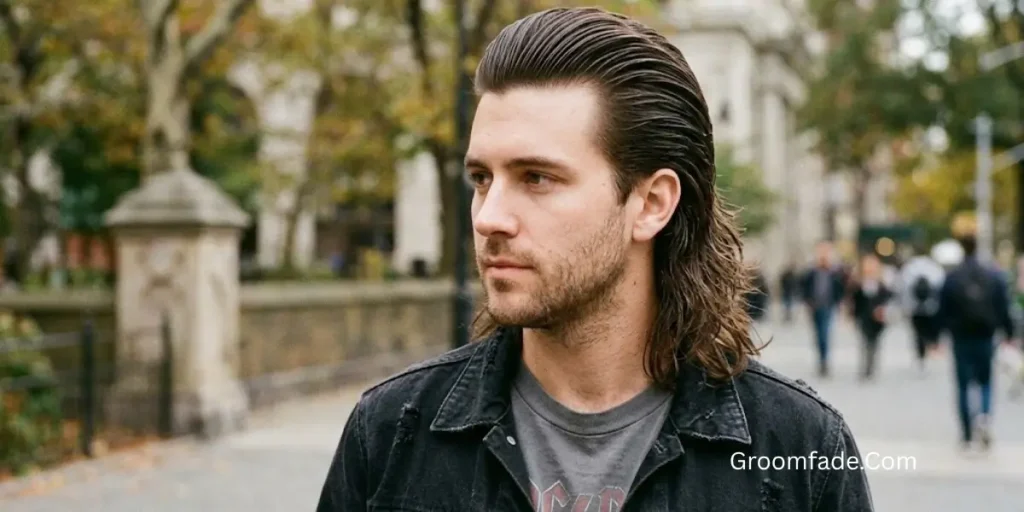
The slicked-back version places more attention on the top.
The front and top are brushed backward, while the longer back keeps the mullet shape. Depending on hair type, a person can use a light styling cream, gel, or pomade to control the top.
This version works especially well with straight or slightly wavy hair.
The amount of product matters. Too much can make the hair look heavy and flat, while too little may not keep the top in place.
For a sharper modern take on shorter sides, the Brooklyn Fade adds a clean transition while leaving enough length on top for styling.
Spiky 80s Mullet
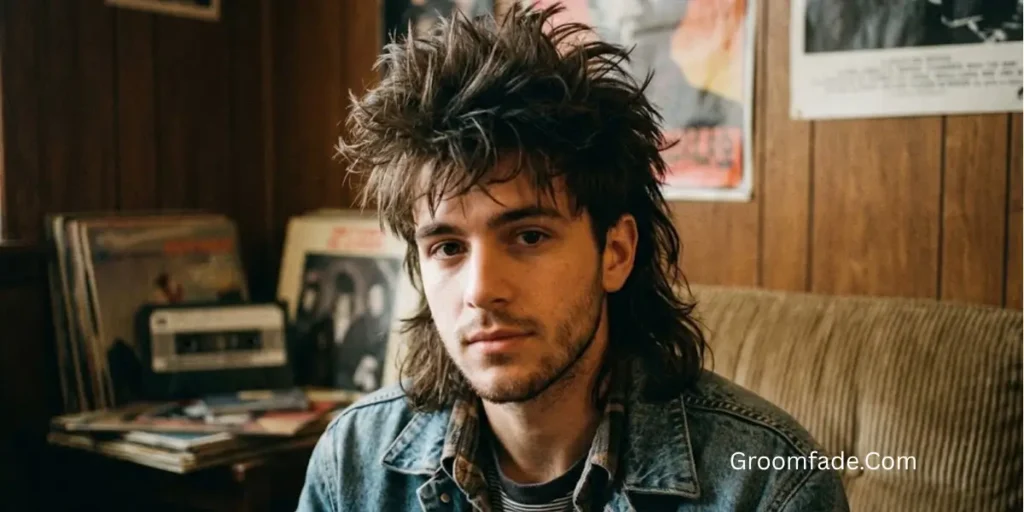
Spiky hair was another recognizable part of 1980s styling.
For a spiky mullet, the top can be cut into shorter layers that are easy to lift. The back stays longer, creating the contrast that defines the haircut.
A small amount of styling product can help create separation between the spikes.
The spikes do not need to be perfectly even. A slightly uneven texture can make the style look more natural.
Wavy 80s Mullet
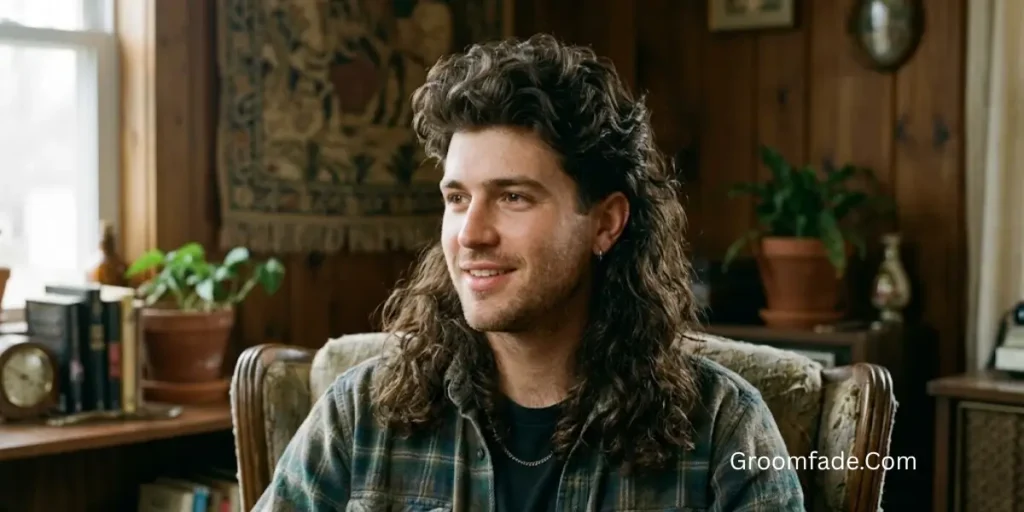
Wavy hair is well suited to a softer version of the mullet haircut 80s look.
The natural wave adds body to the top and back. Instead of trying to straighten the hair, the haircut can follow the natural pattern.
A barber can use layers to prevent the back from becoming too heavy.
For everyday styling, a small amount of cream or mousse can help control frizz while keeping the waves visible.
80s Mullet With Tapered Sides
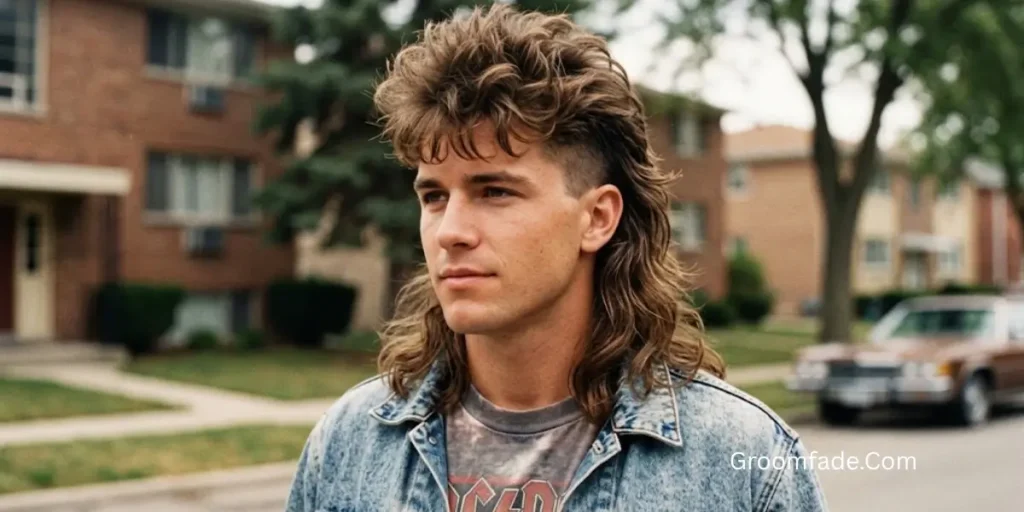
A tapered version is a useful choice for someone who wants an old-school shape with a cleaner finish.
The hair around the sideburns and temples is gradually shortened rather than being cut to one very short length.
This keeps the overall haircut softer than a skin fade.
It is not exactly the same as an original 1980s cut, but it can be a practical modern interpretation of the style.
80s Mullet With a Mustache
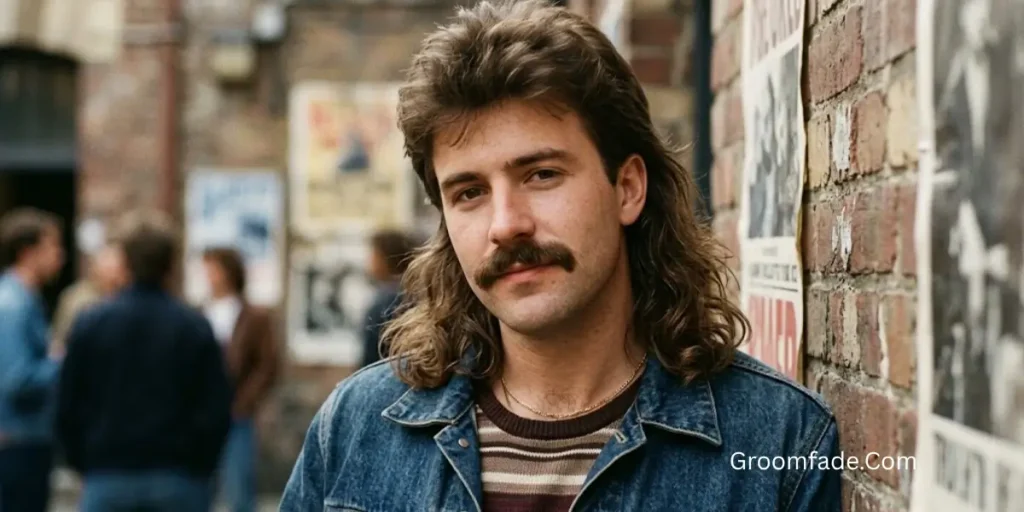
The combination of an 80s mullet and mustache has a strong retro feel.
The hairstyle itself already carries a vintage look, while a mustache can make the overall appearance feel even more connected to old-school fashion.
The key is balance. The hair does not need to be extremely large or heavily styled for the combination to work.
Famous 80s Mullets
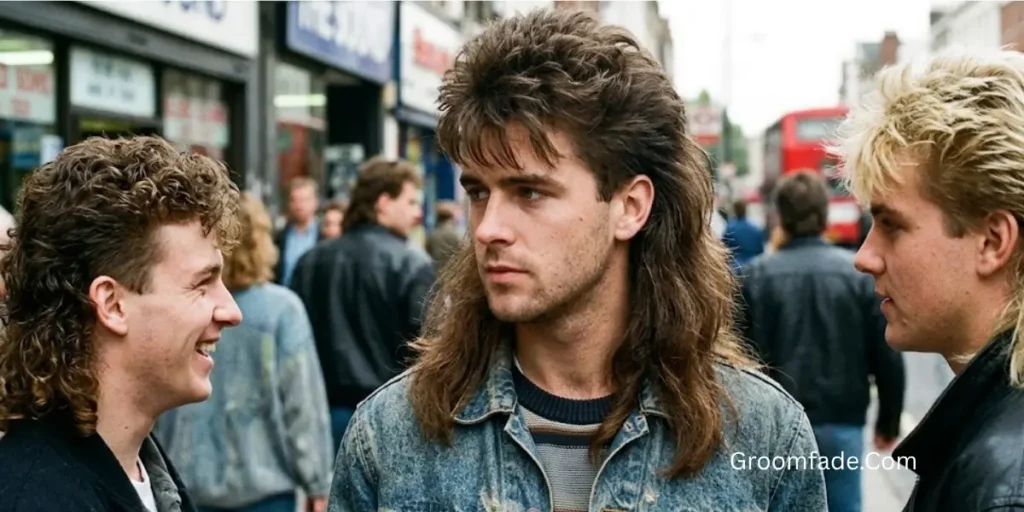
The history of the mullet includes many well-known figures from music, sports, film, and television.
It is important to remember that not every famous hairstyle from the decade was a perfect textbook mullet. Haircuts changed over time, and some styles sat somewhere between a shag, long hairstyle, and mullet.
Patrick Swayze
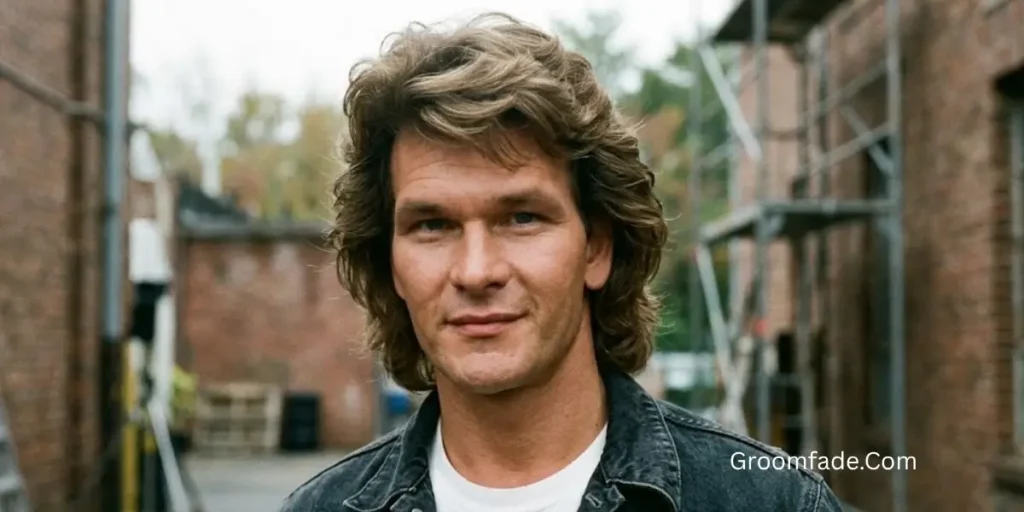
Patrick Swayze became strongly associated with the longer, layered hairstyles of the 1980s.
His hair helped show how a longer back and layered shape could work with a softer, less aggressive style.
A bolder option is the Juice Box Fade, which combines defined sides with a shaped top for a strong, structured appearance.
David Bowie
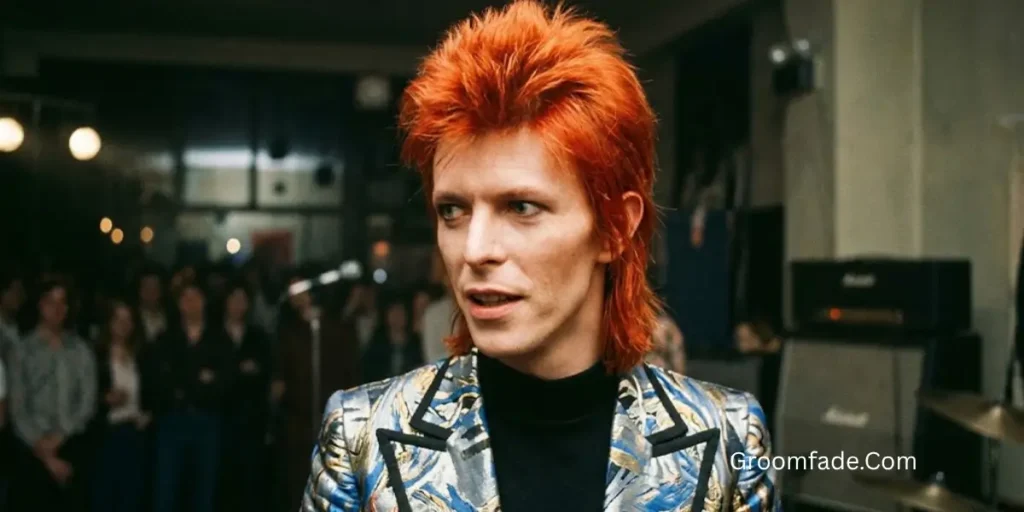
David Bowie wore many different hairstyles throughout his career. His 1980s looks also showed how strongly hair could connect with music and fashion.
His overall influence on men’s hairstyles was much wider than the mullet alone.
Andre Agassi

Andre Agassi became known for his bold hairstyle during his tennis career. His look helped show how longer hair could become part of a sports image.
The exact shape changed over time, which is a good reminder that the 1980s mullet was not one fixed haircut.
Richard Marx

Richard Marx is another name often associated with the longer layered hair popular in the era.
His hairstyle reflected the softer, full-haired side of 1980s men’s fashion.
Other Famous Mullet Examples
The decade also produced many other recognizable examples across music, sports, and entertainment.
Rather than treating these hairstyles as a ranking, it is more useful to look at what they had in common:
- Noticeable length at the back
- Layers
- Volume
- Texture
- Shorter or more controlled sides
- Strong personal styling
This variety explains why searches for famous mullets, best mullets, and best mullets of all time can produce many different answers.
80s Mullet Hair Ideas for Different Hair Types
Your hair type can change how an 80s mullet hair style looks.
The same haircut can look completely different on straight, wavy, curly, thick, or fine hair.
Straight Hair
Straight hair gives the mullet a clear shape.
The back can hang naturally, while layers through the top create movement. If the hair is very straight and fine, adding texture can prevent the style from looking flat.
Straight hair is also easy to slick back or style into spikes.
Wavy Hair
Wavy hair adds natural body.
A layered mullet can allow the waves to form around the crown and back. This can create a softer version of the classic shape.
The main goal is to avoid removing too much weight from the back. Too many short layers can make wavy hair expand in unwanted areas.
Curly Hair
Curly hair can create a bold 80s curly mullet without much effort.
The barber should consider the curl pattern before deciding on length. Curly hair often shrinks when it dries, so cutting it too short can change the final shape.
Keeping enough length in the back helps the curls show their full form.
For a cleaner haircut without removing too much length, Tapered Sides keep the edges neat while allowing the top and back to remain fuller.
Thick Hair
Thick hair can create plenty of volume.
However, too much weight can make the back look bulky. Layers can help remove some weight while keeping the overall length.
The top can also be shaped to create better balance between the crown and back.
Fine Hair
Fine hair can still work with a mullet.
The haircut should focus on keeping enough length and creating texture without removing too much hair.
Heavy thinning can sometimes make fine hair look even flatter. A barber can use careful layering and texture instead.
How to Ask Your Barber for an 80s Mullet
If you want a true mullet 80s look, showing your barber a reference photo is one of the easiest ways to avoid confusion.
The word “mullet” can mean many different things today. One person may picture a modern burst fade mullet, while another may picture a long 1980s rock hairstyle.
Tell your barber what you want from each part of the haircut.
What to Tell Your Barber
You could say:
“I want an old-school 80s mullet with shorter sides and front, layered length on top, and a longer back. Keep the back full and textured instead of making it too clean or modern.”
Then show your reference photo.
Talk about:
- How long you want the back
- How short you want the sides
- How much length you want on top
- Whether you want layers
- Whether you want a taper
- Whether you want a natural or sharp neckline
- How much volume you want
If you want a genuine retro appearance, tell your barber that you do not want the haircut to look like a modern fade mullet.
How to Style an 80s Mullet
Styling depends on your hair type and the shape of your haircut.
You do not need a large amount of product. The right technique is usually more important.
Styling Straight Hair
Start with slightly damp hair.
Use a small amount of mousse or lightweight styling cream if you need more body. Blow-dry the top in the direction you want it to sit.
For a bigger 1980s shape, lift the roots while drying.
The back can be left natural or lightly shaped with a brush.
Styling Wavy Hair
Let the natural wave do most of the work.
Apply a small amount of styling cream or mousse and allow the hair to dry naturally, or use a diffuser if needed.
Avoid brushing the hair too much after the waves form. Too much brushing can create frizz and reduce the natural shape.
A different take on the classic mullet is the Reverse Mullet, which changes the traditional balance by keeping more length toward the front and shorter hair at the back.
Styling Curly Hair
Curly hair often needs less styling than straight hair.
Use a curl-friendly cream or light product to control frizz. Shape the curls with your fingers and allow them to dry.
The back should keep enough length for the curls to form properly.
Creating More Volume
For a larger 80s hairstyles male mullet look, volume is important.
You can create more lift by:
- Starting with damp hair.
- Applying a small amount of mousse.
- Lifting the roots while blow-drying.
- Shaping the top with your fingers.
- Adding a light amount of hair spray if more hold is needed.
Avoid using too much product at once. Heavy product can make the hair look flat.
How to Maintain an 80s Mullet
A mullet needs regular shaping if you want the haircut to keep its original form.
The back can be allowed to grow longer, but the sides and around the ears may need cleaning up more often.
Maintenance depends on the look you want.
A very natural old school mullet can grow for longer between cuts. A cleaner version with tapered sides needs more regular barber visits.
How Often Should You Trim an 80s Mullet?
There is no single schedule that works for everyone.
Someone who wants clean sides may visit a barber every few weeks. Someone who prefers a longer, messy style can wait longer.
The important areas to watch are:
- Sideburns
- Around the ears
- Temple area
- Neckline
- Top layers
- Back length
The back does not always need to be shortened during every visit.
You can ask your barber to clean the sides and neckline while keeping the length at the back.
80s Mullet vs Modern Mullet
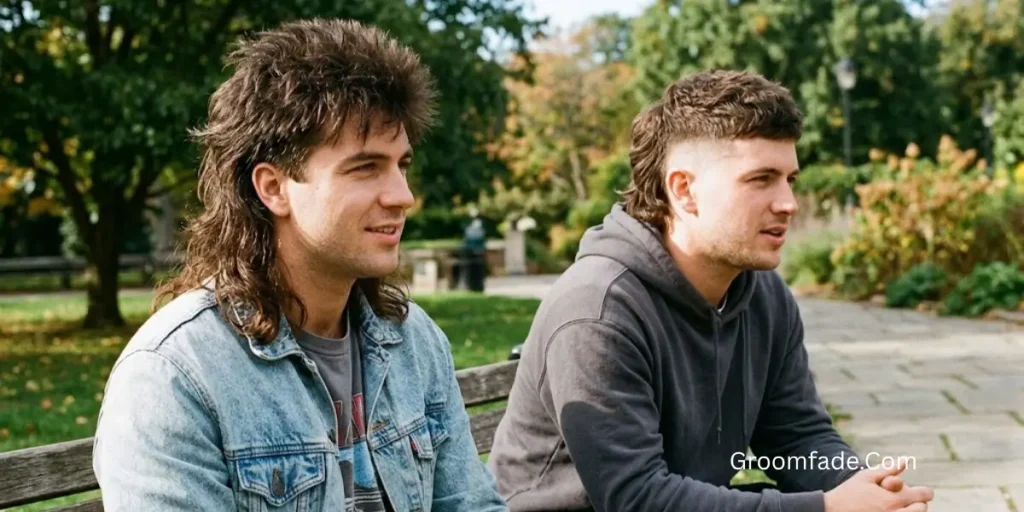
The words “mullet” and “modern mullet” can describe very different hairstyles.
An original-inspired 1980s mullet often has more volume and a softer transition between sections.
A modern mullet may use a fade, taper, sharper texture, or more controlled shape.
| 80s Mullet | Modern Mullet |
| Often has more volume | Often has a cleaner shape |
| Longer back is common | Back length can vary |
| Layers are important | Texture varies |
| Natural sides are common | Tapers and fades are common |
| Retro styling | Modern styling |
| Often fuller around the top | Can be more controlled |
Neither approach has to be copied exactly. Someone can take parts of the classic style and combine them with modern barbering.
For example, a person might keep a long, layered back but use a low taper around the temples.
80s Mullet vs Other Mullet Styles
Not every hairstyle with a long back is the same.
Knowing the differences can help you explain what you want to your barber.
80s Mullet vs Shag Mullet
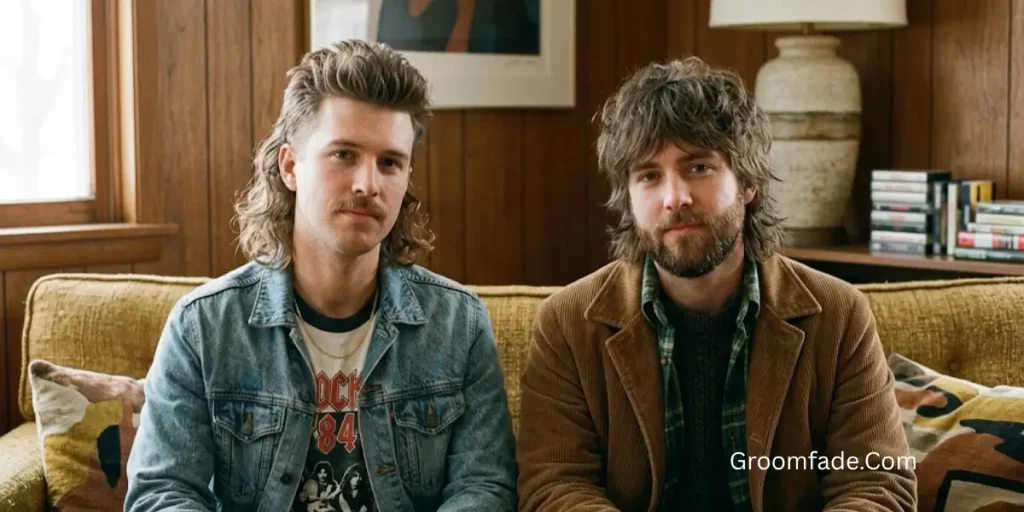
A shag usually focuses more heavily on layers throughout the hair.
An 80s mullet places more attention on the difference between the shorter front and sides and the longer back.
The two can overlap, especially when an old school mullet has lots of layers.
For a softer, more layered version, the Shag Mullet adds loose layers and texture, giving the classic mullet a more relaxed shape.
80s Mullet vs Modern Mullet
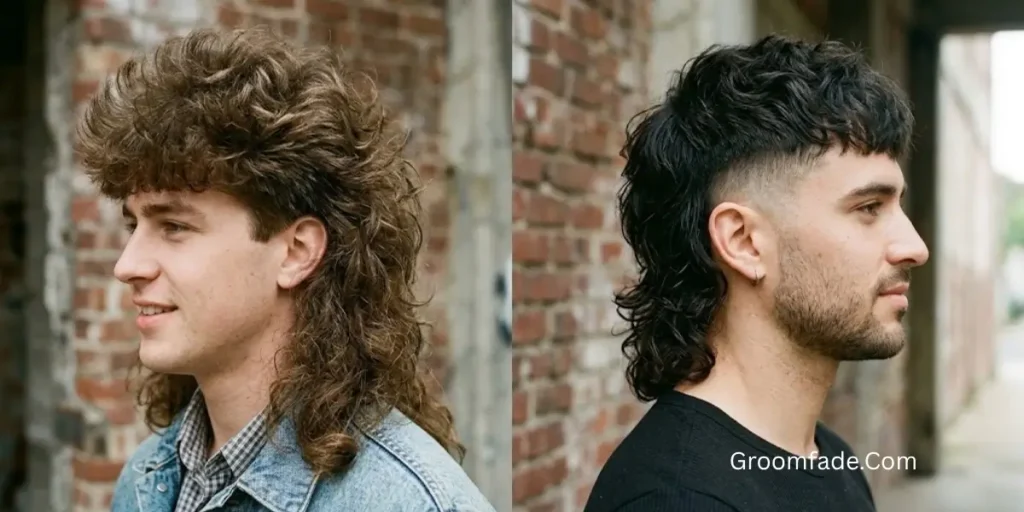
The main difference is often the finish.
The 1980s version tends to have a stronger retro shape and more visible volume. Modern versions can use fades, tapers, textured tops, and cleaner edges.
80s Mullet vs Wolf Cut
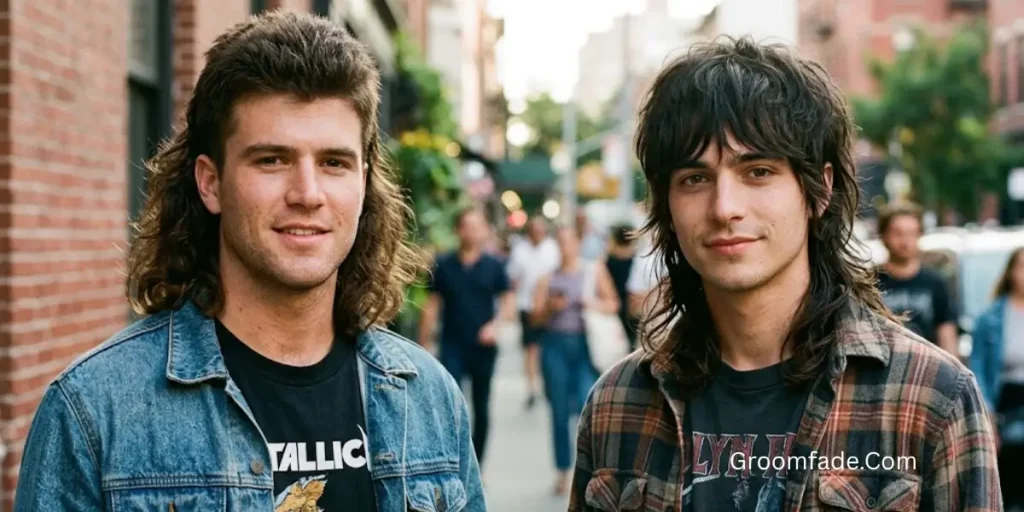
A wolf cut usually has a more blended shape with many layers throughout the head.
An 80s mullet has a clearer short-front, long-back structure.
They can look similar from certain angles, but the haircut design is different.
80s Mullet vs Burst Fade Mullet
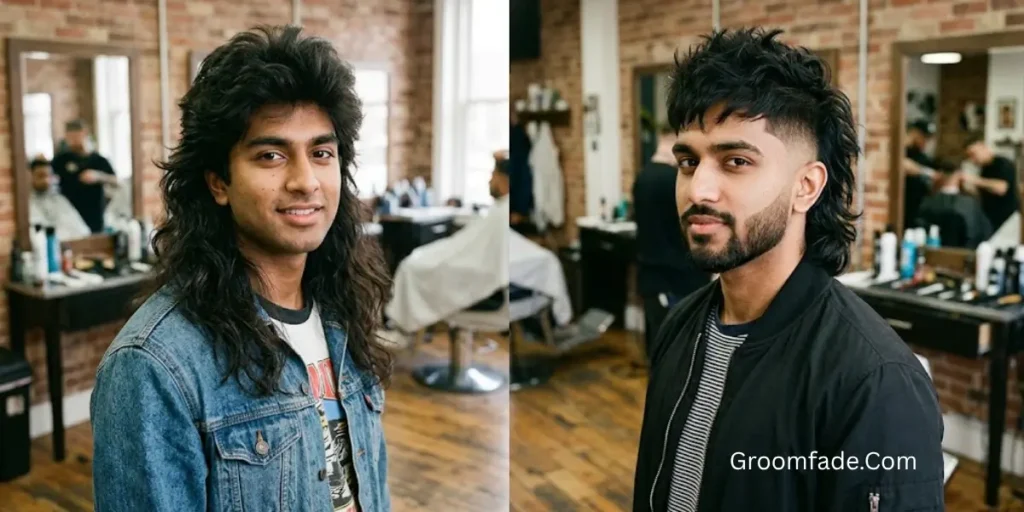
A burst fade mullet uses a fade around the ears and sides.
That creates a much sharper transition than many classic 1980s styles.
If you want a traditional look, tell your barber not to make the sides too tight.
Is the 80s Mullet Still Popular Today?
The 80s Mullet continues to appear in modern fashion and hairstyle culture because retro styles often return in new forms.
Today’s version does not have to copy the original exactly.
Some people keep the long back but use a taper. Others use curly hair, modern texture, or a cleaner neckline.
The appeal is partly in the contrast. The haircut gives you shorter hair around the face while keeping noticeable length behind the head.
It can also be changed to suit different hair types.
Someone with straight hair may prefer a sharp layered version. Someone with curls may want a fuller back. Someone with thick hair may need more weight removed from the layers.
Can Women Wear an 80s Mullet?
Yes. The basic mullet shape is not limited to one gender.
The search terms female mullet 80s and 80s girl mullet reflect interest in the style among women as well.
A women’s 1980s-inspired mullet can be short, medium, curly, shaggy, or heavily layered.
The main shape can stay the same while the length and styling change.
For a softer version, longer layers can be kept around the face. For a stronger retro look, the back can be allowed to grow longer with more volume.
The important part is choosing a shape that works with the person’s hair texture and preferred style.
Common Mistakes With an 80s Mullet
Getting the basic shape right is important.
Making the Sides Too Short
A very short fade can make the haircut look more like a modern fade mullet.
If you want an old school appearance, keep some length around the sides.
Cutting the Back Too Short
The longer back is one of the main features of a mullet.
If too much length is removed, the haircut can lose its identity.
Removing Too Much Weight
Thinning can help thick hair, but removing too much can make the hair look weak.
This is especially important for fine or naturally thin hair.
Using Too Much Product
Large amounts of gel or pomade can make the hair heavy.
The 1980s had plenty of big hairstyles, but volume does not always require heavy product.
Forgetting About Hair Texture
A haircut that works on straight hair may not look the same on curls.
Your barber should consider how your hair behaves when dry.
How to Choose the Right 80s Mullet for You
Start with your natural hair.
If your hair is straight, you can choose from slicked-back, spiky, layered, or classic shapes.
If it is wavy, a shaggy or soft layered version can work well.
If it is curly, keeping enough length in the back can create a strong natural shape.
Then think about how retro you want the haircut to look.
A full classic 80s mullet can have natural sides, long layers, and plenty of volume.
A modern interpretation can keep the long back but add a taper.
Your face shape can also affect how the front and sides are cut, but hair texture and personal preference are usually more important than following a strict face-shape rule.
What Products Work for an 80s Mullet?
The right product depends on the finish you want.
Mousse
Mousse can add body without making the hair feel too heavy.
It is useful for creating volume in straight or wavy hair.
Styling Cream
Cream can help control frizz and add light shape.
It is often useful for wavy and curly hair.
Pomade
Pomade can help with slicked-back styles.
Use a small amount first and add more only when needed.
Hair Spray
Hair spray can help hold a large or spiky hairstyle.
A light application is often enough for everyday styling.
The goal is to support the haircut, not cover the hair in product.
FAQs About the 80s Mullet
Q1. What is an 80s mullet?
An 80s Mullet is a haircut with shorter hair at the front and sides and longer hair at the back. Many versions from the decade also had layers, volume, curls, or waves.
Q2. Were mullets popular in the 1980s?
Yes. The mullet became strongly associated with 1980s popular culture and appeared among musicians, athletes, entertainers, and everyday people.
Q3. What did people ask for in the 80s when they wanted a mullet?
There was no single phrase everyone used. A person could ask for shorter sides with more length at the back, or simply show a barber a photo of the style they wanted.
Today, showing a reference photo is still one of the clearest ways to explain the desired shape.
Q4. Who had famous 80s mullets?
Many public figures wore hairstyles that are now associated with the decade’s mullet trend. Examples often discussed include Patrick Swayze, David Bowie, Andre Agassi, and Richard Marx.
However, their hairstyles changed over time and were not always identical to one another.
Q5. How long should an 80s mullet be?
There is no fixed length.
The front and sides are generally shorter, while the back is noticeably longer. Some styles stop around the neckline, while others grow much farther down.
Q6. Can you get an 80s mullet with curly hair?
Yes. Curly hair can work very well with a mullet.
The barber should account for shrinkage and curl pattern before deciding on the final length.
Q7. What is the difference between an 80s mullet and a modern mullet?
An 80s mullet often has more volume, longer layers, and a less controlled shape.
A modern mullet may use a taper, fade, sharper texture, or cleaner edges.
Q8. Are 80s mullets good for thick hair?
They can work well with thick hair.
The barber may need to remove some weight from the layers so the back does not become too bulky.
Q9. Can women wear an 80s mullet?
Yes. Women can wear the style with short, medium, or long layers. The shape can also be adjusted for straight, wavy, or curly hair.